
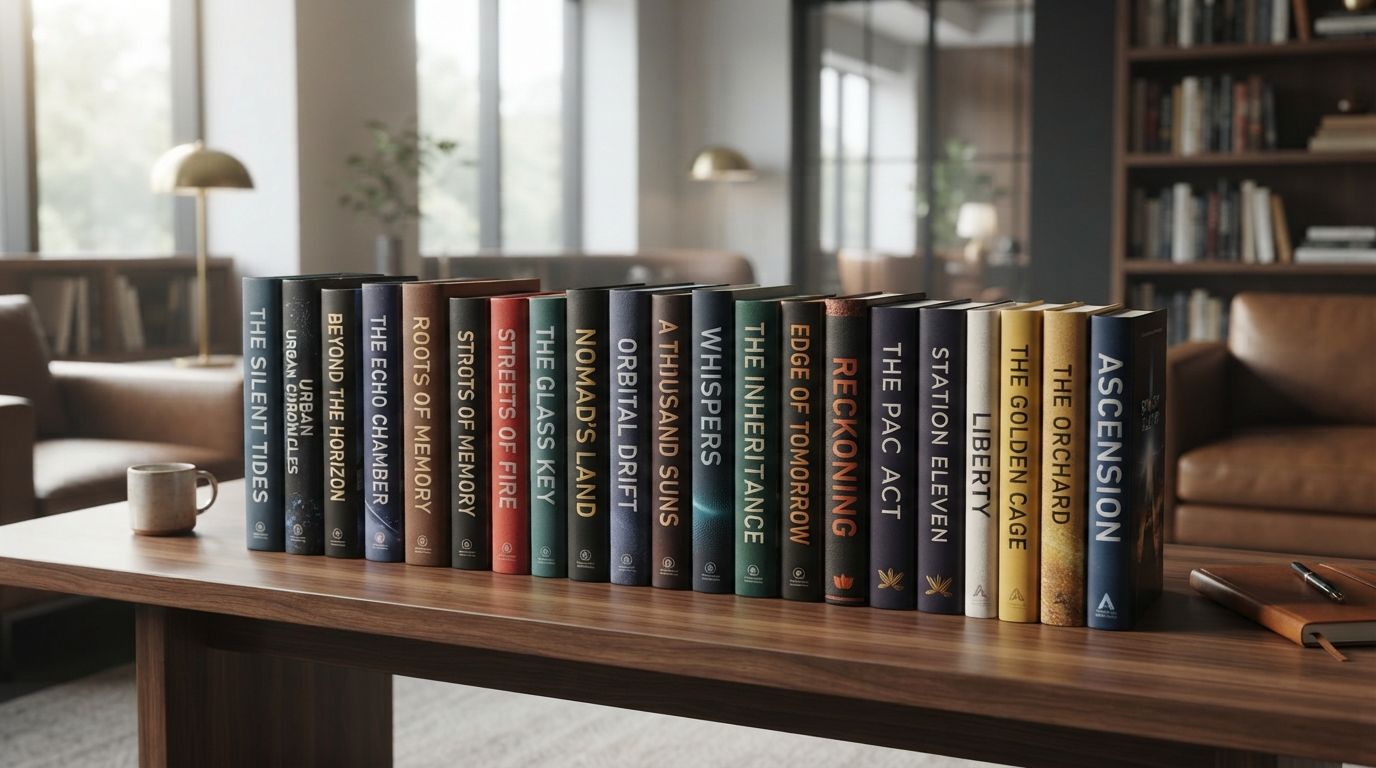
Introduction: The Changing Landscape of Contemporary Literature
The global literary landscape is experiencing a dynamic renaissance. In an era dominated by rapid-fire digital media, streaming entertainment, and algorithmic feeds, the enduring power of the written word remains unparalleled. Today’s global publishing market, valued at over $140 billion, continues to thrive because of the visionary creators who capture the triumphs, anxieties, and complexities of the human condition. These literary icons do not merely write books; they shape cultural discourses, inspire cinematic blockbusters, and pioneer new ways of understanding our rapidly evolving world.
To understand modern culture, one must look to the writers who are currently defining it. This comprehensive guide explores the Top 20 Best Living Famous Authors Today and Their Books, highlighting the masterminds of contemporary prose whose works have achieved both critical acclaim and massive commercial success. From Nobel laureates and Booker Prize winners to speculative fiction pioneers and dark academia architects, these authors represent the pinnacle of modern storytelling.
In compiling this master list, we examine not only raw sales figures but also structural innovation, thematic depth, and lasting cultural legacy. Whether you are an avid bookworm looking to expand your personal library or a literary enthusiast seeking to understand the trends driving today’s publishing industry, these twenty authors are essential reading.
The Cultural and Commercial Impact of Living Literary Icons
The relationship between an author and the public has evolved dramatically in the 21st century. Platforms like “BookTok” (TikTok’s literary community), celebrity-led book clubs (such as those curated by Oprah Winfrey and Reese Witherspoon), and international literary festivals have bridged the gap between niche intellectual circles and mainstream readers. Today’s famous authors are public intellectuals, activists, and cultural commentators.
Moreover, the crossover appeal of contemporary literature has never been stronger. High-brow literary fiction frequently borrows elements from speculative, gothic, and detective genres, while genre fiction is increasingly recognized for its stylistic sophistication. The authors listed below are masters of this boundary-blurring art, proving that great literature can be both intellectually rigorous and immensely entertaining.
Top 20 Best Living Famous Authors Today and Their Books
1. Haruki Murakami
Japanese phenomenon Haruki Murakami is internationally celebrated for his unique blend of magical realism, melancholic nostalgia, and pop-culture-infused surrealism. His narratives frequently feature lonely protagonists, talking cats, jazz music, and parallel dimensions existing just beneath the surface of everyday life. Murakami’s ability to capture the profound alienation of modern urban existence has earned him a massive global cult following and perennial Nobel Prize in Literature speculation.
Essential Books: Norwegian Wood (1987), a poignant story of loss and sexuality; Kafka on the Shore (2002), an intricate dual narrative involving a runaway teenager and an elderly man who speaks to cats; and 1Q84 (2009), a dystopian three-volume epic set in a fictionalized Tokyo.
2. Stephen King
No list of the Top 20 Best Living Famous Authors Today and Their Books would be complete without the undisputed “King of Horror.” Stephen King has published over sixty novels, selling more than 350 million copies worldwide. Beyond his reputation for spine-chilling terror, King is a master of character development, capturing the vernacular and anxieties of blue-collar America with unparalleled precision. His influence on modern pop culture, via films, television series, and literature, is immeasurable.
Essential Books: The Shining (1977), a terrifying psychological study of isolation and addiction; It (1986), a monumental epic about childhood trauma and small-town evil; and The Stand (1978), a post-apocalyptic masterpiece detailing the battle between good and evil.
3. Margaret Atwood
Canadian poet, novelist, and environmental activist Margaret Atwood has spent decades writing sharp, visionary works that dissect gender politics, environmental destruction, and state control. Her mastery of speculative fiction—or what she prefers to call “speculative romance”—allows her to project current social trends into chillingly plausible futures. Her work has enjoyed a massive resurgence in recent years, cementing her status as a vital feminist icon.
Essential Books: The Handmaid’s Tale (1985), a terrifyingly prescient vision of a patriarchal, military dictatorship; Oryx and Crake (2003), a brilliant bio-punk critique of corporate greed and genetic engineering; and The Blind Assassin (2000), a multi-layered, Booker Prize-winning historical mystery.
4. Kazuo Ishiguro
Awarded the Nobel Prize in Literature in 2017, Japanese-born British novelist Kazuo Ishiguro writes with a quiet, devastating restraint. His novels are masterclasses in unreliable narration, memory, and the painful self-delusion we use to shield ourselves from regret. Ishiguro seamlessly moves across genres—from historical realism to dystopian sci-fi and Arthurian fantasy—while maintaining an elegant, deeply emotional core.
Essential Books: The Remains of the Day (1989), a heartbreaking portrait of an aging English butler reflecting on his life and repressed feelings; Never Let Me Go (2005), a melancholic dystopian novel about cloned youths raised for organ harvesting; and Klara and the Sun (2021), a touching look at human love through the eyes of an Artificial Friend.
5. J.K. Rowling
J.K. Rowling revolutionized the publishing industry with her seven-volume fantasy saga about a young wizard named Harry Potter. Selling over 600 million copies, it remains the best-selling book series in history, spawning a multi-billion-dollar media franchise. Beyond her work in children’s fantasy, Rowling writes complex adult fiction and crime mysteries under the pen name Robert Galbraith, demonstrating her remarkable narrative versatility and plotting genius.
Essential Books: Harry Potter and the Sorcerer’s Stone (1997), the magical introduction to Hogwarts; Harry Potter and the Deathly Hallows (2007), the epic conclusion to the wizarding saga; and The Cuckoo’s Calling (2013), an acclaimed detective novel written under her pseudonym.
6. Chimamanda Ngozi Adichie
Nigerian author Chimamanda Ngozi Adichie has become one of the most influential voices in modern global literature and feminist thought. Her prose is celebrated for its clarity, emotional intelligence, and sharp critique of post-colonial identity, race, and migration. Adichie’s work effortlessly bridges the gap between academic discourse and engaging, accessible storytelling, making her a highly sought-after public speaker and essayist.
Essential Books: Half of a Yellow Sun (2006), a devastating, beautifully written novel set during the Biafran War; Americanah (2013), a brilliant, satirical examination of race, love, and hair through the eyes of a Nigerian immigrant in the US; and Purple Hibiscus (2003), her remarkable debut novel about family trauma and religious fanaticism.
7. Salman Rushdie
Salman Rushdie is a towering figure in contemporary literature, renowned for his vibrant, linguistic acrobatics and fearless defense of free expression. His works blend magical realism with historical fiction to explore the complex intersections of East and West, religion, and post-colonial identity. Having survived decades of threats to his life, Rushdie continues to write with an unyielding, triumphant spirit.
Essential Books: Midnight’s Children (1981), a monumental work that earned the “Booker of Bookers” for its brilliant allegory of India’s independence; The Satanic Verses (1988), a highly controversial and imaginative exploration of migration and faith; and Victory City (2023), a dazzling epic about the rise and fall of a magical empire.
8. Zadie Smith
Zadie Smith burst onto the literary scene at just twenty-four years old and has since established herself as one of the most astute observers of multicultural London. Known for her sprawling casts, sharp dialogue, and intellectual curiosity, Smith’s novels and essays tackle issues of class, race, and identity with humor, empathy, and stylistic brilliance.
Essential Books: White Teeth (2000), a vibrant, multi-generational debut exploring the lives of two wartime friends in London; On Beauty (2005), a campus novel that pays homage to E.M. Forster while dissecting cultural clashes; and Swing Time (2016), a moving exploration of friendship, dance, and identity.
9. George R.R. Martin
Often referred to as the “American Tolkien,” George R.R. Martin has redefined modern epic fantasy. His masterwork, A Song of Ice and Fire, stripped the fantasy genre of its classic tropes, replacing them with grim realism, Machiavellian political intrigue, complex moral ambiguity, and shocking character deaths. The resulting television adaptation, Game of Thrones, became a defining cultural phenomenon of the 21st century.
Essential Books: A Game of Thrones (1996), the novel that launched the legendary saga; A Storm of Swords (2000), widely considered the high point of the epic series; and Fevre Dream (1982), a unique, atmospheric historical vampire novel set on the Mississippi River.
10. Colson Whitehead
Colson Whitehead is one of only a handful of writers to win the prestigious Pulitzer Prize for Fiction twice—and he did so with consecutive novels. Whitehead’s work spans genres, from speculative satire to historical realism, always anchored by his sharp prose and profound examination of the American racial landscape. His ability to reframe historical trauma through creative narrative lenses has solidified his place in literary history.
Essential Books: The Underground Railroad (2016), a brilliant, literalized depiction of the historical escape network; The Nickel Boys (2019), a devastating story based on a real-life abusive reform school in Florida; and Harlem Shuffle (2021), a stylish, mid-century crime heist novel.
11. Neil Gaiman
Neil Gaiman is a master myth-maker whose work spans graphic novels, children’s literature, fantasy, and screenplays. Known for his dark, whimsical imagination, Gaiman breathes new life into ancient mythologies, folklore, and fairy tales, placing them in contemporary, often urban settings. His unique brand of “urban fantasy” has earned him numerous Hugo, Nebula, and Bram Stoker awards.
Essential Books: American Gods (2001), a brilliant epic about old and new gods battling for survival in America; The Sandman (1989–1996), a groundbreaking comic book series that redefined graphic storytelling; and The Ocean at the End of the Lane (2013), a hauntingly beautiful, nostalgic fairy tale for adults.
12. Isabel Allende
Chilean-American author Isabel Allende is the world’s most widely read Spanish-language author. Her novels, which frequently employ magical realism, weave together sweeping historical events, deep feminist themes, and intense familial dramas. Allende’s writing is characterized by its warmth, emotional depth, and passionate commitment to social justice and memory.
Essential Books: The House of the Spirits (1982), a landmark multi-generational family saga set against the turbulent political backdrop of Chile; Eva Luna (1987), the story of a young orphan girl who survives through her storytelling talents; and A Long Petal of the Sea (2019), an epic historical novel following refugees of the Spanish Civil War.
13. Joyce Carol Oates
Joyce Carol Oates is an incredibly prolific and versatile force in American letters. Having published over fifty novels, as well as countless short stories, plays, and essays, Oates is a chronicler of the dark underbelly of the American psyche. Her work frequently deals with violence, class struggle, psychological trauma, and the struggles of women in a patriarchal society.
Essential Books: Them (1969), a National Book Award-winning novel about a working-class family in Detroit; Blonde (2000), a massive, radical fictionalized biography of Marilyn Monroe; and We Were the Mulvaneys (1996), a devastating look at a family’s collapse and eventual redemption following a tragedy.
14. Ian McEwan
British novelist Ian McEwan is celebrated for his clinical, psychologically precise prose and his ability to construct moments of sudden, life-altering tension. His novels often explore the fragile nature of domestic life, the moral ambiguities of science and history, and the catastrophic impact of small misunderstandings or moral failures.
Essential Books: Atonement (2001), a brilliant, multi-layered masterpiece about guilt, art, and the devastating consequences of a young girl’s lie; Enduring Love (1997), a chilling psychological thriller about obsession and rationalism; and Saturday (2005), a post-9/11 portrait of a day in the life of a London neurosurgeon.
15. Khaled Hosseini
Afghan-American author Khaled Hosseini has introduced millions of readers to the rich history, culture, and tragic political upheavals of Afghanistan. His deeply emotional, character-driven novels focus on familial bonds, redemption, and the human cost of war. Hosseini’s evocative storytelling has made him a global bestseller and a powerful voice for refugees.
Essential Books: The Kite Runner (2003), a devastating and universally beloved story of friendship, betrayal, and redemption; A Thousand Splendid Suns (2007), a powerful, heartbreaking portrait of two generations of resilient Afghan women; and And the Mountains Echoed (2013), an expansive multi-generational family saga.
16. Donna Tartt
Donna Tartt is a literary icon known for her slow, meticulous writing process, publishing a single, highly polished novel roughly once every decade. Her works are grand, neo-romantic, and intellectual, characterized by their lush descriptions, dark academic settings, and deep explorations of aesthetic beauty, morality, and fate.
Essential Books: The Secret History (1992), the definitive “dark academia” novel about a group of elite classics students who commit a murder; The Goldfinch (2013), a Dickensian, Pulitzer Prize-winning novel about grief, art, and survival; and The Little Friend (2002), a gothic Southern mystery.
17. Jonathan Franzen
Jonathan Franzen is often hailed as one of the premier chroniclers of contemporary American middle-class life. His novels are sprawling, structurally complex, and deeply psychological, offering sharp social critiques of capitalism, environmental degradation, and the fracturing of the nuclear family. Franzen excels at creating flawed, deeply human characters whose struggles feel intensely real.
Essential Books: The Corrections (2001), a monumental family drama that captured the anxieties of the turn of the century; Freedom (2010), an epic exploration of modern marriage, environmentalism, and political polarization; and Crossroads (2021), a brilliant, intimate portrait of a Midwestern family in the early 1970s.
18. Thomas Pynchon
The notoriously reclusive Thomas Pynchon is a giant of postmodern literature. His labyrinthine, deeply complex novels are filled with paranoia, conspiracy, scientific theories, historical arcana, and low-brow pop culture humor. Pynchon’s work challenges readers, requiring active participation to untangle his dense, rewarding prose styles.
Essential Books: Gravity’s Rainbow (1973), an incredibly dense, mind-bending epic set at the end of World War II; The Crying of Lot 49 (1966), a short, brilliant satire about a potential centuries-old postal conspiracy; and Inherent Vice (2009), a hilarious, psychedelic noir detective story set in 1970s California.
19. Marilynne Robinson
Marilynne Robinson’s writing is characterized by its quiet grace, spiritual depth, and exquisite, luminous prose. Her novels, particularly her acclaimed Gilead sequence, explore faith, family, forgiveness, and the beauty of everyday existence in rural America. Robinson’s work offers a rare, intellectually rigorous, and compassionate look at the Christian faith in modern literature.
Essential Books: Gilead (2004), a Pulitzer Prize-winning epistolary novel from an aging Iowa minister to his young son; Housekeeping (1980), a haunting, poetic story of sisterhood and transience; and Home (2008), a devastating companion novel to Gilead exploring the pain of the prodigal son.
20. Orhan Pamuk
Orhan Pamuk, Turkey’s most famous novelist and a Nobel laureate, writes at the cultural crossroads where East meets West. His novels explore themes of identity, memory, secularism versus religion, and the melancholy (known in Turkish as hüzün) of his home city, Istanbul. Pamuk’s work is both historically expansive and intensely personal.
Essential Books: My Name Is Red (1998), a brilliant murder mystery set among Ottoman miniaturists in the 16th century; Snow (2002), a powerful political and philosophical novel exploring tensions in modern Turkey; and The Museum of Innocence (2008), a devastatingly obsessive love story set in mid-20th-century Istanbul.
Author Comparison and Quick-Reference Guide
To help you navigate this impressive roster of literary talent, the table below provides a quick reference to these authors, their primary genres, and their signature masterworks.
| Author | Primary Genre / Style | Signature Masterpiece | Key Accolades |
|---|---|---|---|
| Haruki Murakami | Magical Realism / Surrealism | Kafka on the Shore | Franz Kafka Prize, Jerusalem Prize |
| Stephen King | Horror / Psychological Suspense | The Shining | National Book Foundation Medal |
| Margaret Atwood | Speculative Fiction / Feminist Lit | The Handmaid’s Tale | Two-time Booker Prize Winner |
| Kazuo Ishiguro | Literary Fiction / Dystopian | The Remains of the Day | Nobel Prize in Literature (2017) |
| J.K. Rowling | Fantasy / Detective Mystery | Harry Potter Series | Companion of Honour, Hans Christian Andersen Award |
| Chimamanda Ngozi Adichie | Post-Colonial / Feminist Fiction | Americanah | National Book Critics Circle Award |
| Salman Rushdie | Magical Realism / Historical Fiction | Midnight’s Children | Booker of Bookers, Knighted |
| Zadie Smith | Multicultural Realism / Social Satire | White Teeth | Orange Prize for Fiction, Whitbread First Novel Award |
| George R.R. Martin | Epic Fantasy / Grimdark | A Game of Thrones | Hugo Award, Locus Award |
| Colson Whitehead | Historical Fiction / Speculative Satire | The Underground Railroad | Two-time Pulitzer Prize Winner |
| Neil Gaiman | Urban Fantasy / Mythic Fiction | American Gods | Hugo, Nebula, Newbery, and Carnegie Medals |
| Isabel Allende | Magical Realism / Historical Epic | The House of the Spirits | Presidential Medal of Freedom |
| Joyce Carol Oates | Gothic Realism / Psychological Fiction | Blonde | National Book Award, O. Henry Award |
| Ian McEwan | Literary Fiction / Psychological Drama | Atonement | Booker Prize Winner, Shakespeare Prize |
| Khaled Hosseini | Contemporary Drama / Historical Fiction | The Kite Runner | Original Voices Award, UNHCR Goodwill Ambassador |
| Donna Tartt | Dark Academia / Literary Fiction | The Secret History | Pulitzer Prize for Fiction (2014) |
| Jonathan Franzen | Realist Family Saga / Social Critique | The Corrections | National Book Award |
| Thomas Pynchon | Postmodernism / Satire | Gravity’s Rainbow | National Book Award |
| Marilynne Robinson | Literary / Spiritual Fiction | Gilead | Pulitzer Prize for Fiction (2005) |
| Orhan Pamuk | Postmodern Historical Fiction | My Name Is Red | Nobel Prize in Literature (2006) |
Key Takeaways
- Genre Blending: Today’s top living authors frequently blend high-brow literary techniques with genre elements (like sci-fi, horror, and mystery) to create highly engaging, intellectually stimulating narratives.
- Global Perspectives: Contemporary literature is profoundly globalized. Authors from diverse cultural backgrounds—such as Chimamanda Ngozi Adichie, Orhan Pamuk, and Haruki Murakami—shape the global discourse on identity, migration, and history.
- Thematic Depth: Common recurring themes among these giants of writing include the fragility of memory, the search for identity in a hyper-connected world, environmental anxieties, and historical trauma.
- Cultural Adaptation: Many of these authors’ works have been successfully adapted into highly acclaimed movies, TV shows, and graphic novels, amplifying their cultural footprint and commercial reach.
Frequently Asked Questions
1. How were the authors on this list selected?
This list was curated based on a combination of critical acclaim (including major awards like the Nobel Prize, Pulitzer Prize, and Booker Prize), commercial success, cultural influence, and their ongoing contribution to modern literature. Every author featured is currently living and actively shaping the literary world.
2. Why is magical realism so popular among these top authors?
Magical realism—used beautifully by authors like Haruki Murakami and Isabel Allende—allows writers to explore deep psychological, emotional, and political truths that straightforward realism cannot fully capture. By introducing surreal elements into everyday life, they highlight the magic, mystery, and horror of the human experience.
3. Who is the most translated living author today?
Among the authors on this list, J.K. Rowling and Haruki Murakami are among the most translated living writers. Rowling’s Harry Potter books have been translated into over 80 languages, while Murakami’s works are available in more than 50 languages worldwide.
4. What is the “Great American Novel,” and who on this list is writing it?
The “Great American Novel” is a concept describing a novel that perfectly captures the essence and spirit of democratic, diverse America at a specific point in time. Authors like Jonathan Franzen, Colson Whitehead, Joyce Carol Oates, and Marilynne Robinson are frequently cited by critics as writing contemporary contenders for this title.
5. Where should a beginner start with these authors?
For those looking to dive into this list, starting with accessible yet brilliant works is key. Khaled Hosseini’s The Kite Runner, Kazuo Ishiguro’s Never Let Me Go, and Chimamanda Ngozi Adichie’s Americanah offer compelling, highly readable entry points into the minds of today’s greatest living writers.
Conclusion: Cultivating Your Contemporary Reading List
The Top 20 Best Living Famous Authors Today and Their Books represent a rich tapestry of human experience, imagination, and intellect. These writers invite us to step outside our comfort zones, look closely at our history, and imagine our collective future. Engaging with their work is not just a form of entertainment; it is an active engagement with the ideas, struggles, and triumphs of our modern era.
As you look to enrich your reading habits and build a more thoughtful, diverse personal library, let these master storytellers be your guide. There has never been a better time to dive into contemporary literature.
Are you looking to stay updated on the latest literary releases, author interviews, and deep-dive book analyses? Join our community of passionate readers! Subscribe to our newsletter today to receive curated monthly reading lists, exclusive book recommendations, and literary guides delivered straight to your inbox.
