
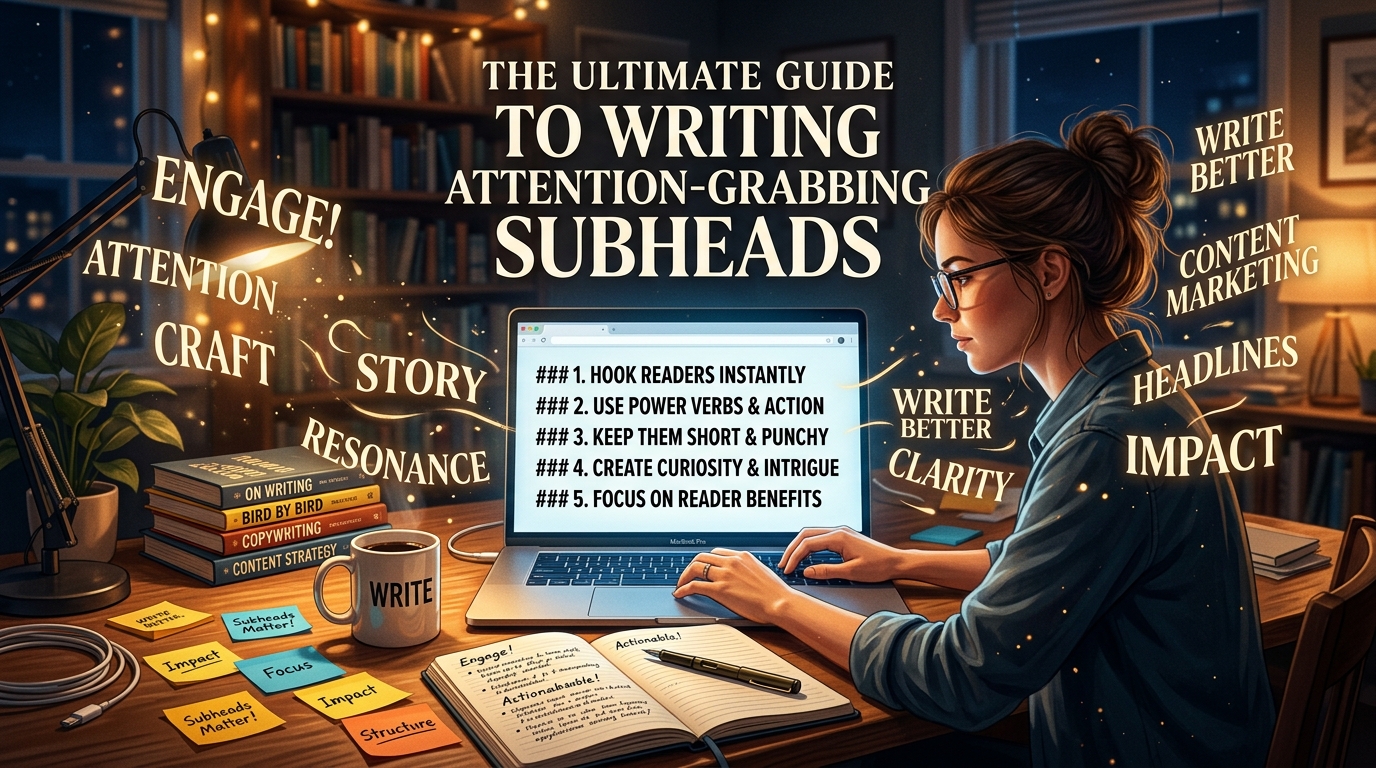
In today’s digital world, readers move quickly. They scroll through articles while multitasking, skim through content on mobile devices, and often decide within seconds whether a page is worth their time. This shift in reading behavior has changed the way content must be written. Strong introductions matter, compelling headlines matter, but one of the most underestimated elements of modern writing is the subhead.
Subheads are the invisible structure holding a piece of content together. They guide readers from one section to another, create rhythm inside an article, and help break large ideas into digestible parts. More importantly, they determine whether readers continue reading or abandon the page entirely. Even the most insightful article can fail if the subheads feel dull, confusing, or repetitive.
Modern content writing is no longer just about delivering information. It is about presentation, flow, readability, and engagement. Readers expect articles to feel effortless to navigate. Search engines also reward content that is organized clearly and structured logically. This is where attention-grabbing subheads become essential. They improve readability, support SEO performance, increase time spent on the page, and create a smoother reading experience overall.
Writers often spend hours crafting headlines but treat subheads as an afterthought. In reality, subheads function like mini headlines throughout the article. Every subhead has a job to do. It must keep momentum alive while encouraging the reader to continue to the next section. Great subheads create curiosity, establish clarity, and maintain emotional energy across the article.
This guide explores how to write powerful subheads that capture attention naturally. It explains the psychology behind why subheads work, the techniques professional writers use to strengthen them, common mistakes to avoid, and how subheads influence both user experience and SEO. Whether you write blogs, articles, web copy, newsletters, or long-form content, mastering subheads can dramatically improve the impact of your writing.
Why Subheads Matter More Than Ever
The internet has changed reading habits permanently. Most online readers do not consume articles word for word. Instead, they scan for important sections before committing their attention. This behavior means structure is no longer optional. It is a critical part of communication.
Subheads act as visual checkpoints throughout an article. They reassure readers that the information is organized and easy to follow. Without subheads, even valuable content can appear intimidating. Large blocks of uninterrupted text create fatigue and increase bounce rates because readers assume the article will require too much effort.
Good subheads improve readability by creating pauses in the reading experience. They divide ideas into sections while helping readers understand what each part of the article will cover. This makes content feel more accessible, especially on mobile screens where readability is even more important.
Subheads also help writers maintain direction. During long-form writing, it is easy for articles to become repetitive or unfocused. Clear subheads create a roadmap that keeps the content aligned with the central topic. They force writers to organize ideas logically rather than simply filling space.
Search engines also benefit from strong subhead structures. Google analyzes headings to understand page hierarchy and topic relevance. Articles with descriptive, organized subheads often perform better because search engines can interpret their content more efficiently. Strategic subheads improve SEO without making writing sound robotic or overly optimized.
Most importantly, subheads influence emotional engagement. Readers subconsciously look for signs that an article will reward their attention. Dynamic subheads create anticipation. They encourage curiosity while sustaining momentum from section to section.
The Psychology Behind Attention-Grabbing Subheads
Human attention is naturally selective. Readers constantly evaluate whether information deserves their focus. Subheads work because they reduce uncertainty. Instead of forcing readers to navigate blindly, they provide quick previews of what comes next.
Psychologically, people are drawn to clarity and curiosity at the same time. A strong subhead balances both. It reveals enough information to establish relevance while leaving enough intrigue to encourage continued reading.
For example, a vague subhead like “Writing Techniques” lacks emotional pull. It does not communicate urgency, value, or specificity. In contrast, a subhead like “Why Most Writers Lose Readers After the First Paragraph” creates emotional tension. It introduces a problem readers want solved.
Attention-grabbing subheads often trigger one of several psychological responses. They may spark curiosity, highlight a challenge, promise improvement, or create emotional resonance. Readers continue reading because they expect the next section to satisfy that emotional trigger.
Another psychological factor involves cognitive ease. Readers prefer information that feels organized and effortless to consume. Strong subheads reduce mental strain because they help readers predict the structure of the article. This predictability creates comfort, which increases engagement.
Digital readers also seek immediate value. Subheads that communicate practical benefits tend to perform better because they answer the silent question every reader asks: “What will I gain from reading this section?”
The Difference Between Weak and Strong Subheads
Weak subheads often fail because they are generic, overly broad, or emotionally flat. They summarize sections mechanically without adding energy or direction.
A weak subhead might simply label a topic without giving readers a reason to care. These types of headings feel functional but forgettable. They guide structure without enhancing engagement.
Strong subheads do more than organize content. They create movement. They sound intentional, conversational, and emotionally aware. Instead of merely describing a section, they frame it in a compelling way.
Consider the difference between these examples:
“Using Keywords in Content”
Compared to:
“How Smart Keyword Placement Improves Visibility Without Sounding Forced”
The second version immediately feels more engaging because it combines clarity with value. It explains why the information matters instead of simply naming the topic.
Strong subheads also sound natural. They avoid awkward keyword stuffing or robotic phrasing. Readers should never feel like the heading exists only for SEO purposes. The best subheads balance optimization with authentic communication.
How Subheads Shape the Reader Experience
Every article creates a reading journey. Subheads influence the pace, tone, and emotional flow of that journey.
When subheads are repetitive, the article feels monotonous. When they are confusing, readers lose direction. But when subheads are varied and purposeful, they create rhythm. They make long-form content feel lighter and easier to absorb.
Good subheads create transitions between ideas. They help readers move naturally from one concept to another without feeling abrupt or disconnected. This improves comprehension because readers understand how sections relate to the overall argument.
Subheads also allow readers to skim strategically. Many visitors scan articles before deciding whether to read deeply. Strong subheads act like previews that communicate value instantly. If readers see compelling sections, they are more likely to remain on the page.
In many ways, subheads determine whether an article feels modern or outdated. Contemporary digital writing depends heavily on visual structure. Articles without strong subheads often feel dense and inaccessible, even when the content itself is excellent.
The Role of Curiosity in Effective Subheads
Curiosity is one of the most powerful tools in writing. Attention-grabbing subheads often succeed because they create open loops in the reader’s mind.
An open loop occurs when readers encounter incomplete information that they instinctively want resolved. Effective subheads use this principle carefully without becoming manipulative or misleading.
For instance, a subhead like “The Simple Mistake That Makes Most Articles Feel Forgettable” encourages readers to continue because they want to identify the mistake.
Curiosity-driven subheads work best when paired with genuine value. If the content fails to satisfy the curiosity created by the heading, readers lose trust quickly. This is why clickbait-style subheads often damage credibility over time.
The goal is not to trick readers into continuing. The goal is to create anticipation while delivering meaningful insights. Sustainable engagement comes from trust, not exaggeration.
Writing Subheads That Improve SEO Naturally
Search engine optimization has changed significantly over the years. Modern SEO prioritizes user experience and content quality more than mechanical keyword repetition.
Subheads play a major role in helping search engines understand article structure. Clear headings signal topic relevance while organizing content logically. This improves crawlability and semantic understanding.
However, effective SEO subheads should still sound human. Overloading headings with repetitive keywords creates awkward phrasing that harms readability. Search engines increasingly recognize unnatural optimization patterns.
Instead of forcing exact-match keywords repeatedly, writers should focus on topic relevance and conversational phrasing. Natural variations often perform better because they align with how real people search and read.
For example, rather than repeating the exact phrase “best content writing tips” multiple times, writers can use related subheads such as:
“Why Readers Connect With Conversational Writing”
“How Structure Improves Content Performance”
“Creating Articles That Feel Easy to Read”
These variations support SEO while maintaining a natural tone.
The relationship between SEO and subheads ultimately comes down to clarity. Search engines reward organized, informative content because readers prefer it.
Common Mistakes Writers Make With Subheads
One of the most common mistakes is writing subheads that are too vague. Generic headings fail to create engagement because they provide little emotional or informational value.
Another issue is inconsistency. Some writers use dramatic, curiosity-driven subheads in one section and bland descriptive headings in another. This creates tonal imbalance across the article.
Overly long subheads can also become problematic. While descriptive headings are useful, excessive length reduces impact and readability. Readers should understand the main idea quickly.
Keyword stuffing remains another major problem. Writers sometimes sacrifice clarity to insert SEO phrases unnaturally. This weakens both user experience and credibility.
Some articles also suffer from repetitive structure. If every subhead follows the exact same pattern, the article begins to feel mechanical. Variation creates energy and keeps readers engaged.
Finally, many writers underestimate emotional language. Facts alone rarely sustain attention. Readers respond more strongly to headings that imply transformation, solutions, or insight.
How Professional Writers Approach Subheads
Experienced writers rarely treat subheads as an afterthought. They often plan article structure before drafting the content itself.
Many professionals write tentative subheads first to establish flow. These headings act as anchors guiding the direction of each section. Once the article is complete, the subheads are refined for tone, clarity, and engagement.
Professional writers also think about pacing. They understand that long-form articles need momentum shifts to prevent fatigue. Strong subheads re-energize readers periodically throughout the piece.
Another strategy involves using conversational phrasing. Instead of sounding formal or academic, modern subheads often mimic natural speech patterns. This creates a more approachable reading experience.
Professionals also pay close attention to rhythm and variation. Some subheads may be short and punchy, while others are more descriptive. This variation creates a smoother emotional cadence throughout the article.
Different Types of Subheads and When to Use Them
Different articles require different subheading styles. Informative articles often benefit from descriptive subheads that communicate clarity immediately. Opinion pieces may use provocative or emotionally driven headings to strengthen engagement.
Question-based subheads work well because they mirror reader curiosity. They create direct interaction with the audience while encouraging continued reading.
Narrative-style subheads are increasingly popular in modern blogging. Instead of sounding instructional, they create storytelling momentum. These subheads make articles feel more immersive and less formulaic.
Problem-solution subheads also perform effectively because they address reader pain points directly. They establish relevance immediately while promising practical value.
The best approach often combines multiple styles naturally throughout the article rather than relying on a single pattern repeatedly.
Characteristics of Weak vs Strong Subheads
| Weak Subheads | Strong Subheads |
| Generic and vague | Specific and engaging |
| Focus only on structure | Focus on reader interest |
| Overloaded with keywords | Naturally optimized |
| Emotionally flat | Emotionally compelling |
| Repetitive phrasing | Varied and dynamic |
| Difficult to skim | Easy to scan quickly |
| Sounds robotic | Sounds conversational |
| Provides little direction | Guides reader smoothly |
Why Mobile Reading Changed Subhead Writing
The rise of smartphones transformed digital writing completely. Readers now consume content on smaller screens where visual clarity matters more than ever.
Long paragraphs without clear headings feel overwhelming on mobile devices. Subheads create breathing room that improves readability significantly.
Mobile readers also skim faster. They expect articles to communicate value instantly. Strong subheads allow readers to navigate content efficiently while deciding which sections deserve deeper attention.
This shift has encouraged a more conversational and visually structured writing style across blogs, media publications, and brand content.
Modern subheads must work not only for desktop readers but also for audiences scrolling rapidly through content feeds on mobile devices.
Creating Emotional Momentum Through Structure
Attention-grabbing subheads do more than organize information. They shape emotional momentum throughout an article.
Great articles feel progressive. Each section builds naturally toward deeper insight or stronger emotional payoff. Subheads act as signposts guiding readers through that progression.
Writers who understand emotional pacing know when to introduce tension, curiosity, reassurance, or inspiration. These shifts keep content dynamic rather than emotionally flat.
For example, an article may begin with problem-focused subheads highlighting reader frustrations. Later sections may transition into hopeful or solution-driven language. This emotional evolution keeps readers invested.
Structure itself becomes part of storytelling.
How to Develop Your Own Subheading Style
Every strong writer eventually develops a recognizable approach to subheads. Some prefer concise, punchy headings. Others use more narrative or emotionally layered phrasing.
Developing style requires experimentation. Writers improve by studying articles that hold their attention and analyzing why certain headings feel compelling.
Reading modern journalism, high-performing blogs, and premium magazine content can reveal patterns in effective subheading structure. Over time, writers begin understanding how tone, rhythm, and phrasing influence engagement.
Consistency matters, but flexibility matters too. Different topics require different energy levels. A marketing article may benefit from bold, energetic subheads, while a reflective essay may require quieter, more thoughtful transitions.
The goal is not imitation but awareness. Strong subhead writing comes from understanding reader psychology while maintaining an authentic voice.
The Future of Subheads in Digital Content
As online competition continues increasing, content structure will become even more important. Readers are overwhelmed with information daily, which means clarity and engagement will determine which articles succeed.
Artificial intelligence and algorithm-driven search are also changing content discovery. Structured writing helps both human readers and search systems understand information more effectively.
Voice search, AI summaries, and mobile-first indexing all favor content that is organized clearly. Subheads help create semantic structure that improves discoverability across platforms.
At the same time, audiences continue craving authentic, human-toned writing. This means subheads must balance optimization with personality. Formulaic headings may attract initial clicks, but engaging writing sustains long-term trust.
The future belongs to writers who understand both structure and storytelling.
Conclusion
Attention-grabbing subheads are no longer optional in modern writing. They shape readability, influence engagement, improve SEO performance, and guide readers through the emotional flow of an article. In many cases, subheads determine whether readers stay on the page long enough to experience the value of the content itself.
Strong subheads combine clarity, curiosity, rhythm, and relevance. They transform articles from dense walls of text into structured reading experiences that feel inviting and easy to navigate. More importantly, they respect how modern audiences consume information in fast-paced digital environments.
Writers who master subheads gain a powerful advantage. They create articles that feel polished, professional, and emotionally engaging from beginning to end. Whether writing blogs, website content, newsletters, or long-form editorial pieces, understanding how to craft compelling subheads can elevate every aspect of communication.
In the end, great subheads do not simply organize information. They keep readers moving forward.
