
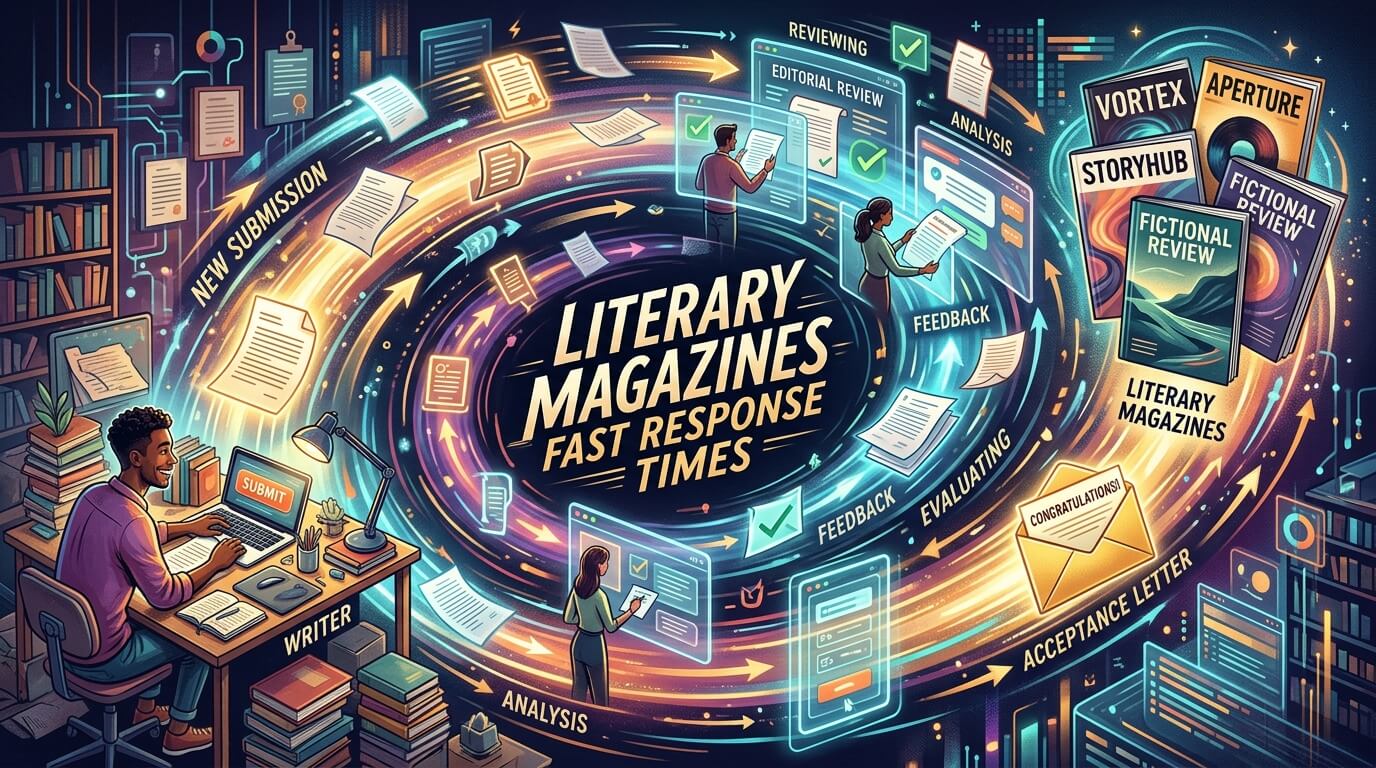
For writers submitting poetry, fiction, essays, and creative nonfiction, waiting for a response from a literary magazine can often feel like one of the most challenging parts of the publishing process. After spending weeks or even months polishing a piece, authors send their work into the world and enter a period of uncertainty. Some magazines respond within days or weeks, while others may take six months, a year, or even longer. This difference in turnaround time has made “fast response times” an increasingly important topic within the literary publishing community.
Literary magazines play a crucial role in contemporary literature. They provide a platform for emerging voices, introduce readers to innovative writing, and often serve as stepping stones for authors pursuing book publication. Yet beyond editorial quality and prestige, many writers now pay close attention to how quickly a publication communicates with contributors. Fast response times are not merely a convenience; they influence submission strategies, publication opportunities, and overall writer morale.
The growth of online submissions has transformed expectations regarding editorial efficiency. In previous decades, writers commonly mailed manuscripts and waited months for a reply. Today’s digital submission systems have accelerated communication, leading many writers to expect faster decisions. As a result, response times have become a significant factor when authors choose where to submit their work.
The Evolution of Response Expectations in Literary Publishing
The literary magazine landscape has changed dramatically over the past two decades. Traditional print magazines once operated under lengthy editorial schedules that naturally resulted in slow responses. Editors often worked with limited resources, handling physical manuscripts and correspondence through postal mail.
The emergence of online literary journals introduced new possibilities. Digital platforms reduced administrative burdens and enabled editors to manage submissions more efficiently. Automated submission systems made it easier to track manuscripts, communicate with writers, and organize editorial workflows.
As technology improved, many magazines began shortening their response windows. Some online journals developed reputations for replying within a few weeks, while others maintained longer timelines due to high submission volumes or volunteer-based editorial structures. The contrast between these approaches created a new awareness among writers regarding editorial responsiveness.
Today, response time data is often publicly shared within writing communities. Submission tracking platforms allow writers to compare experiences and estimate how long a magazine may take to respond. This transparency has increased accountability and encouraged some publications to prioritize faster communication.
Why Fast Response Times Matter to Writers
The significance of fast response times extends beyond simple convenience. For many writers, timely responses directly affect their ability to manage submissions and pursue publication opportunities effectively.
When a magazine responds quickly, writers gain clarity about the status of their work. A rejection allows them to immediately submit elsewhere, while an acceptance enables them to plan future projects and publications. This momentum can be especially valuable for emerging authors building their publication records.
Long waiting periods often create logistical challenges. Many literary magazines restrict simultaneous submissions or have specific policies regarding previously accepted work. Delayed decisions can leave writers uncertain about whether to continue submitting a piece or wait for a pending response.
Fast responses also contribute to emotional well-being. Creative work involves vulnerability, and extended silence can become discouraging. Writers frequently describe the submission process as emotionally taxing, particularly when they have multiple pieces under consideration for extended periods.
A prompt response demonstrates respect for contributors’ time and effort. Even when the decision is a rejection, timely communication often leaves a positive impression of the publication. Many writers appreciate transparency and responsiveness as much as publication prestige.
The Relationship Between Editorial Efficiency and Magazine Reputation
Response times increasingly influence how literary magazines are perceived within the writing community. While literary quality remains the primary factor in a magazine’s reputation, operational efficiency has become an important secondary consideration.
Publications known for fast responses often attract a large number of submissions. Writers appreciate clear timelines and predictable communication. A magazine that consistently responds within a few weeks can develop a reputation for professionalism and organization.
This does not necessarily mean that slower magazines lack quality. Some highly respected literary journals receive thousands of submissions and maintain rigorous editorial processes that require additional time. However, magazines that communicate openly about expected wait times often maintain stronger relationships with contributors.
Transparency plays a crucial role in shaping perceptions. Writers generally understand that editorial review takes time. Frustration tends to arise when magazines provide little information about timelines or significantly exceed their stated response periods without updates.
As competition among literary magazines increases, efficient communication can become a distinguishing characteristic. Publications that balance editorial rigor with timely responses often gain goodwill among writers and strengthen their standing within literary communities.
Average Response Times Across Literary Magazines
Response times vary widely depending on the publication’s size, editorial structure, genre focus, and submission volume. While no universal standard exists, certain patterns have emerged across the industry.
| Response Time Range | Typical Magazine Characteristics | Writer Experience |
| 1–14 Days | Small online journals, flash fiction venues, niche publications | Very fast decisions and quick resubmission opportunities |
| 2–6 Weeks | Efficient digital magazines with streamlined editorial processes | Generally considered an ideal response window |
| 2–4 Months | Mid-sized literary magazines with moderate submission volume | Common and widely accepted timeframe |
| 4–8 Months | Established journals with high prestige and large submission pools | Requires patience but often associated with strong reputations |
| 8+ Months | Highly selective publications or magazines with limited staff resources | Can create uncertainty and submission management challenges |
These ranges should be viewed as general observations rather than fixed rules. Individual magazines may experience fluctuations depending on seasonal submission periods, editorial transitions, or special issues.
How Technology Has Accelerated Literary Publishing
Technology has fundamentally reshaped the submission and editorial review process. Modern submission management platforms allow editors to organize manuscripts, assign readers, and communicate with contributors far more efficiently than traditional paper-based systems.
Digital tools have reduced many administrative obstacles that once contributed to long delays. Editors can now review submissions remotely, collaborate with readers in different locations, and send decisions instantly.
Automated systems also benefit writers by providing submission confirmations and status updates. Rather than wondering whether a manuscript arrived safely, contributors can monitor progress through online dashboards.
The increased efficiency of digital workflows has raised expectations across the literary community. Writers often question lengthy response times when technology makes communication easier than ever before. At the same time, editors note that digital accessibility has dramatically increased submission volumes, creating new challenges despite technological advantages.
The result is a complex balance between efficiency and workload. Technology enables faster communication, but it has also encouraged more submissions, which can offset some of those gains.
The Editorial Perspective on Response Times
Understanding response times requires considering the realities faced by literary magazine editors. Many publications operate with small staffs and limited budgets. In some cases, editors and readers volunteer their time while managing full-time jobs or academic responsibilities.
Each submission typically undergoes multiple stages of review. Initial readers evaluate manuscripts, recommend selections, and pass promising work to senior editors. Final decisions often involve discussions among editorial teams.
High-quality literary magazines frequently prioritize thoughtful evaluation over speed. Editors may spend considerable time reviewing submissions to ensure that strong work receives careful consideration.
Seasonal submission periods can also affect turnaround times. Many magazines receive large numbers of manuscripts immediately before reading periods close. This surge can create temporary backlogs that extend response windows.
While writers understandably prefer quick decisions, many editors view careful review as essential to maintaining editorial standards. The challenge lies in balancing thoroughness with timely communication.
Fast Response Times and Simultaneous Submissions
The practice of simultaneous submissions has become increasingly common in literary publishing. Writers often send the same piece to multiple magazines, provided those publications permit the practice.
Fast response times significantly influence this dynamic. When magazines reply quickly, writers can manage their submissions more effectively and reduce administrative complexity. A prompt acceptance allows authors to withdraw work from other venues immediately.
Slow responses can create complications. A writer may receive an acceptance from one magazine while still waiting to hear from several others. Managing withdrawals and tracking submission statuses becomes more challenging as timelines lengthen.
Many writers strategically include fast-response publications in their submission plans. Even if these magazines are not their highest-priority destinations, quick decisions provide useful information and help maintain momentum.
As simultaneous submissions become more widespread, response times increasingly affect how writers allocate their efforts across different publications.
The Psychological Impact of Waiting
The emotional dimension of response times is often overlooked in discussions about literary publishing. Waiting can be a surprisingly significant aspect of a writer’s experience.
Creative work is deeply personal. Once a manuscript is submitted, the writer loses control over its fate and enters a period of uncertainty. During this time, questions naturally arise about quality, suitability, and future prospects.
Long waits can amplify anxiety. Writers may repeatedly check submission portals, speculate about editorial discussions, or wonder whether their work has been overlooked. Even experienced authors are not immune to these concerns.
Fast responses help reduce this uncertainty. A rejection may be disappointing, but it provides closure and allows the writer to move forward. Acceptance, of course, offers encouragement and validation.
Research on decision-making and uncertainty consistently shows that prolonged ambiguity can increase stress. In the literary world, response times directly influence how long writers remain in that state of uncertainty.
Why Some Prestigious Magazines Respond Slowly
Prestige and response speed do not always align. Some of the most respected literary magazines are also known for lengthy response times.
Several factors contribute to this phenomenon. Prestigious publications often receive thousands of submissions during open reading periods. Managing such volume requires extensive editorial resources and multiple rounds of evaluation.
Highly selective magazines may also conduct detailed discussions about shortlisted pieces. Editors seek work that aligns with the publication’s vision, complements upcoming issues, and maintains established standards.
The complexity of these decisions naturally extends review periods. While writers may prefer faster responses, many accept longer waits when submitting to highly regarded journals because of the potential benefits associated with publication.
This dynamic creates a trade-off between speed and prestige. Writers frequently balance these considerations when developing submission strategies.
Strategies Writers Use to Navigate Response Times
Experienced writers often approach response times strategically rather than passively. They research magazines before submitting and consider turnaround periods alongside editorial preferences and publication goals.
Some authors maintain a mix of submissions across publications with different response expectations. Fast-response journals provide momentum, while slower prestigious venues offer opportunities for broader recognition.
Tracking submissions has become an essential practice. Many writers use spreadsheets or dedicated platforms to monitor timelines and identify patterns among magazines. Understanding historical response data helps set realistic expectations. Rather than becoming frustrated by delays, informed writers can anticipate likely waiting periods and plan accordingly. This strategic approach transforms response times from a source of frustration into one factor within a broader publishing plan.
The Future of Response Times in Literary Magazines
The future of literary magazine response times will likely be shaped by technological innovation, changing writer expectations, and evolving editorial practices.
Artificial intelligence tools may eventually assist with administrative tasks such as sorting submissions and managing workflows. While editorial judgment will remain essential, automation could reduce some operational burdens.
Writers are also becoming more selective about where they submit. Publications with transparent communication and efficient processes may gain competitive advantages in attracting strong work.
At the same time, literary magazines must balance efficiency with thoughtful evaluation. Speed alone cannot replace careful editorial consideration. The challenge will be maintaining literary quality while meeting growing expectations for responsiveness.
Many industry observers expect transparency to become increasingly important. Clear communication regarding timelines may matter as much as the actual speed of responses.
Conclusion
Fast response times have become an important topic within contemporary literary publishing because they affect nearly every aspect of the writer experience. From submission management and publication opportunities to emotional well-being and professional development, timely communication carries significant value.
The rise of digital publishing has transformed expectations and created new standards for responsiveness. Writers increasingly appreciate magazines that provide efficient communication and realistic timelines. At the same time, editors continue to balance the demands of speed with the responsibility of thoughtful literary evaluation.
While response times vary widely across the literary landscape, their importance is unlikely to diminish. As literary magazines evolve alongside technological advancements and changing contributor expectations, responsiveness will remain a key measure of editorial professionalism.
For writers navigating the submission process, understanding response times is more than a matter of convenience. It is an essential part of developing an effective publishing strategy and building productive relationships with literary magazines. In a field where patience has always been necessary, the value of timely communication has never been more apparent.
FAQs: Literary Journals with Fast Response Times
Q1. What is considered a fast response time for literary journals?
A fast response time is usually anything from a few days up to six weeks. Some flash fiction and poetry journals respond within 48 hours to two weeks, while anything under two months is still considered relatively fast compared to traditional journals that may take several months.
Q2. Do fast response journals mean lower quality or less prestige?
No. Fast response time does not automatically mean lower quality. Many respected literary journals use efficient digital systems and focus on shorter forms like flash fiction or poetry, which allows them to respond quickly while still maintaining high editorial standards.
Q3. Which genres usually get the fastest responses from journals?
Flash fiction, micro-fiction, and poetry tend to receive the fastest responses because they are shorter and quicker for editors to review. Longer fiction, essays, and hybrid manuscripts typically take more time to evaluate.
Q4. Can I submit to multiple fast-response journals at the same time?
Yes, many journals allow simultaneous submissions, especially in poetry and flash fiction. However, you should always check each journal’s guidelines carefully. If a piece gets accepted elsewhere, you are expected to withdraw it immediately from other submissions.
Q5. Why do some literary journals respond faster than others?
Response speed depends on factors like submission volume, editorial team size, and publishing format. Journals with rolling submissions and digital workflows tend to respond faster than print-based or seasonal journals that review submissions in batches.
