
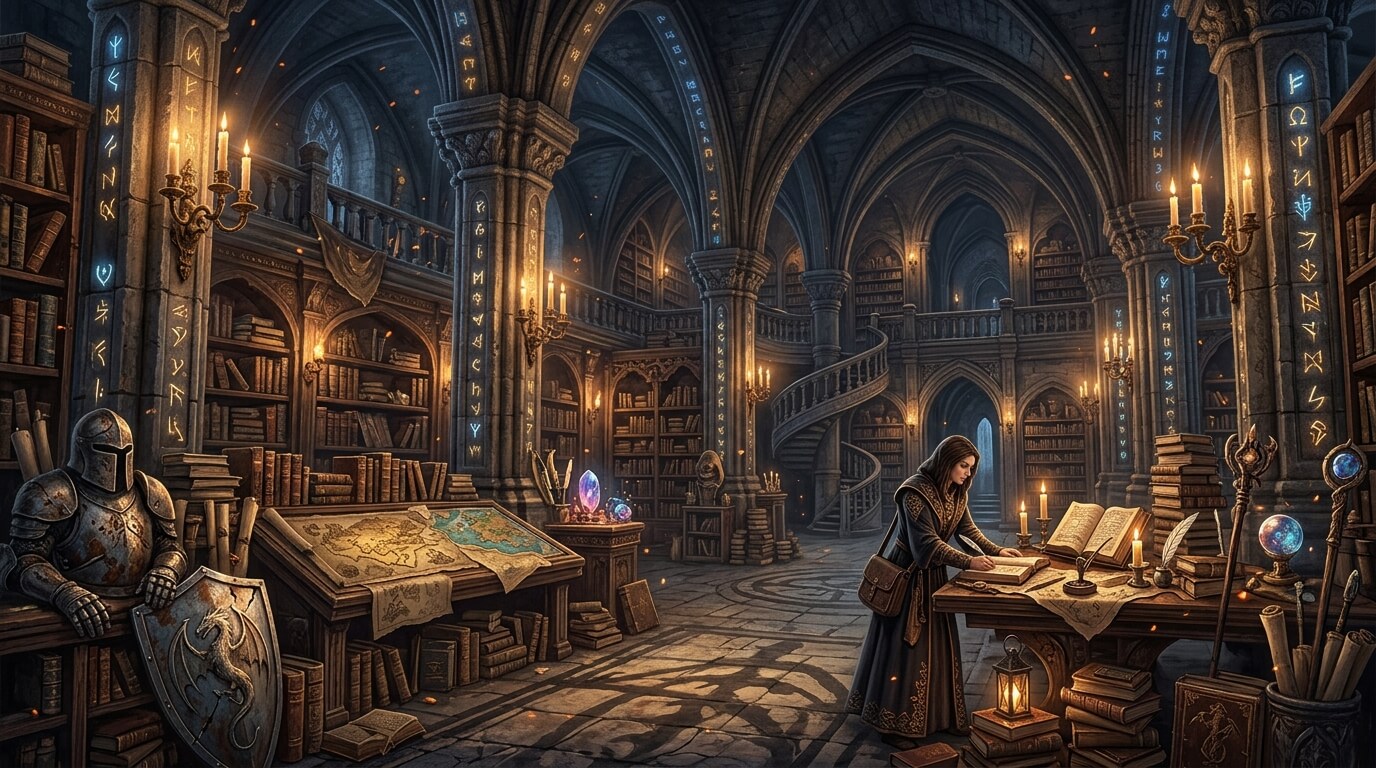
Fantasy literature has evolved far beyond the traditional tales of heroic knights, noble kingdoms, and clear battles between good and evil. Modern audiences often crave stories that challenge them intellectually as well as emotionally. They want worlds that feel ancient, layered, and mysterious rather than neatly explained. Few works have demonstrated this style of storytelling better than Dark Souls. While many recognize it as an action role-playing game, writers and literary enthusiasts frequently study it because of its unconventional narrative structure. Instead of presenting history in chronological order or explaining every event through dialogue, it asks its audience to observe, interpret, and assemble the truth piece by piece.
Writing a story like Dark Souls is not about copying its monsters, castles, or medieval aesthetics. It is about understanding the philosophy behind its storytelling. Every ruined kingdom, forgotten warrior, broken monument, and cryptic conversation exists for a reason. The narrative respects the audience’s intelligence by allowing them to become explorers rather than passive readers. Instead of feeding information directly, it encourages discovery through atmosphere, symbolism, fragmented history, and emotional subtlety.
This style of storytelling may seem challenging at first because it requires careful planning beneath the surface. Every scene must carry hidden meaning, every location should reflect forgotten history, and every character should feel like they have lived an entire life before the story begins. The reward, however, is immense. Stories inspired by this narrative philosophy often remain in readers’ minds long after they finish the final chapter because they continue thinking about unanswered questions, hidden clues, and deeper interpretations. If your goal is to write fantasy that feels timeless, haunting, and intellectually engaging, understanding what makes Dark Souls unique is an excellent place to begin.
Understanding the Philosophy Behind Dark Souls Storytelling
Most novels are designed to ensure readers always know what is happening. They introduce the protagonist, explain the world’s history, establish the rules of magic, and clearly define the conflict before the journey truly begins. This approach creates clarity, but it also leaves little room for discovery. Dark Souls follows a completely different philosophy. Rather than revealing everything immediately, it presents a world that already feels ancient and lived in. The audience enters the story long after history’s greatest events have already occurred.
This narrative design creates an unusual relationship between the storyteller and the audience. Instead of simply following a plot, readers become investigators searching for forgotten truths. Every discovery feels rewarding because it is earned rather than delivered. The audience slowly connects scattered pieces of information until a much larger picture begins to emerge. This active participation creates stronger emotional investment because readers are not just witnessing the story—they are helping uncover it.
For writers, this philosophy changes the entire creative process. Instead of asking what information should be explained first, begin asking what information should remain hidden. Every mystery should have an answer somewhere within your world, even if readers never discover every detail. Hidden knowledge gives your fictional universe depth because it suggests that life continues beyond the pages of your novel.
Why Mystery Is More Powerful Than Constant Explanation
Modern storytelling often suffers from excessive exposition. Writers sometimes feel obligated to explain every magical system, every historical event, every political conflict, and every character motivation. While clarity is important, too much explanation removes the reader’s opportunity to wonder. Mystery creates emotional momentum because curiosity naturally drives people forward.
One reason Dark Souls continues generating discussion years after its release is that its mysteries remain meaningful. Fans continue debating ancient kingdoms, forgotten rulers, and symbolic events because the story leaves enough evidence to support multiple interpretations without providing complete certainty. This uncertainty transforms storytelling into an ongoing conversation rather than a finished lecture.
When writing your own novel, resist the temptation to answer every question immediately. If readers encounter a giant stone monument covered in unfamiliar symbols, they do not need an immediate translation. Instead, allow that mystery to remain in their minds. Perhaps later they encounter another monument displaying similar carvings. Much later, an elderly scholar vaguely recognizes the language but cannot fully interpret it. Each new discovery rewards patient readers while preserving the atmosphere of uncertainty.
Mystery becomes frustrating only when it exists without purpose. Every unanswered question should eventually connect to your world’s deeper themes, even if the complete answer remains hidden. Readers should feel that there is always another layer waiting beneath the surface.
Building a World That Feels Older Than the Story
One of the greatest strengths of Dark Souls lies in its extraordinary sense of age. The player never feels like the world’s first hero. Instead, they enter a civilization carrying thousands of years of victories, failures, betrayals, and forgotten legends. This immense historical weight gives every location emotional significance.
Many fantasy writers unintentionally create worlds that begin when their protagonist appears. Cities exist only because the hero needs somewhere to visit. Ancient ruins exist merely to provide adventure. In contrast, a world inspired by Dark Souls feels completely independent of its main character. The protagonist is simply another individual moving through history rather than controlling it.
Creating this illusion requires writing far more history than readers will ever directly see. Before beginning your novel, consider what existed centuries before the opening chapter. Which civilizations rose to greatness? What wars reshaped continents? Which rulers were celebrated before eventually being forgotten? Which religions disappeared after catastrophic events? Although much of this history may never appear directly in your novel, it influences every building, tradition, artifact, and belief that readers encounter.
This historical depth also affects the emotional atmosphere. A kingdom standing proudly at the height of its power creates a very different feeling from one slowly collapsing beneath the weight of forgotten mistakes. Dark Souls consistently chooses the latter because decline naturally creates questions. Readers become fascinated by discovering what caused such magnificent civilizations to fall.
Environmental Storytelling: Let the World Speak First
Perhaps the most recognizable storytelling technique used in Dark Souls is environmental storytelling. Instead of relying primarily on narration or dialogue, the physical world becomes the storyteller. Every location communicates information through architecture, destruction, weather, objects, and visual symbolism.
Imagine entering an enormous cathedral where every stained-glass window remains perfectly intact except one. Beneath the broken window lies a shattered statue of a crowned figure whose face has been deliberately removed. No character needs to explain what happened there. Readers immediately begin forming theories. Was this ruler betrayed? Was their legacy erased? Did a revolution destroy symbols of the old kingdom? These unanswered questions naturally encourage deeper engagement with the narrative.
Environmental storytelling also creates realism because real places contain visible evidence of history. Ancient castles bear scars from forgotten wars. Old forests preserve abandoned roads leading to vanished settlements. Deserted villages contain everyday objects left behind by people who once lived ordinary lives. When writers include these subtle details, readers begin believing the fictional world existed long before they arrived.
Rather than describing settings only through appearance, ask what each location reveals about its past. A bridge partially rebuilt several times suggests repeated conflict. A library with thousands of untouched books but no surviving scholars hints at cultural collapse. A battlefield where flowers now grow among broken weapons suggests that nature has quietly reclaimed the consequences of human ambition. These visual stories enrich the world without requiring lengthy exposition.
Continue Building History Through Forgotten Civilizations
One reason Dark Souls feels so vast is because its world contains multiple civilizations layered on top of one another. Ancient kingdoms disappear, only to be replaced by newer societies that misunderstand the past. Over centuries, myths replace facts, legends replace history, and truth becomes increasingly difficult to separate from fiction.
This concept can dramatically strengthen your own storytelling. Instead of creating one dominant kingdom, imagine several civilizations that existed across different eras. Each one leaves behind unique architecture, beliefs, technologies, and cultural traditions. As later generations inherit these remnants, they interpret them differently, sometimes preserving history and sometimes completely distorting it.
For example, an ancient empire may have built enormous stone guardians to protect sacred knowledge. Hundreds of years later, surviving villagers might worship those same statues as gods without understanding their original purpose. Another kingdom may discover fragments of old manuscripts and mistakenly believe they describe mythical creatures rather than real historical events. These misunderstandings create layers of narrative complexity because history itself becomes unreliable.
Readers enjoy uncovering these forgotten civilizations because each discovery changes how they understand the present world. Instead of learning history through textbook-like explanations, they gradually recognize that today’s conflicts often began centuries earlier. Every ruin, artifact, and surviving legend becomes another piece of a much larger puzzle, encouraging readers to remain curious throughout the novel.
Designing Characters Who Feel Like Survivors Instead of Heroes
One of the most distinctive qualities of Dark Souls is the type of characters that inhabit its world. Traditional fantasy often celebrates heroes destined to change history, overthrow tyrants, or save kingdoms. The people in Dark Souls, however, rarely see themselves as heroes. They are exhausted wanderers, forgotten knights, broken rulers, cursed scholars, and lonely guardians who continue living despite believing that their greatest days are already behind them. Their stories are not defined by glory but by endurance.
When writing your own story, consider giving every important character a past that feels larger than their present. Instead of introducing a knight simply as an experienced warrior, imagine that he once commanded an army capable of changing the fate of nations. Today he quietly protects an abandoned bridge that no one crosses anymore because he refuses to abandon the final order given by a king who died centuries ago. His present actions become meaningful because readers sense the enormous history hidden beneath them. Even without revealing every detail immediately, his existence carries emotional weight.
This approach also creates empathy because readers recognize that every character has experienced victories, failures, regrets, and sacrifices before meeting the protagonist. They become individuals shaped by time rather than tools created solely to advance the plot. Their dialogue, decisions, and emotional responses naturally reflect the burdens they carry. A scholar may hesitate before opening an ancient manuscript because she remembers the catastrophe caused by forbidden knowledge. A queen may refuse to reclaim her throne because she witnessed how power destroyed everyone she loved. These histories influence the present, making characters feel authentic and deeply human.
Let Characters Hide Their Pain
Another lesson writers can learn from Dark Souls is restraint. Characters rarely explain everything they feel. Instead of delivering long emotional speeches, they often reveal themselves through subtle behavior, fragmented conversations, and symbolic actions. Their silence is not emptiness; it reflects years of grief, guilt, or acceptance that words can no longer express.
In fiction, emotional subtlety often creates stronger connections than direct explanation. Imagine an elderly blacksmith who continues forging swords despite living in a peaceful world. He never openly discusses his past, but readers eventually notice hundreds of identical swords hanging untouched inside his workshop. Later they learn those weapons were originally made for soldiers who never returned from a forgotten war. Without dramatic exposition, the workshop itself becomes an expression of grief. Readers understand the blacksmith’s sorrow because they discover it naturally.
Characters become memorable when they communicate through implication rather than constant explanation. Their silence encourages readers to observe details, interpret behavior, and appreciate emotional complexity instead of receiving simple answers.
Creating Lore That Rewards Curious Readers
One of the reasons Dark Souls has inspired countless discussions is its remarkable lore. The world’s history is incredibly detailed, yet very little is presented directly. Instead, readers and players gradually collect fragments until larger historical patterns begin to emerge. This method transforms storytelling into exploration.
When creating lore for your own novel, begin by imagining your world’s complete history before deciding what readers actually need to know. Write about ancient civilizations, religious movements, legendary rulers, forgotten wars, and mythical creatures even if many of these events never appear directly within the story. Hidden knowledge influences the world’s culture, architecture, traditions, and conflicts, allowing readers to sense historical depth without reading lengthy historical summaries.
Rather than presenting history chronologically, allow information to surface naturally through the narrative. A damaged mural inside an abandoned temple might depict a forgotten king surrounded by celestial beings. Hundreds of pages later, readers encounter an old diary describing a ruler who betrayed those same divine figures. Near the novel’s conclusion, the protagonist discovers a ruined battlefield confirming parts of both stories while contradicting others. History slowly reveals itself through overlapping perspectives instead of straightforward explanation.
This fragmented structure also reflects how real history survives. Civilizations lose records. Myths replace facts. Victors rewrite events to serve political goals. Historians disagree. By embracing uncertainty instead of avoiding it, your fictional world becomes far more believable.
Symbolism Should Shape the Entire Narrative
Another defining characteristic of Dark Souls is its sophisticated use of symbolism. Objects, environments, and recurring images rarely exist simply for decoration. Fire represents survival, sacrifice, ambition, and inevitable decline all at once. Darkness does not merely symbolize evil but also uncertainty, transformation, and forgotten truths. Every recurring symbol gains emotional significance because it evolves alongside the story.
As a writer, choose symbols connected to your novel’s central themes rather than selecting imagery randomly. If your story explores memory, perhaps mirrors appear repeatedly throughout the narrative. At first they reflect reality clearly. As the story progresses, older mirrors become cracked, clouded, or completely blackened, reflecting the gradual loss of history. Readers subconsciously connect these visual patterns with the novel’s deeper emotional concerns.
Natural elements can also become powerful symbols. Rivers may represent the passage of forgotten generations. Mountains might symbolize traditions that appear permanent yet slowly erode over centuries. Ash could represent both destruction and rebirth depending on the context. When symbols consistently reinforce your themes, readers begin interpreting the world beyond its literal meaning.
Strong symbolism also rewards rereading. Once readers understand the story’s conclusion, earlier symbolic details often gain entirely new significance. This layered experience encourages deeper appreciation and gives the narrative lasting value.
Writing Themes Instead of Moral Lessons
Many stories conclude by presenting a clear message about courage, friendship, justice, or perseverance. Dark Souls takes a far more philosophical approach. Rather than providing definitive answers, it asks enduring questions. Is preserving tradition always worthwhile? Can endless sacrifice truly save a dying civilization? Does immortality become another form of imprisonment? Should history be repeated simply because it has always existed?
These questions rarely receive absolute answers because every major character interprets them differently. One ruler may believe maintaining ancient customs is the only path toward survival, while another views those same traditions as the source of endless suffering. Both perspectives contain truth, allowing readers to consider each argument carefully before reaching their own conclusions.
When writing your own novel, resist the temptation to force readers toward a predetermined moral. Instead, build situations where multiple viewpoints seem equally understandable. Allow different characters to embody different philosophies without portraying one as completely right or completely wrong. Stories become intellectually engaging when they encourage reflection rather than delivering simple conclusions.
Readers often remember questions longer than answers. A novel that inspires discussion years after publication usually succeeds because it trusts readers to continue thinking beyond the final page.
Traditional Fantasy vs. Dark Souls-Inspired Storytelling
| Story Element | Traditional Fantasy | Dark Souls-Inspired Storytelling |
| Narrative Style | Direct and chronological | Fragmented and interpretive |
| World History | Fully explained | Hidden beneath exploration |
| Main Character | Hero destined to save the world | Survivor caught in an ancient cycle |
| Dialogue | Frequent explanations | Sparse, symbolic conversations |
| Setting | Background for events | Active storyteller |
| Conflict | External battles | Emotional, philosophical, and historical struggles |
| Reader Role | Receives information | Discovers information independently |
Bringing Everything Together
Writing a story like Dark Souls requires more than adopting a dark fantasy setting or filling your world with ruined castles and mysterious monsters. Its true brilliance lies in how every element of the narrative works together to create discovery. The world feels ancient because history exists beyond the protagonist. Characters feel real because they carry invisible emotional scars from lives readers never fully witness. Locations communicate forgotten stories through architecture and atmosphere, while symbolism quietly reinforces themes that continue evolving until the final chapter.
Perhaps the most important lesson writers can learn from Dark Souls is the value of trusting the audience. Modern storytelling often assumes readers require immediate explanations, yet mystery frequently creates stronger emotional engagement than certainty. By allowing readers to connect clues, question unreliable histories, and interpret symbolic details for themselves, you invite them to become active participants in the storytelling experience. That sense of discovery transforms a novel into something readers explore rather than simply consume.
Ultimately, writing in the spirit of Dark Souls means embracing ambiguity without sacrificing meaning. Every unanswered question should suggest that the world extends far beyond the page, while every revealed truth should deepen the mystery instead of eliminating it. When history, atmosphere, character, symbolism, and philosophy work together in harmony, your story gains the timeless quality that has made Dark Souls one of the most influential examples of environmental and narrative storytelling. Rather than guiding readers through every answer, you invite them to wander through a forgotten world, uncover its secrets at their own pace, and leave with interpretations that remain long after the story has ended.
FAQs
Q1. What makes a story feel like Dark Souls?
A Dark Souls-inspired story emphasizes mystery, environmental storytelling, layered lore, and subtle character development rather than direct exposition.
Q2. Do I need a dark fantasy setting to write like Dark Souls?
No. The storytelling style can work in any genre as long as the narrative focuses on hidden history, atmosphere, and reader discovery.
Q3. How much of my world’s lore should I reveal?
Reveal only what serves the story. Let readers uncover the rest through clues, dialogue, locations, and symbolism.
Q4. Why is environmental storytelling important?
It allows settings, objects, and architecture to communicate history and emotion naturally, making the world feel more immersive and believable.
Q5. Can beginners write in the Dark Souls storytelling style?
Yes. Start by creating a rich backstory for your world, trust readers to connect the clues, and avoid explaining every mystery outright.
