
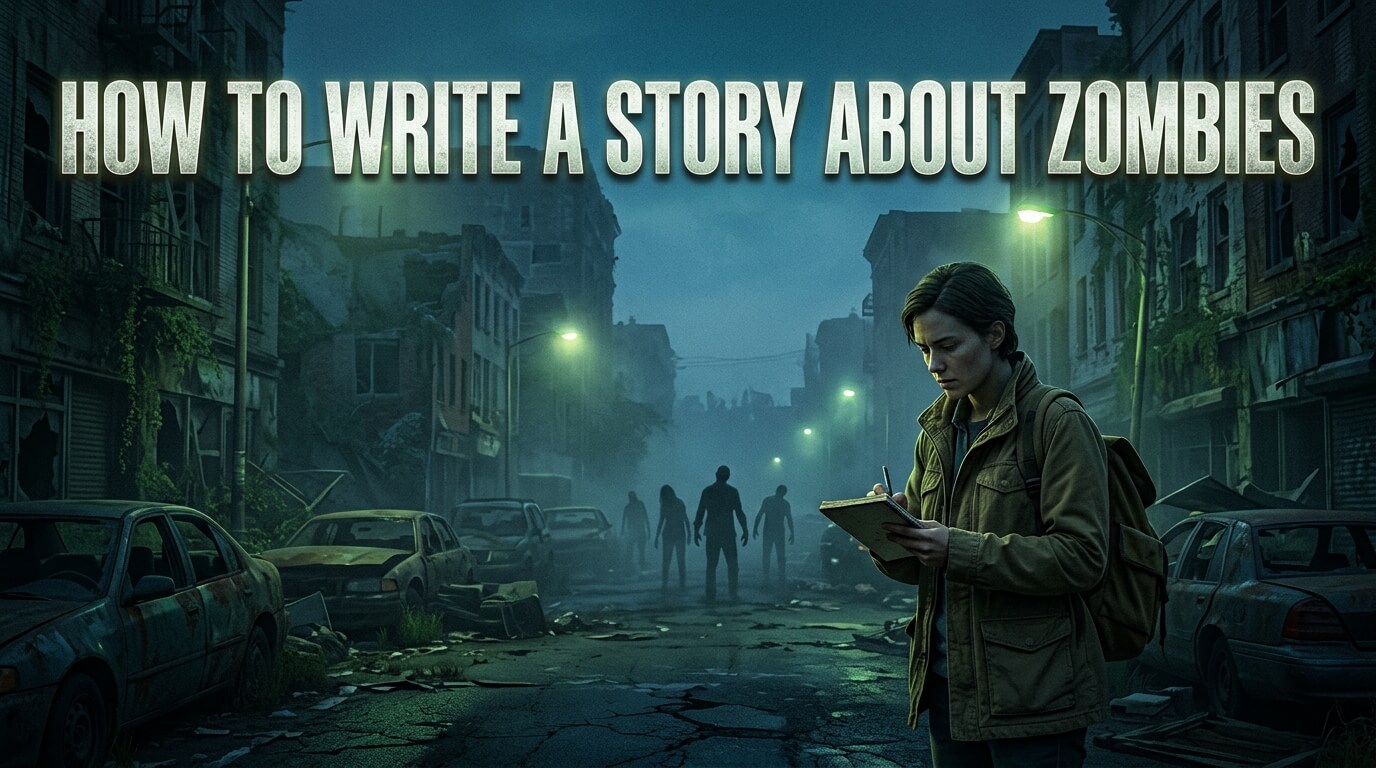
Zombie stories have fascinated readers for decades because they combine suspense, horror, survival, and human emotion in ways few other genres can. Although zombies are often portrayed as terrifying monsters, the heart of every memorable zombie story is rarely the creatures themselves. Instead, it is the people who must survive against impossible odds, make heartbreaking decisions, and struggle to hold onto their humanity in a collapsing world. Whether you are writing a short horror story for a school assignment or planning a full-length novel, understanding how to create believable characters, realistic settings, and meaningful conflicts will help your story stand out from thousands of others.
Modern zombie fiction has evolved far beyond the traditional image of slow-moving undead wandering deserted streets. Today’s readers expect rich storytelling, emotional depth, carefully developed worlds, and original ideas that go beyond simple survival. A successful zombie story blends fear with hope, action with emotion, and horror with compelling character development. While frightening scenes remain an important part of the genre, readers remember stories because of the people they meet, the choices they make, and the emotional journey they experience from beginning to end.
In this guide, you’ll learn how to write a zombie story that feels original, engaging, and unforgettable. From building your fictional world to creating believable characters and writing suspenseful scenes, every element contributes to a story readers won’t want to put down.
Understanding What Makes Zombie Stories So Popular
Zombie fiction continues to thrive because it explores much deeper themes than monsters chasing people. At its core, the genre asks difficult questions about survival, morality, fear, and the value of human relationships. Readers enjoy imagining how ordinary people would react if the world suddenly collapsed. They become invested in stories that force characters to make impossible decisions, such as choosing between saving a loved one or protecting an entire group of survivors.
Unlike many horror creatures that possess supernatural intelligence or magical powers, zombies usually represent an unstoppable force of nature. Their strength often comes from overwhelming numbers rather than individual abilities. This creates constant pressure, making every decision matter. Even simple tasks like searching for food or crossing a deserted street become life-threatening challenges.
Another reason zombie stories remain popular is their flexibility. While horror is usually the primary genre, zombie stories can also include mystery, adventure, science fiction, romance, drama, psychological suspense, or even dark comedy. This allows writers to experiment with different storytelling styles while keeping readers emotionally invested. The zombies may provide the danger, but the emotional struggles of the survivors keep the story alive.
Decide What Type of Zombie Story You Want to Write
Before creating characters or outlining your plot, think carefully about the kind of zombie story you want to tell. Not every zombie novel follows the same formula, and choosing your direction early helps create a more consistent and believable narrative.
Some writers focus on large-scale apocalyptic survival where entire cities have fallen, governments have collapsed, and humanity fights for its existence. These stories often feature dangerous journeys across abandoned landscapes, encounters with hostile survivor groups, and constant battles against overwhelming zombie hordes. The emphasis remains on action, survival, and rebuilding civilization.
Other writers prefer intimate character-driven stories that follow only a handful of people trapped in one location. A family hiding inside their home, a hospital filled with infected patients, or strangers seeking shelter inside a shopping mall can create incredibly intense stories without requiring massive action sequences. These narratives focus more on emotional conflict, trust, grief, and psychological pressure than endless zombie attacks.
You might also combine multiple genres to create something unique. A mystery can unfold during a zombie outbreak as characters search for the cause of the infection. A coming-of-age story can explore how teenagers mature while surviving an apocalypse. Science fiction can introduce experimental viruses or advanced biological research that triggered the disaster. By deciding your story’s primary focus before you begin writing, you’ll create a stronger and more consistent reading experience.
Build a Believable Zombie World
One of the biggest differences between an average zombie story and an unforgettable one is the quality of its world-building. Readers want to believe that your fictional world could actually exist, even if the events themselves are impossible. The more realistic your environment feels, the more terrifying the zombie outbreak becomes.
Begin by asking what happened immediately after the outbreak. Did governments respond quickly, or did society collapse almost overnight? Are hospitals still functioning? Have military forces established safe zones, or have they disappeared completely? What happened to schools, airports, shopping centers, and communication networks? Every answer helps create a believable setting that feels consistent throughout the story.
The passage of time also changes the appearance of your world. If the outbreak happened only a few days ago, abandoned cars may still block highways, grocery stores could remain partially stocked, and electricity might still work in some neighborhoods. If several years have passed, nature begins reclaiming cities. Roads crack beneath growing weeds, buildings decay without maintenance, animals return to urban environments, and silence replaces the noise of everyday life.
These environmental details do much more than describe scenery. They constantly remind readers of everything humanity has lost. A child’s forgotten backpack lying in an empty classroom or a wedding photograph hanging inside an abandoned house can evoke stronger emotions than pages of graphic horror. The setting itself becomes a silent storyteller, revealing pieces of history without lengthy explanations.
Create Clear Rules for Your Zombies
Every memorable zombie story follows consistent rules. Readers quickly become frustrated when zombies suddenly behave differently simply because the plot requires them to. Establishing clear rules before writing helps maintain realism throughout your story and prevents confusing contradictions later.
First, determine what caused the outbreak. Perhaps it began with a deadly virus created during medical research, a biological weapon released during war, an environmental mutation, or an unexplained natural phenomenon. While your story doesn’t always need to reveal every scientific detail, understanding the cause yourself helps maintain internal consistency.
Next, decide how infection spreads. Does a zombie bite always result in infection? Can scratches transmit the disease? Does everyone become infected after death regardless of how they die? How long does the transformation process take? Some stories show victims changing within minutes, while others allow several hours or even days before complete transformation. Whatever timeline you choose should remain consistent from beginning to end.
You should also define the physical abilities of your zombies. Are they slow-moving but relentless, forcing survivors to think strategically rather than run? Or are they incredibly fast, making every encounter terrifyingly unpredictable? Can they hear exceptionally well? Do they react to light or movement? Can they climb stairs, open doors, or work together in simple ways? These rules shape the type of suspense your story creates.
Consistency is what ultimately makes fictional monsters believable. Once readers understand the rules of your world, they’ll naturally anticipate danger and appreciate clever solutions that follow those established limitations.
Develop Characters Readers Truly Care About
Even in the most terrifying zombie stories, readers stay invested because of the characters rather than the monsters. The emotional journey of the survivors is what transforms a simple horror story into an unforgettable novel. Creating believable, relatable characters should therefore be one of your highest priorities.
Your protagonist doesn’t need extraordinary abilities. In fact, ordinary people often make the most compelling heroes because readers can easily imagine themselves in similar situations. A teacher protecting students, a paramedic struggling to save lives, a college student searching for family, or a retired mechanic trying to help neighbors survive all provide opportunities for meaningful emotional development.
Avoid creating characters who succeed effortlessly. Fear, grief, guilt, self-doubt, and emotional trauma make people feel authentic. Perhaps your main character freezes during dangerous situations because of a past tragedy. Maybe they struggle with leadership despite everyone depending on them. Personal weaknesses create room for growth, allowing readers to witness meaningful transformation throughout the story.
Supporting characters deserve the same attention. Every member of the survivor group should contribute something valuable beyond simply increasing the body count. Different professions, personalities, ages, and life experiences naturally influence how each person responds to the apocalypse. A doctor may refuse to abandon infected patients, while a soldier prioritizes difficult tactical decisions. These differing perspectives generate natural conflict without relying solely on zombie attacks.
Give Every Character a Purpose Beyond Survival
One of the most common mistakes new writers make is allowing survival to become the only objective. While staying alive certainly motivates characters, it rarely sustains an entire novel. The strongest zombie stories give each major character personal goals that continue driving the narrative long after the initial outbreak.
A father may desperately search for his missing daughter after becoming separated during the chaos. A scientist might hope to reach a research facility where a possible cure is being developed. A journalist could risk everything to expose the truth behind the outbreak, while an elderly survivor dreams only of returning home one last time. These individual motivations create emotional depth because they remind readers that every character had a meaningful life before the apocalypse began.
Personal goals also create opportunities for conflict. One survivor may want to rescue strangers, while another believes helping outsiders puts the group at unnecessary risk. Someone may insist on searching for missing family members despite overwhelming danger, forcing everyone else to choose between loyalty and self-preservation. These emotional dilemmas often become far more compelling than battles against zombies because there are no easy answers.
When characters pursue dreams, relationships, redemption, or hope instead of merely staying alive, readers become emotionally invested in every success and every loss. That emotional connection is what separates unforgettable zombie stories from ordinary horror fiction.
Essential Elements of a Great Zombie Story
| Story Element | Why It Matters |
| Believable Characters | Creates emotional connection with readers |
| Consistent Zombie Rules | Makes the fictional world realistic |
| Strong World-Building | Increases immersion and suspense |
| Emotional Conflict | Adds depth beyond horror |
| Personal Character Goals | Keeps the story moving forward |
| Suspenseful Atmosphere | Builds tension naturally |
| Meaningful Stakes | Makes every decision important |
Create Suspense Instead of Relying Only on Action
One of the biggest misconceptions about zombie fiction is that every chapter must be packed with violence, explosions, and endless chase scenes. While action certainly has its place, nonstop excitement eventually loses its impact. Readers become desensitized when every page delivers the same level of intensity. The strongest zombie stories understand that suspense is built through anticipation rather than constant movement.
Imagine a group of survivors entering a silent supermarket after weeks without food. Every shelf is covered in dust, shopping carts remain scattered across the aisles, and the emergency lights barely illuminate the building. Nothing appears dangerous at first, but readers know something is wrong. The silence itself becomes frightening. Every creaking floorboard, distant noise, or unopened storage room raises tension because the unknown is often scarier than what is immediately visible.
Slowing the pace occasionally also allows readers to reconnect with the characters. Moments where survivors share stories around a campfire, mourn lost loved ones, or simply enjoy a rare peaceful evening create emotional balance. These quieter scenes remind readers what the characters are fighting to preserve. When danger inevitably returns, the emotional stakes become much higher because readers now care deeply about the people involved.
Good suspense is about controlling information. Reveal enough to make readers curious, but never enough to eliminate uncertainty. The fear of what might happen next often creates a stronger emotional response than showing every terrifying detail immediately.
Design Memorable Zombie Encounters
Not every encounter with zombies should unfold in the same way. Repeating identical attack scenes eventually makes the story predictable, regardless of how dangerous the creatures are. Every confrontation should present a unique challenge that forces characters to think differently.
A crowded hospital filled with infected patients creates a completely different atmosphere from an abandoned farmhouse surrounded by silence. Likewise, escaping a subway tunnel during a power outage feels entirely different from defending a rooftop against hundreds of approaching zombies. By changing the environment, available resources, and emotional circumstances, each encounter remains fresh and engaging.
The best zombie scenes also involve more than physical survival. Sometimes the greatest challenge is deciding whether to save someone who has already been bitten. Other times, survivors must choose between rescuing a stranger or protecting their own family. These moral dilemmas create lasting emotional impact because readers understand that every decision comes with painful consequences.
Remember that zombies are not the only source of danger. Environmental hazards, limited supplies, severe weather, injuries, and exhaustion can make simple situations life-threatening. Combining multiple threats keeps readers constantly uncertain about what obstacle will appear next.
Build Relationships That Feel Genuine
Although zombies dominate the setting, relationships give the story its emotional heart. Readers remember conversations, sacrifices, betrayals, and acts of compassion long after they forget individual action scenes. Strong relationships transform survival into something meaningful.
Family dynamics often provide the strongest emotional foundation. Parents struggle to protect children despite impossible circumstances. Siblings who once argued over trivial matters suddenly become each other’s greatest source of strength. Grandparents pass on wisdom while recognizing they may not survive long enough to see the future they hope to protect.
Friendships also evolve under extreme pressure. Some become stronger through shared hardship, while others collapse because fear changes people. A trusted companion might betray the group to save themselves, creating emotional wounds far deeper than any zombie attack. Conversely, complete strangers can become family after surviving unimaginable challenges together.
Romantic relationships should develop naturally rather than simply because two characters spend time together. Shared grief, mutual respect, and emotional vulnerability create believable connections. In a world filled with death and uncertainty, moments of kindness become even more meaningful.
When relationships feel authentic, readers worry about characters even during quiet scenes. Emotional investment keeps them turning pages long after the novelty of zombies fades.
Use Setting to Strengthen the Story
The setting in a zombie story should do much more than provide a backdrop for action. Every location has the power to shape mood, influence character decisions, and create unique storytelling opportunities. A carefully chosen setting can become almost as memorable as the characters themselves.
Large cities naturally create feelings of chaos and danger. Crowded streets, abandoned skyscrapers, blocked highways, and underground transportation systems offer endless possibilities for suspense. At the same time, urban environments make finding supplies easier, forcing survivors to balance opportunity with risk.
Small towns present a different kind of horror. Familiar neighborhoods become eerily silent, everyone knows each other, and losing even a few community members dramatically changes daily life. Isolation also limits access to food, medicine, and outside assistance, increasing the pressure on survivors.
Remote forests, mountains, islands, or snowy landscapes introduce environmental dangers alongside zombie threats. While these places may offer temporary safety from large hordes, they also create challenges involving weather, wildlife, navigation, and limited resources.
Regardless of where your story takes place, include sensory details that help readers visualize the world. Describe the smell of abandoned buildings, the echo of footsteps in empty streets, the rust covering forgotten vehicles, or the sound of distant alarms still ringing years after civilization collapsed. Small observations make fictional worlds feel surprisingly real.
Keep the Plot Moving Forward
A common problem in zombie fiction is repetition. Characters search for food, fight zombies, move to another location, and repeat the cycle chapter after chapter. Without meaningful progression, even exciting stories eventually lose momentum.
Each major event should permanently change the situation. Perhaps survivors finally reach a military base only to discover it has already fallen. Maybe they rescue someone who possesses crucial information about the outbreak. A trusted leader could die unexpectedly, forcing an inexperienced character into responsibility. Every turning point should create new problems rather than simply resolving old ones.
Good pacing also requires balancing external conflict with internal growth. While the characters face increasingly dangerous situations, they should also evolve emotionally. Someone who began the story afraid of responsibility may gradually become an inspiring leader. Another character who initially trusted everyone may learn painful lessons about betrayal. These personal transformations ensure the narrative continues developing even during quieter chapters.
The middle of your story deserves as much attention as the beginning and ending. Introduce new challenges, surprising revelations, and emotional conflicts that keep readers wondering what will happen next. Every chapter should leave readers with a reason to continue.
Write an Ending Readers Will Remember
The conclusion of a zombie story should feel like the natural result of everything that came before. Whether your ending is hopeful, tragic, bittersweet, or completely unexpected, it must satisfy the emotional journey of your characters.
Not every zombie story requires humanity to defeat the outbreak. Sometimes survival itself represents victory. A family finally reaching safety, a child finding hope after unimaginable loss, or a community beginning to rebuild civilization can provide deeply satisfying conclusions even if zombies still exist.
Alternatively, darker endings may emphasize the cost of survival. Characters might succeed in their mission only after making heartbreaking sacrifices. They may discover that defeating the zombies cannot restore the world they once knew. These bittersweet conclusions often stay with readers because they reflect the emotional complexity of the story.
Avoid ending your story too suddenly after the final action scene. Give readers time to see how the surviving characters have changed. Show the emotional consequences of everything they endured. Even a few reflective scenes can provide closure while reinforcing the themes explored throughout the narrative.
The ending should answer the most important emotional questions raised at the beginning. Did the protagonist overcome their greatest fear? Did relationships survive the apocalypse? Was hope preserved despite overwhelming darkness? When readers finish your story feeling emotionally satisfied, they are far more likely to remember it.
Common Mistakes to Avoid When Writing a Zombie Story
Many first-time writers focus so heavily on zombies that they forget the importance of storytelling. Endless scenes of violence quickly become repetitive if characters never grow or face meaningful emotional choices. Horror works best when readers care deeply about the people experiencing it.
Another common mistake is creating inconsistent rules. If zombies are unable to climb stairs in one chapter but suddenly scale buildings later without explanation, readers lose trust in the fictional world. Consistency is essential for maintaining immersion.
Some writers also introduce too many characters too quickly. When readers cannot remember who everyone is, emotional moments lose their impact. Instead, spend time developing a smaller group of memorable survivors whose personalities, motivations, and relationships feel distinct.
Finally, avoid relying on clichés without adding your own perspective. Secret laboratories, abandoned shopping malls, military safe zones, and mysterious viruses have appeared countless times before. These familiar ideas can still work, but they become far more interesting when viewed through unique characters, original settings, or fresh emotional conflicts.
Final Thoughts
Writing a compelling zombie story is about much more than creating terrifying monsters. The undead provide the danger, but the survivors provide the heart. Readers return to this genre because it explores resilience, sacrifice, hope, fear, and the strength of human relationships under extraordinary circumstances.
As you develop your story, focus on creating believable characters with meaningful goals, a consistent fictional world, and emotional conflicts that feel just as important as the physical threats. Build suspense through atmosphere rather than constant action, allow your setting to become part of the storytelling, and ensure every major event changes both the plot and the people experiencing it.
The most memorable zombie stories remind us that even when civilization falls apart, humanity is defined not by the monsters outside, but by the choices people make when everything they once knew has disappeared. If your readers finish the story remembering the characters long after they forget the zombies, you’ve written a story that truly succeeds.
FAQs
Q1. What makes a good zombie story?
A good zombie story combines believable characters, emotional conflict, suspense, and a unique take on the zombie apocalypse.
Q2. Do I need to explain how the zombie outbreak started?
Not necessarily. A clear explanation can add depth, but keeping the origin mysterious can also build suspense if it fits your story.
Q3. How can I make my zombie story unique?
Focus on original characters, fresh settings, meaningful themes, and emotional storytelling rather than relying on common zombie clichés.
Q4. Should zombies be the main focus of the story?
No. While zombies create the danger, the story should primarily focus on the characters, their relationships, and their struggle to survive.
Q5. Can a zombie story have a happy ending?
Yes. A hopeful or bittersweet ending can be just as effective as a tragic one, as long as it feels earned and fits the story.
