
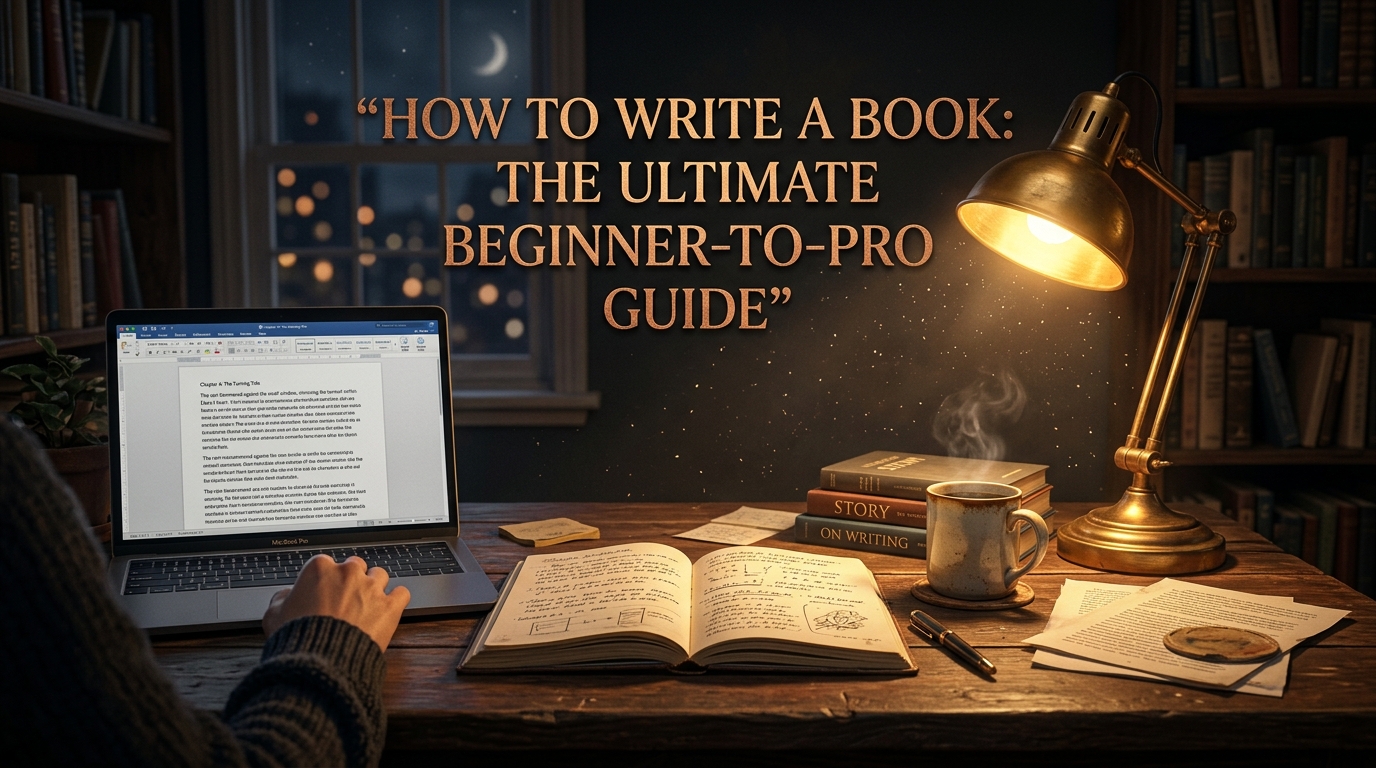
Writing a book is one of those ambitions that feels both deeply personal and overwhelmingly complex. Almost everyone who has ever thought about writing one starts with excitement, then quickly runs into uncertainty about where to begin, how to stay consistent, and how to turn scattered ideas into a finished manuscript. The truth is that writing a book is not a sudden burst of inspiration but a structured creative process that blends imagination, discipline, and revision over time. Whether you want to write fiction, nonfiction, memoir, or even a self-help guide, the core journey remains surprisingly similar: you begin with an idea, you develop it into structure, you build it into chapters, and you refine it until it becomes something worth sharing with the world.
This guide walks you through that entire journey in a natural, practical way so that you can move from a beginner mindset into a confident author’s workflow without feeling lost in technicalities or overwhelmed by perfectionism.
Understanding What It Really Means to Write a Book
Writing a book is not just about typing words until you reach a certain length. It is about building a sustained narrative or argument that holds meaning from beginning to end. Many new writers assume the hardest part is talent, but in reality, the biggest challenge is endurance. A book demands consistency over weeks or months, and that requires a shift in mindset from inspiration-based writing to process-based writing.
At its core, a book is a structured form of communication. Even fiction, which is driven by imagination, still follows emotional logic and narrative structure. Nonfiction, on the other hand, relies on clarity of thought and the ability to guide a reader through complex ideas in a simple and engaging way. In both cases, the writer acts as a bridge between raw ideas and a refined reading experience.
Once you understand that writing a book is more about shaping ideas than waiting for inspiration, the process becomes far more manageable.
Developing Your Book Idea into Something Solid
Every book begins with a spark, but a spark alone cannot sustain a full manuscript. The early stage of writing is about expanding that spark into a concept that can carry weight across chapters. This is where many writers either rush ahead too quickly or overthink to the point of delay.
A strong book idea usually has three layers. First is the core theme, which is the central message or emotional direction of the book. Second is the scope, which defines how wide or narrow your subject will be. Third is the audience, which determines who the book is actually speaking to.
For example, if someone wants to write about personal growth, that theme alone is too broad. But if it is narrowed into a specific angle such as rebuilding confidence after failure or finding direction after life transitions, it becomes much more focused and easier to develop. The same principle applies to fiction, where a vague idea like “a mystery story” becomes far more powerful when shaped into a specific situation, character conflict, or setting.
At this stage, your goal is not perfection but clarity. You are simply trying to ensure that your idea has enough depth to survive the writing process.
Research and Building Depth in Your Book
Research is often misunderstood as something only nonfiction writers need, but in reality, every book benefits from it. Fiction writers research human behavior, settings, cultures, professions, and emotional dynamics to make their stories believable. Nonfiction writers rely even more heavily on structured research to ensure accuracy and authority.
Good research is not about collecting endless information but about identifying what actually strengthens your narrative. It is about selecting details that add credibility and meaning rather than overwhelming the reader with unnecessary data. When writing nonfiction, research also helps you avoid generalizations and allows your ideas to be supported by real-world logic and examples.
A well-researched book feels grounded, even when it explores abstract or imaginative concepts. Readers may not consciously notice the depth of your research, but they will always feel when something is underdeveloped or superficial.
Structuring Your Book Before You Write It
Before the first draft begins, structure plays a crucial role in shaping the direction of your book. Structure does not limit creativity; instead, it gives it direction. Without structure, even the best ideas can become scattered or repetitive.
Some writers prefer a detailed outline, while others develop structure gradually as they write. Both approaches can work, but what matters most is having a sense of progression. A book needs movement, whether that is emotional development, narrative tension, or intellectual expansion.
In nonfiction, structure often follows a logical progression where each chapter builds on the previous one. In fiction, structure often follows emotional arcs or plot developments that lead the reader through rising tension and resolution. Even if you prefer a more flexible writing style, having a general roadmap helps prevent confusion during long writing sessions.
Writing the First Draft Without Overthinking
The first draft is where most writers either lose momentum or get stuck in perfectionism. It is important to understand that the first draft is not supposed to be good. Its purpose is to exist. It is the raw version of your book that will later be shaped, refined, and improved.
Many writers make the mistake of editing while writing, which slows down progress and interrupts creative flow. A better approach is to allow yourself to write imperfectly and focus only on completing the ideas in sequence. The goal is to reach the end of your manuscript without stopping to correct every sentence.
Once the first draft is complete, you will finally have something real to work with. That is when the actual shaping of your book begins.
Editing, Refining, and Strengthening Your Manuscript
Editing is where writing transforms into writing that feels intentional. It is the stage where structure becomes clearer, language becomes sharper, and unnecessary content is removed. A strong edit does not just fix grammar; it improves rhythm, clarity, and emotional impact.
During revision, writers often discover that some sections need to be expanded while others need to be shortened or removed entirely. This is a natural part of the process and should not be seen as failure. Instead, it reflects the evolving understanding of your own work.
Professional writers often go through multiple rounds of editing. The first focuses on structure, the second on language, and the final one on polishing details. Even experienced authors rarely publish a first draft without significant revision.
Choosing How to Publish Your Book
Once your manuscript is complete, the next step is deciding how to bring it into the world. Publishing today offers more options than ever before, and each path comes with its own advantages and challenges.
Traditional publishing involves working with established publishing houses that handle editing, design, distribution, and marketing. Self-publishing gives you full control over the process but also requires you to manage every stage. Hybrid publishing sits somewhere in between, offering professional support while still maintaining author involvement.
Each option suits different goals, budgets, and levels of experience. Understanding these differences helps you choose the path that aligns best with your vision as an author.
Comparison of Publishing Options
| Publishing Type | Control Level | Cost Responsibility | Time to Publish | Marketing Support | Best For |
| Traditional Publishing | Low | Publisher handles | Slow | Strong | Established authors and mainstream reach |
| Self-Publishing | High | Author pays | Fast | Limited (self-driven) | Independent authors and niche topics |
| Hybrid Publishing | Medium | Shared cost | Moderate | Moderate | Authors wanting balance of control and support |
Common Mistakes New Authors Make
One of the most common mistakes new writers make is waiting for the perfect time to start. In reality, there is no perfect time, only consistent effort. Another frequent issue is abandoning projects too early due to lack of immediate clarity. Writing a book often involves uncertainty in the beginning, and clarity usually emerges through the process rather than before it.
Many writers also underestimate the importance of editing and assume the first draft is close to the final version. This mindset often leads to weak manuscripts that lack refinement. Another challenge is inconsistency, where writers begin with enthusiasm but struggle to maintain momentum over time.
Avoiding these mistakes is less about skill and more about developing discipline and patience with the process.
Building the Habits of Successful Authors
Successful authors tend to share one key trait: consistency. They do not rely on occasional bursts of inspiration but instead build writing into a routine. Even when progress feels slow, they continue showing up to their work.
Another important habit is reading regularly. Reading not only improves vocabulary and style but also helps writers understand pacing, structure, and storytelling techniques at a deeper level. Successful writers also revise without emotional attachment, understanding that improvement often requires rewriting entire sections.
Most importantly, they treat writing as a long-term practice rather than a short-term project. This mindset shift is often what separates completed books from unfinished ideas.
Moving from Idea to Finished Book
The journey from idea to finished book is rarely linear. It involves experimentation, rewriting, doubt, discovery, and refinement. At times, it may feel like you are moving backward, but even revision contributes to progress. Every stage of the process builds toward a stronger final manuscript.
The key is to trust the process rather than rush it. A well-written book is not created in a single moment but shaped over time through patience and persistence. Once you accept that writing is both creative and structural, you gain the freedom to develop your work with confidence rather than pressure.
Conclusion
Writing a book is ultimately an act of transformation. It takes something abstract, whether an idea, a story, or a message, and turns it into something tangible that others can experience. The process requires patience, structure, creativity, and a willingness to revise and refine until the work feels complete.
Every author begins somewhere uncertain, but what matters most is not where you start, but how consistently you continue. A book is not built in a day, but step by step through writing, rewriting, and shaping ideas into meaning. Once you understand that, the journey from beginner to author becomes not only achievable but deeply rewarding.
