
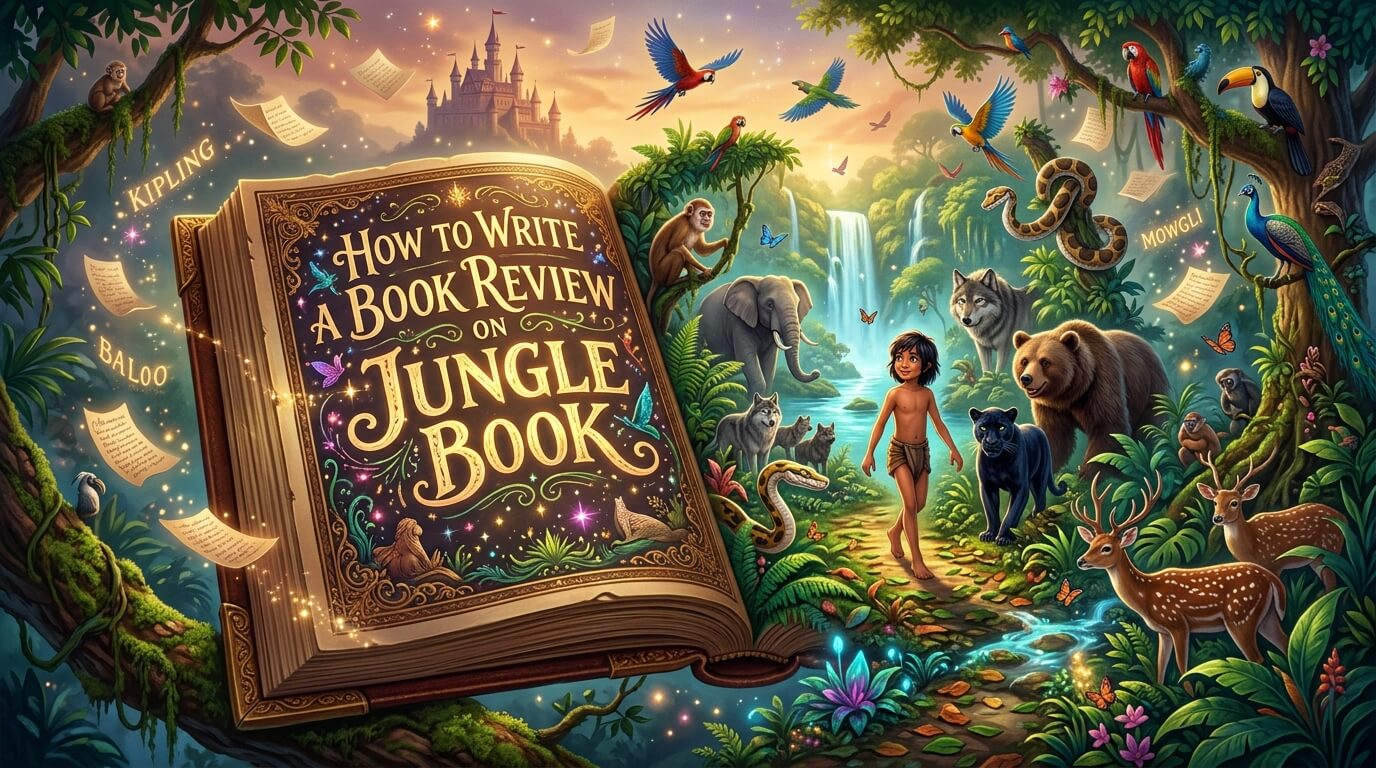
Writing a book review is more than simply describing what happens in a story. A good review explores the themes, characters, writing style, and overall impact of a book while helping readers understand why the book is worth reading. When reviewing The Jungle Book, readers have the opportunity to analyze one of the most celebrated works in children’s literature. Written by Rudyard Kipling in 1894, The Jungle Book continues to captivate audiences around the world through its adventure, memorable characters, and timeless lessons about courage, friendship, identity, and survival.
Many students find it challenging to write a review because they are unsure whether to summarize the story or share their opinions. The truth is that a strong book review combines both elements. It introduces the book, discusses important aspects of the narrative, evaluates its strengths, and offers thoughtful reflections without revealing too many spoilers.
This guide will explain how to write an effective book review on The Jungle Book. Whether you are preparing a school assignment, participating in a reading project, or simply practicing literary analysis, understanding how to review this classic novel can help improve your writing skills and deepen your appreciation of literature.
Exploring The Jungle Book Before You Start Your Review
Before beginning your review, it is important to understand the book itself. The Jungle Book is a collection of stories, although the most famous tales revolve around Mowgli, a young boy raised by wolves in the Indian jungle. Throughout the story, Mowgli learns the laws of the jungle while facing dangers from predators, particularly the tiger Shere Khan.
The book introduces readers to a fascinating world where animals speak, teach, and interact according to their own social rules. Characters such as Baloo the bear, Bagheera the black panther, and Kaa the python play important roles in shaping Mowgli’s journey.
A thoughtful review begins with a clear understanding of the plot, themes, and character development. Reading carefully and taking notes while reading can make the review-writing process much easier.
Basic Information to Include in Your Review
A book review should start with essential information about the book. This provides readers with context before they learn about your analysis and opinion.
| Book Detail | Information |
| Title | The Jungle Book |
| Author | Rudyard Kipling |
| Published | 1894 |
| Genre | Children’s Literature, Adventure Fiction |
| Setting | Indian Jungle |
| Main Character | Mowgli |
| Major Themes | Identity, Friendship, Survival, Courage, Nature |
| Target Audience | Children, Young Adults, General Readers |
Including these details helps establish a strong introduction and demonstrates familiarity with the text.
Creating an Effective Introduction
The introduction serves as the foundation of your review. It should introduce the book and provide a brief overview without going into excessive detail.
A good introduction captures attention while giving readers a reason to continue reading. It should mention the title, author, genre, and general premise of the story.
For example, you might explain that The Jungle Book is a classic adventure story that follows Mowgli’s life among jungle animals while exploring themes of belonging and personal growth. This immediately gives readers a sense of what the book is about without revealing key plot developments.
The introduction should also hint at your overall opinion of the book. Whether you found it engaging, inspiring, or thought-provoking, readers should understand your general impression from the beginning.
Summarizing the Story Without Revealing Too Much
Why Summary Matters
Every book review includes a summary, but many reviewers make the mistake of retelling the entire story. A review is not meant to replace reading the book.
The purpose of the summary is to provide enough information for readers to understand the main storyline while preserving the excitement and surprises of the narrative.
Writing a Balanced Summary
When summarizing The Jungle Book, focus on the central conflict and major characters. Explain that Mowgli is a human child raised by wolves who must navigate the challenges of living between the animal and human worlds.
Mention his relationships with Baloo and Bagheera as mentors and his ongoing conflict with Shere Khan. Avoid revealing the ending or major twists. This keeps the review informative while maintaining reader interest.
Analyzing the Main Characters
Characters often determine whether a story leaves a lasting impression. In The Jungle Book, the characters are memorable because each one represents different values and perspectives.
Mowgli
Mowgli serves as the central figure of the story. His journey reflects the universal search for identity and belonging. As someone who exists between two worlds, he faces challenges that many readers can relate to in different ways.
When reviewing Mowgli, discuss his growth throughout the story. Consider how he develops confidence, wisdom, and resilience while learning to navigate difficult situations.
Baloo
Baloo is one of the most beloved characters in the book. As Mowgli’s teacher and friend, he represents wisdom, patience, and kindness.A review can explore how Baloo’s lessons help Mowgli understand the laws of the jungle and prepare him for future challenges.
Bagheera
Bagheera combines strength with intelligence. He acts as a protector and guide, often making difficult decisions for Mowgli’s well-being.Discussing Bagheera’s role allows reviewers to highlight themes of mentorship and responsibility.
Shere Khan
Every compelling story needs a strong antagonist, and Shere Khan fulfills this role effectively. His presence creates tension and conflict throughout the narrative.A thoughtful review can analyze how Shere Khan’s actions drive the story forward and challenge Mowgli’s growth.
Examining the Themes of The Jungle Book
A high-quality book review goes beyond plot summary and character descriptions. It explores the deeper ideas that make the story meaningful.
Identity and Belonging
One of the strongest themes in The Jungle Book is identity. Mowgli constantly struggles with the question of where he truly belongs.Although he grows up among animals, he remains human. This creates a conflict that shapes many of his experiences and decisions.
Reviewers can discuss how this theme remains relevant today because many people experience feelings of uncertainty about where they fit within society.
Friendship and Loyalty
The relationships between Mowgli, Baloo, and Bagheera demonstrate the importance of friendship and loyalty.
These bonds help Mowgli survive difficult situations and provide emotional support throughout his journey.
When writing a review, consider how these friendships contribute to the story’s emotional impact.
Courage and Growth
Mowgli’s adventures require him to confront fears and overcome obstacles. Through these experiences, he develops courage and maturity.
A review can analyze how the story portrays bravery not as the absence of fear but as the ability to act despite challenges.
Nature and Survival
The jungle itself functions almost like a character. The environment shapes the behavior of every creature and influences the events of the story.
Discussing the role of nature can add depth to your review by highlighting how the setting supports the narrative’s themes.
Evaluating Kipling’s Writing Style
Descriptive Language
Rudyard Kipling is known for his vivid descriptions. His writing brings the jungle to life through detailed imagery and sensory language. Readers can easily imagine dense forests, exotic animals, and dramatic encounters because of Kipling’s descriptive skill.
When reviewing the book, evaluate how effectively the language creates atmosphere and engages the imagination.
Storytelling Techniques
Kipling combines adventure, suspense, and emotional moments to maintain reader interest. His storytelling approach keeps the narrative moving while allowing time for character development.
A review can discuss how these techniques contribute to the book’s lasting popularity.
Use of Symbolism
Many elements in The Jungle Book carry symbolic meaning. The jungle often symbolizes life’s challenges, while Mowgli’s journey reflects personal growth and self-discovery. Analyzing symbolism demonstrates a deeper understanding of the text and strengthens the quality of a review.
Discussing the Setting
The setting plays a crucial role in shaping the story’s atmosphere. The Indian jungle provides a rich and vibrant backdrop for Mowgli’s adventures. Its beauty, danger, and complexity create a world that feels both magical and realistic.
When reviewing the setting, explain how it influences the characters and plot. Consider how the jungle’s laws, landscapes, and creatures contribute to the overall experience of the story.
Exploring the Educational Value of the Book
One reason The Jungle Book remains popular is its educational value.
The story teaches important lessons about responsibility, respect, cooperation, and perseverance. These lessons are presented naturally through character experiences rather than direct instruction.
A review can discuss how the book encourages readers to think critically about relationships, choices, and personal growth. Students may also appreciate how the story introduces cultural and environmental themes that remain relevant in modern discussions about nature and society.
Sharing Your Personal Response
Why Personal Opinion Matters
A book review should include your own reaction to the story. Readers want to know how the book affected you and whether you would recommend it.
Personal opinions help make reviews more authentic and engaging.
Reflecting on Your Reading Experience
Consider questions such as:
- What did you enjoy most about the book?
- Which character was the most memorable?
- Did any theme resonate with you personally?
- Were there any aspects you found challenging or less effective?
Answering these questions can help develop thoughtful and balanced commentary.
Strengths of The Jungle Book
One of the greatest strengths of The Jungle Book is its unforgettable cast of characters. Mowgli, Baloo, Bagheera, and Shere Khan remain iconic figures in literature more than a century after the book’s publication.
Another strength is the universal nature of its themes. Questions of identity, belonging, friendship, and courage continue to resonate with readers of all ages.
The vivid setting and imaginative storytelling also contribute to the book’s enduring appeal. Kipling creates a world that feels both adventurous and meaningful.
Additionally, the book successfully balances entertainment with valuable life lessons, making it enjoyable for both children and adults.
Possible Weaknesses to Mention
A balanced review should acknowledge any limitations or challenges readers may encounter.
Some modern readers may find certain aspects of the language old-fashioned because the book was written in the nineteenth century.
Others may feel that parts of the story move more slowly compared to contemporary adventure novels.
Mentioning these observations demonstrates fairness and critical thinking while maintaining respect for the work’s historical significance.
Structuring Your Final Review
A well-organized review typically follows a logical progression.
Begin with an introduction that presents the book and your overall impression. Follow this with a concise summary of the story. Continue by analyzing characters, themes, setting, and writing style. Include your personal response and evaluation of strengths and weaknesses. End with a conclusion that summarizes your thoughts and recommendation.
Maintaining this structure helps readers follow your ideas clearly and creates a professional review.
Common Mistakes to Avoid
Many students focus too heavily on retelling the plot. While some summary is necessary, excessive detail can make the review feel more like a book report than an evaluation.
Another common mistake is providing opinions without supporting evidence. Strong reviews explain why a particular aspect was effective or ineffective.
Some reviewers also forget to discuss themes and literary elements. Including analysis demonstrates deeper engagement with the text.
Finally, avoid revealing major spoilers. Readers should finish your review feeling interested in reading the book themselves.
Sample Review Conclusion
A conclusion should reinforce your overall evaluation and leave readers with a clear understanding of your perspective.
You might conclude by stating that The Jungle Book remains a timeless classic because of its engaging story, memorable characters, and meaningful themes. Its exploration of identity, friendship, and courage continues to resonate with readers across generations. Despite its age, the book offers valuable lessons and exciting adventures that make it worthy of recommendation.
Final Thoughts
Learning how to write a book review on The Jungle Book involves much more than summarizing the story. An effective review examines the characters, themes, setting, and writing style while incorporating thoughtful personal reflections. By analyzing these elements, reviewers can provide readers with a deeper understanding of why the book has remained influential for more than a century.
The Jungle Book is not merely an adventure story about a boy raised by wolves. It is a rich exploration of identity, belonging, courage, and personal growth. These universal themes continue to attract readers from different cultures and age groups, making the book a valuable subject for literary analysis.
When writing your review, focus on balancing summary with evaluation. Support your opinions with examples from the text, discuss the significance of key themes, and explain how the story affected you as a reader. By following these principles, you can create a thoughtful, engaging, and insightful review that demonstrates both critical thinking and appreciation for one of literature’s most enduring classics.
