
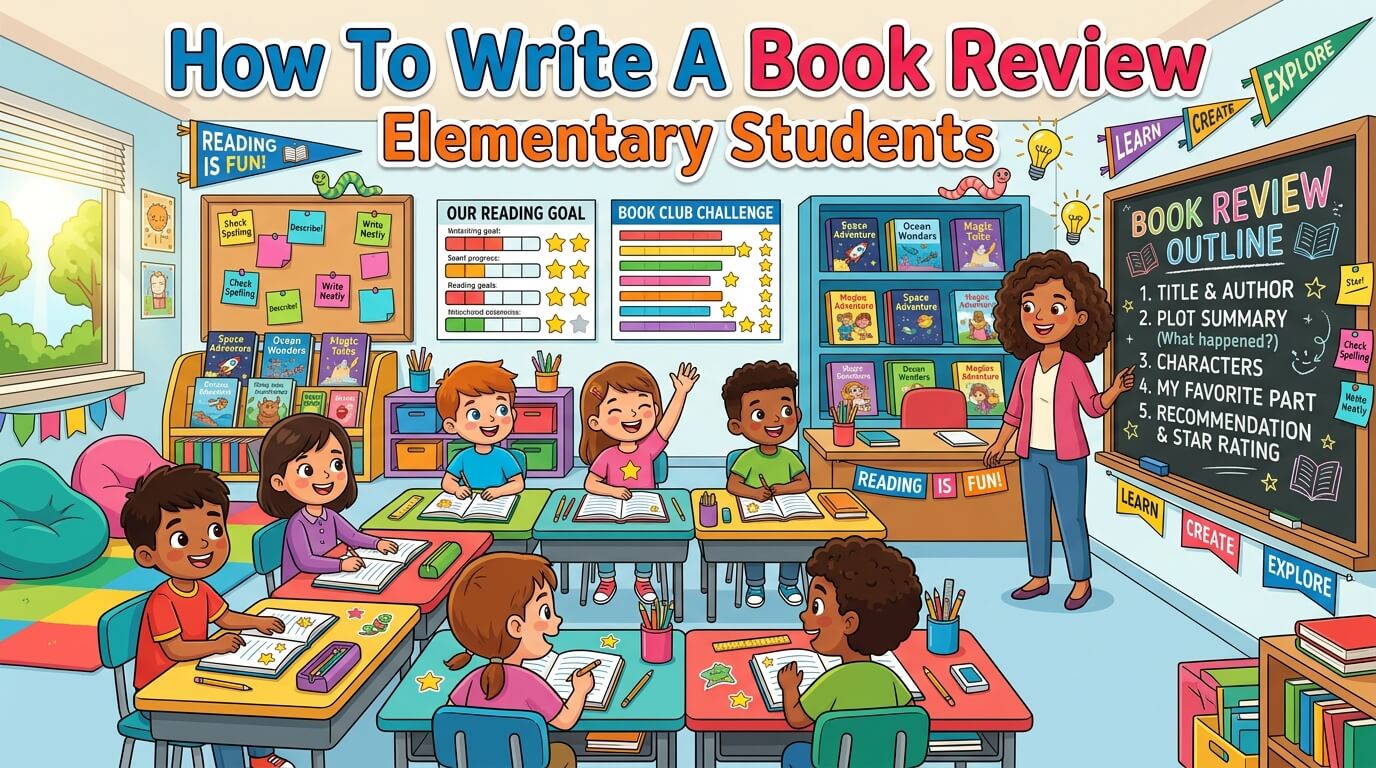
Reading books is one of the most enjoyable ways for elementary students to learn, imagine, and discover new ideas. Whether a child is reading an adventure story, a fairy tale, a mystery, or an educational book, every book offers a unique experience. However, reading is only one part of the learning journey. Sharing thoughts and opinions about a book is equally important, which is why book reviews are often assigned in elementary classrooms.
A book review helps students think carefully about what they have read. It encourages them to remember important details, understand the author’s message, and express their own opinions. Writing a review also improves critical thinking, reading comprehension, vocabulary, and writing skills. For many elementary students, writing a book review may seem difficult at first, but with the right approach, it becomes an enjoyable and rewarding activity.
This guide explains how elementary students can write an effective book review step by step. From understanding the purpose of a review to organizing ideas and expressing opinions clearly, this article covers everything young readers need to know.
Breaking Down What a Book Review Is
A book review is a piece of writing that describes a book and shares personal thoughts about it. Unlike a simple summary that only tells what happened in the story, a book review includes opinions, reactions, and recommendations.
When students write a book review, they explain what the book is about, discuss the main characters and events, and share what they liked or disliked. The goal is to help others understand the book and decide whether they might enjoy reading it.
Book reviews allow students to become thoughtful readers rather than simply turning pages. They learn to analyze stories and think about how books make them feel.
Why Elementary Students Should Learn to Write Book Reviews
Writing book reviews offers many educational benefits. It helps children develop reading comprehension because they must remember key details from the story. It also strengthens writing skills by encouraging them to organize thoughts logically.
When students write about books, they practice expressing opinions with confidence. They learn that their thoughts and interpretations matter. This process builds communication skills and helps students become more independent learners.
Book reviews also encourage deeper engagement with reading. Instead of rushing through a story, students pay closer attention to characters, settings, themes, and important events because they know they will discuss them later.
Preparing to Write a Book Review
Before beginning the review, students should spend some time reflecting on the book they have read. Good preparation makes writing easier and more organized.
After finishing the book, students should think about the story, characters, and their overall experience. Taking notes while reading can be helpful. These notes might include favorite parts, memorable characters, surprising events, or lessons learned from the story.
Thinking carefully before writing helps students develop stronger ideas and avoid forgetting important details.
Important Information to Collect Before Writing
Students should gather basic information about the book before starting their review. This information serves as the foundation of the review.
| Book Review Information | Description |
| Title | Name of the book |
| Author | Person who wrote the book |
| Genre | Type of book such as fiction, fantasy, mystery, or nonfiction |
| Main Characters | Important people or animals in the story |
| Setting | Where and when the story takes place |
| Main Plot | Major events of the story |
| Favorite Part | Most enjoyable section of the book |
| Lesson Learned | Message or moral of the story |
| Recommendation | Whether others should read the book |
Having this information ready makes the writing process smoother and more effective.
Choosing the Right Book
Selecting Age-Appropriate Books
Elementary students should choose books that match their reading level. A book that is too difficult may make it hard to understand the story and write a review. On the other hand, a book that is too simple may not provide enough material to discuss.
Teachers and parents often recommend books that are both educational and enjoyable. Choosing a book that sparks curiosity can make the review-writing process much more interesting.
Reading With Purpose
When students know they will write a review, they tend to read more carefully. They pay attention to details and think about how different parts of the story connect.
Reading with purpose helps students become active readers. Instead of simply following the plot, they begin asking questions and making observations throughout the story.
Understanding the Structure of a Book Review
A well-written book review usually follows a simple structure that is easy for elementary students to understand.
The review begins with an introduction that provides basic information about the book. The middle section discusses the story, characters, and important events. The final section shares personal opinions and recommendations.
Following this structure helps students organize their thoughts clearly and logically.
Writing the Introduction
Starting With Basic Information
The introduction should tell readers the title of the book and the author’s name. It can also mention the genre and provide a brief overview of the story. The purpose of the introduction is to give readers enough information to understand what book is being reviewed.
For example, a student might begin by explaining that the book is an adventure story about a young explorer who travels to a mysterious island.
Creating Reader Interest
An engaging introduction encourages people to continue reading the review. Students can mention something exciting, funny, or interesting about the story without revealing too much.
A strong opening creates curiosity and sets a positive tone for the rest of the review.
Summarizing the Story
Keeping the Summary Brief
One common mistake students make is retelling the entire story. A book review should provide a short summary rather than a complete description of every event. The summary should focus on the main plot and major events. It should explain what happens without revealing important surprises or the ending.
Providing a brief summary helps readers understand the story while maintaining their interest in reading the book themselves.
Focusing on Key Events
Students should include only the most important events that drive the story forward. Mentioning too many details can make the review confusing or overly long. The goal is to provide enough information for readers to understand the story without overwhelming them.
Discussing the Characters
Describing Main Characters
Characters are often the heart of a story. Students should discuss the main characters and explain what makes them interesting. They might describe the character’s personality, goals, strengths, or challenges. Understanding characters helps readers connect emotionally with the story.
Sharing Personal Reactions
Students can also explain how they felt about the characters. Did they admire the hero? Did they find a character funny or inspiring? Personal reactions make reviews more engaging and authentic.
Expressing opinions helps students develop confidence in their writing.
Exploring the Setting
Understanding Time and Place
The setting tells readers where and when a story takes place. It can be a city, a village, a magical kingdom, a forest, or even another planet. Students should consider how the setting influences the story. A mysterious forest creates a different atmosphere than a busy school or a modern city.
Explaining Its Importance
Sometimes the setting plays a major role in the events of the story. Discussing its importance helps students think more deeply about the book. Understanding the setting also improves comprehension and literary analysis skills.
Sharing Personal Opinions
Explaining What Was Enjoyable
The opinion section is one of the most important parts of a book review. Here, students explain what they liked about the book.
They might discuss exciting adventures, funny moments, interesting characters, or valuable lessons. Personal opinions make the review unique because every reader experiences a book differently.
Mentioning Areas That Could Be Better
If there were parts they did not enjoy, students can mention them respectfully. Perhaps the story moved slowly in certain sections or some characters were not very interesting. Balanced reviews often include both positive and constructive observations.
Identifying Themes and Lessons
Looking Beyond the Story
Many books teach important lessons about friendship, honesty, courage, kindness, or perseverance. Students should think about what message the author wanted readers to learn.
Recognizing themes helps students understand the deeper meaning of a story.
Connecting Lessons to Real Life
Students can explain how the book’s message relates to everyday experiences. Making these connections demonstrates thoughtful reading and strengthens critical thinking skills.
Books often become more meaningful when readers connect them to their own lives.
Writing a Recommendation
Deciding Who Would Enjoy the Book
A good review often ends with a recommendation. Students can suggest who might enjoy reading the book. For example, they might recommend it to children who enjoy adventure stories, animal tales, fantasy books, or mysteries.
Recommendations help readers determine whether the book matches their interests.
Supporting the Recommendation
Rather than simply saying the book is good, students should explain why they recommend it. Clear reasons make recommendations more convincing and helpful.
Using Descriptive Language
Making Reviews More Engaging
Descriptive language helps bring reviews to life. Instead of saying a book was good, students can explain that it was exciting, heartwarming, suspenseful, inspiring, or funny. Specific descriptions create stronger and more interesting reviews.
Choosing Meaningful Words
Using a variety of vocabulary improves writing quality. Rich language allows students to communicate their thoughts more clearly and effectively. Expanding vocabulary is one of the many benefits of writing book reviews regularly.
Revising and Editing the Review
Checking for Clarity
After completing a draft, students should read it carefully. They should make sure their ideas are easy to understand and organized logically.
Reading the review aloud often helps identify sentences that sound awkward or unclear.
Correcting Mistakes
Editing involves checking spelling, punctuation, grammar, and capitalization. Small corrections can greatly improve the quality of a review.
A polished review demonstrates care and attention to detail.
Common Mistakes Elementary Students Should Avoid
Many young writers accidentally reveal the ending of the story. This can spoil the book for future readers. Reviews should provide enough information to explain the plot without giving away major surprises.
Another common mistake is focusing only on the summary. While summarizing is important, reviews should also include opinions and personal reactions.
Students should avoid writing very short reviews that lack detail. Taking time to explain thoughts clearly creates stronger and more meaningful reviews.
Finally, writers should support opinions with examples from the story whenever possible. Specific details make reviews more convincing and informative.
Helping Students Build Confidence in Book Review Writing
Confidence develops through practice. The more reviews students write, the easier the process becomes. Teachers and parents can encourage children by praising their ideas and creativity rather than focusing only on mistakes.
Reading examples of book reviews can also help students understand what effective reviews look like. Over time, they learn how to organize ideas, express opinions, and communicate clearly.
Book reviews provide an excellent opportunity for students to develop their unique voices as writers. Every review reflects a personal reading experience, making each one different and valuable.
The Long-Term Benefits of Writing Book Reviews
Book review writing offers benefits that extend far beyond elementary school. Students learn how to analyze information, support opinions, and communicate ideas effectively. These skills are useful in every subject area and throughout life.
Strong readers often become strong writers because reading and writing reinforce one another. Book reviews encourage students to engage deeply with literature while practicing important academic skills.
The ability to evaluate information and express thoughtful opinions will continue to serve students in middle school, high school, college, and future careers.
Conclusion
Learning how to write a book review is an important skill for elementary students. It transforms reading from a passive activity into an active learning experience. Through book reviews, students learn to summarize stories, analyze characters, identify themes, and share personal opinions with confidence.
A successful book review includes basic information about the book, a brief summary of the story, thoughtful discussion of characters and settings, personal reactions, and a recommendation for other readers. By following a clear structure and taking time to revise their work, elementary students can create engaging and informative reviews.
Most importantly, book reviews help young readers develop a lifelong appreciation for books and learning. Every story offers an opportunity to think, reflect, and grow, and writing about those experiences makes reading even more meaningful.
