
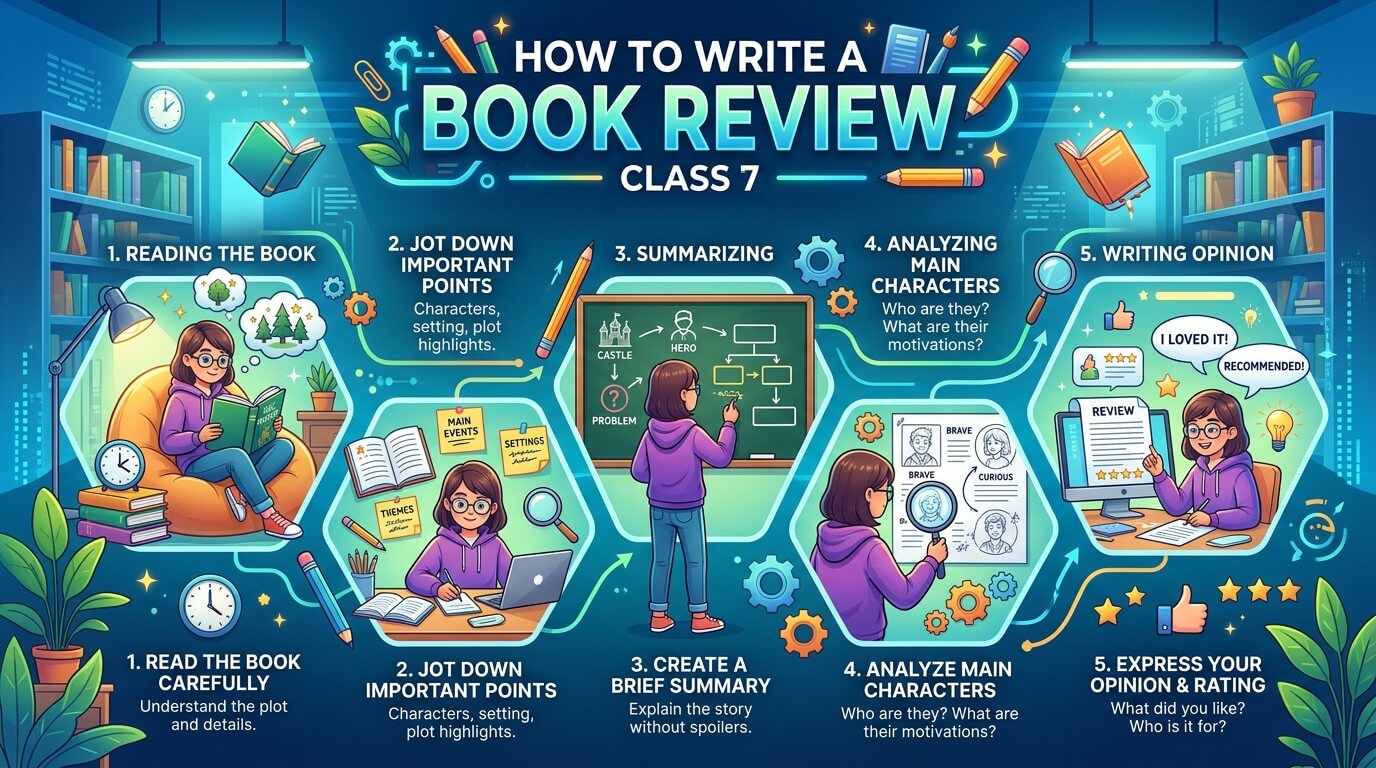
Writing a book review is an important skill for Class 7 students because it helps develop reading comprehension, critical thinking, and writing abilities. A book review is more than just a summary of a story. It is a thoughtful piece of writing that explains what the book is about, what the reader learned from it, and whether others should read it. Learning how to write a book review allows students to express their opinions clearly while demonstrating their understanding of a book.
In Class 7, students are often encouraged to read a variety of books, including fiction, biographies, adventure stories, historical novels, and educational books. After reading, teachers may ask students to write a review that reflects their understanding and personal response to the text. A well-written book review combines factual information about the book with personal observations and critical analysis.
This guide explains everything Class 7 students need to know about writing an effective book review. From understanding the purpose of a review to organizing ideas and presenting opinions, this article provides a complete roadmap for creating engaging and informative book reviews.
How a Book Review Works and What It Means
A book review is a written evaluation of a book. It provides readers with information about the book’s content, themes, characters, and overall quality. Unlike a simple summary, a review includes the reviewer’s thoughts and opinions about the book.
The main purpose of a book review is to help others decide whether they might enjoy reading the book. It also allows the reviewer to share their experience and insights. In academic settings, book reviews help teachers assess how well students understand what they have read.
For Class 7 students, book reviews are an excellent opportunity to practice analytical thinking. Instead of merely retelling events, students learn to evaluate characters, themes, and writing styles while supporting their opinions with examples from the book.
Why Book Reviews Are Important for Class 7 Students
Book reviews encourage active reading. When students know they will be writing a review, they pay closer attention to details such as character development, plot progression, and important themes.
Writing reviews also strengthens communication skills. Students learn how to organize ideas logically and express their opinions clearly. These skills are useful not only in English classes but also in other academic subjects.
Additionally, book reviews help develop confidence. Students learn that their opinions about literature matter and that they can contribute meaningful perspectives to discussions about books.
Key Elements of a Book Review
Every effective book review contains several important components. These elements work together to provide readers with a complete understanding of the book and the reviewer’s perspective.
The first element is basic information about the book, including the title, author, and genre. This helps readers identify the book being reviewed. The second element is a brief summary of the story or content. This summary should introduce the main plot without revealing major spoilers.
The third element involves discussing important characters, themes, or ideas presented in the book. This section demonstrates a deeper understanding of the text. The fourth element is personal evaluation. Here, students explain what they liked or disliked about the book and provide reasons for their opinions.
Finally, a conclusion summarizes the overall impression and may include a recommendation for potential readers.
Preparing to Write a Book Review
Before beginning the review, students should spend time thinking about the book they have read. Reflection helps generate meaningful insights and observations.
Consider the story’s main events, memorable characters, and significant lessons. Think about how the book made you feel and whether it changed your perspective on any topic.
Taking notes while reading can be especially helpful. Notes about favorite scenes, important quotations, and character actions provide valuable material for the review.
Students should also consider the intended audience of the book. Understanding who the book is written for helps evaluate whether it successfully meets its goals.
Reading the Book Carefully
Successful book reviews begin with careful reading. Simply finishing a book is not enough. Students should engage actively with the text.
Pay attention to how characters change throughout the story. Notice the challenges they face and how they overcome them. Consider the setting and how it influences events.
Look for recurring themes or messages. Many books explore ideas such as friendship, courage, honesty, perseverance, or personal growth. Identifying these themes strengthens the review.
Careful reading also helps students identify strengths and weaknesses within the book, leading to a more balanced evaluation.
Collecting Important Information
Before writing, gather essential details about the book.
| Information Category | Details to Include |
| Title | Name of the book |
| Author | Writer of the book |
| Genre | Fiction, adventure, mystery, biography, etc. |
| Main Characters | Key people in the story |
| Setting | Where and when the story takes place |
| Main Theme | Central message or lesson |
| Favorite Part | Most enjoyable section |
| Overall Opinion | Personal evaluation of the book |
Having this information organized makes the writing process smoother and more efficient.
Creating an Effective Introduction
The introduction serves as the opening section of the book review. It should immediately inform readers about the book being discussed. Begin by mentioning the title and author. You may also include the genre and a brief statement about the book’s main topic.
An engaging introduction captures the reader’s interest while providing enough context to understand the review. For example, if reviewing an adventure novel, the introduction might mention the exciting journey at the center of the story and hint at why it was memorable.
Writing a Brief Summary
A summary gives readers an overview of the book’s content. However, it should remain concise and avoid revealing major plot twists or the ending. Focus on introducing the main character, setting, and central conflict. Explain what the story is generally about without describing every event.
A good summary provides enough information for readers to understand the context of the review while maintaining curiosity about the book itself. Students should remember that the summary is only one part of the review. The majority of the review should focus on analysis and personal response.
Discussing the Main Characters
Characters often play a major role in a reader’s enjoyment of a book. Therefore, discussing key characters is an important part of many reviews. Describe the main character and explain their role in the story. Consider their personality, strengths, weaknesses, and growth throughout the book.
If there are supporting characters who significantly influence the story, mention them as well. Explain how relationships between characters contribute to the overall narrative. Thoughtful character analysis demonstrates a deeper understanding of the book and helps readers appreciate its complexity.
Exploring Themes and Messages
Themes are the underlying ideas or lessons conveyed by a book. Identifying themes helps readers understand the author’s purpose. Many Class 7 books explore themes such as friendship, bravery, teamwork, determination, family relationships, and responsibility.
When discussing themes, explain how they appear throughout the story. Use examples from the book to support your observations. Understanding themes transforms a review from a simple summary into a meaningful analysis of the book’s deeper significance.
Evaluating the Plot
The plot refers to the sequence of events that make up the story. In a review, students should evaluate whether the plot was interesting, logical, and engaging. Consider the pacing of the story. Did events move too slowly or too quickly? Were there exciting moments that captured your attention?
Think about whether the story remained interesting from beginning to end. Discuss any surprises, conflicts, or memorable developments that contributed to your reading experience.
An honest evaluation of the plot provides valuable information for potential readers.
Examining the Author’s Writing Style
Every author has a unique writing style. Some writers use simple language, while others create detailed descriptions and complex narratives. When reviewing a book, consider whether the writing style enhanced your enjoyment. Was the language easy to understand? Did the descriptions help you imagine the scenes?
Class 7 students do not need advanced literary analysis, but basic observations about the author’s style can add depth to the review. Discussing writing style shows attention to how the story is told, not just what happens in the story.
Sharing Personal Opinions
The personal opinion section is often the most important part of a book review. Here, students explain their genuine reactions to the book. Describe what you enjoyed most. Perhaps you liked a particular character, found the plot exciting, or appreciated the lessons presented.
If there were aspects you disliked, explain them respectfully. Maybe certain sections felt slow, or some characters were difficult to understand. Providing reasons for your opinions makes the review more convincing and informative.
Maintaining a Balanced Perspective
Good reviews acknowledge both strengths and weaknesses. Even books that students greatly enjoy may have areas that could be improved. Similarly, books that students dislike often contain positive qualities worth mentioning.
Balanced reviews appear more thoughtful and credible. Readers appreciate honest evaluations that consider multiple aspects of a book. By discussing both positive and negative elements, students demonstrate maturity and critical thinking skills.
Writing an Effective Conclusion
The conclusion brings the review to a satisfying close. It should summarize your overall impression of the book and provide a final recommendation. State whether you would recommend the book to other readers and explain why. Mention the type of reader who might enjoy it most.
A strong conclusion leaves readers with a clear understanding of your opinion and reinforces the main points discussed throughout the review. The conclusion should be concise while effectively wrapping up the review.
Sample Book Review Structure for Class 7
A simple structure helps students organize their ideas clearly. The first paragraph introduces the book by providing the title, author, and genre.
The second paragraph summarizes the story without revealing important surprises. The third and fourth paragraphs discuss characters, themes, and notable aspects of the plot.
The fifth paragraph presents personal opinions and evaluation. The final paragraph concludes with a recommendation and overall assessment.
Following this structure ensures that all important elements are included in the review.
Common Mistakes to Avoid
Many students focus too heavily on summarizing the story. While a summary is important, a review should primarily express thoughts and evaluations. Another common mistake is revealing the ending. Spoilers can reduce readers’ interest in the book.
Some students provide opinions without explanations. Every opinion should be supported with reasons and examples. Grammar and spelling errors can also affect the quality of a review. Proofreading before submission helps eliminate mistakes and improve clarity.
Improving Your Book Review Writing Skills
Like any form of writing, book reviews improve with practice. Reading professional reviews can provide inspiration and demonstrate effective techniques. Students should experiment with different ways of expressing opinions and analyzing books. Over time, they will become more confident and skilled reviewers.
Seeking feedback from teachers, classmates, or family members can also be helpful. Constructive criticism highlights areas for improvement and encourages growth. Regular reading plays an equally important role. The more books students read, the more ideas and perspectives they develop for future reviews.
How Teachers Evaluate Book Reviews
Teachers typically assess book reviews based on several criteria. Understanding these criteria helps students produce stronger work. Teachers look for evidence that students have read and understood the book. Clear summaries and accurate references demonstrate comprehension.
Organization is also important. Reviews should follow a logical structure with smooth transitions between ideas. Critical thinking is another key factor. Teachers appreciate reviews that go beyond summary and explore themes, characters, and personal insights.
Finally, grammar, vocabulary, and writing style contribute to the overall quality of the review.
Building Confidence as a Young Reviewer
Many Class 7 students worry about whether their opinions are correct. However, there is rarely a single right answer when reviewing a book.
What matters most is explaining opinions clearly and supporting them with examples from the text. Different readers may have different reactions to the same book, and these differences make reviews interesting.
Confidence grows through practice. Each review helps students develop stronger analytical and communication skills. By sharing thoughtful opinions, students become active participants in the world of reading and literature.
Conclusion
Learning how to write a book review in Class 7 is an important step toward becoming a thoughtful reader and effective writer. A strong book review combines a brief summary with careful analysis, personal opinions, and clear recommendations. It allows students to explore characters, themes, plots, and writing styles while expressing their own perspectives.
The key to writing an excellent book review lies in reading carefully, thinking critically, and organizing ideas clearly. By focusing on both the strengths and weaknesses of a book, students create balanced and informative reviews that help others discover new reading experiences.
With regular practice, Class 7 students can develop the confidence and skills needed to write engaging book reviews that reflect their understanding, creativity, and love of reading.
