
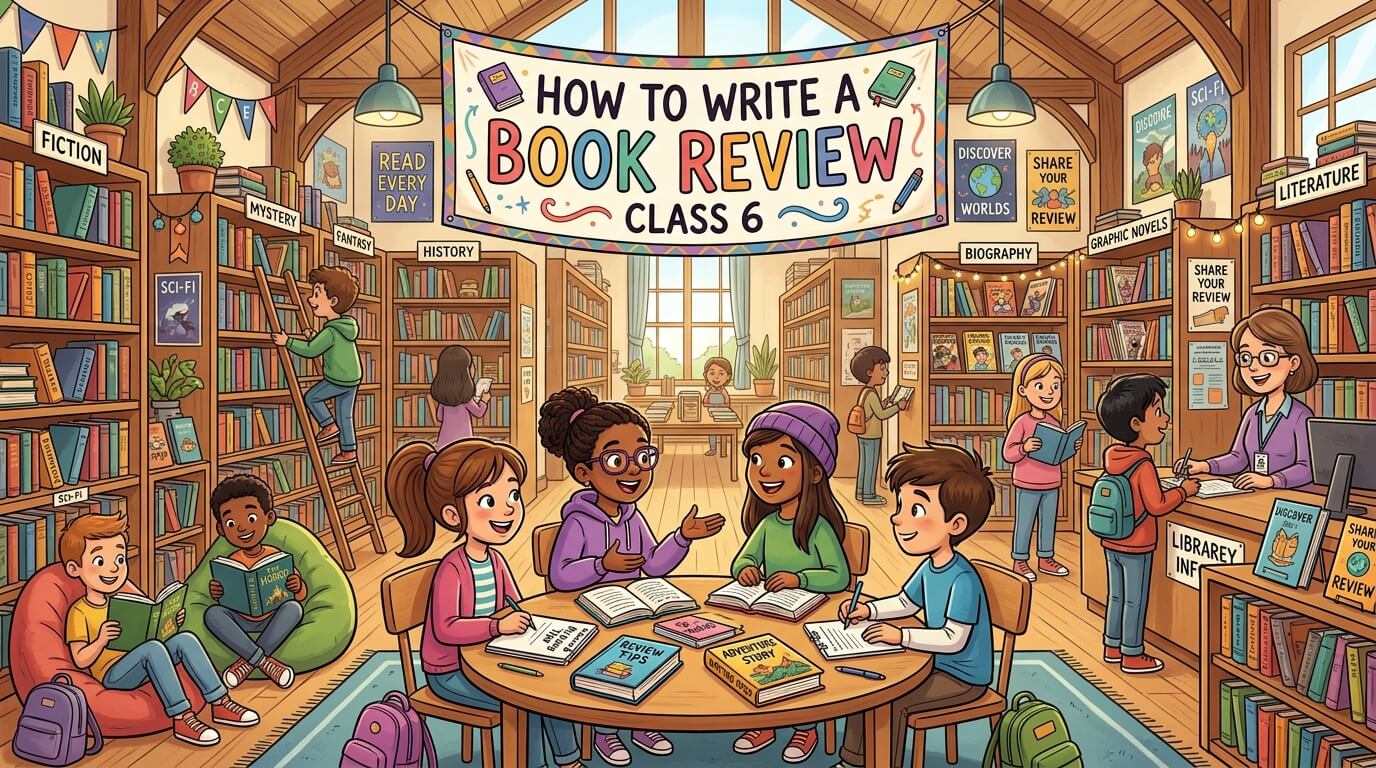
Writing a book review is one of the most creative and thoughtful activities a student can do in Class 6. It is not just about saying whether a book is good or bad, but about expressing personal understanding, imagination, and opinion in a clear and meaningful way. A book review helps a reader reflect on what they have read, understand the story better, and share their thoughts with others in an organized manner. In school, book reviews are often used to improve reading habits, writing skills, and critical thinking abilities. When students learn how to write a book review properly, they also learn how to think deeply about stories, characters, and messages hidden inside a book.
A good book review is like a friendly conversation between the reader and the writer. It explains what the book is about, what the reader liked or disliked, and why others might want to read it. For Class 6 students, the goal is not to sound overly complicated but to be clear, simple, and honest. This blog will guide you step by step in understanding how to write a book review in a natural, human-toned way that feels easy and enjoyable.
What a Book Review Actually Represents
A book review is not a summary alone, and it is not just a story retelling. It is a mix of both understanding and opinion. When a student writes a book review, they explain the story briefly but also share their personal thoughts about it. This means writing what the book made them feel, what they learned from it, and whether they would recommend it to others.
In Class 6, teachers usually expect students to read a storybook or novel and then describe it in their own words. The review becomes a way of showing that the student has not only read the book but also understood it. It is also a way of practicing writing skills in a structured and meaningful way. A strong book review always includes simple language, honest thoughts, and a clear structure.
Why Book Reviews Are Important for Class 6 Students
Book reviews are more than just school assignments. They help students grow in many ways. When a student reads a book and then writes about it, they begin to think more carefully about the story. They start noticing details like character behavior, moral lessons, and writing style. This improves their reading comprehension and imagination.
Another important reason is that book reviews help improve writing skills. Students learn how to organize their thoughts in paragraphs and express ideas clearly. Over time, they also become better at forming opinions and supporting them with reasons. This skill is not only useful in English class but also in real life when expressing views on any topic.
Book reviews also encourage reading habits. When students know they have to write about a book afterward, they tend to read more carefully and enjoy the story at a deeper level. This makes reading a more active and meaningful experience rather than a passive one.
Basic Structure of a Book Review
A book review follows a simple structure that helps organize thoughts in a clear way. Even though we are not using point-wise formatting here, understanding the flow is important. A typical book review includes an introduction, a summary of the story, a discussion of characters and themes, personal opinion, and a conclusion.
In the introduction, the student mentions the name of the book, the author, and sometimes the genre. The summary gives a short description of what the story is about without revealing too many details. The main body of the review talks about characters, events, and important lessons. Finally, the conclusion gives the student’s personal opinion and recommendation.
When written properly, this structure makes the review easy to read and understand. It also ensures that the student covers all important aspects of the book.
Key Elements of a Book Review
| Element of Review | What It Means | Purpose in Writing |
| Introduction | Name of book, author, and basic information | To introduce the book clearly |
| Summary | Short explanation of the story | To help reader understand the plot |
| Characters | Description of main characters | To explain who drives the story |
| Theme | Main idea or message of the book | To understand deeper meaning |
| Personal Opinion | Student’s thoughts and feelings | To express individual response |
| Conclusion | Final thoughts and recommendation | To end the review clearly and meaningfully |
How to Start a Book Review in Class 6
Starting a book review can feel confusing at first, but it becomes easier with practice. The best way to begin is by introducing the book in a simple and natural way. The student should mention the title of the book, the name of the author, and sometimes the type of story it is, such as adventure, mystery, or fantasy.
After this, a short line about why the book was chosen or assigned can be included. This helps create a smooth beginning. The introduction should not be too long or complicated. It should simply guide the reader into the review and prepare them for what is coming next.
A strong beginning sets the tone for the rest of the review and makes it more interesting to read.
Writing the Summary in a Simple Way
The summary is one of the most important parts of a book review. In Class 6, students should focus on writing a short and clear explanation of the story. The goal is to tell what happens in the book without giving away too many details or the ending.
A good summary usually explains the setting, the main problem, and the general storyline. It should not include every small event. Instead, it should focus on the main idea of the story. This helps the reader understand what the book is about without feeling overwhelmed.
The summary should always be written in simple language. It should feel like someone is explaining the story to a friend in a natural way.
Talking About Characters and Their Importance
Characters are the heart of any story. In a book review, students should describe the main characters and explain their role in the story. This does not mean listing everything about them but highlighting their most important qualities.
For example, a character may be brave, kind, clever, or sometimes even confused or scared. These traits help move the story forward. In Class 6, students can also mention which character they liked the most and why. This makes the review more personal and engaging.
Talking about characters also shows that the student understands how different people in the story contribute to its meaning. It is an important part of learning how stories are built.
Understanding the Theme of the Book
Every book has a central message or theme. It could be friendship, honesty, courage, kindness, or even learning from mistakes. In a book review, students should try to identify this theme and explain it in their own words.
Understanding the theme helps students think beyond the story. It allows them to see what the author is trying to teach through the characters and events. Even in simple books, there is usually a lesson hidden inside the story.
For Class 6 students, the theme should be explained in an easy and clear way. It does not need complicated language. The focus should be on understanding the meaning behind the story.
Sharing Personal Opinion in a Book Review
One of the most interesting parts of writing a book review is sharing personal opinion. This is where the student can express what they felt while reading the book. They can talk about whether they enjoyed the story, which parts they liked the most, and if there were any parts they did not understand or enjoy.
This section makes the review unique because it reflects personal thoughts. No two students will write the same opinion because everyone experiences a story differently. This is what makes book reviews creative and meaningful.
It is important to be honest but also respectful while writing opinions. Even if a student did not enjoy a book, they should explain their thoughts in a polite way.
Writing a Strong Conclusion
The conclusion is the final part of the book review. It brings everything together in a short and meaningful way. In this section, the student can restate their opinion and say whether they would recommend the book to others.
A good conclusion leaves a lasting impression. It should not introduce new ideas but instead summarize the overall experience of reading the book. For Class 6 students, the conclusion should be simple, clear, and confident.
It is like closing a conversation politely while still leaving a positive thought in the reader’s mind.
Tips for Writing a Better Book Review
Writing a good book review becomes easier with practice. Students should focus on reading carefully and understanding the story before writing. It is helpful to take mental notes while reading, such as remembering important characters or events.
Using simple language is very important. Complicated words are not necessary in Class 6. The goal is clarity and understanding. Writing in paragraphs also helps make the review neat and organized.
Another important tip is to be honest. A book review should reflect real thoughts, not copied ideas. This helps students develop their own writing style and confidence.
Final Thoughts
Writing a book review in Class 6 is not just a school task; it is a creative journey. It helps students connect with stories, understand characters, and express their own thoughts in a meaningful way. With practice, students become more confident writers and thoughtful readers.
A good book review is always simple, honest, and well-structured. It does not need complicated language or long explanations. It just needs clear thinking and personal expression. Once students understand the process, writing book reviews becomes an enjoyable and rewarding activity that improves both reading and writing skills for life.
FAQs on How to Write a Book Review (Class 6)
Q. What is a book review in Class 6?
A book review in Class 6 is a short piece of writing where students explain what a book is about and also share their personal opinion about it in simple words.
Q. How long should a Class 6 book review be?
It usually depends on the teacher’s instruction, but a good Class 6 book review is generally 150 to 300 words, written in clear and simple paragraphs.
Q. Do I need to write the full story in a book review?
No, you should not write the full story. A book review only includes a short summary of the main events, without revealing too many details or the ending.
Q. Can I include my opinion in a book review?
Yes, your personal opinion is very important. You should share what you liked or disliked about the book and explain your thoughts in a polite and simple way.
Q. What is the most important part of a book review?
All parts are important, but the most important part is your understanding of the story and your personal response, because it shows that you have truly read and understood the book.
