
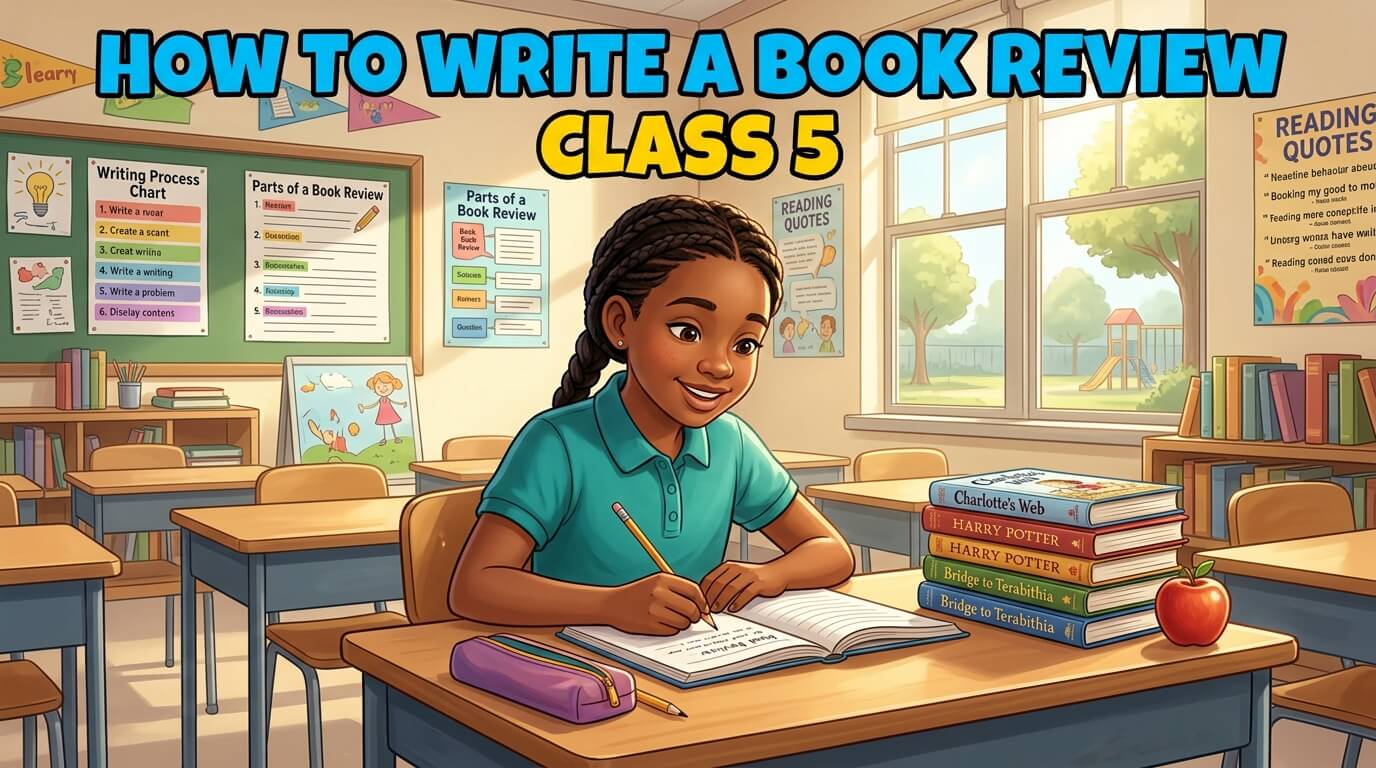
Reading books is one of the most enjoyable ways for Class 5 students to learn new things, explore different worlds, and improve their language skills. However, simply reading a book is not always enough. Students are often asked to write a book review to show their understanding of the story and share their opinions about it. A book review helps readers think carefully about what they have read and express their thoughts in a clear and organized manner.
Writing a book review may seem challenging at first, but it becomes much easier when students understand the purpose and structure of a review. A good book review is not just a summary of the story. It also includes personal opinions, observations about the characters, and thoughts about the lessons learned from the book.
This guide explains everything Class 5 students need to know about writing an effective book review. From understanding the basic structure to developing thoughtful opinions, this article provides a complete roadmap for creating an impressive book review.
Breaking Down the Concept of a Book Review
A book review is a written piece that describes and evaluates a book. It tells readers what the book is about and whether it is worth reading. A review combines factual information with personal opinions. While a summary explains the story, a review goes a step further by discussing what the reader liked or disliked.
For Class 5 students, a book review is an opportunity to practice reading comprehension, critical thinking, and writing skills. It encourages students to analyze the story instead of simply remembering events.
A book review typically includes information about the book’s title, author, main characters, plot, setting, and the reviewer’s opinion. Together, these elements help create a complete picture of the reading experience.
Why Book Reviews Are Important for Class 5 Students
Book reviews play an important role in a student’s academic development. They encourage deeper engagement with reading materials and help improve communication skills.
When students write reviews, they learn how to organize their thoughts logically. They also become more confident in expressing opinions and supporting them with examples from the text. This process strengthens comprehension skills because students must think carefully about the story’s themes, characters, and events.
Book reviews also foster creativity and independent thinking. Every reader experiences a book differently, which means each review can offer a unique perspective.
Preparing Before Writing the Review
Read the Book Carefully
The first step in writing a successful book review is reading the book attentively. Students should pay attention to important details such as the main characters, setting, major events, and lessons learned throughout the story.
Reading carefully allows students to gather information that will later help them write meaningful observations and opinions.
Take Notes While Reading
Keeping notes during reading can make the review-writing process much easier. Students can write down interesting events, favorite characters, memorable quotes, and any questions that arise while reading.
These notes act as a helpful reference when organizing ideas for the review.
Think About Personal Reactions
A book review should reflect personal thoughts and feelings. Students should consider questions such as:
- Did they enjoy the story?
- Which character did they like the most?
- Was the ending satisfying?
- Did they learn something new?
Reflecting on these questions helps create a more engaging and authentic review.
Essential Parts of a Book Review
Introduction
The introduction provides basic information about the book. It should mention the title, author’s name, and the genre of the book. The introduction serves as a brief opening that introduces the reader to the book being reviewed.
For example, a student might begin by mentioning that they recently read an adventure story written by a particular author and found it enjoyable.
Summary of the Story
The summary explains the main events of the story without revealing too many details. It should focus on the central plot and introduce the main characters. The goal is to give readers an understanding of the story while maintaining interest.
Students should avoid retelling every event in the book. Instead, they should highlight the most important aspects of the storyline.
Description of Characters
Characters are often one of the most interesting parts of any book. In this section, students can discuss the main characters and describe their personalities. They may explain which character they liked the most and why. Mentioning how characters grow or change throughout the story can also add depth to the review.
Setting of the Book
The setting refers to where and when the story takes place. Some books are set in schools, villages, cities, forests, or even imaginary worlds. Discussing the setting helps readers understand the environment in which the story unfolds. It can also reveal how the setting influences the plot and characters.
Personal Opinion
This is one of the most important sections of a book review. Students should share their honest thoughts about the book.
They can explain what they enjoyed, what they found interesting, and whether there were any parts they disliked. Supporting opinions with examples from the story makes the review more convincing.
Conclusion
The conclusion summarizes the overall impression of the book. Students can state whether they would recommend the book to others and explain why. A strong conclusion leaves readers with a clear understanding of the reviewer’s final opinion.
Suggested Structure for a Class 5 Book Review
| Section | What to Include |
| Introduction | Book title, author, genre |
| Summary | Brief description of the story |
| Characters | Main characters and their roles |
| Setting | Time and place of the story |
| Opinion | Likes, dislikes, favorite parts |
| Conclusion | Recommendation and final thoughts |
This structure helps students organize their ideas in a logical and easy-to-follow manner.
How to Write an Interesting Introduction
An engaging introduction immediately captures the reader’s attention. Instead of simply stating the book’s title and author, students can begin by sharing a brief reaction or interesting observation about the book.
For example, they might mention how the story made them laugh, think deeply, or feel excited. This approach creates curiosity and encourages readers to continue reading the review.
A well-written introduction sets the tone for the rest of the review and establishes a positive first impression.
Writing a Clear Story Summary
Many students struggle with writing summaries because they either include too much information or too little. A good summary focuses on the main plot while avoiding unnecessary details.
Students should identify the main problem or challenge faced by the characters and briefly explain how the story develops around it.
The summary should remain concise and informative. Revealing every detail can spoil the story for potential readers, so it is important to leave some surprises undisclosed.
Discussing Characters Effectively
Characters often drive the story forward and make books memorable. When discussing characters, students should focus on the main individuals who play important roles. Describing a character’s personality, actions, and development throughout the story helps readers understand their significance.
Students can also explain why they connected with a particular character. Personal reflections make the review more engaging and relatable.
Explaining the Theme of the Book
The theme refers to the main message or lesson conveyed by the story. Many children’s books teach valuable lessons about friendship, honesty, courage, kindness, or perseverance.
Identifying the theme demonstrates a deeper understanding of the text. Students should think about what the author wanted readers to learn from the story.
Discussing the theme can add depth and maturity to a Class 5 book review.
Sharing Honest Opinions
A review should reflect genuine thoughts and feelings. Students do not need to pretend that they enjoyed every aspect of a book. If there were parts they found confusing or less interesting, they can mention these respectfully. Likewise, if they loved the book, they should explain why.
Specific examples make opinions more persuasive and meaningful. Honesty helps create an authentic review that readers can trust.
Common Mistakes to Avoid
Many students make similar mistakes when writing book reviews. One common issue is turning the review into a complete summary of the story. While a summary is important, the review should also include personal analysis and opinions.
Another mistake is providing only positive comments without explaining them. Statements such as “I liked the book” become more effective when supported by reasons and examples.
Some students also forget to proofread their work. Reviewing grammar, spelling, and punctuation before submission can greatly improve the overall quality of the review.
Improving Vocabulary in Book Reviews
Using varied vocabulary makes writing more interesting and professional. Instead of repeatedly using words like “good” or “nice,” students can choose more descriptive alternatives.
Words such as exciting, inspiring, entertaining, thoughtful, creative, adventurous, and fascinating can help create richer descriptions.
Expanding vocabulary not only improves book reviews but also strengthens overall writing skills.
The Role of Critical Thinking in Book Reviews
Writing a book review requires more than remembering facts. It involves evaluating the story and forming thoughtful opinions.
Students should consider questions about character decisions, plot development, and the effectiveness of the ending. Thinking critically about these elements helps create a more detailed and insightful review.
Critical thinking encourages students to become active readers rather than passive observers.
Tips for Making Your Review Stand Out
A memorable book review combines clear writing with thoughtful analysis. Students can make their reviews stand out by including personal reflections and explaining how the book affected them.
Sharing emotional reactions, discussing favorite scenes, and identifying important lessons can make the review more engaging.
Writing in a natural and enthusiastic voice also helps capture readers’ interest.
Sample Short Book Review Format
A student reviewing a storybook might begin by introducing the title and author. They could then provide a brief summary of the plot, describe the main character, discuss the lessons learned, and conclude by recommending the book to classmates.
This simple format helps students cover all essential components while keeping the review organized and easy to understand.
Practicing Book Review Writing Regularly
Like any skill, writing book reviews improves with practice. Students who regularly read books and write reviews become more confident and capable writers over time. Each review provides an opportunity to develop stronger observation skills, improve vocabulary, and learn how to communicate ideas effectively.
Teachers and parents can support this process by encouraging students to read a variety of books and discuss them afterward.
How Teachers Evaluate Book Reviews
Teachers often assess book reviews based on several factors. They look for understanding of the story, organization of ideas, clarity of writing, grammar, vocabulary, and originality of thought.
Students who express thoughtful opinions and support them with examples typically receive higher marks.
Understanding these expectations can help students focus on the most important aspects of their writing.
Building Confidence Through Book Reviews
Book reviews give students a voice. They allow young readers to express their opinions and participate in discussions about literature.
As students gain experience reviewing books, they become more comfortable sharing ideas and defending viewpoints. This confidence can benefit many other areas of learning, including classroom discussions, presentations, and creative writing projects.
Conclusion
Learning how to write a book review in Class 5 is an important step in becoming a thoughtful reader and effective writer. A good book review goes beyond summarizing the story. It explores characters, themes, and personal reactions while providing readers with valuable insights about the book.
By reading carefully, taking notes, organizing ideas, and sharing honest opinions, students can create reviews that are both informative and engaging. The process encourages critical thinking, improves writing skills, and helps students develop a deeper appreciation for literature.
With regular practice and a clear understanding of the review structure, any Class 5 student can learn to write confident, detailed, and meaningful book reviews that reflect their unique reading experiences.
FAQs
Q1. What is a book review?
A book review is a written summary and opinion about a book that explains what the story is about and whether you liked it.
Q2. What should a Class 5 book review include?
A Class 5 book review should include the book title, author, story summary, main characters, personal opinion, and a conclusion.
Q3. How long should a book review be for Class 5?
A Class 5 book review is usually between 150 and 300 words, depending on the teacher’s instructions.
Q4. Can I give my opinion in a book review?
Yes, sharing your opinion is an important part of a book review. You should explain what you liked or disliked about the book.
Q5. Why is writing a book review important?
Writing a book review helps improve reading comprehension, critical thinking, and writing skills while encouraging students to express their ideas clearly.
