
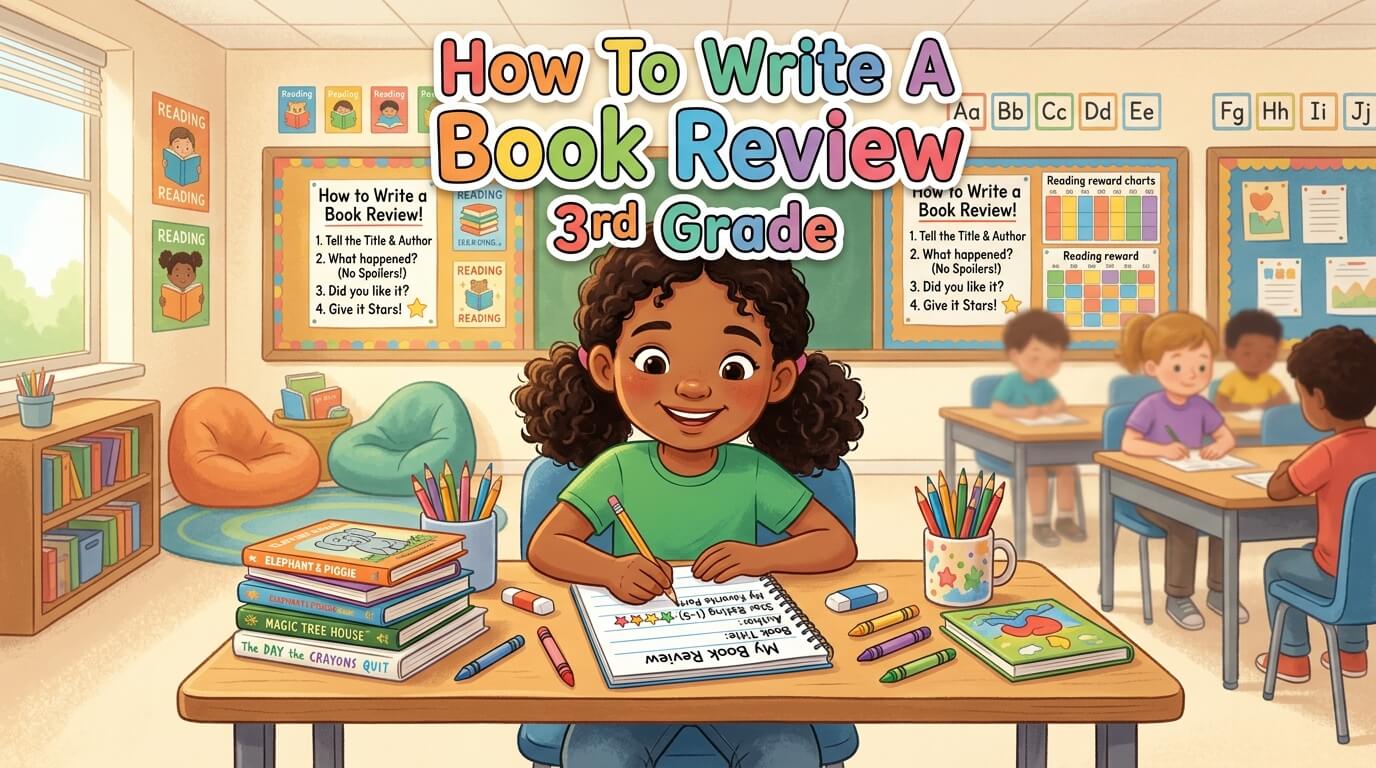
Reading books is one of the most enjoyable ways for children to learn, imagine, and explore new ideas. In third grade, students begin developing stronger reading and writing skills, which makes it the perfect time to learn how to write a book review. A book review is more than simply saying whether a book was good or bad. It helps students think carefully about what they read, understand the story better, and share their opinions with others.
Writing a book review encourages children to become active readers. Instead of just turning pages, they start paying attention to characters, settings, problems, and important events. They also learn how to express their thoughts clearly and support their opinions with examples from the book. These skills are valuable not only for language arts classes but also for future academic success.
For many third graders, writing a book review may seem challenging at first. However, when the process is broken into simple steps, it becomes manageable and even fun. This guide explains everything students, parents, and teachers need to know about creating an effective third-grade book review.
The True Meaning and Purpose of a Book Review
A book review is a piece of writing that tells readers about a book and shares an opinion about it. It includes information about the story while also explaining what the reviewer liked or disliked. Unlike a book report, which mainly summarizes events, a book review focuses on personal reactions and recommendations.
Third graders should understand that a book review answers two important questions. The first question is, “What is the book about?” The second question is, “What did you think about it?” Combining these answers creates a balanced and thoughtful review.
A good review helps other readers decide whether they might enjoy the book. It provides enough information to understand the story without revealing every detail or spoiling the ending.
Why Third Graders Should Learn to Write Book Reviews
Book reviews help students strengthen several important skills at the same time. Reading comprehension improves because children must pay attention to details while reading. Writing skills develop as they organize ideas into complete paragraphs. Critical thinking grows because students evaluate what they liked and why.
When children explain their opinions, they learn that different readers may have different reactions to the same story. This teaches respect for diverse viewpoints and encourages thoughtful discussion about books.
Writing book reviews also builds confidence. Students realize that their opinions matter and that they can communicate their thoughts effectively through writing.
Choosing the Right Book
The first step in writing a successful review is selecting an appropriate book. Third graders should choose books that match their reading level and interests. A student who enjoys animals may prefer a story about pets or wildlife, while another child might enjoy adventure or fantasy stories.
Choosing an interesting book makes the review-writing process much easier. When students enjoy reading, they are more likely to remember important details and write enthusiastically about their experience.
It is helpful to finish reading the entire book before beginning the review. Reading from start to finish allows students to understand the complete story and form a fair opinion.
Paying Attention While Reading
Strong book reviews begin with careful reading. As students read, they should think about the main characters, important events, and lessons in the story. Paying attention to these elements makes it easier to write later.
Many teachers encourage students to keep notes while reading. Writing down favorite scenes, interesting characters, or surprising events can help students remember details when it is time to write the review.
Reading actively helps students engage with the story rather than simply moving through the pages. This engagement leads to more thoughtful and detailed reviews.
Key Parts of a Third-Grade Book Review
Every good book review includes several basic elements. These parts help readers understand the book and the reviewer’s opinion.
Book Information
The review should begin with basic information about the book. This usually includes the title and the author’s name. Mentioning these details helps readers identify the book being reviewed.
For example, a student might start by writing that they read a particular book written by a specific author. This introduction provides context for the rest of the review.
Brief Summary
After introducing the book, students should provide a short summary. The summary explains the main idea of the story without revealing the ending.
A summary should focus on the most important events and characters. Third graders do not need to include every detail. Instead, they should give readers a general understanding of what happens in the book.
Personal Opinion
The opinion section is the heart of the review. Here, students explain what they thought about the book. They can discuss favorite characters, exciting scenes, funny moments, or lessons they learned.
It is important for students to explain their opinions rather than simply stating them. Instead of writing “I liked the book,” they should explain why they liked it.
Recommendation
Most book reviews end with a recommendation. Students can explain who might enjoy the book and whether they would suggest it to other readers.
This final section helps readers decide whether the book might be a good choice for them.
Step-by-Step Process for Writing a Book Review
Writing a book review becomes easier when students follow a clear process.
Step 1: Write an Introduction
The introduction should mention the book title and author. Students can also include a sentence about the type of book or why they chose it. This opening paragraph sets the stage for the review and gives readers important background information.
Step 2: Summarize the Story
The next paragraph should provide a brief overview of the plot. Students should focus on major events rather than small details. The goal is to help readers understand the story without giving away important surprises.
Step 3: Share Thoughts and Feelings
This section allows students to express their opinions. They can discuss what they enjoyed, what surprised them, and what they learned from the story. Including specific examples makes opinions stronger and more convincing.
Step 4: End with a Recommendation
The conclusion should summarize the student’s overall opinion and recommend the book to other readers if appropriate. This ending provides a clear final impression of the book.
Common Mistakes Third Graders Should Avoid
Many young writers make similar mistakes when writing book reviews. One common mistake is revealing the ending. Sharing too much information can spoil the story for future readers.
Another mistake is writing only a summary. While summaries are important, reviews should also include personal opinions and reactions. Some students also forget to explain their opinions. Adding reasons and examples makes the review more meaningful and interesting.
Sample Structure for a Third-Grade Book Review
The following structure can help students organize their ideas effectively.
| Section | Purpose | What to Include |
| Introduction | Introduce the book | Title, author, type of book |
| Summary | Explain the story | Main characters and major events |
| Opinion | Share thoughts | Likes, dislikes, favorite parts |
| Recommendation | Give final judgment | Who should read the book and why |
This simple format helps students create organized and easy-to-read reviews.
How Teachers Can Support Book Review Writing
Teachers play an important role in helping students develop review-writing skills. Modeling examples allows students to see what successful reviews look like. Reading reviews together and discussing their strengths can improve understanding.
Providing graphic organizers can also help students plan their writing before creating the final draft. These tools encourage organization and reduce confusion.
Positive feedback is equally important. Encouraging students to share their opinions confidently helps them become stronger writers.
How Parents Can Help at Home
Parents can support book review writing by discussing books with their children. Asking questions about characters, events, and lessons encourages deeper thinking about the story.
Reading together creates opportunities for meaningful conversations that can later inspire stronger reviews. Parents can also help children brainstorm ideas and organize their thoughts before writing.
Most importantly, parents should focus on encouragement rather than perfection. Building confidence is often more valuable than correcting every mistake.
Developing Stronger Opinions About Books
Many third graders find it easy to describe a story but harder to explain their opinions. Developing strong opinions requires reflection and thoughtful consideration.
Students can ask themselves questions such as whether they liked the main character, whether the story was exciting, or whether they learned something new. Thinking about these questions helps generate meaningful ideas for the review.
The more students practice evaluating books, the easier it becomes to express their thoughts clearly.
Making Book Reviews Interesting to Read
A book review becomes more engaging when students write with enthusiasm and personality. Instead of using very general statements, they can describe specific moments that stood out.
Explaining emotional reactions also adds interest. Readers enjoy hearing why a scene was funny, exciting, surprising, or inspiring. Adding details creates a review that feels authentic and enjoyable rather than repetitive or generic.
Building Confidence Through Practice
Like any skill, book review writing improves with practice. The first review may feel difficult, but each new review becomes easier.
Regular reading provides more opportunities to analyze stories and express opinions. Over time, students develop stronger writing skills and greater confidence in sharing their thoughts.
Practice also helps students discover their unique writing voice. As they become more comfortable, their reviews begin to sound more natural and personal.
The Connection Between Reading and Writing
Book review writing demonstrates the close relationship between reading and writing. Strong readers often become stronger writers because they learn from the books they read.
By analyzing stories, students gain a better understanding of how authors create characters, build plots, and communicate ideas. These observations can improve their own writing abilities.
Book reviews provide a practical way to connect these two important literacy skills.
Encouraging a Lifelong Love of Books
One of the greatest benefits of writing book reviews is that it encourages students to engage more deeply with books. Instead of reading passively, they become active participants in the reading experience.
This deeper engagement can foster a lifelong appreciation for literature. Students learn that books are not just assignments but opportunities for learning, imagination, and personal growth.
When children feel comfortable sharing their opinions about books, reading becomes a more meaningful and rewarding activity.
Conclusion
Learning how to write a book review in third grade is an important step in developing reading, writing, and critical-thinking skills. A successful review introduces the book, provides a brief summary, shares personal opinions, and offers a recommendation. By reading carefully, organizing ideas clearly, and explaining their thoughts, third graders can create reviews that are informative and engaging.
The process may seem challenging at first, but practice makes it easier. With support from teachers and parents, students can learn to express their ideas confidently and thoughtfully. More importantly, writing book reviews helps children become active readers who think deeply about the stories they enjoy. As these skills grow, students gain confidence not only as writers but also as lifelong learners and book lovers.
FAQs
Q1. What is a book review for 3rd grade?
A book review is a short piece of writing that tells what a book is about and shares your opinion about it.
Q2. How long should a 3rd-grade book review be?
A 3rd-grade book review is usually one to three paragraphs long, depending on the teacher’s requirements.
Q3. What should I include in a book review?
You should include the book title, author, a brief summary, your opinion, and whether you recommend the book.
Q4. Can I share my favorite part of the book?
Yes, you can mention your favorite part, but avoid giving away the ending or major surprises.
Q5. Why is writing a book review important?
Writing a book review helps improve reading comprehension, critical thinking, and writing skills while allowing you to share your thoughts about a book.
