
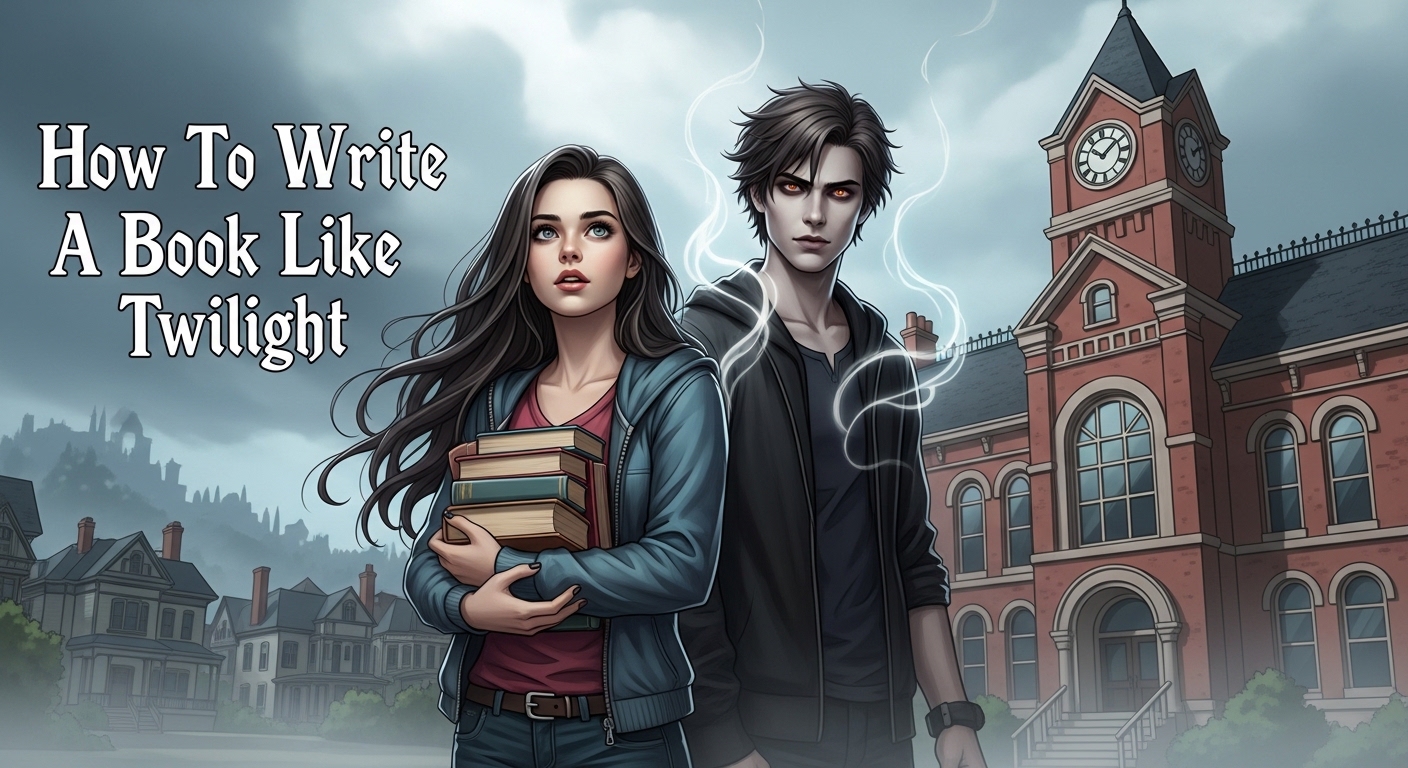
Writing a novel inspired by Twilight means understanding far more than just its plot. Written by Stephenie Meyer, the book reshaped modern young adult fiction by blending supernatural elements with deeply personal emotional storytelling. Its success lies not in vampires alone, but in its tone, pacing, and the immersive inner world of its protagonist.
To write a book like Twilight, you must learn how to build emotional intensity, craft compelling characters, and maintain a consistent narrative voice, while also mastering the technical aspects of editing, publishing, and design that bring a manuscript to life.
The Emotional Foundation Behind Twilight’s Success
At its core, Twilight is a story about longing, identity, and emotional vulnerability. The supernatural aspect acts as a framework, but the real narrative power comes from how the protagonist experiences love, fear, and self-discovery.
Unlike traditional fantasy, the stakes are internal rather than external. The tension arises from emotional conflict—uncertainty, attraction, and restraint—rather than large-scale action. This is a crucial distinction. To replicate this style, your story must prioritize emotional realism over spectacle.
Readers are drawn to characters who feel real, even in unreal circumstances. That is why Twilight resonates—it allows readers to project their own emotions into the narrative.
Developing a Deep First-Person Narrative Voice
One of the defining features of Twilight is its first-person narration. Bella’s voice is introspective, observant, and emotionally nuanced. This perspective allows readers to experience every moment with immediacy.
To achieve a similar effect, your narrative voice must feel authentic and consistent. It should reflect the personality, insecurities, and worldview of your protagonist. This requires careful attention during the writing and editing process, as inconsistencies in voice can break immersion.
A strong first-person voice also relies on subtlety. Instead of explicitly stating emotions, it often reveals them through thought patterns, reactions, and internal dialogue. This technique creates depth without overwhelming the reader.
Creating Complex and Relatable Characters
Character development is central to writing a book like Twilight. The characters are not defined by their actions alone, but by their internal struggles and emotional evolution.
Bella is relatable because she feels ordinary, while Edward is compelling because of his mystery and internal conflict. This contrast creates dynamic tension. When building your own characters, focus on psychological depth rather than external traits.
A well-developed character should have clear motivations, fears, and contradictions. These elements make them feel human. During the editing phase, refining character arcs is essential to ensure consistency and growth throughout the story.
Constructing a Slow-Burn Romantic Arc
The romance in Twilight unfolds gradually, allowing tension to build over time. This slow progression is what makes the relationship feel intense and meaningful.
Rather than relying on dramatic declarations, the story uses small moments—glances, conversations, and silences—to develop connection. This approach requires patience and careful pacing. Rushing the relationship can weaken its impact.
A slow-burn romance also benefits from obstacles. Emotional barriers, misunderstandings, and external pressures all contribute to the development of the relationship. These elements should feel organic rather than forced.
Building an Immersive Atmosphere Through Setting
The setting of Forks is integral to the mood of Twilight. Its constant rain and muted tones create a sense of isolation and introspection. This atmospheric design enhances the emotional tone of the story.
When creating your own setting, consider how environment influences mood. A well-designed setting does more than provide a backdrop—it shapes the narrative. Weather, landscape, and social environment all contribute to the reader’s experience.
Incorporating sensory details during the writing and editing stages can make your world more vivid. However, balance is key. Over-description can slow pacing, while under-description can reduce immersion.
Integrating Supernatural Elements with Realism
A key strength of Twilight is its balance between fantasy and reality. While the story involves vampires, it remains grounded in everyday life. This makes the supernatural elements feel believable.
To replicate this balance, introduce fantastical elements gradually. Allow readers to adjust to the world before expanding its scope. Grounding these elements in relatable experiences helps maintain authenticity.
Consistency is also crucial. Once rules are established within your world, they must be maintained. This is where careful editing becomes essential, as inconsistencies can disrupt the reader’s suspension of disbelief.
Structuring Your Narrative for Emotional Impact
The structure of a Twilight-style novel emphasizes emotional progression rather than action-driven plotting. Each phase of the story builds upon the protagonist’s internal journey.
| Story Phase | Narrative Focus | Writing Approach |
| Beginning | Establish voice and environment | Focus on mood and introspection |
| Development | Build relationships and tension | Use gradual emotional shifts |
| Turning Point | Reveal critical information | Increase stakes subtly |
| Climax | Heighten emotional conflict | Prioritize character decisions |
| Resolution | Reflect on growth and change | Provide emotional closure |
This structure allows for a cohesive narrative that maintains reader engagement through emotional investment.
Writing Dialogue with Subtle Emotional Layers
Dialogue in Twilight is understated but meaningful. Conversations often carry hidden emotions, revealing more than what is explicitly said.
Effective dialogue should reflect character personality and emotional state. It should feel natural while also advancing the narrative. Overly formal or exaggerated dialogue can break immersion.
During the editing process, refining dialogue is essential. Removing unnecessary lines and enhancing subtext can significantly improve readability and impact.
The Role of Editing in Shaping Your Manuscript
Editing is where your story truly takes form. It transforms raw ideas into a polished narrative. For a Twilight-style novel, editing is particularly important because of its reliance on tone and emotional consistency.
This stage involves refining character arcs, improving pacing, and ensuring clarity. It also includes eliminating redundancies and strengthening narrative flow. Professional editing can elevate your manuscript to a publishable standard.
Revisions should not be rushed. Taking time to evaluate your work from different perspectives can reveal areas for improvement.
Navigating the Publishing Process
Once your manuscript is complete, the next step is publishing. Whether you choose traditional publishing or self-publishing, preparation is essential.
Traditional publishing involves submitting your manuscript to agents or publishers, which requires patience and persistence. Self-publishing, on the other hand, offers creative control but demands greater responsibility.
Both paths require a well-edited manuscript and a clear understanding of your target audience. The publishing stage also involves marketing considerations, which can influence your book’s success.
The Importance of Visual Design in Book Success
The design of your book plays a crucial role in attracting readers. Twilight’s iconic cover demonstrates how visual elements can enhance a story’s identity.
Effective design includes a compelling cover, readable typography, and a cohesive aesthetic. These elements should align with the tone of your narrative.
Investing in professional design can significantly impact how your book is perceived. It is often the first impression readers have, making it a critical component of the publishing process.
Maintaining Consistency in Tone and Style
Consistency is essential in a Twilight-inspired novel. The tone should remain steady, allowing readers to stay immersed in the story.
This requires careful attention during both writing and editing. Sudden shifts in tone can disrupt the narrative flow. Ensuring that each scene aligns with the overall mood helps create a cohesive reading experience.
Avoiding Common Writing Pitfalls
When writing a novel inspired by Twilight, it is important to avoid imitation without originality. While the structure and techniques can serve as a guide, your story should offer something unique.
Overly dramatic writing, inconsistent pacing, and underdeveloped characters are common issues. Addressing these during the editing stage can improve the overall quality of your manuscript.
Creating Your Own Identity as a Writer
Ultimately, writing a book like Twilight is about capturing its emotional essence while developing your own voice. Your story should reflect your perspective, themes, and creative vision.
Drawing inspiration from successful works is valuable, but originality is what sets your writing apart. By combining strong storytelling techniques with your unique ideas, you can create a novel that resonates with readers.
Final Thoughts
Writing a book like Twilight requires a deep understanding of emotional storytelling, character development, and atmospheric world-building. It is not about replicating its plot, but about embracing the techniques that make it impactful.
From crafting a compelling narrative voice to refining your manuscript through editing, every step plays a role in shaping your story. The publishing process and thoughtful design further contribute to your book’s success.
If you focus on authenticity, emotional depth, and consistency, you can create a story that captures the same sense of connection that made Twilight a global phenomenon—while still being entirely your own.
