
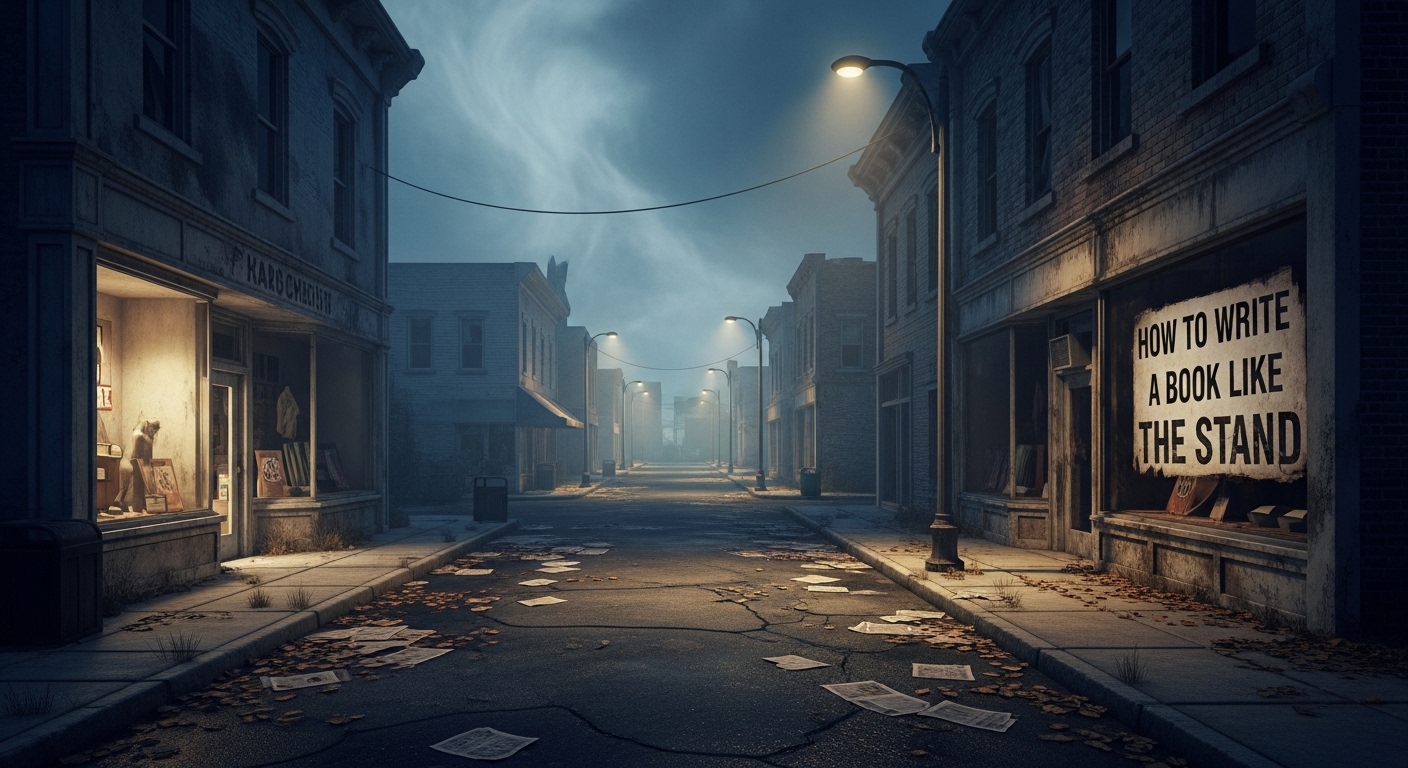
Writing a novel inspired by The Stand by Stephen King is an ambitious creative pursuit. This is not just a story—it is an expansive literary experience that blends apocalyptic horror, philosophical reflection, and deeply human storytelling. What makes The Stand so enduring is not simply its premise of a deadly pandemic, but the way it explores society after collapse, morality under pressure, and the emotional journeys of its characters.
To write something comparable, you must move beyond surface-level imitation and understand the mechanics behind its success. This involves mastering narrative scale, character complexity, thematic depth, and technical processes like editing, design, and publishing. A novel like this is built layer by layer, with careful attention to both the macro world and the micro human experience.
The Foundation of Narrative Structure
At its core, The Stand is structured around collapse and rebirth. The story begins with the breakdown of civilization due to a man-made virus, but the real narrative lies in what happens afterward. The world does not simply end—it reshapes itself through the people who survive.
To create a similar impact, you must design a premise that feels plausible. Readers are more affected by disasters that seem possible rather than fantastical. This is why the virus in The Stand feels so unsettling—it is grounded in scientific realism and human error.
However, the premise alone is not enough. The narrative must evolve beyond the event. The collapse is only the beginning; the real story lies in reconstruction, conflict, and moral confrontation. This layered storytelling is what transforms a simple idea into an epic.
Building an Immersive Post-Apocalyptic World
World-building in a novel like The Stand is both expansive and intimate. The environment is not just a setting—it becomes a living force that shapes the characters and their decisions.
After a catastrophic event, every aspect of life changes. Transportation disappears, communication networks fail, and social systems collapse. A believable world reflects these consequences in detail. Streets are empty, cities decay, and nature begins to reclaim human spaces.
Yet, the effectiveness of world-building comes from restraint. Instead of overwhelming the reader with information, allow the world to unfold naturally through character experiences. A character searching for food or navigating an abandoned town can reveal more about the setting than pages of description.
The key is consistency. Every detail must align with the reality you have created. If resources are scarce, characters should behave accordingly. If danger is constant, it should influence their decisions and relationships.
Developing Deep and Interconnected Characters
One of the most defining features of The Stand is its large ensemble of characters. Each individual feels distinct, with their own voice, history, and emotional trajectory.
To achieve this, you must treat each character as a central figure in their own story. Even secondary characters should have clear motivations and internal conflicts. This creates a network of perspectives that enriches the narrative.
Character transformation is particularly important. In an apocalyptic setting, people are pushed beyond their limits. Some rise to the occasion, discovering strength and compassion, while others succumb to fear, power, or cruelty. These transformations should feel gradual and earned.
Relationships also play a crucial role. Connections between characters—whether cooperative or antagonistic—drive the emotional core of the story. Through these relationships, the broader themes of survival, trust, and morality become more tangible.
Structuring an Epic Narrative
A novel like The Stand requires a carefully controlled structure. Unlike fast-paced thrillers, it unfolds gradually, allowing readers to fully absorb the world and its characters.
Below is a simplified table illustrating how such a narrative can be organized:
| Narrative Stage | Description | Emotional Tone |
| Initial Collapse | The disaster unfolds and society begins to break down | Fear, confusion |
| Fragmentation | Survivors navigate isolation and uncertainty | Loneliness, introspection |
| Gathering | Characters begin to find each other and form communities | Hope, cautious optimism |
| Ideological Conflict | Opposing groups or beliefs emerge, leading to tension | Suspense, moral struggle |
| Final Confrontation | The central conflict reaches its peak | Intensity, inevitability |
| Aftermath | The consequences of the conflict are revealed | Reflection, resolution |
This structure emphasizes progression. Each stage builds upon the previous one, creating a sense of inevitability and momentum.
Exploring Themes That Resonate
Thematic depth is what elevates a novel from entertaining to meaningful. In The Stand, the central theme revolves around the battle between good and evil, but it is explored in a nuanced way.
Rather than presenting morality as black and white, the story examines the gray areas. Characters are forced to make difficult choices, often with no clear right answer. This complexity makes the narrative more engaging and realistic.
When writing your own novel, identify a central theme that resonates with you. It could be survival, redemption, power, or the nature of humanity itself. Once established, this theme should influence every aspect of your story, from character decisions to plot developments.
Creating Atmosphere and Emotional Weight
Atmosphere is a defining element of The Stand. The sense of emptiness, tension, and quiet dread permeates the story, creating an immersive experience for the reader.
This effect is achieved through careful use of language and pacing. Descriptions should focus on sensory details, allowing readers to feel the environment rather than simply visualize it. Silence, darkness, and stillness can be just as powerful as action.
Emotional weight comes from contrast. Moments of calm or connection make the darker elements more impactful. By balancing intensity with reflection, you create a rhythm that keeps readers engaged.
One Focused Section: Practical Writing Approach
To bring all these elements together effectively, a few key techniques can guide your writing process:
Develop a realistic and compelling central catastrophe that serves as the foundation of your story. Build multiple main characters with distinct arcs, ensuring each one contributes meaningfully to the narrative. Use shifting perspectives to expand the scope and provide different angles on the same events. Allow the story to unfold gradually, giving readers time to connect with the world and its inhabitants. Integrate symbolism and thematic elements subtly, reinforcing the deeper meaning without overwhelming the narrative.
The Importance of Editing in Large-Scale Fiction
Editing is essential when working on a complex and lengthy novel. The first draft is often expansive and unrefined, containing ideas that need to be shaped into a coherent structure.
Structural editing focuses on the overall flow of the story. It ensures that each section serves a purpose and that the narrative progresses logically. This stage may involve removing or rewriting entire sections to improve clarity and pacing.
Line editing refines the language itself. It enhances readability, consistency, and tone, ensuring that the writing remains engaging throughout.
Finally, proofreading addresses smaller errors, polishing the manuscript to a professional standard. In a novel of this scale, attention to detail is crucial.
Designing a Book That Reflects Its Depth
Design is often underestimated, but it plays a significant role in how a book is perceived. A novel inspired by The Stand should have a design that reflects its tone and scope.
The cover is the first point of contact with readers. It should evoke curiosity and hint at the story’s themes without revealing too much. Visual elements such as color, typography, and imagery all contribute to this impression.
Interior design is equally important. Clear formatting, readable fonts, and thoughtful layout enhance the reading experience, particularly in a long novel. Good design ensures that readers can immerse themselves in the story without distraction.
Approaching Publishing with Strategy
Publishing a novel of this nature requires careful consideration. Both traditional publishing and self-publishing offer distinct advantages.
Traditional publishing provides professional support in editing, design, and marketing, but it can be highly competitive. Manuscripts must meet high standards and stand out in a crowded field.
Self-publishing offers greater control and flexibility. Writers can oversee every aspect of the process, from editing to design. However, this also means taking on additional responsibilities, particularly in marketing and distribution.
Regardless of the path chosen, quality remains the most important factor. A well-crafted book has a far greater chance of success.
Sustaining Consistency Across a Long Narrative
Maintaining consistency is one of the greatest challenges in writing an epic novel. With multiple characters, timelines, and plotlines, it is easy for details to become inconsistent.
Careful planning can help prevent this. Keeping track of character traits, events, and timelines ensures continuity. This does not restrict creativity—it supports it by providing a stable framework.
Consistency also applies to tone and style. Even as the story evolves, it should feel cohesive and unified.
Balancing Scope with Human Connection
While the scale of a novel like The Stand is vast, its emotional impact comes from individual experiences. Readers connect with characters, not just events.
Focusing on personal stories within the larger narrative creates a sense of intimacy. Moments of connection, conflict, and growth bring depth to the story and make it more relatable.
This balance between scale and intimacy is what makes epic storytelling truly effective.
Final Thoughts
Writing a book like The Stand is a complex and demanding process, but it is also deeply rewarding. It challenges you to think on multiple levels, combining world-building, character development, thematic exploration, and technical execution.
From the earliest stages of concept development to the final steps of editing, design, and publishing, every element contributes to the final work. This is not a project that can be rushed. It requires patience, dedication, and a commitment to crafting something meaningful.
If you approach it with care and intention, you can create a story that not only entertains but also resonates—capturing the same sense of scale, depth, and humanity that has made The Stand a lasting literary achievement.
