
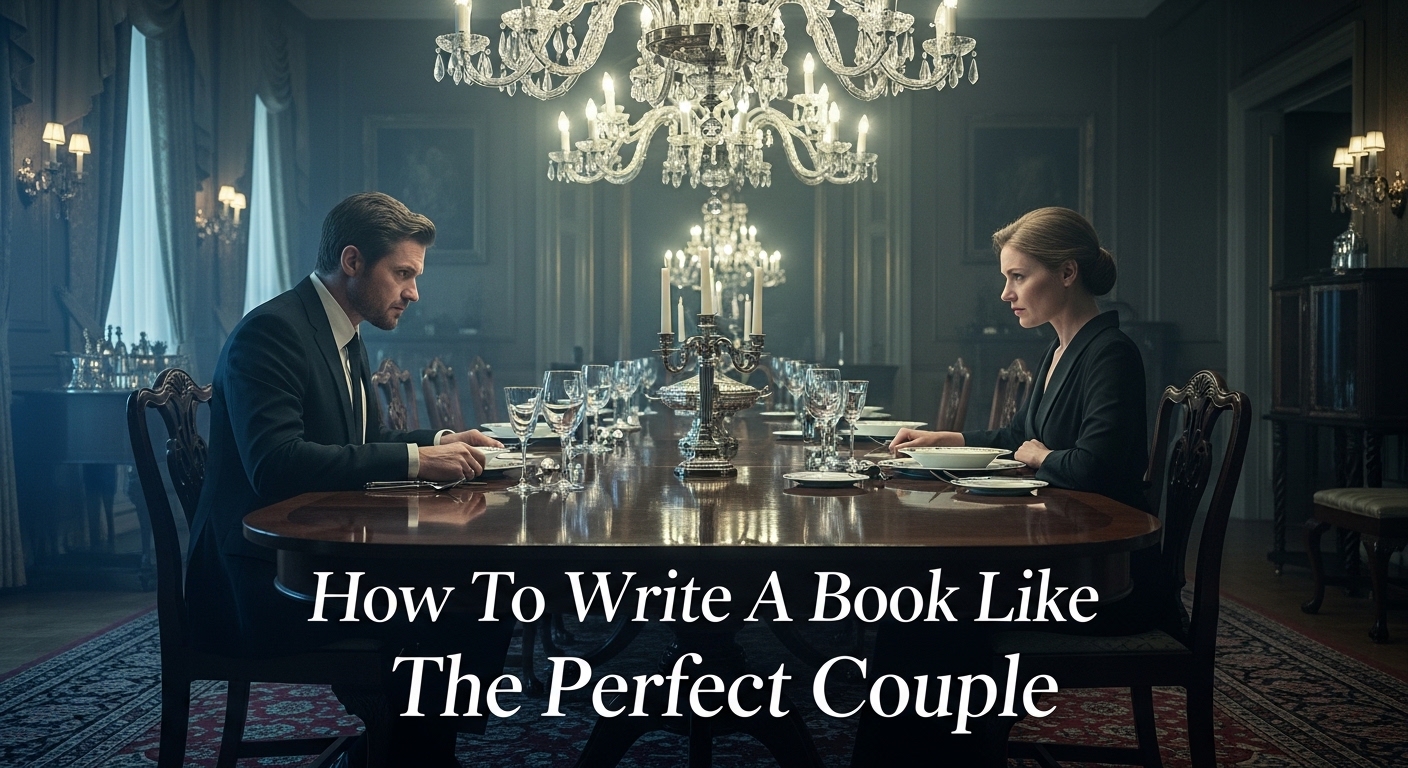
Stories like The Perfect Couple captivate readers because they merge emotional drama with mystery inside a world that appears flawless on the surface. Beneath elegant settings and seemingly ideal relationships lies tension, secrecy, and psychological complexity. Writing a book in this style requires more than crafting a mystery; it demands an understanding of human behavior, social dynamics, and narrative control.
A novel inspired by this storytelling approach draws readers into an environment where every conversation carries weight and every character hides something meaningful. The suspense grows not from violence or action alone but from emotional uncertainty. Writers who want to achieve this effect must learn how to combine atmosphere, characterization, pacing, and thematic depth while also considering how the manuscript will evolve through professional editing, visual design, and eventual publishing.
The Narrative Foundation Behind The Perfect Couple
At its heart, this style of novel functions as both relationship drama and investigative mystery. The story begins with stability — an environment that feels secure, luxurious, or socially admired. Readers are introduced to characters whose lives appear structured and successful. Slowly, that stability fractures.
What makes the narrative compelling is that the mystery emerges organically from personal relationships rather than external danger. Secrets exist long before the central event occurs. The plot simply forces them into the open.
This approach creates emotional realism. Readers become invested not only in discovering what happened but in understanding why it happened. Suspense grows through psychology rather than spectacle, which gives the story lasting impact.
Writers should therefore begin not with the crime or twist but with emotional imbalance. Ask what tensions already exist before the story starts. The mystery should feel inevitable, as if it could only happen within this specific group of people.
Crafting an Atmosphere That Feels Alive
Setting plays a crucial role in novels like The Perfect Couple. The environment is immersive and symbolic, reflecting both privilege and emotional confinement. Coastal homes, destination weddings, or elite social circles are often used because they naturally heighten scrutiny and expectation.
A strong setting influences character behavior. People act differently when surrounded by wealth, tradition, or social pressure. The writer’s task is to show how environment shapes decisions without overexplaining it.
Atmosphere develops through sensory detail rather than description alone. The rhythm of conversations, the silence after arguments, or the tension during public gatherings all contribute to mood. Readers should feel they are observing a world that continues even when the narrator is silent.
This immersive quality later supports book design, influencing cover imagery, typography choices, and marketing identity during the publishing stage.
Character Complexity as the Core Engine
In stories modeled after The Perfect Couple, characters are never entirely trustworthy — yet they are never purely villainous either. Each person operates from personal logic shaped by fear, love, ambition, or insecurity.
The writer must treat every character as emotionally valid. Even morally questionable decisions should feel understandable from the character’s perspective. When readers empathize with multiple sides, suspense deepens because certainty disappears.
Characters should exist in layers. Public identity represents how society sees them, while private emotions reveal vulnerability. Beneath both lies a hidden truth that drives their behavior. The narrative gradually exposes these layers through actions rather than explanations.
During editing, authors often refine characterization by removing excessive backstory and allowing personality to emerge through interaction. Subtle gestures and reactions often communicate more than long descriptions.
Structuring Suspense Through Emotional Revelation
A defining trait of this storytelling style is controlled pacing. Instead of rapid twists, the narrative unfolds through gradual revelation. Each chapter shifts reader perception slightly, encouraging reinterpretation of earlier scenes.
The structure typically moves through emotional escalation rather than action escalation. Early chapters establish relationships and tone, while later sections destabilize trust between characters. By the time the truth surfaces, readers realize clues were present from the beginning.
The following table outlines how narrative momentum develops in this type of novel:
| Narrative Stage | Story Function | Emotional Effect on Readers | Writing Priority |
| Establishment | Introduce social world and relationships | Comfort and curiosity | Atmosphere and tone |
| Disruption | A shocking incident occurs | Unease and intrigue | Character reactions |
| Exposure | Secrets begin surfacing | Suspicion increases | Perspective shifts |
| Confrontation | Relationships fracture | Emotional intensity | Dialogue and conflict |
| Resolution | Truth reshapes relationships | Reflection and closure | Thematic meaning |
Professional editing often focuses heavily on this phase, ensuring revelations appear at precisely the right emotional moment.
Writing Dialogue Filled With Subtext
Dialogue in a novel like The Perfect Couple rarely communicates direct meaning. Characters speak politely while concealing frustration, jealousy, or fear. The tension lies in what remains unsaid.
Effective dialogue mirrors real social behavior. People often avoid confrontation, especially in refined or elite environments. Writers should therefore allow pauses, interruptions, and indirect remarks to carry emotional significance.
Instead of explaining conflict through narration, let readers interpret emotional shifts through tone and reaction. A casual remark may reveal resentment; a compliment may disguise criticism.
During the editing process, tightening dialogue becomes essential. Removing obvious explanations allows subtext to emerge naturally, increasing sophistication and reader engagement.
The Role of Social Observation
One reason readers connect deeply with stories like The Perfect Couple is their subtle commentary on class, expectation, and reputation. The narrative observes how people perform happiness for others while privately struggling.
Writers should explore how social roles influence behavior. Weddings, family gatherings, or public celebrations provide ideal narrative spaces because they force characters into performance. Everyone must appear composed, even when emotional tension grows unbearable.
This social observation adds thematic depth and elevates the novel beyond simple mystery. Readers recognize familiar pressures — the desire to belong, fear of judgment, and struggle to maintain identity within relationships.
Such thematic richness also strengthens a manuscript’s position during publishing, as editors often look for stories that combine entertainment with insight.
Maintaining Glamour Without Losing Emotional Reality
A delicate balance defines novels in this genre. The world feels beautiful and aspirational, yet emotionally unstable. Writers must ensure glamour enhances tension rather than distracting from it.
Luxury settings work best when contrasted with vulnerability. Perfect surroundings emphasize imperfections in relationships. Celebrations feel uneasy when readers sense hidden conflict beneath smiling faces.
Descriptions should therefore serve emotional storytelling. Instead of listing expensive details, focus on how characters experience their environment. A grand house might feel isolating; a crowded party might intensify loneliness.
This emotional grounding prevents the narrative from becoming superficial and allows readers to connect with characters despite unfamiliar lifestyles.
Key Techniques To Capture This Storytelling Style
The following techniques summarize the essential craft elements needed to write a novel similar in tone and structure. This is the only section presented as concise points, while the rest of the article remains fully explanatory:
- Begin with relationships, not the mystery itself.
- Allow secrets to exist before the story starts.
- Reveal character motivations gradually rather than through exposition.
- Use setting to reinforce emotional themes.
- Build suspense through shifting perspectives.
- Let dialogue imply conflict instead of stating it directly.
- Ensure every twist changes emotional understanding, not just plot direction.
These principles help maintain narrative cohesion while sustaining reader curiosity.
The Importance of Editing in Psychological Drama
Novels driven by emotion require meticulous revision. First drafts often contain too much explanation because writers want readers to understand motivations immediately. However, suspense thrives on ambiguity.
Effective editing removes redundancy and sharpens emotional beats. Scenes should begin late and end early, preserving tension. Character reactions must feel authentic rather than theatrical.
Editors also examine pacing carefully, ensuring quieter scenes still carry narrative movement. In relationship-focused stories, emotional progression replaces physical action as the primary driver of momentum.
Through revision, writers refine tone, clarify themes, and strengthen narrative consistency.
Preparing the Story for Publishing Success
Writing the manuscript is only one stage of the journey. Stories like The Perfect Couple succeed commercially because they align storytelling with audience expectations and market positioning.
During publishing, elements such as genre classification, cover design, and reader targeting become crucial. A well-designed cover communicates tone instantly — suggesting mystery, elegance, or emotional drama before readers open the book.
Understanding your story’s emotional identity helps guide these decisions. Is the novel primarily suspenseful, romantic, or socially observant? Clear positioning ensures the book reaches readers who appreciate character-driven mysteries.
Authors who consider publishing realities early often produce manuscripts that transition smoothly into the professional marketplace.
Creating an Ending That Resonates Emotionally
The conclusion of a story like The Perfect Couple does more than reveal truth. It reshapes how readers interpret every previous scene. The ending should feel surprising yet inevitable.
Rather than focusing solely on solving the mystery, emphasize emotional consequences. Relationships change, illusions collapse, and characters confront uncomfortable self-awareness.
A powerful ending leaves readers reflecting on themes long after finishing the book. Closure should answer narrative questions while preserving emotional complexity.
Writers should ask whether the resolution changes characters internally. If the truth emerges but nothing emotionally shifts, the story risks feeling incomplete.
Final Thoughts
Writing a book inspired by The Perfect Couple requires patience, observation, and emotional precision. The genre succeeds because it treats human relationships as mysteries in themselves. Suspense grows from personality, social pressure, and hidden truth rather than constant action.
By focusing on layered characterization, immersive atmosphere, controlled pacing, and meaningful dialogue, writers can create stories that feel elegant yet deeply unsettling. Careful editing refines emotional clarity, thoughtful design enhances presentation, and strategic publishing ensures the novel reaches its ideal audience.
Ultimately, the secret lies in understanding that perfection is only the surface. The real story begins where appearances fail — and where characters must finally confront who they truly are.
