
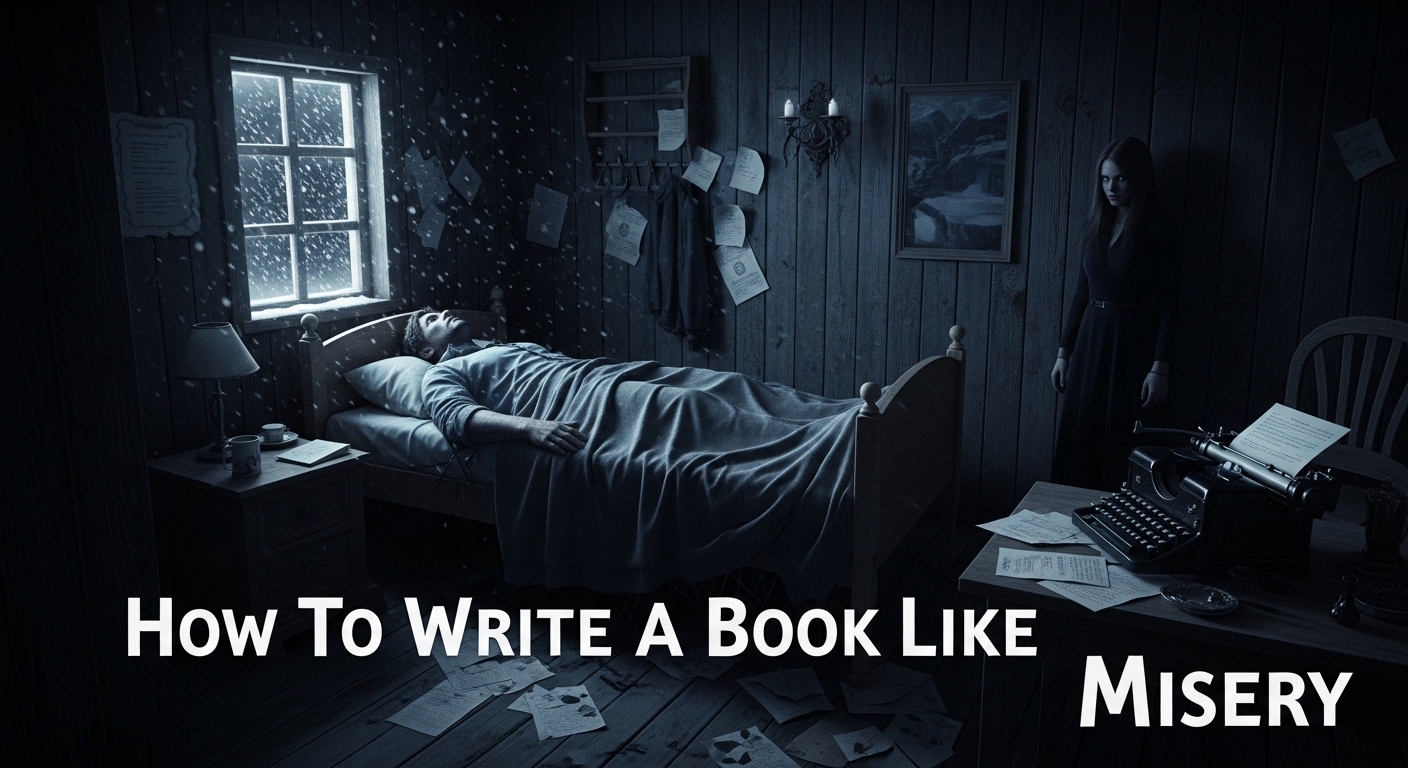
Few novels demonstrate the power of psychological horror as effectively as Misery by Stephen King. What makes this novel remarkable is not just its story, but the way it constructs fear through realism, control, and human instability. It avoids supernatural elements entirely and instead builds tension through believable circumstances, making it a powerful case study in modern suspense writing.
To write a book like Misery, you need to move beyond surface-level storytelling and understand the deeper mechanics that drive reader engagement. This includes psychological theory, narrative structure, character design, and the technical processes of editing and publishing. When approached correctly, these elements combine to create a story that feels both intimate and deeply unsettling.
The Science and Psychology of Authentic Fear
At the core of Misery lies a concept widely discussed in literary and psychological research: fear is most effective when it feels possible. Readers respond more intensely to situations they can imagine happening in real life. This is often referred to as psychological realism, and it is the foundation of the novel’s impact.
Paul Sheldon’s situation—being trapped, dependent, and constantly monitored—activates a deep sense of vulnerability. Studies in behavioral psychology suggest that humans experience heightened anxiety when control is removed and replaced with unpredictability. Annie Wilkes embodies that unpredictability. She is not chaotic in a random way; rather, her behavior follows a pattern that is internally consistent yet emotionally unstable.
When writing your own story, this means you must construct fear through situations that feel grounded. The more believable the setup, the more disturbing the outcome becomes. This also requires careful editing, as even small inconsistencies can break the illusion of realism and weaken the emotional impact.
The Power of a Confined Narrative Space
One of the most studied techniques in suspense writing is the use of confinement. In Misery, the majority of the story unfolds within a single location, which intensifies the emotional pressure on both the characters and the reader. This technique aligns with narrative theory suggesting that restricted environments increase immersion by forcing attention onto character dynamics rather than external distractions.
A confined setting also allows for a more controlled pacing structure. Every movement, conversation, and detail carries weight because there are no alternative storylines to dilute the tension. The environment becomes part of the storytelling, reflecting the protagonist’s mental state and reinforcing the sense of entrapment.
From a design perspective, this approach simplifies the structure of your book while making it more powerful. It also benefits the publishing process, as tightly focused manuscripts are often easier to position within the psychological thriller genre. The key is not just limiting space, but using that limitation to deepen the narrative.
Character Design as the Engine of Suspense
In psychological horror, characters are not just participants in the story—they are the story. Research in narrative studies emphasizes that the most compelling antagonists are those who operate according to their own internal logic. Annie Wilkes is a perfect example of this principle. Her actions are extreme, but they are always justified in her mind.
To achieve this level of depth, you must approach character creation with the same precision as any other form of design. This involves understanding your character’s motivations, emotional triggers, and behavioral patterns. A well-constructed antagonist should feel unpredictable yet inevitable, meaning that their actions surprise the reader while still making sense within the story’s framework.
Equally important is the protagonist. In Misery, Paul Sheldon’s vulnerability is not just physical but psychological. His thoughts, fears, and strategies are central to the narrative. This dual focus creates a layered conflict that sustains tension over time.
During editing, this is where much of the refinement happens. Dialogue must feel natural yet purposeful, and every interaction should contribute to the shifting balance of power between characters. Weak or unnecessary exchanges should be removed to maintain intensity.
Structuring Tension Through Narrative Progression
The structure of Misery reflects a carefully controlled escalation of tension. Instead of relying on large, dramatic events, the story builds through small, incremental changes. Each scene introduces a new layer of conflict, gradually increasing the stakes.
This technique is supported by pacing theory, which suggests that sustained engagement comes from continuous emotional variation rather than constant action. In other words, tension should rise and fall slightly, but never disappear entirely. This creates a rhythm that keeps readers invested.
A useful way to think about this structure is in terms of progression. The opening establishes vulnerability, the middle intensifies control and resistance, and the final sections bring these forces into direct confrontation. This framework ensures that the story moves forward while maintaining focus.
Below is a simple structural model inspired by this approach:
| Story Phase | Narrative Function |
| Opening Setup | Establish isolation, injury, and dependency |
| Controlled Middle | Develop relationship dynamics and psychological manipulation |
| Escalation | Increase resistance, introduce risk, and heighten emotional stakes |
| Climax | Deliver a direct confrontation between opposing forces |
| Resolution | Explore the psychological aftermath and consequences |
This structure is not rigid, but it provides a foundation that aligns with both reader expectations and publishing standards.
The Role of Language, Editing, and Narrative Precision
One of the defining features of Misery is its clarity. The language is direct, the sentences are controlled, and the narrative voice remains consistent throughout. This simplicity is not accidental; it is the result of careful editing and deliberate stylistic choices.
In psychological suspense, overly complex language can create distance between the reader and the story. A clear, focused style allows the emotional intensity to take center stage. This is why editing is such a critical part of the process. It is not just about correcting errors, but about refining the rhythm and flow of the narrative.
Design also plays a subtle but important role. The way scenes are structured, the pacing of paragraphs, and even the visual layout of the text all contribute to readability. These elements become especially important when preparing a manuscript for publishing, where presentation can influence both reader engagement and professional reception.
Writing as a Form of Control and Survival
An interesting layer within Misery is the use of writing itself as a survival mechanism. Paul Sheldon is forced to write under pressure, turning storytelling into both a tool of control and a means of resistance. This meta-narrative adds depth and reinforces the central themes of power and dependency.
From a research perspective, this reflects the idea that creative expression can serve as a coping mechanism in high-stress situations. Incorporating a similar element into your story can add complexity and make your narrative more engaging.
It also provides opportunities for structural experimentation. Including excerpts, drafts, or parallel narratives can enhance the overall design of your book, making it stand out in a competitive publishing landscape.
Preparing Your Manuscript for Publishing Success
Once your story is complete, the transition from writing to publishing requires a different mindset. At this stage, the focus shifts from creativity to refinement. Editing becomes more rigorous, ensuring that every element of the story aligns with its intended tone and purpose.
The design of the book, both visually and structurally, should reflect its genre. Psychological thrillers often benefit from minimalistic yet striking covers, as well as clean, readable formatting. These details may seem minor, but they play a significant role in how your work is perceived.
Publishing, whether traditional or independent, also involves understanding your audience. Readers of psychological horror expect intensity, realism, and emotional depth. Meeting these expectations requires not only strong writing but also careful presentation.
Final Thoughts: Simplicity, Control, and Psychological Depth
Writing a book like Misery ultimately comes down to understanding its core principles. The novel’s strength lies in its simplicity, its focus on character, and its ability to sustain tension without relying on spectacle.
By grounding your story in psychological realism, designing characters with depth and consistency, and refining your work through careful editing, you can create a narrative that captures the same sense of unease and intensity. When combined with thoughtful design and a clear publishing strategy, these elements form the foundation of a compelling psychological thriller.
The lesson is clear: true horror does not need to be elaborate. As demonstrated by Stephen King, it only needs to feel real.
