
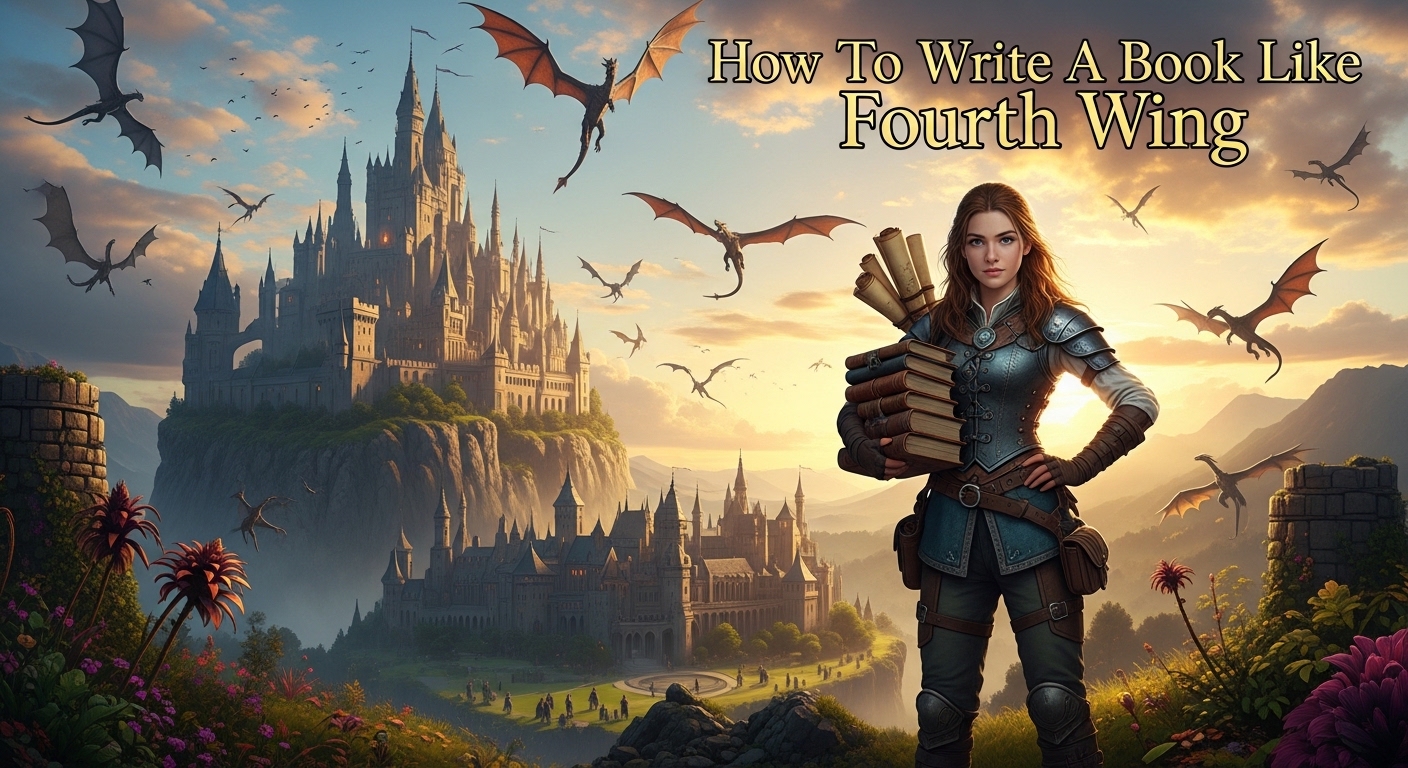
Since its release, Fourth Wing by Rebecca Yarros has captivated millions of readers worldwide, blending epic fantasy with intense emotional depth and romantic tension. Its success at the intersection of action, character complexity, and world‑building has made it a defining example of what many call “romantasy” — a hybrid genre that combines romance with high fantasy. Understanding how such a story works from a craft perspective is essential if you aspire to create something similar: not just thrilling in plot, but resonant in emotion, immersive in setting, and compelling in characterization.
Writing a novel like Fourth Wing involves more than luck or inspiration; it requires careful research, disciplined writing, iterative editing, thoughtful design decisions, and a strategic approach to publishing. In this guide, we’ll unpack each of these elements and provide you with a roadmap that can take you from concept to a complete manuscript ready for the world.
The Anatomy of Fourth Wing: What Makes It Work?
At its core, Fourth Wing achieves success because it excels on multiple storytelling layers simultaneously. The novel does not rely on one strength; instead, it harmonizes several narrative elements that feed into each other:
First, the characters are deeply human. The protagonist, Violet, is not merely thrust into danger; her internal struggles — both emotional and physical — shape every decision she makes. Readers don’t just watch her journey; they inhabit her thoughts, fears, and aspirations. This level of psychological immersion is one reason the book resonates so strongly with audiences.
Second, the world around her is intricately constructed. The Basgiath War College, with its treacherous training grounds and political factions, feels almost tactile: tactile enough that readers can imagine the grit of the academy walls, the tension in training yards, and the roar of dragons. World‑building of this depth requires meticulous research and consistency — not just imaginative details but rules governing how that world functions logically and socially.
Third, the pacing and structure balance high‑intensity sequences with introspective character moments. This rhythm is not accidental; it is crafted through revisions that revisit pacing and emotional beats until the narrative flows with momentum.
All these combine to make Fourth Wing not just a story, but an experience — one that feels lived‑in, emotionally compelling, and intellectually satisfying.
The Foundation: Developing Your Concept and World
Every compelling novel begins with a strong concept — a premise so engaging that it sustains the writer’s energy over the course of hundreds of pages. In Fourth Wing, the concept hinges on the paradox of vulnerability and power: a seemingly fragile woman placed in a brutal environment where physical strength matters, only to discover her own capacity for resilience and transformation.
To build a concept of similar strength, start with three central questions:
- What is the core conflict? This should be both external (a tangible, high‑stakes struggle) and internal (a psychological or emotional struggle inherent to your protagonist).
- Why does it matter? Readers must sense that the struggle has personal and universal consequences. It should reveal something about identity, sacrifice, or the human condition.
- What world houses this conflict? The setting must not be a backdrop — it should be an active force that shapes plot and character arcs.
Once your concept is clear, the work of detailed world‑building begins. Design your world’s geography, politics, power structures, social hierarchies, and cultural norms. Each component should have logical consequences. For example, if your society values martial prowess above all else, explore how that value influences family relationships, education systems, and social mobility. These details aren’t just decorative; they shape plot dynamics and character motivations.
Character Development: Flesh and Soul
One of Fourth Wing’s most praised elements is its characterization, particularly how vulnerabilities become strengths. The protagonist’s transformation is not abrupt or simplistic; it unfolds logically through choices, setbacks, and growth.
Character development requires empathy — the ability to envision how a person with flaws, fears, and desires would behave under stress. A character’s internal landscape — their hopes, insecurities, impulses, and regrets — must be as fully imagined as their external actions. A compelling protagonist is not defined by perfection but by authenticity and capacity to change.
Equally important are supporting characters. In Fourth Wing, friends, rivals, and love interests aren’t mere accessories; they act as mirrors and foils to the protagonist’s interior journey. Writers should think of relationships as dynamic systems, where each character’s presence shapes the protagonist’s evolution.
Plot Architecture and Pacing
Plot structure is the backbone that holds your narrative together. A well‑crafted arc guides the reader through tension, revelation, and resolution. While Fourth Wing doesn’t contort itself into overly formulaic beats, it still adheres to fundamentals of dramatic structure: exposition, rising action, climax, and resolution.
Unlike traditional genre formulas, the novel’s structure is driven by character goals and emotional stakes. Plot events surface naturally from conflicts between what the protagonist wants and what the world demands of her. This approach ensures that events feel organic — not merely plot contrivances, but consequential moments tied to character development.
Pacing, too, is essential. Sustained action without emotional depth becomes exhausting; prolonged introspection without plot movement becomes dull. Successful narratives alternate between external tension and internal revelation, creating dynamic rhythms that keep readers engaged.
Voice, Language, and Dialogue
In any successful novel, the authorial voice — the unique rhythm and tone of the prose — is a silent character in its own right. Fourth Wing employs a voice that is vivid without being overwrought: lyrical when the stakes are intimate, tense when danger approaches, and introspective where emotional depth is required.
Dialogue plays a key role in developing voice and character relationships. Speech should feel natural within the context of your world and true to each character’s personality. Dialogue in fiction must serve multiple functions simultaneously: revelations of inner life, relationship dynamics, narrative propulsion, and sometimes thematic reinforcement.
The precision of language is honed during editing — a stage too often underestimated by novice writers. Good writing becomes great writing through revision: removing redundancies, strengthening imagery, clarifying intentions, and refining narrative clarity.
The Invisible Craft: Editing, Publishing, and Design
Understanding the invisible components of book production — editing, publishing, and design — is foundational for any writer who wants their work to be taken seriously by readers and industry professionals alike.
Editing is not a luxury; it is the engine that transforms raw prose into a polished narrative. It encompasses several layers:
- Structural editing addresses big‑picture narrative flow, scene sequencing, and plot cohesion.
- Line editing focuses on sentence clarity, rhythm, and voice consistency.
- Proofreading eliminates grammar, punctuation, and formatting errors.
Without rigorous editing, even the most brilliant concept can feel disjointed or unfinished.
Publishing is the bridge between your manuscript and your audience. Traditional publishing offers editorial support, marketing, and distribution but is competitive and often requires representation through an agent. Self‑publishing offers control and flexibility but demands that you manage marketing, formatting, and quality control yourself. Hybrid models — combining aspects of both — are increasingly common and worthwhile to explore.
The design of your book, particularly cover art and interior layout, significantly influences reader perception. A compelling cover can make the difference in whether a potential reader clicks, picks up, or scrolls past your book. Typography, chapter headings, and page design also contribute to the reader’s experience. Professional involvement in design elevates your work and signals seriousness to both readers and industry gatekeepers.
Here’s a table that encapsulates how these three elements work together:
| Component | Primary Function | Impact on Reader Experience |
| Editing | Clarifies and refines narrative | Ensures coherence, emotional depth, and readability |
| Publishing | Distributes and markets the book | Determines reach, credibility, and access to audiences |
| Design | Shapes visual and physical presentation | Influences first impressions and reader immersion |
Each component is an investment in your book’s long‑term success. Writers who understand and integrate these elements are more likely to create a work that is both artistically satisfying and commercially viable.
Marketing, Launch, and Reader Engagement
Even a masterfully written novel needs an audience‑building strategy. Fourth Wing didn’t become a sensation by accident; its viral growth on social platforms like BookTok was amplified by reader engagement, community discussions, and enthusiastic recommendations. Reader engagement is no longer passive; it is participatory. Platforms like Instagram, TikTok, and Goodreads allow readers to share covers, quotes, reactions, and artwork that create organic buzz.
Effective marketing begins long before publication. Cover reveals, author interviews, advance reader copies (ARCs), and pre‑launch promotions build anticipation. Networking with reviewers, book bloggers, and influencers expands visibility. Email newsletters help cultivate loyal readerships who are eager to share your work with others.
Post‑launch, engagement continues through virtual book events, author Q&A sessions, and creative content that invites reader interaction — for example, character playlists, behind‑the‑scenes world details, or fan art showcases.
Conclusion
Writing a book like Fourth Wing is not about replication; it is about understanding and applying the principles that make a story emotionally resonant, narratively compelling, and structurally sound. A compelling world, layered characters, thoughtful pacing, rich thematic depth, and a distinctive voice are literary essentials. Beyond writing, investing in rigorous editing, strategic publishing, and thoughtful design propels a manuscript into the reader’s hands with professionalism and impact.
Aspiring authors should embrace the full lifecycle of book creation — concept development, world‑building, drafting, revision, editing, marketing, and engagement — with curiosity, discipline, and persistence. With a research‑based approach and commitment to craft, you can go beyond inspiration and create a novel that stands firmly in conversation with today’s most successful romantic fantasy works.
