
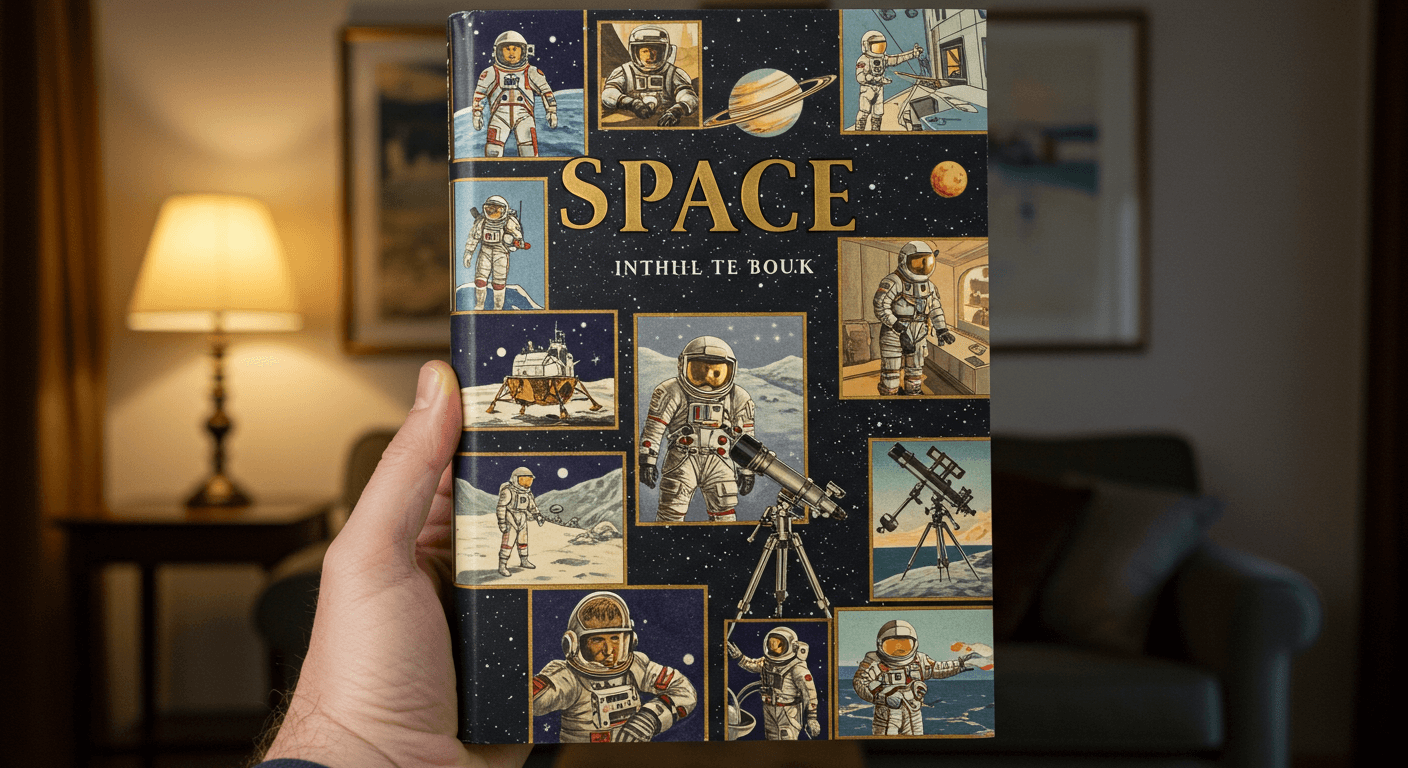
Are you fascinated by galaxies, black holes, alien civilizations, or the future of space travel? Do you dream of writing a book that transports readers to the farthest reaches of the universe? Whether you’re aiming to write hard science fiction, speculative fiction, a space-themed nonfiction book, or an educational guide about the cosmos, this guide is for you.
Writing a book about space requires imagination, research, structure, and commitment — but with the right plan, you can go from blank page to published author.
In this in-depth guide, we’ll cover everything you need to know about writing, editing, cover design, marketing, and publication of your space-themed book.
1. Why Write a Book About Space?
Space captivates the human imagination. From the mysteries of black holes to the possibilities of alien life, it’s a setting that allows writers to explore deep philosophical, scientific, and emotional themes.
Your book about space could:
- Inspire young minds.
- Contribute to the growing sci-fi genre.
- Educate readers about astronomy or astrophysics.
- Imagine futures driven by space travel or colonization.
Whether your goal is to educate or entertain, writing a space-themed book gives you the opportunity to explore the unknown.
2. Choose Your Book Type or Genre
Before you begin writing, decide what type of book you’re creating. Each type has different expectations in terms of structure, voice, and content.
Common space-related genres include:
- Hard Science Fiction (based on real science)
- Soft Sci-Fi / Space Opera (focused on story and characters)
- Nonfiction Educational Books (e.g., astronomy guides)
- Children’s Books About Space
- YA Dystopian or Futuristic Fiction
- Memoirs or Historical Accounts of Space Programs
Understanding your genre helps you shape your outline and target the right audience.
3. Researching Space Topics
Whether you’re writing fiction or nonfiction, accurate research is essential to create a believable world.
Research tips:
- Read NASA articles, documentaries, and academic sources.
- Study space-related news (e.g., Artemis, SpaceX, Mars missions).
- Consult books by astronomers like Neil deGrasse Tyson or Carl Sagan.
- Watch sci-fi classics for inspiration — Interstellar, The Expanse, 2001: A Space Odyssey.
Even in fiction, basing your universe on real scientific principles adds credibility.
4. Developing a Compelling Idea
Great space books start with a bold, clear idea. Your concept should spark curiosity and invite readers into a unique journey.
Ask:
- What space topic fascinates you most?
- What question does your book answer?
- What unique perspective can you offer?
Examples:
- A fiction book: “What if Earth was an alien experiment?”
- A nonfiction book: “The Beginner’s Guide to the Solar System.”
Write a one-sentence summary of your book’s core idea — this will guide your entire project.
5. Planning and Outlining Your Space Book
Jumping in without a plan can lead to plot holes and confusion — especially in space-themed writing where complex ideas are involved.
For fiction:
- Use a 3-act structure or the Hero’s Journey.
- Create a timeline of future or alternate history events.
- Decide on key turning points and character arcs.
For nonfiction:
- Break your topic into logical chapters.
- Use bullet points for facts, case studies, and visuals.
- Think of it as teaching — organize your book as a lesson plan.
Your outline should be flexible but structured enough to keep your writing focused.
6. Writing with Accuracy and Imagination
Space books require a delicate balance between scientific accuracy and creative storytelling.
Tips:
- Simplify complex science for general readers.
- Use analogies to explain space phenomena.
- Don’t shy away from emotion — even astronauts feel awe and fear.
In fiction, your imagination can run wild — but always ground it in plausibility. In nonfiction, clarity is key.
7. Building Worlds (Worldbuilding Tips for Fiction)
In space fiction, worldbuilding is everything. You’re creating planets, technologies, languages, and even political systems.
Ask yourself:
- What kind of star system is it?
- How do people survive? What do they eat?
- Is gravity different? Are there new laws of physics?
- What role does AI or robotics play?
Create maps, planetary profiles, and alien culture sheets. Worldbuilding helps immerse your reader in a believable universe.
8. Creating Characters that Belong in Space
Your characters are the lens through which readers experience your world — especially in a space setting where everything is unfamiliar.
Tips:
- Give characters distinct motivations (e.g., survival, exploration, escape).
- Show how they interact with space tech (suits, ships, AI).
- Reflect human challenges: isolation, conflict, ethics.
Consider including a diverse cast — after all, space is a global (and possibly interstellar) experience.
9. Writing a Captivating First Draft
When it’s time to write your first draft, focus on momentum — not perfection.
Best practices:
- Set daily word count goals (e.g., 1,000 words/day).
- Write scenes out of order if needed.
- Use placeholders for technical details you’ll research later.
Give yourself permission to write badly. The goal is to finish — you’ll refine in the editing phase.
10. Editing and Rewriting Your Manuscript
Once your draft is complete, take a break. Then, return with fresh eyes and start revising.
Self-editing tips:
- Look for pacing issues, unclear scenes, or plot holes.
- Check scientific consistency and internal logic.
- Simplify technical jargon or explain it better.
Read aloud, print your manuscript, or use text-to-speech tools to spot awkward phrasing.
11. Professional Editing and Proofreading
After your revisions, invest in professional editing to polish your manuscript.
Types of editing:
- Developmental editing – big-picture feedback on structure and story.
- Line editing – improving sentence flow and word choice.
- Copyediting – fixing grammar, punctuation, and consistency.
- Proofreading – final polish before publication.
Editing ensures your book reads well and maintains credibility — especially important in science-focused content.
12. Designing a Cover That Sells Space Books
Your cover is the first thing readers see — and in the space genre, visual impact is everything.
Cover design tips:
- Use space visuals: galaxies, rockets, astronauts, planets.
- Choose bold, modern fonts and high-contrast colors.
- Reflect the book’s tone — serious science, thrilling adventure, or kid-friendly?
Consider hiring a professional cover designer with experience in your genre. A stunning cover can make or break your sales.
13. Formatting and Interior Design
A well-formatted book enhances readability and professionalism.
Key formatting elements:
- Clean, readable fonts (e.g., Garamond, Times New Roman).
- Proper spacing, margins, and headers.
- Consistent chapter headings and subheadings.
- Images, diagrams, or illustrations (especially in nonfiction or educational books).
Use tools like Vellum (Mac), Reedsy, or hire a formatter for Kindle, print, and ePub versions.
14. Publishing Your Book (Self vs Traditional)
Now that your book is ready, it’s time to publish. You have two main paths:
Self-Publishing:
- Platforms: Amazon KDP, IngramSpark, Kobo, Draft2Digital.
- Full control over royalties, design, and timelines.
- Faster — you can publish in days.
Traditional Publishing:
- Requires a query letter and literary agent (especially for fiction).
- May offer advance payments, professional editing, and wider bookstore distribution.
- Slower — takes 12–24 months on average.
Hybrid publishing is also an option — a blend of traditional and self-publishing support with a fee.
15. Marketing Strategies for Space Authors
Writing a great book is just the beginning. Now, you need to reach your audience.
Marketing ideas:
- Create a website with a blog and book info.
- Start a newsletter and collect emails early.
- Post on social media with space facts, quotes, or teasers.
- Run Amazon ads or Facebook ads targeting sci-fi or astronomy fans.
- Launch a pre-order campaign or virtual book tour.
- Get book reviews from bloggers, influencers, or Goodreads readers.
Consider joining writing communities like Reddit’s r/scifiwriting or Facebook author groups for support.
16. Final Tips and Frequently Asked Questions
1. Write every day, even when inspiration is low.
Discipline beats motivation.
2. Stay curious and keep learning.
The more you explore real space science, the richer your writing becomes.
3. Don’t give up after your first draft.
Books are written in editing and rewriting — not just in initial inspiration.
Frequently Asked Questions (FAQ)
Q: How long should a space-themed book be?
A: Novels typically range from 60,000–100,000 words. Nonfiction can vary, but 40,000–70,000 words is a strong starting point.
Q: Can I use real NASA data or missions in my book?
A: Yes! NASA material is public domain, but always verify facts and cite if appropriate.
Q: What software is best for writing a book about space?
A: Scrivener, Google Docs, and Microsoft Word are popular. For formatting, use Vellum or Reedsy Book Editor.
Q: Should I include illustrations or diagrams?
A: For nonfiction or educational books, absolutely. They improve understanding and engagement.
Q: Do I need to hire a professional editor?
A: Strongly recommended. A second pair of eyes can catch inconsistencies, technical errors, and grammar mistakes.
Final Thoughts
Writing a book about space is your chance to launch readers into other worlds, expand their understanding of the universe, and maybe even inspire the next generation of scientists and dreamers.
By focusing on strong writing, accurate editing, attractive cover design, and smart marketing and publication strategies, your space book can go far — maybe even to the stars.
So strap in, ignite your engines, and start writing. The cosmos is waiting.
