
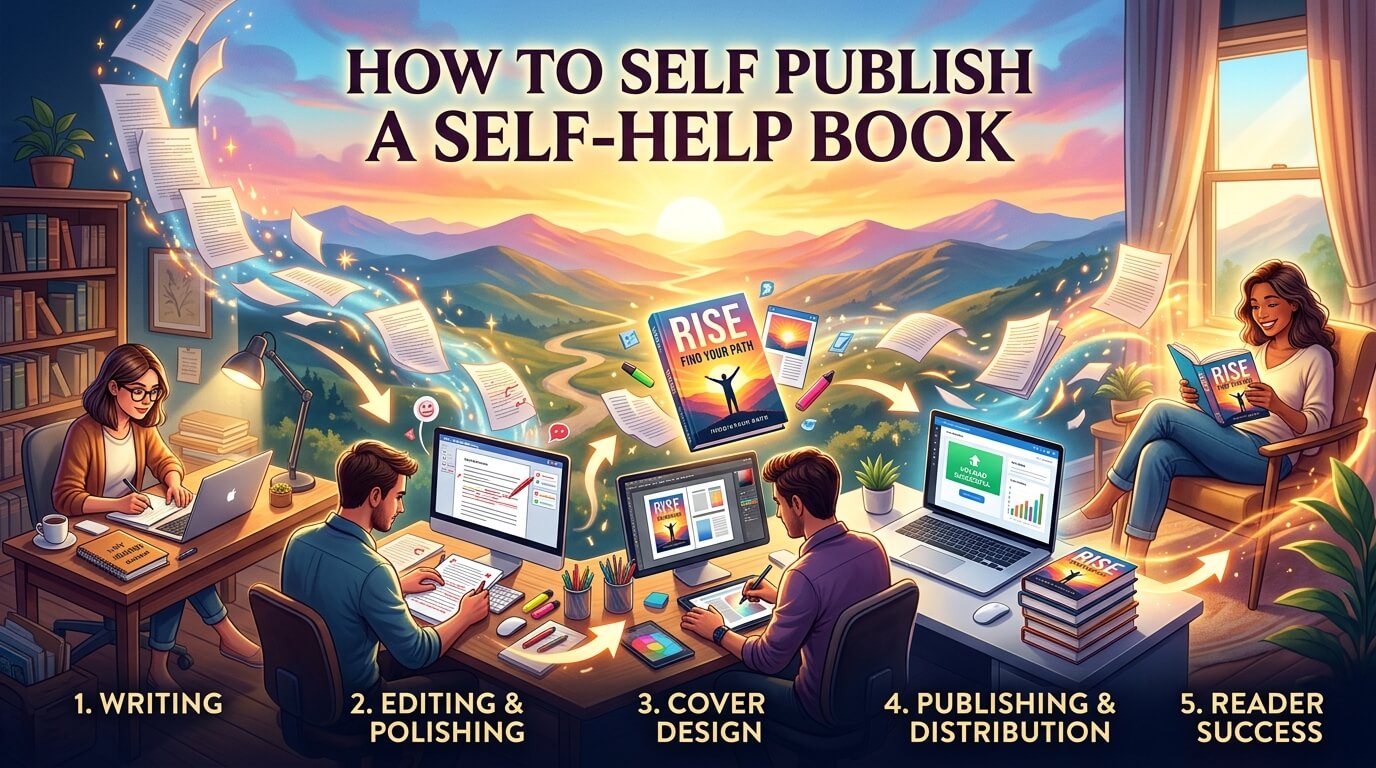
The self-help genre has become one of the most influential and commercially successful categories in modern publishing. From personal development and productivity to mental wellness, leadership, relationships, and financial growth, readers continuously seek books that can help them improve different aspects of their lives. This demand has created significant opportunities for aspiring authors who possess valuable knowledge, experiences, and practical insights to share.
In the past, publishing a self-help book often required securing a traditional publishing contract, which could take months or even years. Today, self-publishing has transformed the industry by giving authors complete control over their work, allowing them to publish faster, retain higher royalties, and directly connect with their audience. Many bestselling self-help books have emerged from independent publishing, proving that success is no longer limited to authors backed by large publishing houses.
However, publishing a self-help book involves much more than simply writing a manuscript and uploading it online. Readers expect credibility, valuable content, professional presentation, and practical solutions. A well-executed self-help book can establish authority, generate speaking opportunities, build a personal brand, and create multiple income streams.
This comprehensive guide explores every stage of the self-publishing journey, from developing your idea to marketing your finished book successfully.
Exploring the Self-Help Publishing Landscape First
Before writing your manuscript, it is essential to understand the current self-help landscape. The genre continues to evolve as readers seek practical solutions to real-world challenges. Topics such as productivity, mental health, emotional intelligence, career growth, entrepreneurship, mindfulness, confidence building, and habit formation remain highly popular.
The most successful self-help books do not simply present information. They offer transformation. Readers purchase self-help books because they want results. They are looking for guidance that helps them overcome obstacles, achieve goals, or improve their quality of life.
When entering this market, authors should identify a specific problem they can solve. Instead of writing a broad book about success, for example, focusing on helping remote workers increase productivity may provide a clearer and more marketable angle.
The more specific your audience and solution, the easier it becomes to position your book effectively.
Finding Your Unique Message
Why Your Personal Perspective Matters
One common misconception is that self-help authors must be world-famous experts. While credentials can help, readers often connect more deeply with authenticity and relatable experiences.
Your personal journey can become one of your greatest strengths. Whether you overcame anxiety, improved your financial situation, built a successful business, or transformed your lifestyle, your experiences can provide valuable lessons for others facing similar challenges.
The key is balancing personal stories with practical guidance. Readers want inspiration, but they also need actionable advice they can implement in their own lives.
Identifying Your Core Promise
Every successful self-help book makes a promise to readers. That promise should answer a simple question: What transformation will readers experience after finishing the book?
For example, a productivity book may promise improved focus and time management. A confidence-building book may promise greater self-esteem and personal empowerment. Defining this promise early helps maintain consistency throughout the writing process and strengthens your marketing efforts later.
Planning Your Self-Help Book Structure
A clear structure improves readability and enhances the reader’s learning experience.
Unlike fiction, self-help books should guide readers through a logical progression. Each chapter should build upon previous concepts while moving readers closer to the desired transformation.
Many successful self-help books follow a journey-based framework where readers start with a problem, gain understanding, learn strategies, and ultimately achieve a solution.
Creating a Chapter Roadmap
Before writing, develop a detailed outline that includes your main chapters and subtopics. This roadmap serves as a guide throughout the writing process and prevents unnecessary repetition. A well-organized outline can significantly reduce writer’s block and ensure that every chapter contributes to the overall goal of the book.
Writing a Self-Help Book That Readers Actually Finish
One of the biggest challenges in the self-help genre is maintaining reader engagement.
Many readers purchase self-help books but never finish them. Authors must therefore focus on creating content that feels accessible, engaging, and immediately useful.
Writing in a Conversational Tone
Readers generally respond better to self-help books that feel like a conversation rather than a lecture. Using clear language, relatable examples, and practical explanations helps create a stronger connection with your audience. Complex concepts should be simplified without oversimplifying the message itself.
The goal is to make readers feel understood and guided rather than instructed.
Combining Research and Personal Experience
Strong self-help books blend personal insights with credible research.
Including studies, expert findings, psychological principles, and real-world examples increases trust and authority. Research helps validate your advice and demonstrates that your recommendations are grounded in evidence rather than opinion alone.
At the same time, personal experiences add emotional depth and relatability, creating a balance that resonates with readers.
Building Authority Without Sounding Arrogant
Many new authors struggle with establishing credibility.
Readers need confidence that the author can help them, but excessive self-promotion can reduce trust. The most effective self-help authors focus on demonstrating expertise through valuable content rather than constantly highlighting achievements.
Authority comes from solving problems, sharing useful insights, and presenting information clearly. If readers consistently gain value from your writing, credibility develops naturally.
Editing: The Most Important Step After Writing
A first draft is rarely ready for publication.
Even experienced authors require multiple rounds of editing to refine their manuscripts. Self-help books, in particular, must communicate ideas clearly and avoid unnecessary complexity.
Professional editing helps improve structure, clarity, flow, grammar, and readability.
Different Types of Editing
Developmental editing focuses on content structure, chapter organization, and overall effectiveness. Line editing improves sentence flow, tone, and readability.
Copyediting addresses grammar, punctuation, consistency, and formatting issues. Proofreading serves as the final quality check before publication.
Investing in professional editing often makes the difference between an average book and one that earns positive reviews and recommendations.
Designing a Professional Book Cover
Readers frequently judge books by their covers, especially in online marketplaces. A professional cover immediately communicates the genre, quality, and value of your book. In the self-help category, successful covers typically emphasize clarity, simplicity, and authority.
The title should remain highly readable even when displayed as a small thumbnail on digital platforms. Avoid overcrowding the cover with excessive graphics or complicated design elements. Clean and modern designs often perform better in the self-help market.
Formatting Your Book for Publication
Professional formatting enhances the reader experience and ensures compatibility across devices. Whether publishing an ebook, paperback, or hardcover edition, proper formatting improves readability and creates a polished appearance.
Formatting includes chapter spacing, typography, margins, page numbers, headings, and consistent styling throughout the manuscript. Many authors hire formatting professionals, while others use specialized software designed for self-publishing.
Choosing the Right Self-Publishing Platform
Several publishing platforms allow authors to distribute their books worldwide.
Each platform offers unique benefits depending on your goals and target audience.
Comparison of Popular Self-Publishing Platforms
| Platform | Best For | Distribution Reach | Royalty Potential |
| Amazon KDP | Global ebook and print sales | Very High | Up to 70% |
| Draft2Digital | Wide ebook distribution | High | Varies by retailer |
| Kobo Writing Life | International readers | Moderate to High | Up to 70% |
| Apple Books | Apple ecosystem readers | High | Up to 70% |
| IngramSpark | Bookstore and library access | Extensive | Varies |
Amazon KDP remains the most popular option due to its large customer base and user-friendly publishing process. However, combining multiple platforms can expand your reach significantly.
Publishing Your Ebook Version
Ebooks remain a major source of revenue for self-help authors.
Digital publishing offers lower production costs and immediate global distribution. Readers can purchase and access ebooks instantly, making them particularly attractive in the personal development market.
When preparing an ebook, ensure proper formatting for different screen sizes and devices. Navigation should be intuitive, and chapters should display correctly across platforms.
Creating Paperback and Hardcover Editions
While ebooks dominate digital sales, many self-help readers still prefer physical books.
Paperback and hardcover editions can increase perceived value and provide additional revenue streams. Physical books are also useful for speaking engagements, workshops, coaching programs, and corporate events.
Print-on-demand technology allows authors to sell printed books without maintaining inventory, reducing financial risk while maintaining professional quality.
Setting the Right Price
Pricing can significantly influence sales performance. A price that is too high may discourage buyers, while a price that is too low may reduce perceived value.
Most successful self-help ebooks fall within a competitive pricing range, while print editions are priced according to production costs and market expectations. Researching comparable books in your niche can help determine an effective pricing strategy.
Writing a Book Description That Converts Readers
Your book description functions as a sales page. Even a well-written book may struggle if its description fails to capture attention and communicate value.
A compelling description should clearly identify the reader’s problem, introduce your solution, explain the benefits of reading the book, and create excitement about the transformation offered. Strong descriptions focus on outcomes rather than simply summarizing chapter contents.
Building an Author Platform Before Launch
Many first-time authors wait until publication day to start marketing. This approach often limits visibility and sales potential.
Successful self-published authors begin building an audience long before their book launches.
Creating a Personal Brand
Your personal brand helps readers understand who you are and why they should trust your message. Whether through blogging, podcasting, social media, newsletters, or public speaking, consistent content allows potential readers to connect with your ideas before purchasing your book.
Building trust early often leads to stronger launch results and long-term audience growth.
Growing an Email List
Email marketing remains one of the most effective tools available to authors. An engaged email list provides direct access to readers without relying entirely on algorithms or advertising platforms.
Sharing valuable content, resources, and updates helps nurture relationships that can translate into book sales and future opportunities.
Launching Your Self-Help Book Successfully
A strategic launch can generate momentum and increase visibility. Rather than simply publishing your book and hoping readers find it, plan a coordinated launch campaign.
This may include promotional content, email announcements, podcast interviews, guest articles, social media campaigns, and advance reader reviews.
Early reviews play a crucial role in establishing credibility and influencing purchasing decisions. The more preparation completed before launch day, the stronger your results are likely to be.
Marketing Beyond the Launch
Publishing your book is only the beginning. Long-term marketing determines whether your book continues generating sales months or years after release.
Leveraging Content Marketing
Content marketing allows authors to showcase expertise while attracting potential readers. Blog articles, videos, newsletters, and social media content can address challenges related to your book’s topic while directing interested individuals toward your publication.
Consistent content creation gradually builds authority and expands audience reach.
Using Speaking Opportunities
Many self-help authors grow their visibility through workshops, webinars, conferences, and corporate presentations. Speaking engagements position authors as experts while creating opportunities to promote books directly to engaged audiences.
For many self-help writers, speaking eventually becomes as valuable as book sales themselves.
Exploring Paid Advertising
Paid advertising can accelerate growth when executed strategically. Platforms such as Amazon Advertising and social media advertising enable authors to reach highly targeted audiences.
While advertising requires investment, effective campaigns can produce measurable returns and increase overall book visibility.
Turning Your Self-Help Book Into a Business Asset
One of the greatest advantages of publishing a self-help book is its potential to support broader business goals. A book can serve as a foundation for coaching programs, online courses, consulting services, memberships, workshops, and speaking opportunities.
Many successful entrepreneurs use books as credibility-building tools that attract clients and establish authority within their industries. Rather than viewing your book solely as a product, consider how it fits into your larger professional vision.
Common Mistakes First-Time Self-Help Authors Make
Many self-published self-help books fail not because the ideas lack value but because execution falls short. Some authors attempt to cover too many topics, resulting in a scattered message. Others focus heavily on personal stories without providing actionable guidance.
Poor editing, amateur cover design, weak marketing, and unrealistic sales expectations can also limit success. Understanding these common pitfalls allows authors to avoid them and create stronger books that better serve readers.
Measuring Success Beyond Book Sales
While sales numbers matter, they are not the only measure of success. A self-help book can generate opportunities that extend far beyond royalties.
Reader testimonials, speaking invitations, consulting inquiries, media appearances, and community impact often become valuable indicators of a book’s influence. Many authors discover that the relationships and opportunities created through publishing become even more rewarding than direct revenue.
The Future of Self-Publishing in the Self-Help Industry
The self-help market continues to expand as readers increasingly seek practical solutions for personal and professional growth. Advances in digital publishing, audiobooks, online learning, and creator-driven marketing have made it easier than ever for independent authors to reach global audiences.
At the same time, competition continues to increase. Readers have access to thousands of self-help books, making quality, authenticity, and expertise more important than ever.
Authors who focus on solving specific problems, delivering genuine value, and maintaining professional standards are positioned to thrive in this evolving landscape.
Final Thoughts
Self-publishing a self-help book offers an extraordinary opportunity to share knowledge, inspire change, and build a meaningful connection with readers worldwide. Unlike traditional publishing, self-publishing allows complete creative control, faster publication timelines, and greater ownership of your intellectual property.
Success, however, requires more than writing a manuscript. It involves understanding your audience, crafting a compelling message, investing in professional editing and design, choosing the right publishing platforms, and developing a long-term marketing strategy.
The most successful self-help books are not simply collections of advice. They become guides that help readers overcome challenges and achieve meaningful transformation. When your book provides genuine value and delivers on its promise, it has the potential to impact lives while creating lasting opportunities for you as an author.
In today’s publishing environment, aspiring writers no longer need permission from gatekeepers to share their expertise. With the right approach, dedication, and commitment to quality, self-publishing a self-help book can become the beginning of a rewarding and influential author journey.
