
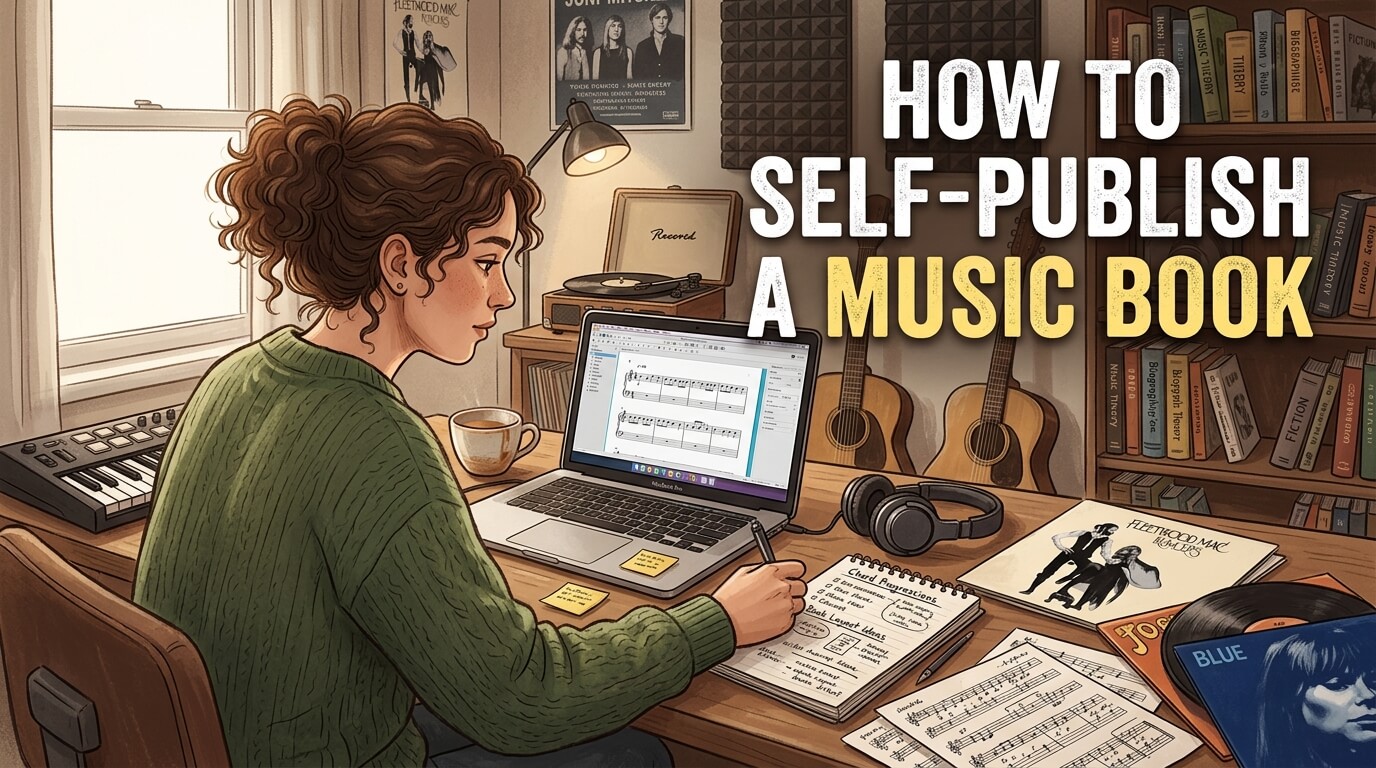
The music industry has always been built on creativity, expression, and the sharing of knowledge. While most people associate musicians with recordings, performances, and streaming platforms, books remain one of the most powerful ways to preserve musical ideas and reach audiences on a deeper level. From instructional guides and sheet music collections to biographies, memoirs, music theory manuals, and songwriting resources, music books continue to play an important role in education and artistic development.
Traditionally, publishing a music book required approval from established publishing houses that controlled production, distribution, and marketing. For many authors, especially independent musicians and educators, gaining access to these opportunities was difficult. The rise of self-publishing has changed that landscape completely. Today, anyone with valuable knowledge, original compositions, or a compelling story can publish a professional-quality music book and sell it worldwide.
Self-publishing offers a level of creative freedom that traditional publishing often cannot match. Authors retain ownership of their content, control pricing decisions, choose distribution channels, and maintain authority over design and branding. This flexibility has encouraged thousands of musicians and educators to share their expertise directly with readers.
However, publishing a successful music book involves much more than simply writing content and uploading a file online. It requires careful planning, professional editing, strategic formatting, thoughtful design, legal awareness, and effective marketing. Every stage contributes to the quality and commercial success of the final product.
Whether you are a composer hoping to publish original scores, a teacher creating instructional material, a songwriter documenting your creative process, or a musician sharing your personal journey, understanding the complete self-publishing process can help transform your idea into a professional publication that resonates with readers around the world.
The Essentials of the Middle Grade Book Industry
Before beginning the writing process, it is important to determine exactly what type of music book you intend to publish. The music publishing landscape is diverse, and each category comes with unique requirements and audience expectations.
Educational music books remain among the most popular categories. These publications teach readers about music theory, instrument techniques, vocal training, songwriting, composition, arrangement, or music production. Students, teachers, and hobbyists often rely on these resources to develop their skills.
Another common category includes sheet music and score collections. Composers frequently self-publish original works for orchestras, choirs, solo instruments, and chamber ensembles. Digital publishing has made it significantly easier for composers to distribute their work globally.
Memoirs and biographies also continue to attract readers. Musicians often possess fascinating stories about their careers, creative struggles, performances, and industry experiences. Readers appreciate authentic insights into the realities of life as an artist.
Some authors focus on music history, cultural studies, genre analysis, or industry trends. These books appeal to scholars, enthusiasts, and readers interested in understanding music’s broader social and historical impact.
Clearly identifying your category helps establish your target audience, writing style, design choices, and marketing strategy from the beginning.
Researching Your Market Before Writing
Many authors begin writing immediately after developing an idea. While enthusiasm is valuable, successful publishing often starts with research rather than writing.
Understanding the marketplace allows you to identify reader interests, existing competition, and opportunities for differentiation. Study books similar to the one you plan to create. Examine their content, reviews, strengths, and weaknesses.
Reader reviews can be particularly informative. They often reveal what audiences appreciate as well as areas where existing books fail to meet expectations. These insights can help shape a stronger manuscript.
Research also helps determine whether demand exists for your topic. A highly specialised subject may attract a smaller but dedicated audience, while broader topics may appeal to larger readerships but face greater competition.
Market research should not discourage originality. Instead, it should help position your book effectively within the existing landscape.
Creating a Comprehensive Outline
A well-structured outline serves as the foundation of a successful music book. Without proper planning, manuscripts often become repetitive, disorganised, or incomplete.
Think of your outline as a roadmap that guides readers through the material. Educational books should introduce concepts in a logical progression, building knowledge gradually from simple ideas to more advanced topics.
For memoirs and biographies, consider how events connect to create a compelling narrative. Readers should feel that each chapter contributes meaningfully to the overall story. If you are publishing sheet music or compositions, organise content according to performance level, instrument type, genre, or intended audience. Clear organisation enhances usability and improves the reader experience. The outlining stage may seem time-consuming, but it often reduces writing difficulties later and contributes significantly to the quality of the finished book.
Writing Content That Educates and Engages
One of the greatest challenges in writing a music book is balancing expertise with accessibility. Authors frequently possess extensive knowledge but struggle to present it in a way that readers can easily understand. The best music books communicate complex ideas through clear explanations, practical examples, and engaging storytelling. Even highly technical topics become more approachable when presented through real-world applications.
Readers appreciate authors who share personal experiences. A music teacher discussing instructional methods, a songwriter describing creative breakthroughs, or a performer recounting memorable concerts adds authenticity that cannot be replicated through theory alone. Avoid overwhelming readers with excessive jargon. Technical terminology is often necessary, but it should be explained clearly. Remember that many readers may be encountering certain concepts for the first time.
Engaging writing encourages readers to continue learning and increases the likelihood that they will recommend your book to others.
Incorporating Musical Examples and Visual Elements
Music books often require visual components that support understanding and improve usability. Unlike many traditional nonfiction books, music publications frequently depend on notation, diagrams, illustrations, and photographs. Musical examples can clarify theoretical concepts far more effectively than text alone. Chord progressions, rhythmic patterns, scales, and harmonic structures become easier to understand when readers can see them represented visually.
Instructional books may benefit from finger positioning diagrams, instrument illustrations, or practice demonstrations. Songwriting books can include lyric examples and compositional breakdowns. When incorporating visuals, quality matters. Blurry images, inconsistent formatting, or poorly rendered notation can undermine the professionalism of the entire publication. Investing time in creating clear, attractive visuals contributes significantly to reader satisfaction and educational value.
Editing: The Difference Between Amateur and Professional Publishing
Many self-publishing failures can be traced back to inadequate editing. Authors often underestimate the importance of this stage because they are already familiar with their own content.
Professional editing goes far beyond correcting grammar and spelling mistakes. Developmental editors evaluate structure, organisation, clarity, pacing, and reader engagement. Copy editors focus on language consistency, style, and accuracy.
Music books require an additional level of scrutiny because technical information must be precise. Incorrect notation, terminology errors, or inaccurate explanations can damage credibility and frustrate readers.
Even experienced authors benefit from objective feedback. An editor identifies weaknesses that the writer may overlook due to familiarity with the material.
Readers may forgive minor imperfections, but consistently poor editing can significantly reduce a book’s success and reputation.
Copyright Considerations for Music Books
Copyright is one of the most important legal considerations when publishing music-related content.
Authors generally own the copyright to original compositions, text, and illustrations they create. However, problems arise when using copyrighted lyrics, musical excerpts, photographs, or arrangements created by others.
Many writers mistakenly assume that educational use automatically eliminates copyright concerns. In reality, permissions may still be necessary depending on how the material is used.
If your book contains references to existing songs, copyrighted scores, or protected content, research applicable laws carefully and obtain permissions when required.
Proper copyright management protects both the author and the integrity of the publication.
Choosing the Right Format for Your Music Book
The format of your music book influences both reader experience and production costs. Different projects benefit from different publishing formats.
| Book Format | Ideal Use | Primary Advantage |
| eBook | Theory books, biographies, educational guides | Instant worldwide distribution |
| Paperback | General instructional books | Affordable production and accessibility |
| Hardcover | Premium editions and reference books | Enhanced durability and perceived value |
| Large Format Print | Sheet music collections | Improved readability |
| Workbook Format | Educational exercises | Interactive learning experience |
| Audiobook | Memoirs and biographies | Additional audience reach |
Selecting the appropriate format depends on the nature of the content and the preferences of your target audience.
Formatting a Music Book Professionally
Formatting a music book presents challenges that many first-time authors do not anticipate. Traditional manuscript formatting techniques may not adequately support musical notation and visual content.
Spacing, image placement, chapter structure, typography, and notation alignment all require careful attention. Readers should be able to navigate the content easily without confusion.
Educational books often benefit from consistent visual hierarchy. Headings, examples, exercises, and explanations should be clearly distinguishable from one another.
Poor formatting creates frustration, while professional formatting enhances usability and reinforces the author’s credibility.
Designing a Cover That Appeals to Readers
A book cover serves as the first point of contact between your work and potential readers. In many cases, it determines whether someone chooses to explore the book further. An effective music book cover communicates professionalism and accurately reflects the subject matter. Visual elements should support the content rather than distract from it.
A book about classical composition may require a sophisticated design approach, while a guide to modern music production may benefit from a contemporary aesthetic. Typography deserves special attention. Titles must remain readable in both digital thumbnails and physical formats. A strong cover design can significantly improve visibility and sales performance.
Publishing and Distribution Options
One of the most significant advantages of self-publishing is the variety of distribution options available to authors. Modern platforms enable worldwide access without requiring traditional publishing contracts. Some authors choose exclusive distribution through a single platform, while others pursue wide distribution across multiple marketplaces. The decision often depends on audience preferences and business goals.
Digital publishing platforms provide access to international readers, while print-on-demand services eliminate the need for large inventory investments. Distribution strategies should align with your target audience and long-term publishing objectives.
Building an Author Platform Before Launch
Successful book marketing often begins long before publication.
An author platform consists of the channels through which you connect with potential readers. This may include a website, newsletter, social media presence, podcast appearances, educational content, or public speaking engagements. Building an audience before launch creates anticipation and establishes trust. Readers are more likely to purchase books from authors they already recognize and respect.
For musicians and educators, sharing valuable insights online can naturally attract followers interested in the book’s subject matter. The strongest launches typically occur when authors have invested time in audience development before publication.
Launching Your Music Book Successfully
A book launch represents the transition from creation to promotion. While many authors focus heavily on writing, the launch strategy often determines commercial success. An effective launch generates visibility, reviews, and early sales momentum. Readers who purchase during the launch period frequently become advocates who recommend the book to others. Consider coordinating announcements across multiple channels. Reach out to fellow musicians, educators, bloggers, reviewers, and industry professionals who may be interested in your work. The goal is not simply to sell books during launch week but to establish long-term awareness that continues generating sales in the future.
Marketing Your Music Book After Publication
Publishing is not the finish line. In many ways, it marks the beginning of a new phase.
Sustained marketing helps maintain visibility and introduces the book to new readers over time. Educational content, interviews, guest articles, workshops, and presentations can all support ongoing promotion.
Music books offer unique marketing opportunities because authors can demonstrate concepts through performances, tutorials, lessons, and multimedia content. The most successful self-published authors view marketing as an ongoing relationship-building process rather than a temporary campaign.
Turning One Book Into Multiple Revenue Streams
A music book can become the foundation for broader professional opportunities.
Educational books often lead to online courses, workshops, coaching programs, and speaking engagements. Composers may attract commissions, performances, or licensing opportunities. Industry professionals may establish consulting services based on the expertise demonstrated in their publications.
Readers frequently seek additional resources from authors they trust. Expanding beyond the book itself creates new revenue streams while strengthening your professional reputation. Thinking strategically about long-term opportunities can increase the overall value of your publishing efforts.
Common Mistakes First-Time Authors Should Avoid
Many self-publishing challenges stem from avoidable mistakes. Rushing the process often results in weak editing, poor formatting, inconsistent design, and ineffective marketing. Some authors underestimate production quality, believing content alone determines success. While strong content is essential, presentation significantly influences reader perception. Another common mistake involves neglecting audience research. A book that fails to address reader’s needs may struggle regardless of writing quality. Authors should also avoid unrealistic expectations. Publishing success rarely happens overnight. Consistent effort, professional execution, and long-term commitment typically produce the best results.
The Future of Self-Published Music Books
The future of music publishing continues to evolve alongside advances in technology and digital learning. Musicians, educators, and creators now have unprecedented opportunities to share knowledge directly with global audiences. Online education has increased demand for instructional resources, while independent publishing tools have lowered barriers to entry. Readers increasingly seek specialised content created by practitioners with real-world experience.
Music books remain valuable because they provide depth, structure, and permanence that short-form content often lacks. As digital learning expands, books will continue serving as foundational educational resources. Authors who combine expertise with professional publishing practices are well-positioned to thrive in this growing marketplace.
Conclusion
Self-publishing a music book is both an artistic and entrepreneurial endeavour. It offers musicians, composers, educators, and industry professionals the opportunity to share their knowledge without relying on traditional gatekeepers.
The journey involves much more than writing. Research, planning, editing, design, formatting, copyright management, publishing, and marketing all contribute to the success of the final product. Each stage requires thoughtful attention and a commitment to quality.
While the process can be demanding, the rewards are substantial. Self-publishing allows authors to retain creative control, reach global audiences, build authority within their field, and create lasting educational resources for future generations of musicians.
Whether your goal is to teach, inspire, preserve musical knowledge, or document personal experiences, a professionally published music book can become a powerful extension of your artistic legacy. By approaching the process strategically and investing in quality at every stage, you can create a publication that informs readers, strengthens your professional reputation, and continues generating value long after its release.
FAQs
Q1. How much does it cost to self-publish a music book?
The cost varies depending on editing, cover design, formatting, and printing needs. A professionally produced music book can cost anywhere from a few hundred to several thousand dollars.
Q2. Can I self-publish a book that includes my original sheet music?
Yes, you can self-publish original compositions as long as you own the rights to the music and content included in the book.
Q3. Do I need an ISBN for my music book?
An ISBN is not always required, but it is recommended if you want your book to be widely distributed through bookstores and online retailers.
Q4. What is the best format for a music book?
The best format depends on the content. Educational guides work well as eBooks and paperbacks, while sheet music collections are often better suited to larger print formats.
Q5. How can I market a self-published music book?
You can promote your book through social media, music communities, email newsletters, workshops, podcasts, and collaborations with musicians, educators, and influencers in your niche.
