
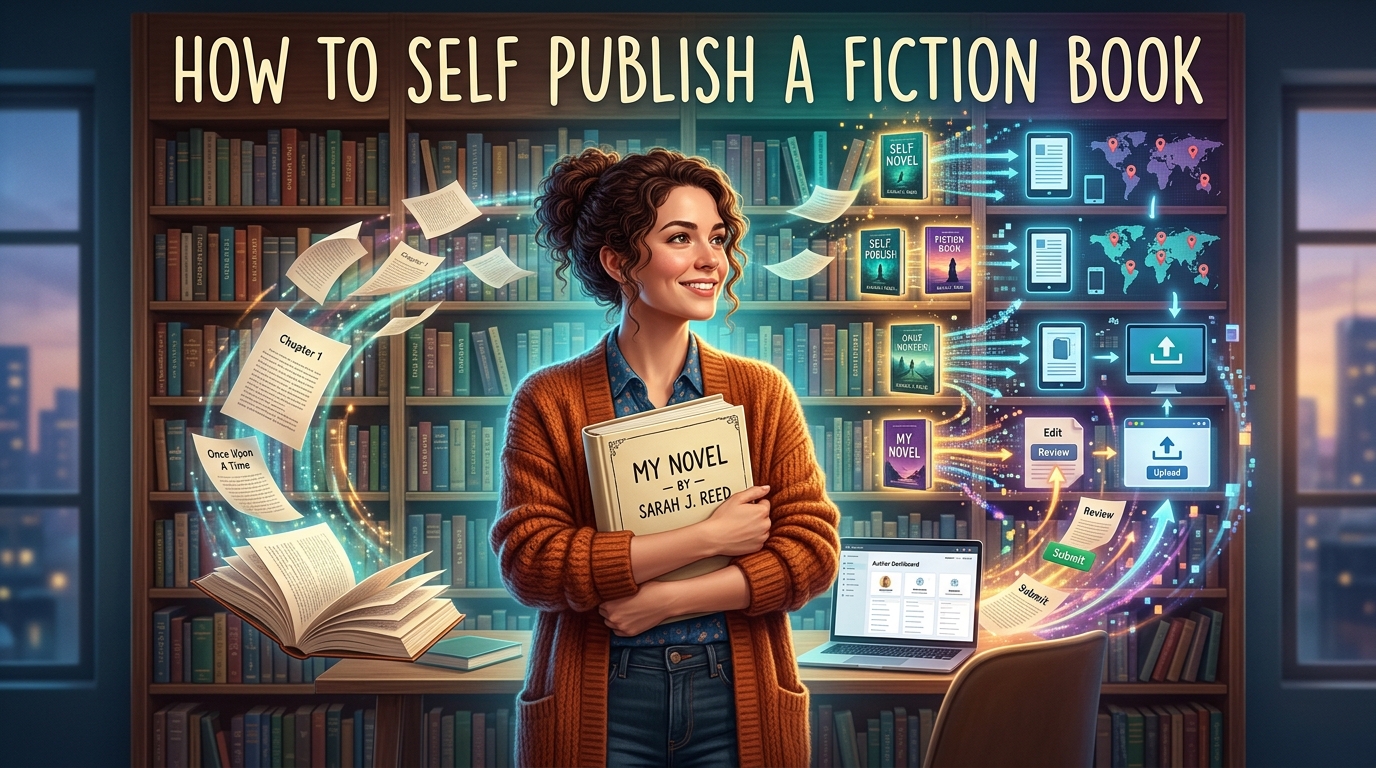
Writing a fiction book is a dream that many people carry for years. Some spend months outlining characters and plot twists, while others pour their imagination onto the page and discover the story as they write. Regardless of the process, completing a fiction manuscript is a significant accomplishment. Yet finishing the final chapter is not the end of the journey. In many ways, it is the beginning of a new phase—publishing.
For decades, traditional publishing was considered the primary route for authors who wanted their stories to reach readers. Writers often spent years querying agents, submitting manuscripts to publishers, and waiting for responses. Today, the publishing landscape has changed dramatically. Self-publishing has created opportunities for fiction writers to bring their books directly to market without relying on traditional gatekeepers.
The rise of digital publishing platforms, print-on-demand technology, and online marketing has made self-publishing more accessible than ever. Independent authors now have the ability to publish professional-quality books, distribute them globally, and build loyal readerships from the ground up. Many bestselling fiction authors have even started their careers through self-publishing before gaining widespread recognition.
However, successful self-publishing involves much more than uploading a manuscript to an online platform. Authors must understand editing, design, formatting, distribution, branding, and marketing. Every stage contributes to the quality of the final product and influences how readers perceive the book.
This guide explores the complete process of how to self-publish a fiction book, helping aspiring authors transform their manuscripts into professionally published works that can compete in today’s marketplace.
The Self-Publishing Process for Fiction Writers Explained
Self-publishing is the process of independently publishing a book without working through a traditional publishing company. Instead of handing over control to a publisher, authors manage every stage of publication themselves or hire professionals to assist them.
For fiction writers, this model offers substantial creative freedom. Authors can choose their own book title, cover design, release schedule, pricing strategy, and marketing approach. They are not restricted by publishing contracts that may influence creative decisions or ownership rights.
One of the most appealing aspects of self-publishing is the ability to maintain complete ownership of intellectual property. The author retains rights to the story, characters, and future adaptations while earning a larger share of royalties from book sales.
Self-publishing also allows fiction writers to publish books that might not fit traditional publishing trends. Niche genres, experimental storytelling styles, and unique concepts often thrive in the independent publishing world because readers can discover them directly through online marketplaces.
The responsibility that comes with self-publishing is significant, but so are the rewards. Authors become both creative professionals and publishing entrepreneurs, managing their careers according to their own goals and vision.
Why More Fiction Authors Are Choosing Self-Publishing
The publishing industry has experienced a major transformation over the last two decades. What was once considered an alternative path has become a respected and viable publishing option.
Many fiction authors choose self-publishing because it dramatically shortens the timeline between completing a manuscript and reaching readers. Traditional publishing often requires years of submissions, negotiations, editing cycles, and production schedules. Self-publishing enables authors to publish when they are ready.
Financial considerations also play an important role. Self-published authors generally receive higher royalty percentages than traditionally published writers. Although they invest in editing, cover design, and marketing, they retain greater control over long-term earnings.
The accessibility of global distribution has further increased self-publishing’s appeal. A novel published independently today can be available to readers across multiple countries within days. This level of reach was once difficult to achieve without the support of a major publishing house.
Additionally, fiction readers are increasingly comfortable purchasing books from independent authors. Online marketplaces and recommendation algorithms allow readers to discover stories based on personal interests rather than relying solely on traditional bookstore exposure.
Finishing Your Manuscript Before Publication
Before considering publication, authors must ensure that their manuscript is truly complete. Many writers reach the end of a first draft and immediately begin thinking about publishing, but successful fiction books typically undergo extensive revision before reaching readers.
The first draft serves as the foundation of the story rather than the finished product. Revision allows authors to strengthen character development, improve pacing, eliminate inconsistencies, and enhance emotional impact.
Reading the manuscript from beginning to end helps identify structural weaknesses. Plot holes, unresolved storylines, weak dialogue, and uneven pacing often become more apparent during this stage.
Many authors benefit from setting the manuscript aside for several weeks before revising. Returning with fresh perspective can reveal issues that were previously overlooked.
Revision is often where a good story becomes a great one. Investing time in this stage significantly improves the quality of the final book.
The Importance of Professional Editing
Even the most talented writers need editors. Fiction authors become deeply familiar with their stories, which can make it difficult to identify weaknesses objectively.
Professional editing helps elevate a manuscript to industry standards while ensuring readers receive the best possible experience.
Developmental Editing
Developmental editing focuses on the story’s overall structure and effectiveness. Editors evaluate character arcs, narrative tension, pacing, plot development, and thematic consistency.
This stage often involves substantial feedback and may require major revisions. Although developmental editing can be intensive, it often produces the most significant improvements in storytelling quality.
A developmental editor examines whether the story delivers a satisfying reader experience and whether each element contributes meaningfully to the narrative.
Line Editing
Line editing addresses the author’s writing style at the sentence and paragraph level.
Editors refine word choice, improve sentence flow, strengthen dialogue, and enhance readability. The goal is not to change the author’s voice but to make the writing clearer and more engaging.
Strong line editing helps fiction feel immersive and polished, allowing readers to focus on the story rather than awkward phrasing.
Copy Editing
Copy editing focuses on technical accuracy. Grammar, punctuation, spelling, capitalization, and consistency are carefully reviewed.
Copy editors also ensure character names, timelines, locations, and other details remain consistent throughout the manuscript.
This stage contributes significantly to the professionalism of the finished book.
Proofreading
Proofreading is the final quality check before publication.
Even after multiple rounds of editing, small errors can remain. Proofreaders identify typos, formatting issues, and minor mistakes that may have escaped earlier reviews.
A carefully proofread manuscript demonstrates professionalism and respect for readers.
Using Beta Readers to Improve Your Story
Beta readers provide valuable insights before publication. These individuals represent potential readers and offer feedback based on their reading experience.
Unlike professional editors, beta readers focus primarily on enjoyment, engagement, and emotional impact. They can identify moments where the story feels slow, confusing, predictable, or particularly compelling.
Feedback from beta readers often reveals patterns. If multiple readers highlight the same issue, it may deserve attention during revisions.
Beta readers help authors view their work from an audience perspective rather than a creator’s perspective. This additional layer of feedback often strengthens the manuscript before publication.
Creating a Strong Author Identity
Publishing a fiction book is not simply about releasing a single title. It is also about establishing an identity as an author.
Readers who enjoy one book frequently seek additional works by the same writer. Developing a recognizable author brand helps build long-term reader loyalty.
An author identity includes genre focus, writing style, visual presentation, online presence, and communication with readers.
Consistency plays a significant role in branding. Authors who consistently write within related genres often build stronger reader expectations and audience trust.
A professional author identity contributes to discoverability and supports future publishing efforts.
Designing a Professional Book Cover
A book cover is one of the most influential marketing tools available to fiction authors. Readers frequently make purchasing decisions based on visual impressions. Before reading a description or sample chapter, they see the cover.
An effective cover immediately communicates genre, tone, and audience expectations. A fantasy novel should look different from a psychological thriller or a romance novel. Professional cover designers understand genre conventions and reader psychology. They create designs that attract attention while remaining consistent with market expectations. A strong cover increases click-through rates, encourages browsing readers to investigate further, and strengthens overall credibility.
Choosing the Right Title for Your Fiction Book
A title serves as the first introduction to a story. Strong fiction titles are memorable, intriguing, and relevant to the narrative. They generate curiosity while reflecting the book’s atmosphere and themes. The best titles often strike a balance between originality and familiarity. Readers should find them distinctive without feeling confused about the genre or content.
Authors frequently explore dozens of title options before selecting the final version. Testing potential titles with readers can provide useful insights into audience perception. A compelling title supports discoverability and contributes to effective marketing.
Formatting Your Book for Publication
Formatting transforms a manuscript into a professional reading experience. Whether publishing an ebook, paperback, or hardcover edition, proper formatting ensures readability and visual consistency. Ebook formatting must adapt to various screen sizes and devices. Text should display correctly on e-readers, tablets, and smartphones.
Print formatting requires careful attention to page layout, chapter openings, margins, headers, typography, and trim size. Readers rarely notice excellent formatting, but they quickly notice poor formatting. Investing in professional presentation enhances the perceived quality of the book.
Understanding ISBNs and Publishing Information
An ISBN, or International Standard Book Number, serves as a unique identifier for a published book. ISBNs help bookstores, libraries, distributors, and retailers track and catalog books accurately.
Many self-publishing platforms offer free ISBN options, while others allow authors to purchase their own. Owning an ISBN can provide greater control over publishing information and establish a more professional publishing presence. Authors planning long-term publishing careers often consider ISBN ownership an important investment.
Choosing a Self-Publishing Platform
Several publishing platforms support independent fiction authors. Each offers unique advantages depending on publishing goals and distribution preferences.
Amazon Kindle Direct Publishing
Amazon KDP remains the dominant self-publishing platform worldwide. Its extensive customer base provides significant exposure opportunities, and authors can publish both ebooks and print editions through a single system. Many independent fiction authors begin their publishing journey through Amazon because of its accessibility and reach.
Kobo Writing Life
Kobo Writing Life offers access to international ebook markets and provides opportunities to reach readers beyond Amazon’s ecosystem. Its global presence makes it particularly attractive for authors seeking broader distribution.
Apple Books
Apple Books provides access to millions of users across Apple devices. The platform’s visual marketplace and growing audience make it a valuable distribution channel for fiction authors.
Draft2Digital
Draft2Digital simplifies wide distribution by allowing authors to publish across multiple retailers from one dashboard. This streamlined approach saves time while expanding market reach.
Ebook, Paperback, and Hardcover Publishing
Modern self-publishing allows authors to release books in multiple formats.
Each format appeals to different segments of the reading audience.
| Format | Benefits | Reader Appeal |
| Ebook | Instant delivery, low production cost, global access | Digital readers and mobile users |
| Paperback | Affordable physical format | Traditional book buyers |
| Hardcover | Premium appearance and durability | Collectors and dedicated fans |
| Large Print | Improved accessibility | Readers who prefer larger text |
Publishing in multiple formats increases visibility and accommodates different reader preferences.
Setting the Right Price for Your Book
Pricing influences both sales volume and perceived value. Authors should research books within their genre to understand market expectations. Readers often compare pricing when deciding between similar titles. A thoughtful pricing strategy balances profitability with competitiveness. Some authors use promotional pricing during launches to encourage initial sales and reviews. Others maintain consistent pricing based on genre norms and audience expectations. Pricing decisions should support long-term publishing goals rather than focusing solely on immediate revenue.
Writing a Book Description That Sells
A book description acts as a marketing tool designed to persuade readers to purchase the book. Effective descriptions introduce the protagonist, establish the central conflict, and create curiosity about the outcome. The goal is to provide enough information to generate interest without revealing major plot twists. Readers should finish the description wanting to know what happens next. A strong description often contributes significantly to conversion rates and sales performance.
Building an Author Website
An author website serves as the foundation of a professional online presence. It provides readers with information about books, upcoming releases, author background, and contact opportunities. Unlike social media platforms, an author website remains completely under the author’s control. As a publishing career grows, the website becomes a central location for reader engagement, media inquiries, and promotional activities. Professional websites strengthen credibility and support long-term brand development.
Growing an Email List
Email marketing remains one of the most effective promotional tools available to authors. Unlike social media platforms, email provides direct communication with readers who have chosen to receive updates. Authors often attract subscribers by offering exclusive content, bonus chapters, or free stories. Over time, an engaged email list becomes a valuable asset for announcing new releases, sharing updates, and maintaining reader relationships. Many successful independent authors consider their email lists one of their most important marketing resources.
Marketing Your Fiction Book
Publishing a great book is only part of the equation. Readers must also discover it. Marketing helps increase visibility and connect books with their target audience. Successful fiction marketing involves understanding reader behavior, participating in relevant communities, maintaining an online presence, and consistently promoting books over time. Rather than focusing solely on sales, effective marketing emphasizes relationship-building and audience engagement. Readers who feel connected to an author are often more likely to become loyal supporters.
Launching Your Fiction Book Successfully
A successful launch requires preparation long before publication day. Authors often build anticipation through cover reveals, newsletter updates, early review campaigns, and social media engagement. Generating excitement before release increases visibility and encourages early sales momentum. The launch period can significantly influence a book’s performance in marketplace algorithms and recommendation systems.
Careful planning helps maximize the impact of a new release.
The Importance of Reader Reviews
Reviews provide social proof that influences purchasing decisions. Potential readers often examine reviews before deciding whether to invest time and money in a book. Positive reviews increase credibility and help establish trust. While authors naturally hope for favorable feedback, constructive criticism is a normal part of publishing. Every successful book receives a range of opinions.
The focus should remain on delivering quality stories and building genuine relationships with readers.
Exploring Advertising Opportunities
Paid advertising can help fiction authors reach new audiences more efficiently. Platforms such as Amazon Ads, Facebook Ads, and BookBub offer opportunities to target readers based on interests and purchasing behavior. Advertising works best when supported by professional covers, compelling descriptions, and positive reviews. Successful advertising often requires experimentation, testing, and continuous optimization.
While marketing investments can accelerate growth, strong storytelling remains the foundation of long-term success.
Building a Long-Term Fiction Career
Many authors view self-publishing as a single project, but the most successful writers often think in terms of careers rather than individual books. Each publication contributes to a larger body of work that strengthens visibility and readership over time. Readers who enjoy one book frequently purchase additional titles by the same author. Building a catalog creates more opportunities for discovery and income. Consistency, professionalism, and continuous improvement are essential qualities for long-term success in self-publishing.
Authors who continue learning, writing, and engaging with readers often experience steady growth throughout their careers.
Common Mistakes First-Time Fiction Authors Should Avoid
Many new authors rush to publish before their books are fully ready. Skipping editing, using low-quality cover designs, neglecting marketing, and ignoring reader expectations can reduce a book’s potential. Another common mistake is expecting immediate success. Publishing is rarely an overnight process. Building readership often takes time, patience, and persistence. Some authors focus exclusively on writing while overlooking the business side of publishing. Others become consumed by marketing and neglect future writing projects. The most successful approach balances creativity with professionalism.
Understanding common mistakes helps authors make informed decisions and improve their chances of success.
Conclusion
Self-publishing a fiction book has opened extraordinary opportunities for writers around the world. Authors no longer need to depend solely on traditional publishing routes to share their stories with readers. With the right combination of preparation, professionalism, and persistence, independent writers can publish high-quality books and build meaningful careers.
The process begins with a strong manuscript and continues through editing, cover design, formatting, distribution, marketing, and reader engagement. Every stage contributes to the overall success of the book and influences how readers experience the story.
While self-publishing requires effort and commitment, it also offers unmatched creative freedom and ownership. Authors retain control over their work, connect directly with readers, and shape their publishing journeys according to their own goals.
For fiction writers with a story to tell, self-publishing is more than a publishing method. It is an opportunity to transform imagination into a professionally published book that can reach readers across the globe and leave a lasting impact through the power of storytelling.
