
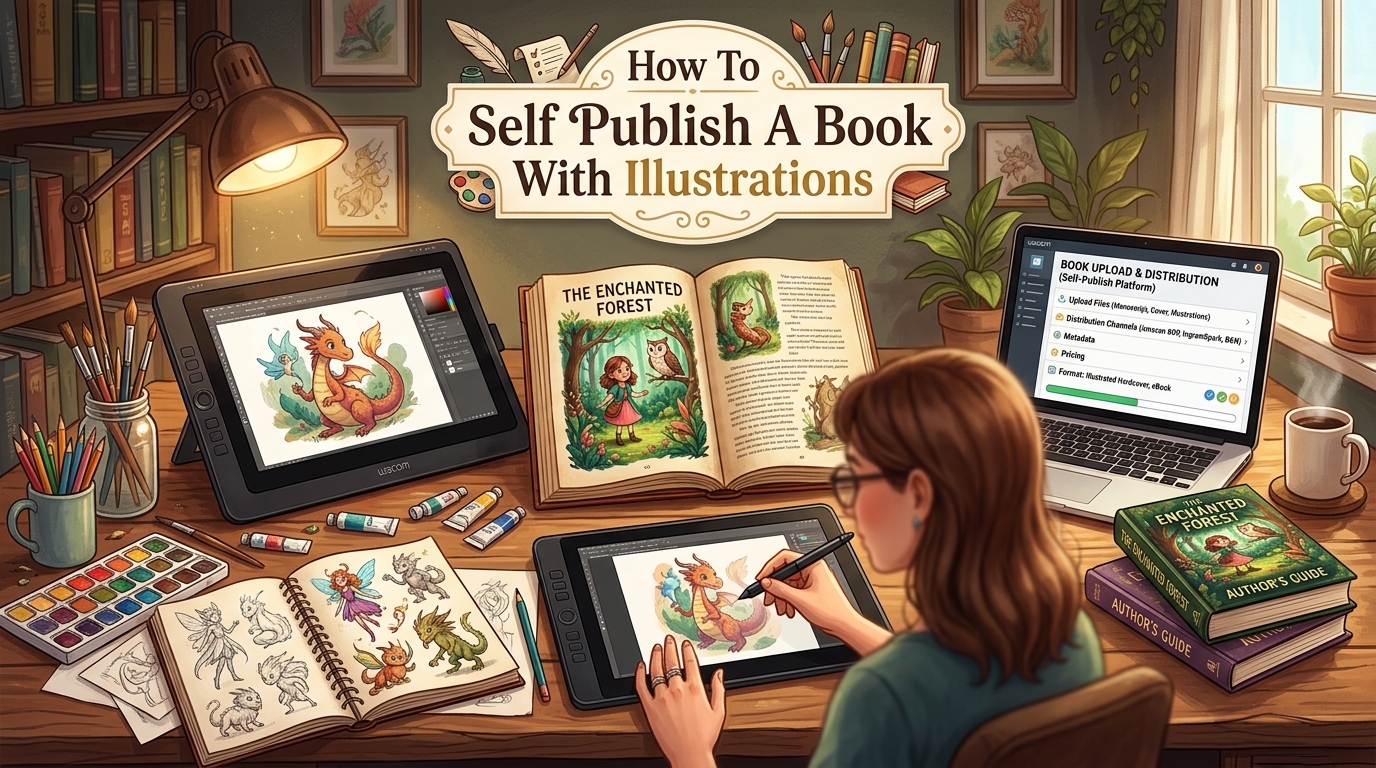
Illustrated books occupy a unique space in the publishing world. They combine the power of storytelling with visual creativity, creating an experience that words alone often cannot achieve. Whether you are publishing a children’s picture book, a graphic novel, a memoir with artwork, a cookbook filled with illustrations, an educational guide, or a fantasy novel enhanced by visual elements, illustrations can transform a manuscript into something memorable and engaging.
The rise of self-publishing has made it easier than ever for authors and artists to bring illustrated books directly to readers without relying on traditional publishing houses. Today, creators have access to professional printing technologies, global distribution platforms, and digital publishing tools that allow them to maintain creative control while reaching audiences around the world.
However, self-publishing an illustrated book involves more than simply adding images to a manuscript. Authors must consider image quality, page layouts, printing specifications, file formats, copyright ownership, color management, and production costs. Unlike text-only books, illustrated publications require careful planning to ensure that both the written content and visual elements work together seamlessly.
Understanding the complete self-publishing process can help you avoid costly mistakes and create a professional-quality book that reflects your vision. Whether you are an author collaborating with an illustrator or an artist creating an entire book independently, this guide will walk you through everything you need to know about self-publishing a book with illustrations.
Understanding the Different Types of Illustrated Books
Before beginning the publishing process, it is important to identify what kind of illustrated book you are creating. Different categories have different production requirements, printing costs, and reader expectations.
Children’s picture books are among the most common illustrated publications. In these books, artwork often carries as much storytelling weight as the text itself. The visual narrative helps young readers understand emotions, settings, and actions. Graphic novels and comics rely almost entirely on sequential artwork. Layout design becomes especially important because pacing, dialogue placement, and visual flow determine how readers experience the story.
Educational books frequently use illustrations to explain complex concepts. Diagrams, visual examples, and instructional artwork can make learning more accessible and engaging. Cookbooks, travel books, memoirs, and historical works may incorporate illustrations to enhance understanding and create a richer reading experience. In these cases, images serve a supportive role while complementing the written content.
Fantasy and science fiction novels increasingly include maps, character sketches, world-building illustrations, and decorative chapter artwork that deepen immersion without overwhelming the narrative. Knowing your category early helps guide important decisions regarding format, trim size, paper quality, and printing methods.
Why Self-Publishing Is Ideal for Illustrated Books
Traditional publishers often approach illustrated books cautiously because production costs are significantly higher than standard text-based titles. Full-color printing, specialized paper, and professional artwork increase the financial investment required for publication. Self-publishing removes many of these barriers. Creators maintain ownership of their intellectual property while making decisions about design, pricing, distribution, and marketing.
One of the greatest advantages is creative freedom. Traditional publishers may request changes to artwork, layouts, or visual style to align with market trends. Self-published authors retain full authority over every aspect of the book’s appearance. Another benefit is speed. Traditional publishing timelines can stretch across several years. Self-publishing allows creators to move from completed manuscript to published book in a matter of months.
Illustrated books also benefit from print-on-demand services, which eliminate the need for large inventory investments. Authors can order copies as needed while still maintaining professional production quality.
Planning Your Illustrated Book
Successful illustrated books begin with careful planning. Before creating pages, it is essential to establish a clear vision for how text and illustrations will work together. Think about the role illustrations will play throughout the book. Some projects feature artwork on every page, while others use illustrations selectively to highlight important moments.
Consider your target audience. A picture book for young children requires a very different visual approach than a fantasy novel aimed at adults. Age group, genre, and reader expectations should influence both artistic style and design choices. Page count is another critical factor. Printing costs often increase with additional pages, especially when color illustrations are involved. Establishing a realistic page count early helps manage production expenses.
It is also helpful to create a visual roadmap showing where illustrations will appear. This allows authors and designers to maintain consistency while balancing text and imagery throughout the publication.
Creating Professional Illustrations
The quality of your illustrations can significantly impact the success of your book. Readers often judge illustrated books based on visual presentation before reading a single word. If you are creating the artwork yourself, focus on consistency. Characters, environments, colors, and artistic techniques should remain cohesive throughout the project.
For authors who are not illustrators, hiring a professional artist can elevate the final product considerably. Many successful self-published books result from collaborations between writers and illustrators who bring complementary skills to the project. Professional illustrations should be created at high resolution. Most printers recommend artwork prepared at 300 DPI (dots per inch) to ensure sharp and clear reproduction.
Digital illustration software has become increasingly sophisticated, allowing artists to create publication-ready artwork that meets modern printing standards. Regardless of the tools used, maintaining high-quality source files is essential.
Working With an Illustrator
Collaborating with an illustrator requires clear communication and mutual understanding. The most successful partnerships begin with a detailed creative brief that explains the project’s goals, audience, tone, and visual expectations.
Authors should provide character descriptions, setting details, and examples of artistic styles that align with their vision. This helps prevent misunderstandings and reduces the likelihood of extensive revisions later.
Contracts are equally important. Written agreements should define ownership rights, payment terms, deadlines, and permitted uses of the artwork.
Many illustrators charge based on complexity, page count, and usage rights. Budgeting appropriately ensures that the project remains sustainable from start to finish.
Open communication throughout the creative process helps maintain consistency while allowing both parties to contribute their expertise.
Designing the Interior Layout
The layout of an illustrated book determines how readers interact with both text and artwork. A strong design creates a seamless reading experience while showcasing illustrations effectively.
Text placement should never compete with the artwork. Readers should be able to enjoy illustrations without struggling to locate or read the accompanying text.
White space plays an important role in visual balance. Overcrowded pages can feel overwhelming, while carefully planned spacing allows illustrations to breathe.
Typography should complement the visual style of the book. Fonts that work well in a modern educational book may not suit a whimsical children’s story.
Professional layout software helps creators arrange content precisely while meeting printer requirements. Careful attention to margins, gutters, and image placement ensures that important visual elements are not lost during printing.
Choosing Between Color and Black-and-White Printing
One of the biggest decisions for illustrated book creators involves color usage.
Full-color printing offers the most visually impressive results. Vibrant artwork can capture attention and enhance emotional impact. Children’s books, art books, and graphic novels often benefit greatly from color reproduction.
However, color printing is significantly more expensive. Authors must balance artistic goals with financial realities.
Black-and-white printing can reduce production costs while still providing a professional appearance. Certain illustration styles, such as ink drawings, sketches, and line art, work exceptionally well in monochrome formats.
The choice ultimately depends on the purpose of the illustrations, target audience, and publishing budget.
Understanding Print Specifications
Illustrated books require special attention to technical specifications. Printers use precise standards that influence the final appearance of the publication.
Resolution Requirements
Images should generally be prepared at 300 DPI for print production. Lower-resolution artwork may appear blurry or pixelated when printed.
Bleed Settings
Bleed refers to artwork extending beyond the trim line. This prevents unwanted white borders when pages are cut during production.
Color Profiles
Professional printers typically use CMYK color mode rather than RGB. Converting files properly helps ensure accurate color reproduction.
File Formats
High-quality PDF files are generally preferred for printing. These files preserve layout integrity while maintaining image quality.
Understanding these specifications early prevents production delays and costly corrections.
Selecting the Right Book Size
Trim size affects both reader experience and printing costs. Larger formats often showcase illustrations more effectively but increase production expenses.
The following table highlights common trim sizes used for illustrated books.
| Book Type | Common Trim Size | Best Use |
| Children’s Picture Book | 8.5″ x 8.5″ | Full-page artwork and storytelling |
| Graphic Novel | 6″ x 9″ | Sequential art and dialogue |
| Art Book | 8.5″ x 11″ | Detailed illustrations and portfolios |
| Educational Book | 7″ x 10″ | Visual learning materials |
| Illustrated Novel | 6″ x 9″ | Text-heavy books with supporting artwork |
| Coffee Table Book | 11″ x 11″ or larger | High-quality visual presentation |
Selecting the right size helps maximize visual impact while maintaining production efficiency.
Preparing Your Book for Print
Once illustrations and layouts are complete, the next step involves preparing files for production. A thorough review process is essential. Every page should be checked for formatting consistency, image quality, spelling errors, and alignment issues. Printing a physical proof copy before publication is highly recommended. Digital previews cannot always reveal problems that become apparent in print. Proof copies allow authors to evaluate color accuracy, paper quality, text readability, and overall presentation before approving final production. This stage often reveals small adjustments that significantly improve the finished book.
Choosing a Self-Publishing Platform
Several self-publishing platforms support illustrated books. The best choice depends on your goals, distribution needs, and printing preferences. Some platforms specialize in global distribution, while others focus on premium print quality. Certain services excel at hardcover production, while others prioritize affordability. When evaluating publishing platforms, consider printing options, color capabilities, royalty structures, international availability, and customer support. Many creators choose to publish through multiple channels to maximize visibility and reach different audiences.
Creating an Eye-Catching Cover
The cover serves as the primary marketing tool for any book. For illustrated publications, the cover becomes even more important because readers often expect strong visual presentation. An effective cover immediately communicates genre, tone, and audience. The artwork should capture attention while remaining clear and readable in both physical and digital formats.
Title placement, typography, and color choices all contribute to first impressions. A professionally designed cover increases credibility and can significantly improve sales performance. Many self-published authors invest heavily in cover design because it directly influences purchasing decisions.
Pricing an Illustrated Book
Pricing illustrated books requires balancing profitability with market expectations. Production costs are generally higher than standard books due to increased printing expenses. Full-color interiors, premium paper, and hardcover formats can substantially raise manufacturing costs.
Researching comparable books within your genre helps establish competitive pricing. Readers expect illustrated books to cost more than text-only books, but excessive pricing may discourage purchases. Understanding production costs, royalty percentages, and distribution fees allows authors to set sustainable prices while remaining attractive to buyers.
Marketing Your Illustrated Book
Publishing the book is only part of the journey. Effective marketing helps connect your work with readers. Illustrated books possess a significant advantage because visual content performs exceptionally well across digital platforms. Artwork can be shared through social media, websites, newsletters, and promotional campaigns.
Behind-the-scenes content often resonates strongly with audiences. Readers enjoy seeing sketches, concept art, design progress, and creative processes. Building anticipation before launch can generate momentum and establish an early readership. Consistent visibility helps maintain interest long after publication.
Marketing should emphasize both the story and the artwork, highlighting what makes the book unique within its category.
Building a Long-Term Author Brand
A successful illustrated book can become the foundation for a larger creative career. Readers who connect with your work often seek additional projects from the same creator. Maintaining a professional website, engaging with readers, and consistently producing quality content helps establish a recognizable brand.
Illustrators and authors alike benefit from showcasing their portfolios, sharing updates, and building communities around their creative work. Over time, a strong brand can increase opportunities for collaborations, speaking engagements, licensing deals, and future publications.
Common Mistakes to Avoid
Many first-time illustrated book creators underestimate the technical and financial requirements involved in production. Low-resolution images, inconsistent artwork, poor layout design, and inadequate proofreading are among the most common issues. Another frequent mistake is skipping proof copies. What looks perfect on a computer screen may appear very different in print.
Some creators focus entirely on artwork while neglecting typography and readability. Others underestimate marketing efforts and assume that publication alone will attract readers. Avoiding these pitfalls helps create a polished, professional product capable of competing in today’s publishing marketplace.
Conclusion
Self-publishing a book with illustrations is a rewarding creative endeavor that combines storytelling, visual artistry, and entrepreneurial thinking. While the process involves additional considerations compared to publishing a traditional text-only book, the results can be extraordinary when executed thoughtfully. From planning and illustration development to layout design, printing, and marketing, every stage contributes to the reader’s experience. By focusing on professional-quality artwork, strong design principles, and careful production standards, authors and illustrators can create books that stand out in an increasingly competitive market. With modern self-publishing tools and global distribution opportunities readily available, there has never been a better time to transform an illustrated manuscript into a professionally published book that readers can discover, enjoy, and remember for years to come.
