
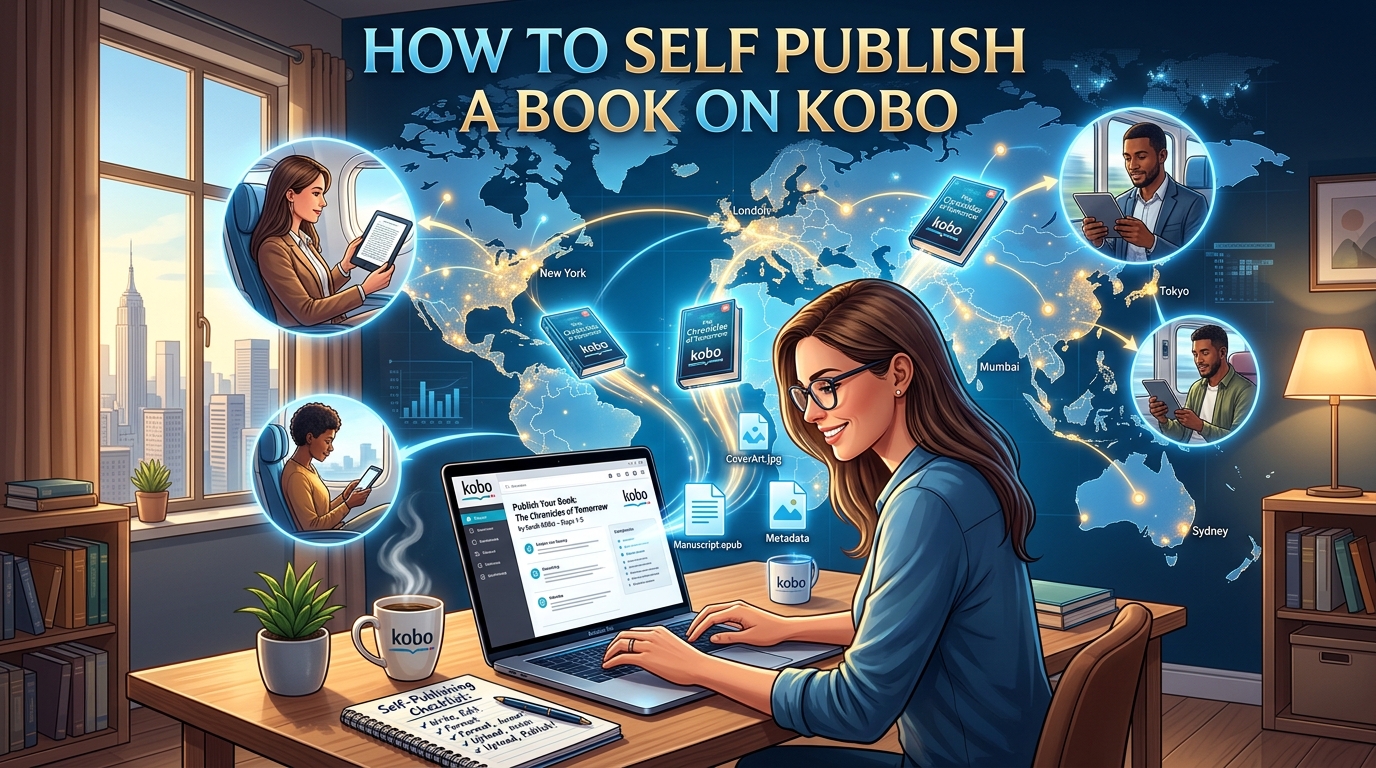
The rise of self-publishing has fundamentally changed the publishing industry, creating opportunities for authors that were nearly impossible to imagine just a few decades ago. Writers no longer need to spend years querying literary agents or waiting for traditional publishers to approve their manuscripts before reaching readers. Today, authors can take control of their publishing journey and distribute their work directly to a global audience. Among the many self-publishing platforms available, Kobo has emerged as one of the most valuable options for independent authors looking to build a sustainable publishing career.
While Amazon often dominates conversations about self-publishing, Kobo has quietly established itself as a major player in the digital publishing world. Through its self-publishing platform, Kobo Writing Life, authors can publish ebooks and audiobooks while maintaining complete control over pricing, rights, distribution, and royalties. More importantly, Kobo offers access to readers in numerous international markets, making it an attractive choice for writers who want to expand beyond a single retailer.
Self-publishing on Kobo is not simply about uploading a manuscript and waiting for sales to appear. Like any successful publishing venture, it requires careful preparation, professional presentation, strategic marketing, and a clear understanding of how the platform works. Authors who approach Kobo with a long-term mindset often discover opportunities to reach readers in countries and regions they may never have considered before.
Whether you are publishing your first novel, a nonfiction guide, a memoir, a poetry collection, or a business book, understanding the Kobo ecosystem can help you maximize your book’s visibility and earning potential. This guide explores every stage of the process, from manuscript preparation to post-publication marketing, providing a complete roadmap for authors who want to self-publish successfully on Kobo.
Understanding Kobo and Kobo Writing Life
What Is Kobo?
Kobo is a digital reading company that specializes in ebooks, audiobooks, and eReading devices. Founded in Canada, the company has grown into one of the world’s largest digital reading platforms, serving readers across more than 190 countries. Unlike some retailers that focus heavily on one geographic market, Kobo has built strong relationships with international bookstores, retailers, and libraries, helping it establish a broad global footprint.
One of Kobo’s defining characteristics is its commitment to serving readers outside the dominant American ebook ecosystem. The platform enjoys strong market penetration in countries such as Canada, Australia, New Zealand, France, Italy, Belgium, the Netherlands, and several other regions. This international reach creates unique opportunities for independent authors seeking to diversify their audience.
Over the years, Kobo has become a trusted destination for readers who prefer digital formats. Through its marketplace, users can purchase ebooks and audiobooks, access personalized recommendations, and read content across multiple devices. This growing user base provides authors with access to millions of potential customers around the world.
How Kobo Writing Life Works
Kobo Writing Life is Kobo’s dedicated self-publishing platform. It allows authors and publishers to upload, manage, distribute, and sell books directly through Kobo’s global marketplace. The platform is designed to be accessible to both first-time authors and experienced publishers, offering a straightforward publishing process without sacrificing professional publishing tools.
Through Kobo Writing Life, authors maintain full ownership of their content and publishing rights. This means writers retain control over pricing, cover design, metadata, and distribution decisions. Unlike traditional publishing arrangements, authors are not required to surrender intellectual property rights in exchange for publication.
The platform also provides detailed reporting tools that allow authors to monitor sales performance across different countries and regions. This data can help writers understand where their books are performing well and identify opportunities for future growth.
For many independent authors, Kobo Writing Life represents an important component of a broader publishing strategy, allowing them to reach readers beyond a single retailer while maintaining complete creative control.
Why Kobo Is Worth Considering for Self-Publishing
Access to a Truly Global Audience
One of Kobo’s strongest advantages is its international reach. Many self-published authors focus primarily on domestic markets, often overlooking the substantial opportunities available overseas. Kobo helps bridge this gap by connecting authors with readers across multiple continents.
International publishing has become increasingly important as digital books eliminate many of the logistical challenges associated with traditional print distribution. A reader in Australia can purchase the same ebook as a reader in Canada within seconds, creating opportunities for global readership that were once difficult to achieve.
Authors frequently discover that certain genres perform exceptionally well in specific countries. Romance novels, thrillers, historical fiction, and self-help books often attract audiences across multiple markets. Kobo’s international presence makes it easier to capitalize on these opportunities.
For authors seeking long-term growth, access to diverse markets can provide a valuable source of additional revenue and readership.
Maintaining Full Creative Control
One of the primary reasons authors choose self-publishing is the ability to maintain complete creative freedom. Kobo supports this philosophy by allowing writers to make independent decisions regarding every aspect of their book.
Authors control their titles, subtitles, pricing, descriptions, categories, keywords, and cover designs. They can update their books whenever necessary and make changes without waiting for publisher approval. This flexibility enables writers to respond quickly to market trends and reader feedback.
Creative control also extends to publishing schedules. Rather than adhering to traditional publishing timelines, authors can release books when they are ready and maintain momentum through consistent publishing.
For writers who value independence, Kobo offers a publishing environment that respects author ownership and decision-making.
Preparing Your Manuscript for Publication
Moving Beyond the First Draft
Completing a manuscript is an important milestone, but it is only the beginning of the publishing process. Many authors mistakenly assume that finishing a draft means the book is ready for publication. In reality, the revision process often determines whether a book succeeds or struggles in the marketplace.
The first draft is typically where ideas take shape. Subsequent revisions refine those ideas, improve pacing, strengthen arguments, and eliminate inconsistencies. During this stage, authors should focus on identifying weaknesses in structure, character development, narrative flow, and overall readability.
Stepping away from the manuscript for a short period before revising can provide valuable perspective. Returning with fresh eyes often makes it easier to identify areas that need improvement.
Professional authors understand that rewriting is an essential part of the creative process. The most successful books rarely emerge fully polished from the first draft.
The Importance of Professional Editing
Editing remains one of the most valuable investments an author can make. Readers expect professionally written books regardless of whether they are traditionally published or independently produced.
Developmental editing focuses on the broader aspects of the manuscript, including organization, pacing, content structure, and narrative effectiveness. This stage addresses fundamental issues before detailed language corrections begin.
Copyediting examines grammar, punctuation, clarity, consistency, and style. It helps ensure the manuscript reads smoothly and professionally.
Proofreading serves as the final quality check before publication. Even small typographical errors can negatively affect reader perception, making this final review essential.
Publishing a professionally edited book significantly increases the likelihood of positive reviews and reader satisfaction.
Formatting Your Book for Kobo
Creating a Professional Reading Experience
Formatting plays a critical role in ebook publishing. Even a well-written book can frustrate readers if the formatting is inconsistent or difficult to navigate.
Kobo generally recommends EPUB files because they provide flexibility across different devices and screen sizes. Proper formatting ensures chapters display correctly, text flows smoothly, and readers can navigate the book without difficulty.
Attention should be given to chapter headings, paragraph spacing, page breaks, image placement, and font consistency. These details may seem minor, but collectively they influence the overall reading experience.
Authors should preview their formatted manuscript before publication to ensure everything appears as intended.
Understanding Ebook Design Principles
Digital reading differs from print reading in several important ways. Ebook readers often customize font size, spacing, and display settings according to personal preferences. As a result, formatting must be adaptable rather than rigid.
Simple, clean formatting generally performs best. Excessive styling, complicated layouts, and unnecessary visual elements can create compatibility issues across devices.
The goal is to create a seamless reading experience that allows readers to focus entirely on the content.
Designing a Book Cover That Attracts Readers
Why Cover Design Matters
A book cover is often the first interaction readers have with a title. In digital marketplaces, where books compete for attention among thousands of alternatives, visual presentation becomes especially important.
An effective cover immediately communicates genre, tone, and professionalism. Readers make assumptions about a book within seconds of seeing its cover, which means first impressions matter tremendously.
A strong cover can dramatically improve click-through rates and encourage readers to explore the book description. Conversely, a poorly designed cover may prevent potential buyers from engaging with the book at all.
Investing in quality cover design is often one of the highest-return decisions an author can make.
Understanding Genre Expectations
Every genre has visual conventions that readers recognize. Romance covers typically differ significantly from thriller covers, and nonfiction books often employ entirely different design strategies than fantasy novels.
Studying successful books within your genre can provide valuable insights into reader expectations. While originality is important, completely ignoring genre conventions can create confusion and reduce marketability.
A successful cover balances uniqueness with familiarity, helping readers immediately understand what kind of experience the book offers.
Setting Up Your Kobo Writing Life Account
Creating a Kobo Writing Life account is a straightforward process. Authors begin by registering their account and providing basic personal information. During setup, payment and tax information must also be completed to ensure royalty payments are processed correctly.
Once registration is complete, authors gain access to the Kobo Writing Life dashboard. This centralized platform allows users to upload books, manage listings, track sales, update pricing, and monitor performance across multiple territories.
The dashboard is designed to be intuitive and accessible, making it suitable for both beginners and experienced publishers. Spending time exploring its features before publication can help authors become more comfortable with the platform.
Understanding how the dashboard functions will make future publishing activities more efficient and effective.
Uploading Your Book to Kobo
Entering Book Metadata
Metadata serves as the foundation of discoverability. It includes information such as the book title, subtitle, author name, description, categories, and keywords.
These elements help Kobo understand where the book belongs within its marketplace and determine which readers may find it relevant. Strong metadata improves visibility and increases the likelihood of appearing in search results.
Authors should approach metadata strategically, considering the terms and categories readers are most likely to use when searching for similar books.
Uploading Files and Final Review
After entering metadata, authors upload their manuscript and cover files. Kobo processes these files and provides opportunities to review the final presentation before publication.
This review stage is critical because it allows authors to identify formatting issues, cover display problems, or metadata errors before the book becomes publicly available.
Taking time to conduct a thorough final review can prevent future complications and ensure a professional launch.
Key Publishing Elements Every Kobo Author Needs
| Publishing Component | Why It Matters |
| Book Title | Creates first impression and supports discoverability |
| Subtitle | Provides context and keyword opportunities |
| Cover Design | Influences reader interest and clicks |
| Book Description | Encourages purchases |
| Keywords | Improves search visibility |
| Categories | Places the book in relevant sections |
| Author Profile | Builds credibility and branding |
| Pricing Strategy | Impacts sales and profitability |
| Manuscript Formatting | Enhances reading experience |
| Marketing Plan | Supports long-term visibility |
Pricing Your Book Strategically
Pricing is one of the most important decisions authors make during publication. A book’s price influences both sales volume and reader perception.
New authors sometimes undervalue their work by setting prices extremely low, while others overestimate market demand and price themselves out of potential sales. Finding the right balance requires research and experimentation.
Studying comparable books within the same genre can provide valuable guidance. Reader expectations vary significantly between genres, making market awareness essential.
Pricing should be viewed as an ongoing strategy rather than a permanent decision. Kobo allows authors to adjust pricing over time, enabling them to test different approaches and optimize performance.
Marketing Your Kobo Book After Publication
Publishing a book is only the first stage of the journey. Marketing determines whether readers discover the book and decide to purchase it.
Many successful Kobo authors focus on building long-term relationships with readers rather than relying solely on one-time promotional efforts. An author website, email newsletter, and active online presence can help establish credibility and encourage reader engagement.
Marketing is most effective when it begins before publication and continues long afterward. Consistent visibility helps maintain momentum and attract new readers over time.
Authors who approach marketing as an ongoing process rather than a launch-week activity often achieve stronger results.
Using Kobo Promotions to Increase Visibility
Kobo regularly offers promotional opportunities for independent authors. These promotions can place books in front of larger audiences and generate increased visibility within the marketplace.
Promotional campaigns often include discounted pricing, seasonal features, regional promotions, and genre-specific marketing initiatives. Participating in these opportunities can help authors reach readers who might not otherwise discover their books.
Promotions are particularly valuable for new authors seeking to build initial readership and generate reviews. Increased exposure can create momentum that continues beyond the promotion itself.
Strategic participation in Kobo promotions can become an important part of a broader marketing plan.
Building a Long-Term Author Career on Kobo
Successful self-publishing rarely depends on a single book. Instead, it often results from consistent publishing, ongoing learning, and a commitment to serving readers over time.
Authors who regularly release new books tend to build stronger readership and create additional opportunities for discovery. Each publication expands the author’s catalog and increases the likelihood that readers will explore other titles.
Building an author career also involves understanding market trends, refining marketing strategies, and continually improving writing skills. Kobo provides the tools necessary for publication, but long-term success depends on how effectively authors use those tools.
Patience is essential. Publishing success often develops gradually as readers discover books, leave reviews, and recommend titles to others.
Conclusion
Self-publishing a book on Kobo offers authors a powerful opportunity to reach readers around the world while maintaining complete ownership and creative control over their work. Through Kobo Writing Life, writers can publish professionally, distribute globally, earn royalties directly, and build sustainable publishing careers without relying on traditional gatekeepers.
Success on Kobo begins with a well-prepared manuscript, professional editing, thoughtful formatting, and strong cover design. It continues through strategic metadata optimization, effective pricing, and ongoing marketing efforts. Authors who view self-publishing as a long-term business rather than a one-time event often experience the greatest rewards.
As digital publishing continues to evolve, Kobo remains one of the most valuable platforms for independent authors seeking international reach and publishing freedom. By understanding the platform, investing in quality, and consistently engaging with readers, authors can transform their manuscripts into professionally published books that connect with audiences across the globe.
