
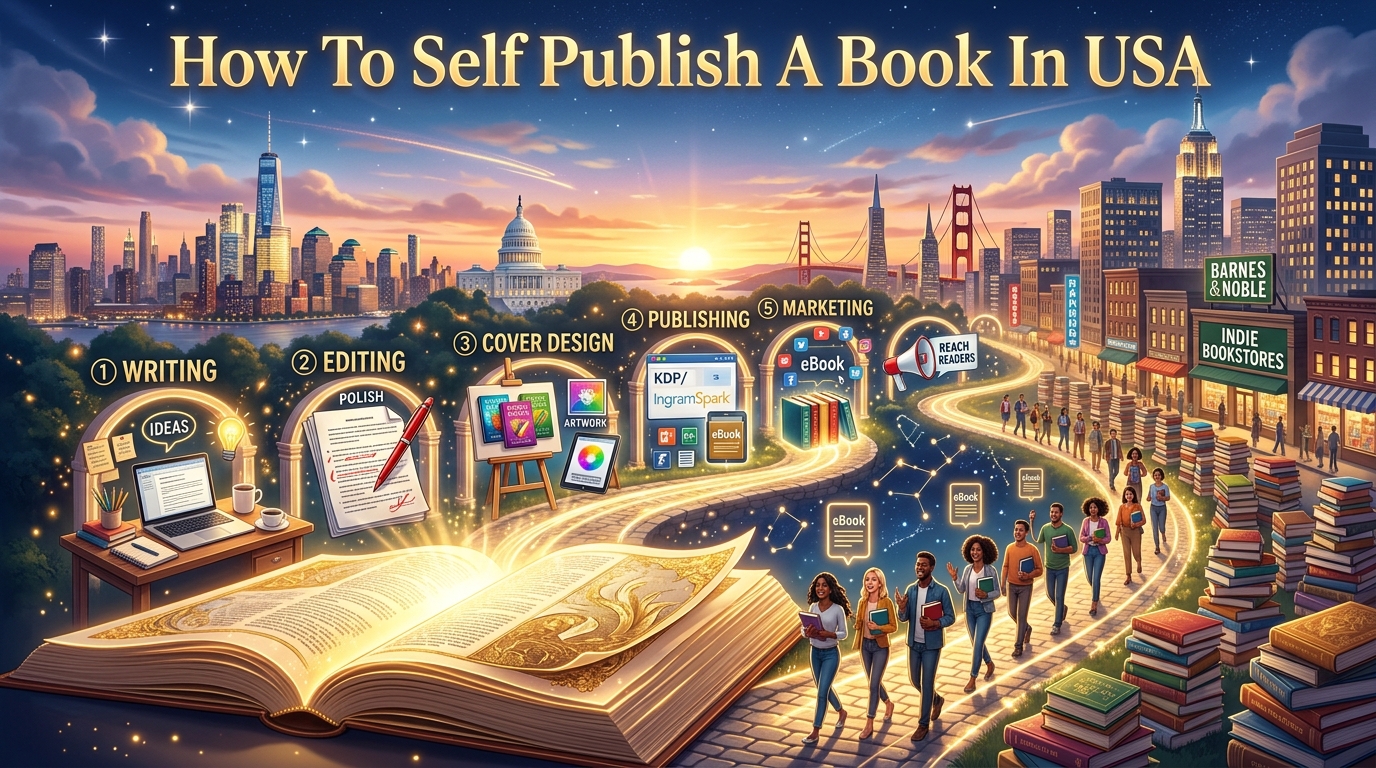
The publishing industry in the United States has changed dramatically over the past two decades. Writers no longer need to spend months or even years searching for a literary agent or waiting for a traditional publishing house to accept their manuscript. Today, self-publishing has become one of the most accessible and profitable ways for authors to bring their work to readers.
Whether you are writing a novel, memoir, business book, poetry collection, children’s book, or educational guide, self-publishing offers complete control over the publishing process. Authors can decide everything from the book cover and interior design to pricing, distribution, and marketing strategies. More importantly, self-publishing allows writers to earn higher royalty percentages compared to traditional publishing contracts.
However, publishing a book successfully requires much more than uploading a manuscript to an online platform. Professional editing, formatting, cover design, distribution, copyright protection, and marketing all play important roles in determining whether a book reaches its audience.
This guide explores the complete process of how to self-publish a book in the USA, covering every stage from manuscript preparation to book promotion, helping aspiring authors navigate the modern publishing landscape with confidence.
Inside the U.S. Self-Publishing Industry
Self-publishing is the process of independently publishing a book without relying on a traditional publishing company. The author acts as the publisher and retains ownership of the book’s rights, creative direction, and profits.
The rise of digital publishing platforms has transformed self-publishing into a mainstream publishing route. Thousands of authors in the United States now build successful careers through independent publishing. Many bestselling books originally began as self-published projects before gaining widespread recognition.
One of the biggest advantages of self-publishing is speed. Traditional publishing can take years from manuscript submission to bookstore release. Self-publishing can reduce that timeline to a matter of weeks or months, depending on how quickly an author completes the preparation process.
The self-publishing industry has also become more professional. Readers now expect independently published books to meet the same standards as traditionally published titles. As a result, successful authors invest significant effort into editing, design, and marketing.
Why Many Authors Choose Self-Publishing
The growing popularity of self-publishing in the United States is driven by several key benefits that appeal to modern writers.
Creative control remains one of the strongest motivations. Authors have full authority over the book title, cover design, content, pricing, and promotional strategy. There is no publisher demanding changes to fit market trends or corporate objectives.
Financial rewards are another major factor. Traditional publishing often provides royalties ranging between 5% and 15% of sales. Self-published authors can earn significantly higher royalty rates through online platforms, especially for eBooks.
Publishing independence also allows writers to target niche audiences. Traditional publishers often focus on books with broad commercial appeal. Independent authors can publish specialized topics, local histories, unique fiction genres, or educational materials that might otherwise struggle to secure a publishing deal.
Additionally, self-publishing allows authors to update content whenever necessary. This flexibility is particularly valuable for nonfiction writers whose information may require periodic revisions.
Preparing Your Manuscript Before Publishing
Before publishing a book, the manuscript should be polished to the highest possible standard. Readers judge books primarily by their quality, and even minor mistakes can negatively affect reviews and sales.
The first step involves completing multiple rounds of self-editing. Authors should review grammar, sentence structure, pacing, consistency, and clarity. Reading the manuscript aloud often helps identify awkward phrasing and overlooked errors.
After self-editing, it is advisable to seek feedback from beta readers. These early readers can provide valuable insights regarding plot development, character strength, readability, and overall engagement.
Many successful authors also step away from the manuscript for several weeks before conducting another revision. Fresh perspective often reveals weaknesses that were previously missed during editing.
Professional preparation at this stage significantly improves the final product and increases the likelihood of positive reader reception.
The Importance of Professional Editing
Editing is one of the most critical investments in the self-publishing process. Even experienced writers benefit from professional editorial review.
Professional editing typically occurs in several stages. Developmental editing focuses on structure, organization, pacing, and content improvement. Copyediting addresses grammar, punctuation, consistency, and language refinement. Proofreading serves as the final quality check before publication.
Many self-published books fail because authors skip professional editing in an attempt to reduce costs. Readers quickly notice errors, and negative reviews can significantly impact sales.
A professionally edited manuscript demonstrates credibility and helps establish trust with readers. It also positions the book to compete effectively with titles produced by major publishing houses.
Designing a Professional Book Cover
The saying “don’t judge a book by its cover” rarely applies in publishing. Readers frequently make purchasing decisions based on cover appearance.
A professionally designed cover communicates quality, genre, and market positioning. It serves as the book’s first marketing tool and often determines whether a potential reader clicks on a listing or walks past it.
An effective book cover combines typography, imagery, color psychology, and genre expectations. A thriller cover should look distinctly different from a romance novel or business guide.
Professional designers understand current market trends and reader expectations. Their expertise helps create covers that attract attention while maintaining industry standards.
Because online bookstores display books as small thumbnails, cover designs must remain clear and visually appealing even at reduced sizes.
Formatting Your Book for Publication
Formatting transforms a manuscript into a professionally presented book ready for readers.
Proper formatting affects readability and overall user experience. Elements such as margins, chapter headings, font selection, spacing, page numbers, and section breaks must be carefully arranged.
Different publishing formats require different specifications. Print books require interior layout formatting, while eBooks require digital formatting compatible with various reading devices.
Poor formatting can distract readers and create a perception of unprofessionalism. Professional formatting ensures smooth navigation and visual consistency throughout the book.
Many authors hire formatting specialists, while others use dedicated publishing software to prepare files according to industry requirements.
ISBNs and Copyright Protection
Authors in the USA should understand the role of ISBNs and copyright protection before publishing.
An ISBN, or International Standard Book Number, serves as a unique identifier for a specific book edition. Different formats, such as hardcover, paperback, and eBook versions, may require separate ISBNs.
Copyright protection exists automatically when an author creates original work. However, registering copyright with the appropriate government office provides additional legal protection and strengthens ownership claims if disputes arise.
Protecting intellectual property becomes increasingly important as books gain visibility and commercial success.
Choosing the Right Self-Publishing Platform
The United States offers numerous publishing platforms for independent authors. Selecting the right platform depends on publishing goals, audience reach, and distribution preferences.
Amazon Kindle Direct Publishing (KDP)
Amazon dominates the self-publishing market and provides access to millions of readers worldwide. Through Kindle Direct Publishing, authors can publish eBooks and paperbacks while maintaining control over pricing and royalties.
KDP offers extensive market exposure and user-friendly publishing tools, making it a popular starting point for new authors.
IngramSpark
IngramSpark specializes in broad distribution and professional publishing services. Books published through the platform can reach bookstores, libraries, schools, and online retailers.
Many authors use IngramSpark alongside Amazon to maximize availability across multiple sales channels.
Barnes & Noble Press
Barnes & Noble Press allows authors to publish directly through one of America’s largest bookstore chains. The platform supports both digital and print formats and offers additional retail opportunities.
Apple Books
Apple Books provides access to readers using Apple devices. Authors seeking to expand their digital distribution often include Apple Books within their publishing strategy.
Comparison of Major Self-Publishing Platforms
| Platform | Formats Supported | Distribution Reach | Royalty Potential | Best For |
| Amazon KDP | eBook, Paperback, Hardcover | Global Amazon Marketplace | High | New and experienced authors |
| IngramSpark | Print and eBook | Bookstores, Libraries, Retailers | Moderate to High | Wide distribution |
| Barnes & Noble Press | eBook and Print | Barnes & Noble Network | Moderate | Retail bookstore presence |
| Apple Books | eBook | Apple Ecosystem | High | Digital-focused authors |
| Kobo Writing Life | eBook | International Markets | Moderate to High | Global reach |
Setting Book Pricing Strategically
Pricing influences sales volume, reader perception, and profitability.
Many first-time authors price books too high, making it difficult to attract readers. Others price too low, reducing potential earnings and perceived value.
Effective pricing requires understanding genre expectations and market competition. Fiction books often have different pricing standards than business books, educational texts, or specialized nonfiction works.
Authors should also consider promotional pricing strategies. Temporary discounts can increase visibility, encourage reviews, and boost ranking positions within online marketplaces.
Pricing should be viewed as a dynamic marketing tool rather than a permanent decision.
Publishing Your Book
Once editing, design, formatting, and pricing decisions are complete, the book is ready for publication.
Publishing platforms typically require authors to upload manuscript files, cover designs, metadata, pricing information, and distribution preferences.
Metadata includes essential information such as title, subtitle, author name, book description, keywords, and categories. Strong metadata improves discoverability and helps potential readers find the book through search results.
Before approving publication, authors should carefully review digital previews to ensure formatting and design appear correctly.
After final approval, books may become available within hours or several days depending on platform processing times.
Building an Author Platform
Publishing a book is only one part of the journey. Marketing and audience development are equally important.
An author platform refers to the collection of channels through which writers connect with readers. This may include a website, email newsletter, social media presence, blog, podcast appearances, and professional networking activities.
Readers often want to learn more about authors before making purchasing decisions. A professional online presence helps establish credibility and trust.
Building an audience before publication can significantly improve launch performance and generate early momentum.
Marketing Your Self-Published Book
Marketing is often the biggest challenge for self-published authors. Even exceptional books require visibility to achieve success.
Effective marketing begins with identifying the target audience. Understanding reader demographics, interests, and purchasing behavior helps authors create focused promotional campaigns.
Social media marketing can help generate awareness and engagement. Platforms such as Instagram, Facebook, TikTok, and LinkedIn allow authors to share content, connect with readers, and build communities around their books.
Email marketing remains one of the most effective promotional tools. Building an email list provides direct communication with interested readers and supports future book launches.
Authors should also seek book reviews, participate in interviews, contribute guest articles, and explore podcast appearances to expand visibility.
Getting Your Book into Bookstores and Libraries
Many authors dream of seeing their books on bookstore shelves. While self-publishing traditionally focused on online sales, modern distribution options make physical placement increasingly possible.
Bookstores typically evaluate books based on quality, marketability, and returnability. Professional presentation increases the likelihood of consideration.
Libraries also represent valuable distribution opportunities. Many library systems actively acquire independently published titles that meet professional standards and demonstrate local or community relevance.
Expanding beyond online sales can help authors reach new audiences and establish greater credibility within the publishing industry.
Common Mistakes New Self-Published Authors Make
Many publishing challenges can be avoided through careful planning and realistic expectations.
One of the most common mistakes is publishing too quickly. Rushing the process often leads to editing errors, poor formatting, and weak cover design.
Another mistake involves neglecting marketing. Some authors assume that simply publishing a book will generate sales automatically. In reality, visibility requires consistent promotional effort.
Inadequate research also creates problems. Understanding genre expectations, reader preferences, and publishing platform requirements improves decision-making throughout the process.
Finally, unrealistic expectations can lead to disappointment. Building a successful publishing career often requires patience, persistence, and multiple book releases.
Long-Term Success as a Self-Published Author
The most successful self-published authors view publishing as a long-term business rather than a single project.
Each book contributes to an author’s overall brand and catalog. Multiple titles create additional revenue opportunities and improve discoverability across online marketplaces.
Continuous learning also plays an important role. Publishing trends, marketing strategies, reader behavior, and technology continue to evolve. Authors who adapt remain competitive and increase their chances of sustained success.
Consistency often matters more than immediate results. Authors who continue writing, publishing, and engaging with readers generally achieve stronger outcomes over time.
Conclusion
Self-publishing a book in the USA has never been more accessible. Modern publishing platforms have removed many traditional barriers, giving writers the opportunity to share their stories, expertise, and creativity directly with readers around the world.
Success, however, requires more than simply uploading a manuscript. Professional editing, compelling cover design, quality formatting, strategic distribution, effective pricing, and consistent marketing all contribute to a book’s performance. Authors who approach self-publishing with professionalism and patience are far more likely to achieve meaningful results.
Whether your goal is to publish a personal memoir, launch a fiction series, establish authority in your industry, or build a full-time writing career, self-publishing provides a flexible and rewarding path forward. By understanding each stage of the process and investing in quality from the beginning, you can transform a manuscript into a professionally published book that reaches readers across the United States and beyond.
