
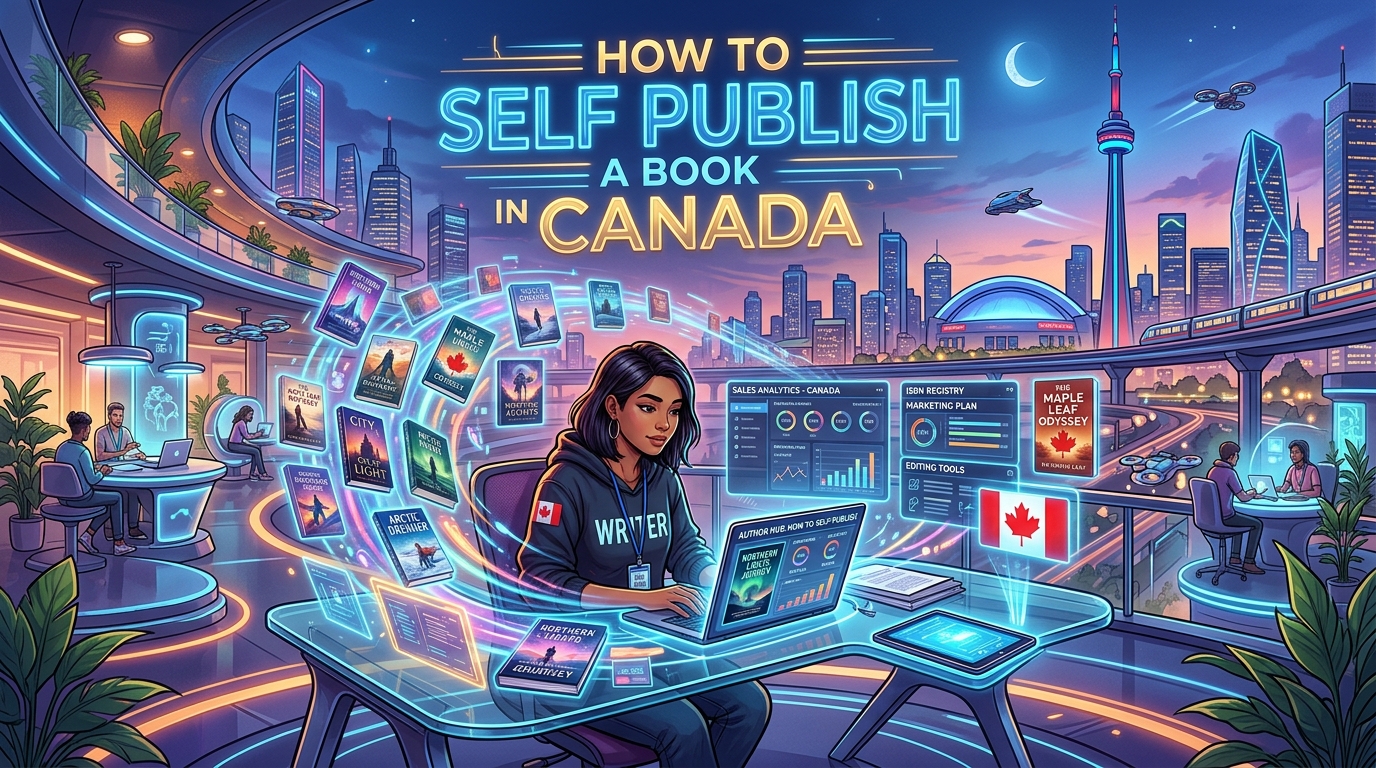
Self-publishing in Canada has changed dramatically over the last decade. What once felt like an alternative route for writers who could not secure traditional publishing deals has now become a respected and profitable industry of its own. Across cities like Toronto, Vancouver, Montreal, and smaller creative communities throughout the country, independent authors are building careers, reaching global audiences, and maintaining full creative control over their work.
Canada offers a strong environment for independent publishing because of its diverse readership, growing digital market, and access to international platforms. Authors can publish fiction, memoirs, poetry, business books, children’s stories, and educational material without waiting years for approval from literary agents or major publishing houses. Today, a writer with a polished manuscript and a strategic publishing plan can launch a book from home and sell it worldwide.
Self-publishing, however, is more than simply uploading a document online. It involves editing, formatting, cover design, ISBN registration, distribution, marketing, pricing, and long-term branding. Writers who approach self-publishing professionally often discover that the process resembles running a creative business. The more informed and prepared the author is, the greater the chances of success.
This guide explores how to self-publish a book in Canada from start to finish. It explains the publishing process in a practical and realistic way while helping new authors understand the decisions that shape a successful release.
The Current State of Self-Publishing in Canada
The Canadian publishing industry operates differently from some larger markets because it combines local cultural support with access to international publishing systems. Canadian authors can publish nationally while also distributing globally through online retailers and print-on-demand services.
One of the advantages of being a Canadian author is access to free ISBNs through the Government of Canada. Unlike authors in some countries who must pay for ISBN registration, Canadian writers can obtain them at no cost. This reduces startup expenses and makes independent publishing more accessible.
Another important factor is the rise of digital reading. Ebook consumption continues to grow across Canada, while print-on-demand technology allows authors to avoid large printing costs. Instead of ordering thousands of copies upfront, books are printed only when readers place orders. This minimizes financial risk and simplifies inventory management.
Canadian readers are also highly supportive of local voices. Books exploring Canadian identity, immigration, Indigenous perspectives, regional culture, and social themes often find strong readerships. At the same time, Canadian authors are not limited to local audiences. Platforms like Amazon and Kobo make it possible to reach readers across North America, Europe, Australia, and beyond.
Self-publishing in Canada is therefore both a local and international opportunity. Writers can establish themselves within Canadian literary circles while building a global digital presence.
Writing a Book Worth Publishing
The first step in self-publishing is completing a manuscript that is ready for readers. Many first-time authors rush toward publication too quickly because they are excited to see their book online. However, publishing an unfinished or poorly revised manuscript can damage credibility and limit future opportunities.
Strong books usually go through several stages of refinement before publication. Early drafts focus on structure and storytelling, while later drafts improve pacing, dialogue, grammar, and emotional impact. Even experienced writers revise extensively before releasing a final version.
Canadian readers, like readers everywhere, expect professional quality. Whether the book is fiction or non-fiction, readers want clarity, polished language, and engaging content. Self-publishing does not mean lower standards. In fact, independently published books are often judged more critically because readers compare them directly to traditionally published titles.
Writers should allow enough time for rewriting and self-editing before involving professional editors. Reading the manuscript aloud, taking breaks between drafts, and receiving feedback from beta readers can reveal weaknesses that are difficult to notice during the writing process.
The strongest self-published books are rarely rushed. They are developed with patience and attention to detail.
Why Professional Editing Matters
Editing is one of the most important investments in self-publishing. Even talented writers need outside editorial support because familiarity with the manuscript makes it difficult to catch errors objectively.
In Canada, authors commonly work with freelance editors or editing agencies specializing in developmental editing, copyediting, and proofreading. Developmental editors focus on structure, pacing, and storytelling, while copyeditors refine sentence-level clarity and grammar. Proofreaders perform the final review before publication.
Skipping professional editing may save money initially, but it often results in negative reviews and poor reader retention. Readers immediately notice grammatical mistakes, awkward formatting, and inconsistent storytelling.
A professionally edited book also improves confidence. Authors feel more prepared to market and promote their work when they know the final product meets industry standards.
The cost of editing varies depending on manuscript length and complexity. Fiction novels, memoirs, business books, and academic works all require different editorial approaches. While editing can be expensive, it is usually considered one of the most valuable long-term publishing investments.
Designing a Book Cover That Sells
Book covers influence purchasing decisions more than many new authors realize. In digital marketplaces, readers often see a thumbnail image before reading a description or sample chapter. A weak cover can cause potential readers to scroll past immediately.
Professional cover design is especially important in competitive genres such as romance, thriller, fantasy, self-help, and business. Readers associate visual quality with content quality. A polished cover creates trust before the book is even opened.
Canadian self-published authors often hire freelance designers or specialized publishing studios for cover creation. The best covers reflect genre expectations while still appearing original and memorable.
Typography, imagery, color selection, and spacing all affect reader perception. Children’s books require bright and inviting visuals, while literary fiction often uses minimalist design approaches. Non-fiction covers typically emphasize authority and clarity.
A cover should also work effectively in both print and digital formats. Since most readers first encounter books online, the design must remain visually appealing even at small sizes.
Choosing the Right Self-Publishing Platform
One of the most important decisions Canadian authors make is selecting where to publish. Different platforms offer different royalty structures, distribution systems, and audience reach.
The most widely used platform is Amazon Kindle Direct Publishing. It allows authors to publish ebooks and paperbacks globally with relatively simple setup procedures. KDP dominates much of the ebook market and provides access to Amazon’s international customer base.
Another major platform in Canada is Kobo Writing Life. Because Kobo has a strong Canadian presence, many local authors choose it to target Canadian ebook readers specifically. Kobo devices and ebooks are widely used across the country.
Some authors also distribute through IngramSpark, which offers broader bookstore and library distribution. IngramSpark is especially useful for writers interested in reaching independent bookstores and educational institutions.
Each platform has advantages depending on the author’s goals. Some prioritize maximum reach, while others focus on bookstore availability or higher print quality.
Comparing Popular Self-Publishing Platforms in Canada
| Platform | Best For | Main Advantage | Distribution Type |
| Amazon KDP | Ebooks and paperbacks | Massive global audience | Online retail |
| Kobo Writing Life | Canadian ebook readers | Strong Canadian market presence | Ebook retail |
| IngramSpark | Bookstore distribution | Access to libraries and stores | Print and ebook |
| Draft2Digital | Wide ebook distribution | Simplified multi-platform publishing | Ebook aggregation |
| Lulu | Custom print projects | Flexible print options | Print-on-demand |
Choosing the right platform depends on publishing goals, target audience, and marketing strategy.
Understanding ISBNs in Canada
An ISBN, or International Standard Book Number, identifies a book edition for retailers, distributors, and libraries. Canadian authors benefit from receiving ISBNs for free through Library and Archives Canada.
ISBN registration is an important part of professional publishing because it allows books to be catalogued and distributed properly. Different formats require separate ISBNs. For example, an ebook, paperback, and hardcover version each need unique identifiers.
Using a personal ISBN instead of a platform-assigned one gives authors greater publishing control. It also allows the author or publishing imprint to appear as the official publisher.
For Canadian writers planning long-term publishing careers, obtaining official ISBNs is usually recommended.
Formatting the Manuscript for Publication
Formatting transforms a manuscript into a readable and visually professional book. Ebook formatting differs from print formatting because digital devices automatically adjust font size and screen layout.
Print formatting involves page margins, typography, chapter spacing, headers, and bleed settings for printing. Poor formatting creates an amateur reading experience, even if the writing itself is strong.
Many Canadian self-published authors hire formatters or use specialized software to prepare their books. Tools like Atticus, Vellum, and Adobe InDesign are commonly used in the publishing industry.
A properly formatted book improves readability and reader satisfaction. It also minimizes printing issues and technical errors during upload.
Setting a Publishing Budget
Self-publishing costs vary widely depending on quality expectations and production choices. Some authors publish with minimal expenses, while others invest heavily in editing, design, and advertising.
The publishing budget often includes editing, cover design, formatting, ISBN management, printing proofs, marketing campaigns, author websites, and promotional graphics.
Authors should think carefully about where to invest their money. Spending strategically on editing and design usually delivers better long-term results than overspending on ineffective advertising.
Budgeting also reduces stress during the publishing process. Writers who plan expenses early are less likely to feel overwhelmed later.
The Importance of Print-On-Demand Publishing
Print-on-demand technology has transformed independent publishing in Canada. Instead of paying for large inventory orders, books are printed only when purchased.
This system removes one of the biggest financial barriers for authors. Writers no longer need garages filled with unsold books or expensive storage facilities.
Print-on-demand services also allow books to remain permanently available online without additional inventory costs. Readers can order copies anytime, and printing companies handle production and shipping automatically.
For first-time authors, this publishing model offers flexibility and reduced financial risk.
Marketing a Self-Published Book in Canada
Publishing a book is only the beginning. Marketing determines whether readers actually discover it.
Many self-published authors struggle because they underestimate the importance of promotion. A professionally written book can still fail commercially if nobody knows it exists.
Canadian authors often market through social media platforms, book blogs, newsletters, podcasts, literary communities, and online advertising. Local events such as book fairs, writing festivals, and independent bookstore signings can also help build visibility.
Creating an author brand is especially important. Readers are more likely to follow writers who maintain consistent online presence and authentic engagement.
Marketing should begin before publication rather than after launch. Building anticipation through cover reveals, early reader reviews, and email newsletters can generate momentum before release day.
Building an Author Platform
An author platform refers to the audience and online presence connected to a writer’s work. In modern publishing, authors often function as both creators and marketers.
Websites, newsletters, and social media profiles help writers connect directly with readers. Canadian authors frequently use platforms such as Instagram, TikTok, YouTube, and Substack to share writing updates and personal insights.
Readers increasingly want connection with authors, not just books. Behind-the-scenes content, writing journeys, and discussions about inspiration create stronger audience loyalty.
Building an author platform takes time, but it becomes a valuable long-term asset. Authors with engaged communities often experience stronger launches and more consistent sales across future books.
Understanding Royalties and Earnings
One of the biggest advantages of self-publishing is higher royalty potential. Traditional publishing contracts often provide lower royalty percentages because publishers handle production and distribution costs.
Self-published authors retain a larger share of each sale, particularly for ebooks. However, they also assume responsibility for production expenses and marketing.
Book earnings vary significantly depending on genre, audience size, marketing effectiveness, and release consistency. Some authors publish part-time passion projects, while others build full-time careers.
Success rarely happens overnight. Many profitable independent authors achieve growth gradually through multiple releases and consistent branding.
Understanding realistic expectations is important. Self-publishing offers opportunity, but sustainable success usually requires patience and persistence.
Legal Considerations for Canadian Authors
Canadian self-published authors should understand copyright ownership and publishing rights. In Canada, authors automatically own copyright to their work once it is created in tangible form.
However, registering copyright can provide additional legal documentation if disputes arise. Writers should also ensure they have proper permissions for images, quotations, and third-party content included in their books.
Business considerations may also arise for successful authors, including taxes, publishing imprints, and income reporting. Some writers eventually establish formal publishing businesses as their careers grow.
Understanding contracts is equally important when hiring editors, designers, or marketers. Clear agreements help avoid misunderstandings regarding payment, timelines, and ownership rights.
Self-Publishing Fiction Versus Non-Fiction
The publishing process differs slightly between fiction and non-fiction categories.
Fiction publishing often focuses heavily on storytelling quality, genre positioning, emotional connection, and reader immersion. Cover design and reader reviews play major roles in fiction sales.
Non-fiction publishing emphasizes expertise, credibility, and practical value. Authors publishing self-help, business, educational, or informational books often market through authority-building strategies such as speaking engagements, podcasts, and professional networking.
Canadian authors succeed in both areas, but the marketing methods and audience expectations differ considerably.
Common Mistakes First-Time Authors Make
Many first-time self-published authors make avoidable mistakes that reduce the quality or visibility of their books.
One common issue is publishing too quickly without proper editing. Another is using low-quality cover design that fails to compete visually in online marketplaces.
Some authors ignore marketing entirely, assuming readers will naturally discover their book. Others price their books unrealistically or upload poorly formatted files.
Another frequent mistake is expecting immediate success. Publishing careers often grow slowly through consistency and experience.
Authors who approach self-publishing professionally and patiently tend to achieve better long-term outcomes.
The Future of Self-Publishing in Canada
Self-publishing in Canada continues to expand as digital technology evolves and independent authors gain greater recognition. Readers are increasingly open to discovering books outside traditional publishing systems, especially through online communities and social media recommendations.
Artificial intelligence, audiobook growth, and subscription reading services are also changing the publishing landscape. Canadian authors now have more opportunities than ever to reach specialized audiences and international readers.
At the same time, competition continues to grow. This means quality, branding, and authenticity matter more than ever before.
Writers who combine strong storytelling with professional publishing practices are likely to remain competitive in the evolving market.
Conclusion
Self-publishing a book in Canada offers writers creative freedom, ownership, and direct access to readers around the world. The process requires more than simply writing a manuscript. It involves editing, design, formatting, distribution, marketing, and long-term audience building. Authors who treat self-publishing as both a creative and professional endeavor often discover meaningful opportunities for growth and success.
Canada’s publishing environment provides unique advantages, including free ISBN registration, access to global publishing platforms, and strong support for independent voices. Whether publishing fiction, poetry, memoirs, or non-fiction, Canadian authors now have powerful tools to bring their stories into the world on their own terms.
The journey demands patience, preparation, and persistence, but it also gives writers complete control over their work and career direction. For many authors, that independence becomes one of the most rewarding parts of the entire publishing experience.
