
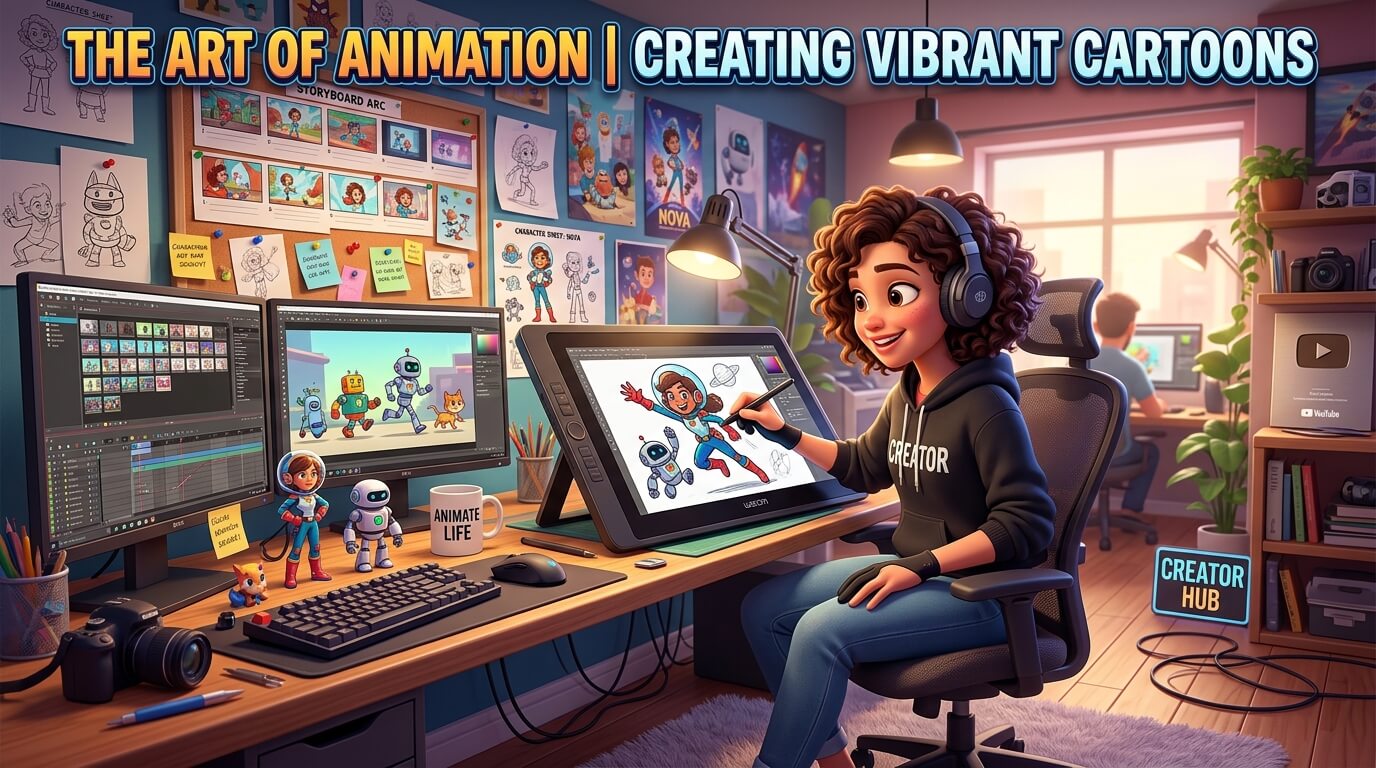
Creating cartoon stories for YouTube has become one of the most exciting ways to share creativity online. Animated storytelling channels attract millions of viewers worldwide because they combine entertainment, visual appeal, and engaging narratives in a format that people of all ages enjoy. From short comedy sketches and educational cartoons to fantasy adventures and moral stories, YouTube offers endless opportunities for creators who want to build an audience through animation.
The rise of affordable animation software, artificial intelligence tools, and digital drawing platforms has made cartoon production more accessible than ever. Years ago, producing an animated story required large teams and expensive equipment. Today, independent creators can write, animate, edit, and publish professional-looking cartoon stories from their homes.
However, creating successful cartoon stories for YouTube involves much more than drawing characters and uploading videos. The most popular channels understand storytelling, audience psychology, character development, visual design, pacing, and content strategy. Whether you are a beginner dreaming of starting your first animation channel or an aspiring storyteller hoping to turn ideas into engaging YouTube content, understanding the complete process is essential.
This guide explores every stage of creating cartoon stories for YouTube, from generating ideas and writing scripts to animation, editing, publishing, and growing a loyal audience.
The Key Elements Behind Successful YouTube Cartoons
Before creating your first cartoon story, it is important to understand why audiences watch animated content on YouTube. Animation offers creators complete control over worlds, characters, and situations that would be difficult or expensive to produce in live-action videos.
Cartoon stories can entertain, educate, inspire, or deliver emotional experiences. Viewers often become attached to recurring characters and eagerly return to watch new adventures. This emotional connection is one of the strongest reasons animation channels succeed over time.
Popular cartoon channels typically focus on relatable themes such as friendship, family, school life, fantasy adventures, life lessons, comedy, mystery, or personal growth. The strongest stories balance entertainment with meaningful experiences that resonate with viewers.
When planning your content, think beyond individual videos. Consider how your stories can create a universe that encourages viewers to return repeatedly.
Choosing the Right Type of Cartoon Story
The first major step is deciding what type of cartoon stories you want to create. Your chosen genre will influence your characters, visual style, storytelling approach, and audience.
Comedy Cartoon Stories
Comedy remains one of the most successful genres on YouTube. Humorous situations, funny misunderstandings, exaggerated personalities, and unexpected twists often perform well because viewers enjoy content that makes them laugh and share with friends.
Comedy cartoons usually rely on strong timing, expressive animation, and memorable characters. Even simple animation can become successful if the humor is engaging.
Adventure Cartoon Stories
Adventure stories allow creators to build exciting worlds filled with quests, challenges, discoveries, and action. These stories often encourage viewers to follow ongoing series because they become invested in the journey.
Adventure cartoons work particularly well when characters face meaningful obstacles and experience growth throughout their experiences.
Educational Cartoon Stories
Educational animation combines learning with entertainment. Topics such as science, history, mathematics, language learning, environmental awareness, and social skills can become more engaging through cartoon storytelling.
Many successful educational channels use animated characters to explain complex concepts in a simple and entertaining manner.
Moral and Inspirational Stories
Stories that teach values, kindness, honesty, perseverance, and empathy remain popular among younger audiences and families. These narratives often focus on character decisions and life lessons while maintaining entertaining plots.
Researching Your Target Audience
One of the biggest mistakes new creators make is creating content without understanding who they are making it for. Every successful YouTube channel knows its audience.
If your viewers are young children, your stories should use simple language, colorful visuals, clear lessons, and straightforward plots. Teen audiences may prefer humor, fantasy, school-related themes, and character-driven stories. Adult viewers often appreciate satire, sophisticated storytelling, and deeper emotional themes.
Understanding your audience influences everything from scriptwriting and visual design to video length and thumbnail creation.
Audience research can involve studying successful channels in your niche, reading comments, identifying viewer interests, and observing storytelling patterns that consistently attract engagement.
Developing Original Cartoon Story Ideas
Strong cartoon stories begin with strong ideas. A compelling concept provides the foundation for every successful animated video.
Great ideas often emerge from everyday situations, personal experiences, imaginative questions, or common emotions. Many creators ask “what if” questions to generate unique concepts.
What if animals secretly ran a city after humans went to sleep? What if a student discovered a magical pencil that brought drawings to life? What if siblings accidentally opened a portal to another dimension?
Interesting questions naturally create story possibilities.
The goal is not necessarily to invent something completely unprecedented. Instead, focus on presenting familiar themes in fresh and engaging ways that reflect your unique creative perspective.
Creating Memorable Cartoon Characters
Characters are often the most important element of any cartoon story. Viewers may forget individual plots, but they remember characters who make them laugh, cry, or feel inspired.
A memorable character possesses clear goals, strengths, weaknesses, fears, and personality traits. Even simple cartoon characters become engaging when they react consistently to challenges and situations.
Designing Character Personalities
Personality drives storytelling. A brave character responds differently to danger than a timid character. A curious character approaches mysteries differently than a cautious one.
Creating detailed personalities helps generate story ideas naturally because character decisions begin shaping the narrative.
Designing Character Appearance
Visual design should reflect personality. Colors, clothing, expressions, hairstyles, and body language all contribute to character identity.
For example, an energetic character may have bright colors and dynamic poses, while a thoughtful character may have calmer visual elements.
Strong visual design allows viewers to recognize characters instantly.
Building a Story World
Every cartoon story takes place within a specific environment. Whether your story occurs in a school, magical kingdom, futuristic city, underwater civilization, or ordinary neighborhood, the setting influences narrative possibilities.
World-building helps create consistency and immersion. Consider how locations function, what rules exist, and how characters interact with their surroundings.
A well-developed world creates opportunities for future episodes because viewers become interested in exploring different areas and learning more about the environment.
Writing a Strong Cartoon Script
Animation begins with writing. Even the most beautiful visuals cannot compensate for a weak story.
A cartoon script provides structure, dialogue, scene descriptions, and narrative direction. Successful scripts typically follow a clear storytelling framework.
Creating an Engaging Beginning
The opening moments determine whether viewers continue watching. Introduce an interesting situation, conflict, question, or surprise early in the story.
A strong beginning creates curiosity and motivates viewers to stay until the conclusion.
Developing the Middle of the Story
The middle section contains challenges, discoveries, character interactions, and escalating tension. This portion should continuously move the narrative forward.
Each scene should contribute something meaningful to the overall story. Unnecessary scenes often reduce viewer retention.
Crafting a Satisfying Ending
A strong ending resolves major conflicts while delivering emotional or narrative satisfaction. Viewers should feel rewarded for watching the entire story.
Depending on your goals, endings can provide closure or introduce future adventures.
Understanding Story Structure
Most successful cartoon stories follow a structure that guides audience emotions and maintains interest.
A simple framework includes introduction, conflict, rising action, climax, and resolution.
The introduction establishes characters and settings. Conflict introduces challenges. Rising action increases tension. The climax delivers the story’s most exciting moment. Resolution provides closure.
This structure helps stories feel complete and engaging.
Storyboarding Your Cartoon
Storyboarding transforms written scripts into visual plans. It involves sketching scenes to determine camera angles, character positions, and visual storytelling.
Storyboards help identify pacing issues before animation begins. They also provide a roadmap that simplifies production.
Professional animation studios rely heavily on storyboards because they reduce costly revisions later in the process.
Even rough sketches can dramatically improve production efficiency.
Selecting Animation Software
Modern creators have access to numerous animation tools suitable for different skill levels and budgets.
| Software | Best For | Skill Level | Animation Type |
| Adobe Animate | Professional projects | Intermediate to Advanced | 2D Animation |
| Toon Boom Harmony | Studio-quality production | Advanced | 2D Animation |
| Moho | Character animation | Intermediate | 2D Rigged Animation |
| Blender | Professional creators | Advanced | 3D Animation |
| OpenToonz | Budget-conscious creators | Intermediate | 2D Animation |
| Animaker | Beginners | Beginner | Drag-and-Drop Animation |
| Vyond | Business and storytelling videos | Beginner to Intermediate | Animated Explainer Style |
The ideal software depends on your goals, technical experience, and preferred animation style.
Designing Visual Assets
Before animation begins, creators must prepare characters, backgrounds, props, and visual elements.
Asset creation establishes consistency throughout the story. Reusable assets also speed up future production because creators do not need to redraw everything from scratch.
Successful channels often create asset libraries containing character poses, expressions, environments, and objects.
This approach improves efficiency while maintaining visual quality.
Bringing Characters to Life Through Animation
Animation creates movement and emotion. Even simple movements can make characters feel alive and engaging.
Successful animation focuses on clarity rather than complexity. Character expressions, gestures, and body language often communicate emotions more effectively than dialogue alone.
Movement should support storytelling rather than distract from it. Every animation choice should enhance the viewer’s understanding of the scene.
Consistency is also important. Characters should move naturally according to their personalities and physical characteristics.
Recording Voiceovers
Voice acting adds personality and emotional depth to cartoon stories. A well-delivered performance can transform ordinary dialogue into memorable moments.
Creators may record their own voices, hire voice actors, or use AI-generated voices depending on their budget and production goals.
Voice recordings should be clear, expressive, and appropriately paced. Background noise and poor audio quality can significantly reduce viewer engagement.
Many successful animation channels invest heavily in audio because viewers often tolerate average visuals more readily than poor sound quality.
Adding Sound Effects and Music
Audio plays a critical role in storytelling. Sound effects enhance actions, emphasize comedic moments, and create atmosphere.
Music influences emotions and helps establish tone. Adventure scenes benefit from energetic music, while emotional scenes often use softer compositions.
The combination of voice acting, sound effects, and music creates a richer viewing experience.
Creators should ensure all audio assets are properly licensed to avoid copyright issues on YouTube.
Editing the Final Cartoon Story
Editing is where all elements come together. Animation, voiceovers, sound effects, music, and visual transitions must be assembled into a cohesive final product.
Effective editing improves pacing and removes unnecessary content. Every second should contribute to viewer engagement.
Many creators discover that shortening scenes improves retention because modern audiences have limited attention spans.
The editing process also provides opportunities to strengthen storytelling through timing, visual emphasis, and audio synchronization.
Creating Attractive Thumbnails
No matter how good your cartoon story is, people must click on it first. Thumbnails serve as the visual advertisement for your video.
Successful cartoon thumbnails feature expressive characters, clear emotions, bright colors, and strong visual focus.
The goal is to create curiosity while accurately representing the content.
Viewers often decide whether to click within seconds, making thumbnail design an essential part of YouTube success.
Writing Effective Video Titles
Titles influence both discoverability and click-through rates. Strong titles communicate the story while generating interest.
Titles should be clear, engaging, and easy to understand. Avoid misleading promises because disappointed viewers often leave quickly, hurting retention.
Good titles create curiosity without confusing the audience.
Balancing clarity and intrigue is a valuable skill for animation creators.
Understanding YouTube’s Algorithm
Many creators focus exclusively on animation while ignoring YouTube’s recommendation system. Understanding how the platform works can significantly improve growth.
The algorithm prioritizes content that keeps viewers watching and returning to the platform. Watch time, retention, engagement, and viewer satisfaction all contribute to performance.
Strong storytelling naturally supports these metrics because viewers remain interested throughout the video.
Creators who consistently produce engaging content often benefit from increased recommendations over time.
Building a Consistent Upload Schedule
Consistency helps establish audience expectations. Viewers are more likely to subscribe when they know new content will arrive regularly.
This does not necessarily mean uploading daily. A realistic schedule that maintains quality is more valuable than frequent uploads that sacrifice storytelling standards.
Consistency builds trust between creators and audiences.
Over time, this trust contributes to stronger community growth and viewer loyalty.
Learning From Analytics
YouTube provides valuable data about audience behavior. Analytics reveal how viewers discover content, how long they watch, and where they lose interest.
Studying this information helps creators identify strengths and weaknesses in their storytelling.
Patterns often emerge that reveal which topics, characters, and story structures resonate most strongly with audiences.
Successful creators continuously refine their approach based on viewer behavior.
Monetizing Cartoon Story Content
As channels grow, creators can generate revenue through various methods.
Advertising revenue remains a primary source of income for many animation channels. However, sponsorships, merchandise, memberships, licensing opportunities, and crowdfunding can also contribute significantly.
Building a sustainable cartoon channel often involves diversifying income sources rather than relying exclusively on advertisements.
Strong storytelling and audience loyalty increase monetization opportunities.
Common Mistakes New Cartoon Creators Make
Many beginners focus heavily on animation quality while neglecting storytelling fundamentals. Audiences often forgive simple visuals if stories are entertaining.
Another common mistake is attempting overly ambitious projects that become difficult to complete. Starting with shorter stories allows creators to gain experience and maintain consistency.
Inconsistent uploads, poor audio quality, weak character development, and lack of audience research also limit growth.
Understanding these challenges early helps creators avoid unnecessary setbacks.
The Future of Cartoon Storytelling on YouTube
The future of YouTube animation appears incredibly promising. Advances in artificial intelligence, animation software, voice generation, and digital production tools continue lowering barriers to entry.
Creators now have unprecedented opportunities to transform ideas into animated stories and reach global audiences. At the same time, competition continues increasing, making originality and storytelling quality more important than ever.
Channels that focus on meaningful narratives, memorable characters, consistent branding, and audience engagement are likely to remain successful regardless of technological changes.
Conclusion
Learning how to make cartoon stories for YouTube involves much more than creating animations. Success comes from combining storytelling, character development, visual design, audio production, editing, and audience understanding into a cohesive creative process.
The most successful cartoon creators recognize that viewers connect with stories before they connect with animation techniques. A compelling narrative, relatable characters, and emotional engagement remain the foundation of every memorable cartoon.
Whether your goal is to entertain children, educate audiences, tell fantasy adventures, or build a thriving YouTube channel, the principles remain the same. Start with a strong idea, develop meaningful characters, craft engaging stories, and continually improve through practice and audience feedback.
Every successful animation channel began with a single story. By focusing on creativity, consistency, and storytelling excellence, you can transform your ideas into captivating cartoon content that attracts viewers and builds a lasting presence on YouTube.
