
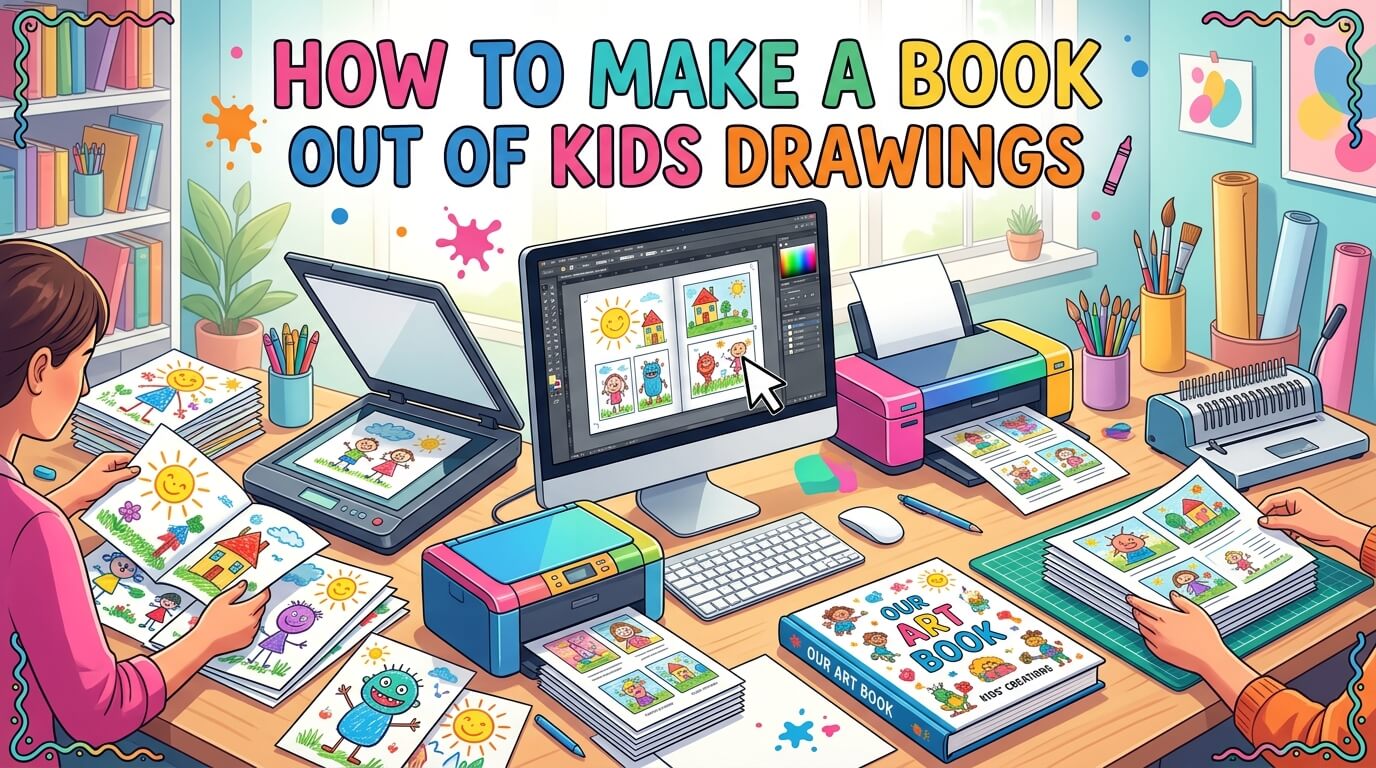
Children create artwork that captures moments, emotions, and imagination in ways that are often impossible to recreate later in life. From colorful stick figures and family portraits to imaginative creatures and dreamlike landscapes, every drawing tells a story about a child’s growth and perspective. However, as the years pass, parents, grandparents, teachers, and caregivers often find themselves surrounded by stacks of artwork that are too meaningful to throw away but too numerous to store effectively.
One of the most meaningful ways to preserve these treasured creations is by turning them into a book. A book made from children’s drawings becomes more than a collection of artwork; it transforms into a lasting record of childhood memories, creativity, and development. It allows families to organize years of artistic expression into a format that is easy to revisit, share, and cherish.
Creating a book from kids’ drawings is not only a practical preservation method but also a rewarding creative project. Whether the goal is to produce a keepsake for the family, create a gift for grandparents, celebrate a child’s artistic journey, or document a particular stage of development, the process can be both enjoyable and deeply meaningful. Understanding how to collect, organize, digitize, and present artwork effectively can help transform simple drawings into a professionally presented book that will be treasured for generations.
Keeping Childhood Memories Alive Through Art
Children’s drawings represent much more than colorful marks on paper. Developmental researchers and educators often view artwork as an important reflection of cognitive growth, emotional development, communication skills, and imagination. Through drawing, children learn to express ideas that they may not yet be able to communicate verbally.
As children grow older, their artistic style changes significantly. Early scribbles evolve into recognizable shapes, and eventually into detailed illustrations that reveal increasing understanding of the world. A book documenting this progression provides a fascinating visual timeline of development.
Preserving artwork also reinforces a child’s confidence and self-esteem. When children see their drawings valued enough to be compiled into a book, they gain a sense of accomplishment and pride in their creativity. This validation encourages continued artistic exploration and self-expression.
For families, these books become emotional time capsules. Years later, flipping through the pages can bring back memories of specific ages, milestones, interests, and family experiences that might otherwise fade over time.
Understanding the Purpose of Your Book
Before beginning the project, it is helpful to define the purpose of the book. The intended purpose influences decisions about organization, design, content selection, and presentation style.
Some families create annual artwork books that showcase a single year of creative development. Others prefer milestone books that document artwork from infancy through elementary school. Teachers may create classroom collections, while grandparents might compile artwork received over many years.
The purpose may also determine the tone of the book. Some projects focus on preserving every piece of artwork possible, while others emphasize storytelling through carefully selected illustrations. Understanding the intended outcome provides direction throughout the creation process.
Collecting and Organizing Artwork
The first major step involves gathering all available drawings. Depending on the age of the child and the amount of artwork produced, this stage may require sorting through folders, storage boxes, refrigerator displays, classroom projects, and digital photographs.
Organization is essential during this phase. Instead of selecting artwork randomly, consider categorizing drawings according to themes, age ranges, school years, seasons, or special events.
Creating a simple organizational structure makes the final book more engaging and coherent. Readers can follow a clear progression rather than viewing a disconnected collection of images.
It is often beneficial to record approximate dates whenever possible. Even if exact dates are unavailable, noting a child’s age can provide valuable context that enhances the storytelling aspect of the book.
Choosing Which Drawings to Include
Many parents quickly discover that selecting artwork is one of the most challenging parts of the process. Children can produce hundreds or even thousands of drawings over several years, making it impractical to include everything.
The selection process should focus on pieces that represent growth, creativity, personality, and important milestones. Drawings that capture unique interests or memorable moments often become highlights of the finished book.
A balanced collection typically includes artwork from different developmental stages. Early scribbles can be just as meaningful as later, more sophisticated illustrations because they demonstrate artistic progression.
Rather than focusing solely on technical quality, it is often more valuable to select drawings that tell stories or reveal aspects of a child’s personality. The emotional significance of a drawing frequently outweighs artistic perfection.
Digitizing Children’s Artwork
Why Digital Copies Matter
Digitization is one of the most important steps in creating a lasting book. Original artwork can fade, tear, become stained, or be lost over time. Digital files provide long-term preservation while making book design significantly easier.
Scanning artwork generally produces the highest-quality results. Flatbed scanners capture colors, textures, and details accurately, making them ideal for preserving drawings.
For oversized artwork or three-dimensional projects, high-resolution photography can be an effective alternative. Good lighting and proper camera positioning help ensure accurate reproduction.
Best Practices for Scanning
When scanning drawings, maintaining consistency is important. Similar resolution settings, file formats, and color adjustments help create a professional-looking collection.
Saving files with descriptive names improves organization. Including details such as age, year, or subject matter makes future retrieval much easier.
Digital archiving also creates opportunities for future projects beyond the book itself, including wall art, calendars, greeting cards, and family presentations.
Creating a Story Through Artwork
A compelling book does more than display pictures. It tells a story.
One effective approach involves arranging artwork chronologically. This method allows readers to observe artistic growth over time, creating a natural narrative arc.
Another approach focuses on themes. Drawings can be grouped according to subjects such as family, animals, fantasy worlds, holidays, school experiences, or favorite activities.
Narrative structure helps transform a collection of drawings into a meaningful reading experience. Readers become engaged not only with individual images but also with the larger story those images collectively tell.
Adding brief contextual information can strengthen this narrative. A short note explaining the circumstances behind a drawing often enhances its emotional impact and historical value.
Adding Captions and Personal Commentary
Captions provide valuable context that enriches the viewing experience. Without explanations, some drawings may lose important meaning over time.
Including a child’s own description of a drawing can be particularly powerful. Young children often create imaginative stories behind their artwork, and recording these explanations preserves their original perspective.
Parents may also contribute reflections, memories, or observations associated with specific drawings. These comments add depth and create stronger emotional connections.
The combination of visual artwork and written commentary transforms the book into a richer and more personal keepsake.
Designing the Layout
Balancing Visual Appeal and Simplicity
Book design should enhance the artwork rather than compete with it. Clean layouts typically produce the most effective results because they allow drawings to remain the focal point.
White space plays an important role in visual presentation. Crowded pages can diminish the impact of individual pieces, while spacious layouts create a more professional appearance.
Consistency across pages contributes to a cohesive reading experience. Similar margins, font choices, and image placements help unify the book’s overall design.
Deciding on Page Structure
Some pages may feature a single large drawing, allowing readers to appreciate details fully. Other pages may present multiple related drawings together to highlight themes or developmental progression.
The choice depends on the amount of available artwork and the desired visual style. A varied layout often creates greater interest while maintaining consistency in overall design.
Incorporating Educational Insights
Children’s drawings can reveal fascinating aspects of development. Including educational observations can add another dimension to the book.
Researchers have long studied children’s artistic development as a window into cognitive and emotional growth. Early drawings often emphasize movement and experimentation, while later artwork demonstrates increasing representational accuracy and symbolic thinking.
Without becoming overly academic, brief developmental insights can help readers appreciate the significance of artistic changes throughout childhood.
These observations can make the book informative as well as sentimental.
Table: Recommended Elements for a Kids’ Artwork Book
| Element | Purpose | Benefit |
| Cover Artwork | Creates visual appeal | Personalizes the book |
| Child’s Name and Age | Provides context | Helps identify the collection |
| Chronological Organization | Shows development | Creates a clear narrative |
| Captions | Explains artwork | Adds meaning and context |
| Family Notes | Preserves memories | Enhances emotional value |
| Dates or Year Labels | Establishes timeline | Documents growth accurately |
| High-Resolution Images | Maintains quality | Ensures professional appearance |
| Theme Sections | Improves organization | Makes browsing easier |
| Introduction Page | Explains project purpose | Creates stronger engagement |
| Closing Reflection | Summarizes journey | Provides emotional conclusion |
Choosing the Right Book Format
The format selected for the final book significantly affects its appearance and usability.
Hardcover books offer durability and a premium presentation. They are particularly suitable for keepsakes intended to last for many years.
Softcover books provide a more economical option while still preserving artwork effectively. They are often ideal for creating multiple copies for relatives and friends.
Large-format books showcase artwork beautifully, especially when drawings contain intricate details. Smaller formats may be easier to store and handle but offer less visual impact.
The decision should balance budget considerations with long-term preservation goals.
Involving Children in the Process
One of the most rewarding aspects of creating an artwork book is involving the child directly.
Children can help select favorite drawings, suggest titles, write descriptions, and choose cover designs. Participation transforms the project into a collaborative creative experience.
Involvement also increases a child’s sense of ownership and pride. Seeing their artistic contributions treated seriously encourages confidence and reinforces the value of creative expression.
Older children may even contribute design ideas, helping shape the overall appearance of the finished book.
Creating Themed Artwork Books
While chronological collections remain popular, themed books offer exciting alternatives.
A book focused on animals, fantasy characters, family portraits, or seasonal celebrations can highlight specific interests and talents. Theme-based collections often feel more curated and cohesive.
These books can also reveal recurring patterns in a child’s imagination. Certain subjects may appear repeatedly across different ages, offering insight into long-term interests and passions.
Themed collections work particularly well when a child has a strong fascination with a specific topic.
Preserving Artwork Beyond the Printed Book
Although the printed book serves as the centerpiece of preservation efforts, maintaining digital archives remains equally important.
Cloud storage, external hard drives, and backup systems help ensure that artwork remains protected against loss or damage. Digital preservation provides flexibility for future projects and reproductions.
Families often discover new ways to use archived artwork years later. Drawings can be incorporated into graduation gifts, family history projects, personalized home décor, or future memory books.
The combination of physical and digital preservation offers the greatest long-term security.
Turning the Book Into a Family Heirloom
The most successful artwork books become family heirlooms. They preserve not only artistic creations but also memories, relationships, and moments in time.
A thoughtfully designed book allows future generations to glimpse childhood experiences that would otherwise be forgotten. Grandparents, parents, and eventually children themselves can revisit these memories decades later.
Including family photographs alongside artwork can further strengthen the historical value of the collection. These visual connections provide context and create a richer narrative.
Over time, the book evolves from a simple creative project into a treasured family artifact.
Common Mistakes to Avoid
Many people rush through the creation process and unintentionally reduce the quality of the final product. Poor image resolution, inconsistent organization, overcrowded layouts, and missing dates are among the most common issues.
Another frequent mistake involves focusing exclusively on polished artwork. Sometimes the most meaningful drawings are simple sketches that capture a child’s personality or unique way of seeing the world.
Failing to record stories behind the artwork can also diminish future enjoyment. Memories fade, making it valuable to document explanations while they remain fresh.
Careful planning and attention to detail help ensure that the finished book remains meaningful for years to come.
Conclusion
Learning how to make a book out of kids’ drawings is about far more than organizing artwork. It is an opportunity to preserve creativity, celebrate childhood, and create a lasting family treasure. Every drawing reflects a moment in a child’s development, capturing ideas, emotions, and experiences that might otherwise disappear with time.
By thoughtfully collecting artwork, digitizing images, organizing content, designing meaningful layouts, and adding personal context, families can transform stacks of paper into a beautifully curated story of growth and imagination. The resulting book becomes a record of artistic evolution, a source of family memories, and a keepsake that can be revisited for decades.
In a world where so many childhood moments are fleeting, a book made from kids’ drawings offers something enduring. It preserves not only what children created but also who they were at each stage of their journey. Long after the crayons have been put away and childhood has passed, those pages continue telling stories that remain as meaningful as the day they were first drawn.
