
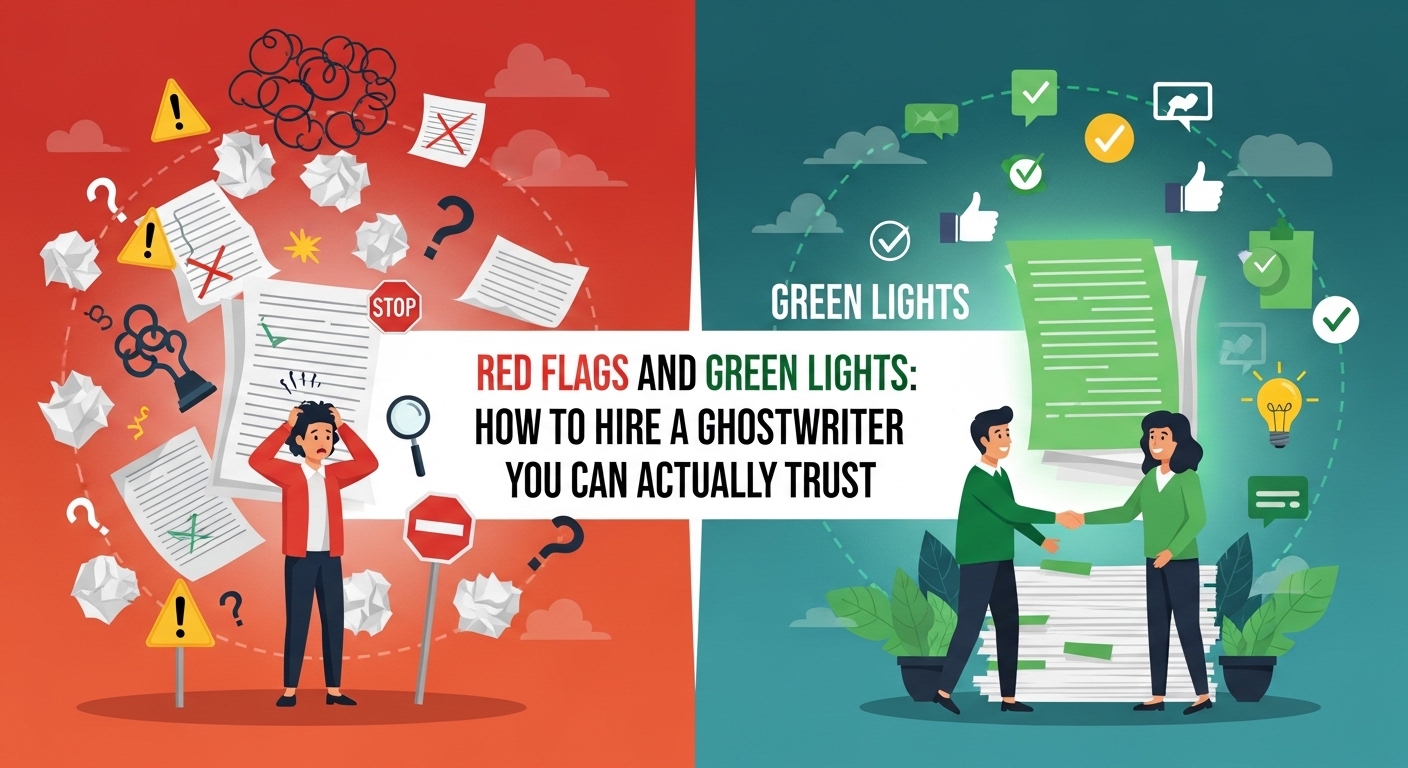
Hiring a ghostwriter can feel like stepping into unfamiliar territory. You are trusting someone not only with your ideas but with your voice, your story, and often your reputation. Whether you are planning a memoir, a business book, a novel, or a thought-leadership manuscript, the right ghostwriter can transform scattered thoughts into a compelling, publishable work. The wrong one, however, can cost you time, money, and confidence.
In today’s rapidly growing publishing industry, ghostwriting has become more common and more professionalized than ever before. Entrepreneurs, executives, influencers, and first-time authors regularly collaborate with ghostwriters to bring books to life. Yet the increase in demand has also led to a crowded marketplace where quality varies dramatically. Knowing how to identify trustworthy professionals is no longer optional—it is essential.
This guide explores the real red flags and green lights you should look for when hiring a ghostwriter, helping you make a decision grounded in research, industry practices, and practical experience rather than guesswork.
Why Trust Matters More Than Talent
Many first-time clients assume writing skill is the most important factor when hiring a ghostwriter. While strong writing ability is necessary, trust is what ultimately determines whether a collaboration succeeds.
Ghostwriting is an unusually intimate professional relationship. A ghostwriter often learns personal histories, business strategies, emotional experiences, or unpublished ideas. They must interpret not just what you say, but how you think and feel. Without mutual trust, communication breaks down quickly.
A trustworthy ghostwriter does more than produce polished prose. They listen carefully, ask thoughtful questions, respect confidentiality, and prioritize your goals over their ego. When trust exists, the process becomes collaborative and energizing. When it doesn’t, even technically good writing feels disconnected from your vision.
Understanding What Professional Ghostwriting Actually Looks Like
Before identifying warning signs, it helps to understand what legitimate ghostwriting typically involves. Professional ghostwriters follow structured workflows developed through years of publishing experience.
The process usually begins with discovery conversations, where the writer learns about your goals, audience, and expectations. This stage is followed by outlining, interviews, drafting, revisions, and editorial refinement. Communication remains consistent throughout, often through scheduled meetings or progress updates.
A reliable ghostwriter does not simply “write a book” in isolation. Instead, they build the manuscript through collaboration, feedback loops, and iterative development. Transparency around timelines, deliverables, and responsibilities is a defining feature of professional work.
When someone skips these foundational steps or promises instant results, it often signals deeper issues.
Red Flag: Vague or Unrealistic Promises
One of the clearest warning signs appears during early conversations. If a ghostwriter guarantees bestseller status, overnight success, or publication without effort, caution is necessary.
Publishing outcomes depend on many variables beyond writing quality, including marketing, audience reach, timing, and distribution strategy. Ethical professionals understand this reality and avoid exaggerated claims.
Unrealistic promises often indicate inexperience or sales-driven behavior rather than genuine expertise. A trustworthy ghostwriter discusses process and craftsmanship, not shortcuts to fame.
Pay attention to language. Professionals explain possibilities; unreliable providers sell fantasies.
Green Light: A Clear and Structured Process
Trustworthy ghostwriters are transparent about how they work. They can explain each phase of the project, from initial interviews to final manuscript delivery.
You should understand how communication will happen, how feedback is incorporated, and how revisions are handled. A structured process shows that the writer has completed projects successfully before and understands the complexity of book creation.
Clarity also protects both parties. When expectations are defined early, misunderstandings rarely escalate into conflicts later.
A professional process signals preparation, organization, and respect for your investment.
Red Flag: No Portfolio or Verifiable Experience
Ghostwriting naturally involves confidentiality, so not every project can be publicly credited. However, experienced ghostwriters still provide evidence of their work.
This may include anonymized writing samples, testimonials, published books they contributed to, or client references willing to confirm collaboration privately. If a writer refuses to provide any proof of experience, you should proceed carefully.
A lack of portfolio material often means the writer is either new or misrepresenting their capabilities. While new writers can be talented, transparency about experience levels is crucial.
Trust grows from honesty, not mystery.
Green Light: Strong Listening Skills
Many clients underestimate how important listening is in ghostwriting. Writing skill matters, but listening skill determines whether the final manuscript sounds like you.
A reliable ghostwriter asks detailed questions about tone, personal experiences, audience expectations, and emotional intent. They seek clarification instead of making assumptions. During early conversations, you should feel heard rather than rushed.
When a writer reflects your ideas accurately even before drafting begins, it demonstrates empathy and comprehension—two qualities essential for authentic ghostwriting.
Good ghostwriters translate voices; great ones understand them.
Red Flag: Poor Communication Early On
The hiring stage often predicts the entire collaboration. Delayed responses, unclear answers, or inconsistent communication patterns are serious warning signs.
If a ghostwriter takes days to reply before the contract is signed, responsiveness rarely improves afterward. Writing a book requires ongoing dialogue, feedback, and adjustments. Communication problems quickly derail momentum.
Professional writers respect timelines and respond thoughtfully. Reliability during early exchanges usually reflects reliability throughout the project.
Consistency builds confidence long before the first chapter is written.
Green Light: Transparent Contracts and Pricing
Professional ghostwriters rely on written agreements that clearly outline scope, payment structure, deadlines, and ownership rights. Transparency in contracts protects both client and writer.
A trustworthy agreement specifies what happens if revisions are needed, how intellectual property is handled, and what milestones trigger payments. Ethical writers welcome contracts because clarity prevents disputes.
Pricing transparency also matters. Experienced ghostwriters explain why their rates are structured a certain way, often based on research time, interviews, drafting hours, and revision cycles.
Hidden fees or constantly changing quotes suggest instability or poor planning.
Red Flag: Extremely Low Pricing
Ghostwriting is skilled, time-intensive labor. Writing a full book can require hundreds of hours of research, interviews, drafting, and editing.
When pricing seems dramatically lower than industry norms, it often indicates rushed work, outsourcing without disclosure, or lack of experience. Some low-cost providers rely on templates or AI-generated drafts with minimal personalization.
While budget considerations are valid, unusually cheap services frequently result in manuscripts requiring major rewriting later, ultimately costing more.
Quality ghostwriting is an investment, not a bargain purchase.
Green Light: Collaborative Mindset
A trustworthy ghostwriter views the relationship as a partnership rather than a transaction. They encourage feedback, welcome questions, and remain open to adjustments.
Collaboration means balancing professional guidance with respect for your vision. Skilled ghostwriters offer suggestions while recognizing that the story ultimately belongs to you.
You should feel comfortable expressing concerns or requesting changes without fear of defensiveness. Mutual respect fosters creative confidence and produces stronger work.
The best collaborations feel like shared creation rather than outsourced labor.
Red Flag: Lack of Curiosity About Your Project
If a ghostwriter shows little interest in your story, audience, or goals, it signals potential disengagement.
Professional writers are naturally curious. They ask about motivations, themes, background details, and intended readers. Curiosity drives depth, authenticity, and narrative clarity.
A writer who jumps straight to pricing without understanding your project may prioritize volume over quality. Ghostwriting requires emotional and intellectual investment, not mechanical production.
Indifference early on often leads to generic writing later.
Green Light: Realistic Timelines
Writing a book takes time. Experienced ghostwriters provide timelines that account for interviews, drafting, revisions, and unexpected delays.
Promises of completing a full manuscript within unrealistically short periods often compromise quality. Thoughtful writers build schedules that allow ideas to develop naturally.
Realistic timelines demonstrate respect for both creativity and professionalism. They also show that the writer understands the true scope of book development.
Patience during creation almost always results in stronger storytelling.
The Role of Compatibility and Personal Chemistry
Beyond technical qualifications, emotional compatibility matters more than many clients expect. You may spend months discussing personal experiences, business philosophies, or creative ideas with your ghostwriter.
Trust grows when communication feels natural and comfortable. If conversations feel strained or transactional, collaboration may become exhausting over time.
Chemistry does not mean friendship; it means alignment in communication style, expectations, and working rhythm. A short trial project or consultation can help determine whether that alignment exists.
Successful ghostwriting partnerships often resemble creative collaborations rather than client-service exchanges.
How Research Protects You From Costly Mistakes
Before hiring, invest time in research. Read testimonials carefully, review writing samples, and compare multiple candidates. Look beyond marketing language and evaluate how writers present their process and experience.
Online platforms, professional writing networks, and referrals from published authors can provide valuable insights. Asking thoughtful questions during consultations often reveals more than resumes alone.
Trustworthy ghostwriters welcome informed clients because clarity improves collaboration. Rushed hiring decisions, on the other hand, frequently lead to mismatched expectations.
Research transforms uncertainty into confidence.
Building Trust Throughout the Writing Process
Hiring the right ghostwriter is only the beginning. Trust continues to develop through consistent communication, honest feedback, and shared commitment to the project’s success.
Regular check-ins help maintain alignment. Providing clear feedback allows the writer to refine your voice accurately. Likewise, respecting agreed timelines and communication boundaries strengthens mutual professionalism.
Ghostwriting works best when both parties remain engaged partners. Trust is not a single decision but an evolving relationship built chapter by chapter.
The Long-Term Value of Choosing the Right Ghostwriter
A successful ghostwriting collaboration often extends beyond one project. Many authors continue working with the same writer for future books, articles, or brand storytelling initiatives.
When trust exists, efficiency increases. The writer already understands your voice, goals, and audience, allowing future projects to move faster and more smoothly.
More importantly, a trustworthy ghostwriter helps you express ideas you may have struggled to articulate alone. The result is not just a finished manuscript but a clearer representation of your identity and message.
Choosing carefully today can shape your creative output for years to come.
Final Thoughts: Trust Is the True Foundation of Ghostwriting
Hiring a ghostwriter is ultimately an act of trust. You are inviting someone into your intellectual and creative space, asking them to help translate your thoughts into lasting words.
By recognizing red flags such as vague promises, poor communication, and unclear contracts—and prioritizing green lights like transparency, curiosity, collaboration, and professionalism—you dramatically increase your chances of a successful partnership.
The right ghostwriter does more than write well. They respect your voice, honor your story, and guide the process with integrity. When those qualities align, ghostwriting becomes not just a service but a powerful creative alliance capable of turning ideas into meaningful, enduring books.
