
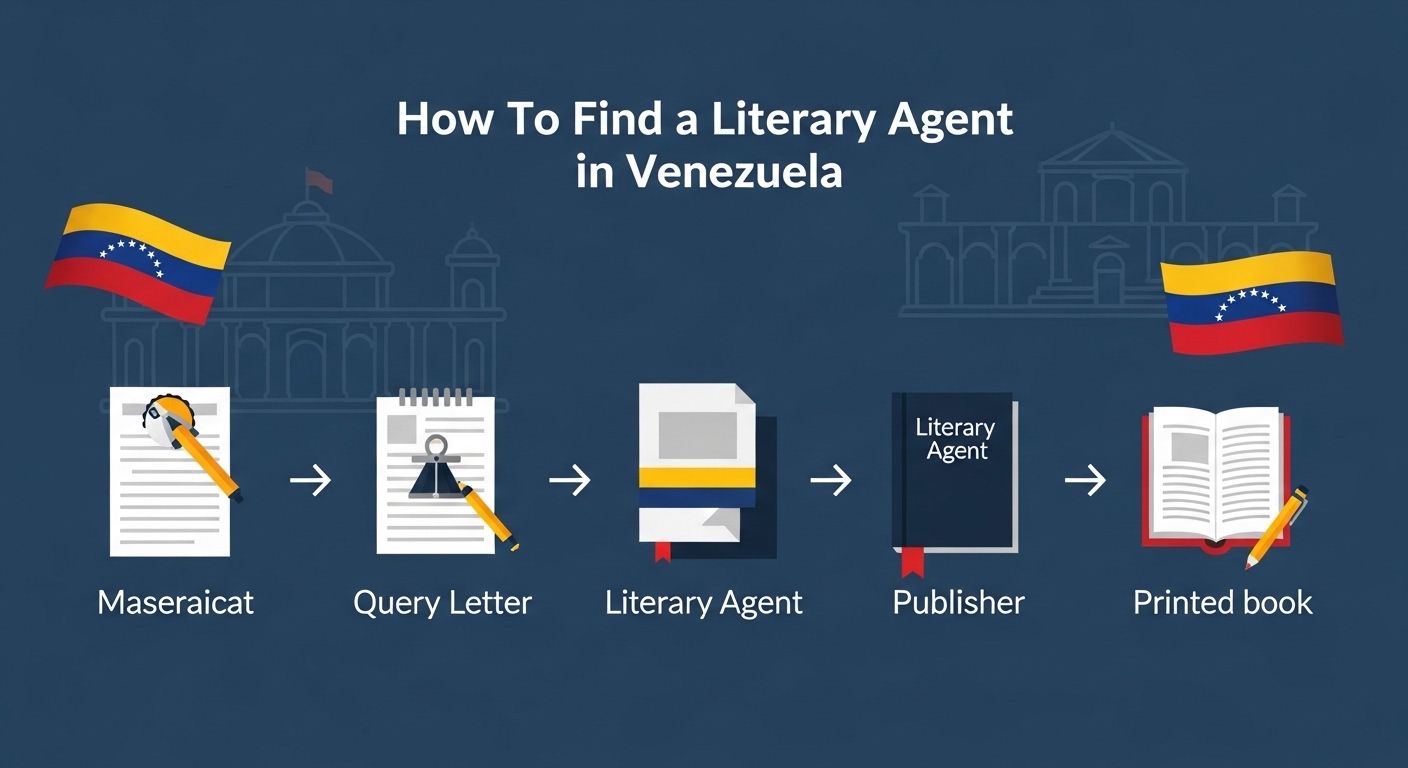
For writers in Venezuela, finding a literary agent can feel both exciting and overwhelming. The publishing industry within the country has experienced significant changes over the years, and while opportunities still exist, they often require a more strategic and international approach. Whether you are writing literary fiction, poetry, memoir, children’s literature, or political essays, securing the right literary agent can dramatically improve your chances of publication and long-term career growth.
This extended guide will walk you through the Venezuelan publishing landscape, explain how literary agents operate, and provide a detailed roadmap to help you find professional representation.
Understanding the Role of a Literary Agent
Before beginning your search, it is essential to understand what a literary agent actually does.
A literary agent is not just someone who submits your manuscript to publishers. They act as:
- A career strategist
- A contract negotiator
- A rights manager
- A publishing industry expert
- A long-term professional partner
Agents earn a commission—typically between 10% and 20%—from book deals they secure on your behalf. They do not charge upfront reading fees. Their success depends on your success.
In Venezuela, where the traditional publishing market is smaller compared to larger Spanish-language markets like Spain or Mexico, agents often work regionally or internationally. Many represent authors across Latin America rather than exclusively within one country.
The Current Publishing Landscape in Venezuela
Understanding the environment in which you are seeking representation is crucial.
Venezuela’s publishing industry includes:
- Independent publishers
- University presses
- Cultural institutions
- Government-affiliated presses
- Small literary houses
- International publishers with regional distribution
Economic and production challenges have reduced the number of active publishing houses in recent years. As a result:
- Print runs may be limited
- Distribution networks can be restricted
- International publication becomes more attractive
For many Venezuelan writers, working with an agent who has connections outside the country significantly increases publishing opportunities.
Step 1: Finish and Professionally Polish Your Manuscript
No reputable agent will consider an incomplete fiction manuscript.
Before querying:
- Complete your manuscript fully
- Revise multiple times
- Seek feedback from beta readers
- Join writing workshops or critique groups
- Consider professional editing
Quality matters more than speed. In a competitive and selective market, your manuscript must be structurally strong, grammatically polished, and emotionally compelling.
For non-fiction projects, you may submit a book proposal instead of a completed manuscript—but it must be detailed and professional.
Step 2: Define Your Genre and Market Positioning
Agents specialize. You must clearly understand:
- Your genre
- Your target audience
- Your book’s tone and theme
- Comparable authors
Common genres in the Venezuelan and broader Latin American market include:
- Literary fiction
- Historical fiction
- Contemporary social novels
- Poetry
- Political and cultural essays
- Memoirs
- Children’s and young adult literature
When defining your market positioning, ask yourself:
- Is my story local, regional, or international in appeal?
- Could it succeed in Spain or Mexico?
- Is it highly cultural or globally relatable?
Clear positioning makes it easier for agents to assess commercial viability.
Step 3: Research Literary Agents Strategically
Finding a literary agent in Venezuela requires thorough research.
Where to Search
You can identify agents through:
- Acknowledgment sections of Venezuelan books
- Literary festivals and book fairs
- Publishing house announcements
- Author interviews
- Writing conferences
- Online professional directories
If a published Venezuelan author thanks an agent in their book, that is a valuable lead.
Because the local agent pool is smaller, it is wise to expand your search to:
- Spanish agencies representing Latin American authors
- Mexican and Argentine literary agencies
- International agents open to Spanish-language manuscripts
Comparing Your Options
Below is a practical comparison of representation paths available to Venezuelan authors:
| Option | Advantages | Challenges | Best For |
| Venezuelan-based agent | Local cultural understanding | Limited market reach | Strongly local themes |
| Spanish agent | Access to European market | Competitive submissions | Literary fiction & essays |
| Latin American agent | Regional distribution | Smaller agencies | Cross-border appeal |
| US-based bilingual agent | Translation & global rights | Requires broader appeal | International projects |
| Direct publisher submission | No agent needed | Contract negotiation risk | Experienced writers |
This table can help you determine which path aligns best with your goals.
Step 4: Prepare a Strong Query Letter
Your query letter is your professional introduction. It must be concise, structured, and engaging.
Structure of a Strong Query
- Personalized greeting
- Brief hook (1 paragraph summarizing the core of your story)
- Short synopsis paragraph
- Word count and genre
- Author bio
- Professional closing
Keep it clear and focused. Avoid:
- Overly emotional appeals
- Long autobiographical explanations
- Grand statements like “This will be a bestseller”
- Informal language
Agents appreciate clarity and confidence.
Step 5: Write a Clear Synopsis
Most agents request:
- A one- to two-page synopsis
- The first 10–50 pages of your manuscript
Your synopsis must:
- Reveal the full plot, including the ending
- Focus on the main character arc
- Avoid unnecessary subplots
- Be written in third person, present tense
Think of it as a structural summary rather than promotional material.
Step 6: Follow Submission Guidelines Carefully
Each agent has specific submission requirements. These may include:
- Email subject formatting
- Document attachment format (PDF or Word)
- Page limits
- Specific fonts and spacing
- Query-only initial contact
Failure to follow instructions signals unprofessionalism. In a competitive field, small mistakes can result in automatic rejection.
Step 7: Track Your Submissions
Organization is essential.
Create a submission tracker that includes:
- Agent name
- Agency
- Date submitted
- Response date
- Outcome
- Notes
Response times vary widely. Some agents reply within weeks; others may take months—or never respond at all.
Patience is part of the process.
Common Mistakes Venezuelan Writers Should Avoid
- Submitting unfinished work
- Querying without researching the agent
- Sending mass generic emails
- Paying reading fees
- Signing unclear contracts
- Giving up after a few rejections
Rejection is not a judgment of your talent. It often reflects market fit.
Red Flags: How to Spot a Fake or Predatory Agent
Unfortunately, some individuals present themselves as agents without legitimate credentials.
Be cautious if an agent:
- Charges upfront reading fees
- Demands payment for representation
- Has no verifiable sales record
- Cannot provide a client list
- Offers vague or verbal-only contracts
Legitimate agents earn commission from sales—not from writers directly.
Expanding Beyond Venezuela
Because of market limitations, many Venezuelan authors successfully secure representation abroad.
Benefits of international agents include:
- Larger distribution networks
- Foreign rights management
- Translation opportunities
- Stronger contract negotiation
- Access to international book fairs
If your manuscript has universal themes—migration, identity, family, political change—it may resonate globally.
Building Your Author Visibility
While not mandatory, a professional presence strengthens your profile.
Consider:
- Publishing short stories in magazines
- Participating in literary contests
- Attending book fairs
- Speaking at cultural events
- Maintaining a professional social media presence
In Venezuela’s literary community, networking plays a meaningful role.
Alternative Routes if You Cannot Find an Agent
If representation proves difficult, you still have options:
Direct Publisher Submissions
Some publishers accept unsolicited manuscripts.
Literary Competitions
Winning or placing in contests increases visibility and credibility.
Self-Publishing
With careful editing and marketing, this can be a viable path.
Translation and International Markets
If your work can be translated into English or other languages, new opportunities emerge.
Questions to Ask Before Signing with an Agent
If you receive an offer of representation, ask:
- What is your commission rate?
- Which publishers will you approach?
- How frequently will we communicate?
- How do you handle foreign rights?
- What is the termination clause?
You are entering a professional partnership. Transparency is essential.
Timeline: How Long Does It Take?
There is no universal timeline.
Some authors secure agents within months. Others take years. Key factors include:
- Manuscript quality
- Genre demand
- Market conditions
- Strategic targeting
- Persistence
The process requires resilience.
Challenges Unique to the Venezuelan Market
Writers in Venezuela may face:
- Limited local publishing infrastructure
- Reduced print production
- Economic instability
- Smaller agent pool
However, digital tools and global publishing have expanded opportunities significantly. Venezuelan voices are increasingly valued in international markets.
The Importance of Persistence and Professionalism
The search for a literary agent is not just about talent—it is about preparation and strategy.
Remember:
- Rejections are normal
- Improvement is continuous
- Research matters
- Professional communication is essential
- Patience pays off
Many successful authors faced dozens of rejections before finding representation.
Final Thoughts
Finding a literary agent in Venezuela requires a combination of preparation, research, flexibility, and persistence. While the local publishing market may be smaller, regional and international opportunities provide meaningful pathways for success.
To recap:
- Polish your manuscript thoroughly
- Define your genre clearly
- Research both local and international agents
- Write a strong query letter
- Follow guidelines carefully
- Stay organized
- Evaluate offers wisely
Venezuelan literature carries a rich cultural heritage and powerful contemporary voice. Whether your story reflects local traditions, political realities, migration experiences, or universal human themes, there is space for your work in the global publishing world.
The journey to finding a literary agent may take time—but with dedication and strategic effort, representation is entirely within reach.
Your story matters. Now it’s time to present it professionally and confidently to the world.
