
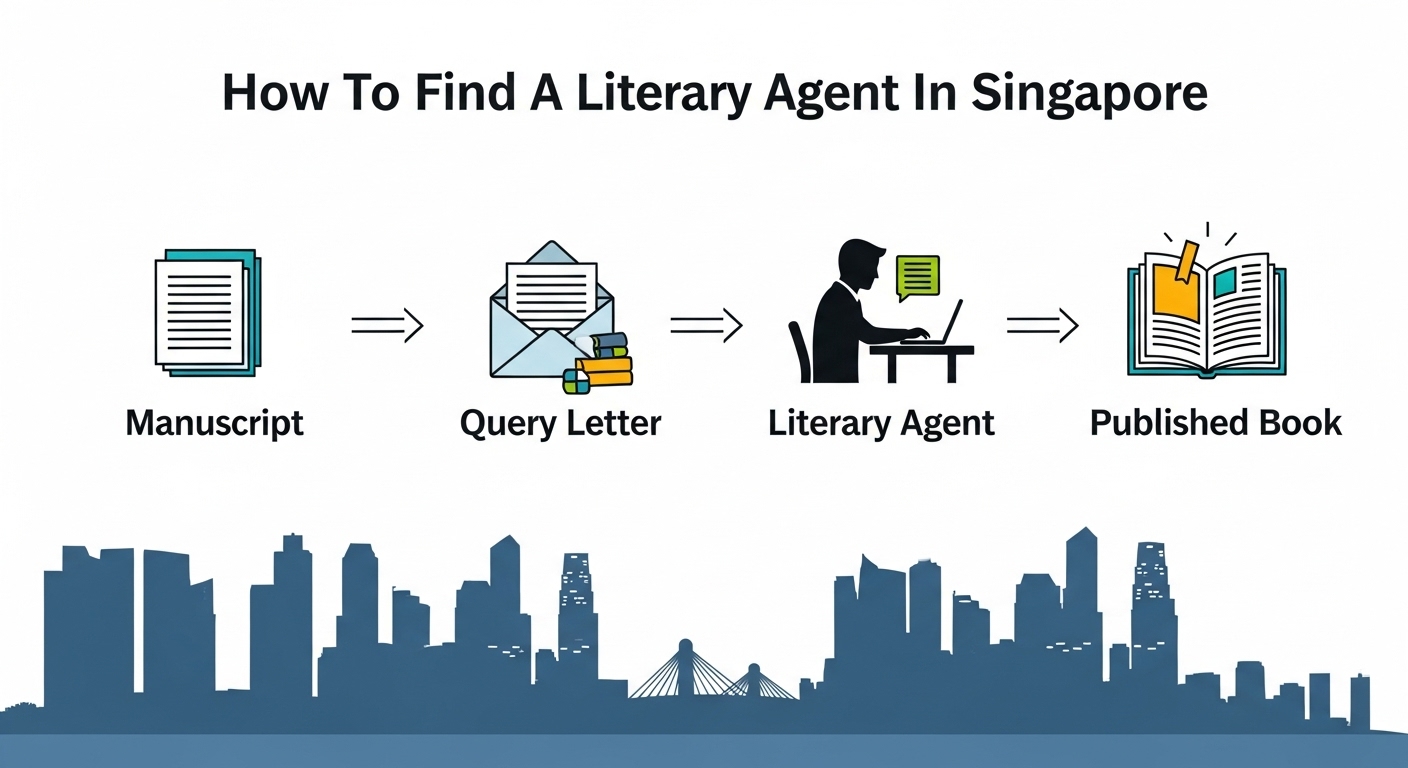
Finding a literary agent can feel overwhelming, especially in a compact but competitive market like Singapore. Writers often wonder whether agents even exist locally, how approachable they are, and whether international representation might be a better option. The truth is, Singapore’s literary scene is small but active, professional, and increasingly connected to global publishing networks.
Whether you’re writing fiction, nonfiction, children’s books, or memoirs, securing the right literary agent can significantly improve your chances of landing a traditional publishing deal. This guide walks you through the entire process—step by step—so you can approach the search with confidence and clarity.
Understanding the Singapore Literary Market
Singapore’s publishing industry sits at a crossroads between East and West. English is one of the country’s main working languages, which makes Singaporean writers attractive to international publishers, especially in the UK, Australia, and the US. However, because the local market is relatively small, many literary agents in Singapore operate regionally rather than exclusively domestically.
Most agents here handle a mix of:
- Singaporean authors
- Southeast Asian writers
- International authors seeking Asian market access
This means competition can be tight, but quality work still stands out. Agents are selective not because opportunities are scarce, but because they focus on projects with strong commercial or literary potential beyond Singapore alone.
What Does a Literary Agent Actually Do?
Before starting your search, it’s important to understand what a literary agent contributes to your career. An agent is not just someone who sends your manuscript to publishers.
A good literary agent:
- Evaluates your manuscript objectively
- Helps refine your pitch or proposal
- Submits your work to suitable publishers
- Negotiates contracts and royalties
- Protects your legal and creative rights
- Guides your long-term writing career
In Singapore, agents often play an even more hands-on role, helping writers shape their work for international audiences.
Decide If You’re Ready for an Agent
One common mistake writers make is approaching agents too early. Before contacting anyone, ask yourself a few honest questions.
Is your manuscript fully completed and edited?
Have you revised it multiple times?
Have you received feedback from beta readers or editors?
For nonfiction writers, is your proposal polished, structured, and market-focused?
Agents in Singapore expect submissions to be professional and near-publishable. They are open to nurturing talent, but they are not developmental editors for early drafts.
Identify the Right Type of Literary Agent
Not every agent is suitable for every writer. Some agents focus on commercial fiction, others on literary fiction, and some specialize in nonfiction categories like business, self-help, or memoirs.
Before making a list, define:
- Your genre
- Your target audience
- Whether your book has local, regional, or global appeal
For example, a children’s picture book writer should not pitch to an agent who only handles adult nonfiction. Matching your work with an agent’s interests dramatically increases your chances of success.
Research Literary Agents Based in Singapore
While Singapore has fewer agents than larger markets, several reputable professionals represent writers locally and internationally. Some are independent agents, while others operate as part of boutique agencies.
When researching agents:
- Look at the types of books they represent
- Study the authors they’ve worked with
- Understand whether they accept unsolicited submissions
Don’t limit yourself strictly to Singapore-based agents. Many writers in Singapore successfully work with agents in the UK, Australia, or other parts of Asia who are open to Southeast Asian voices.
Use Writing Communities and Industry Events
Singapore has an active literary community, and tapping into it can open doors that cold submissions cannot.
Consider:
- Writers’ workshops and festivals
- Publishing panels and book launches
- Writing associations and critique groups
These spaces help you understand what agents are looking for and sometimes offer opportunities to pitch directly. Even informal conversations can lead to valuable introductions or advice.
Prepare a Strong Query Letter
Your query letter is your first impression. It must be clear, concise, and compelling. Agents in Singapore typically prefer professional, straightforward queries rather than gimmicky pitches.
A strong query letter includes:
- A brief introduction
- A concise summary of your book
- Your target audience and genre
- A short author bio
- Why you chose that agent
Avoid exaggeration. Let the strength of your idea and writing speak for itself.
Craft a Professional Synopsis
Many agents request a synopsis along with the query. This is where writers often struggle. A synopsis should clearly outline the full story, including the ending.
Key tips:
- Keep it structured and logical
- Focus on main plot points
- Avoid excessive detail
- Maintain clarity over style
For nonfiction, this may be replaced with a chapter outline and concept explanation.
Submit in Small, Focused Batches
Avoid sending your manuscript to dozens of agents at once. Instead, submit in small, targeted batches. This allows you to adjust your query based on feedback or responses.
Patience is essential. Response times can range from a few weeks to several months. Silence is common and usually means a pass, not a reflection of your talent.
Follow Submission Guidelines Carefully
Agents expect writers to respect their guidelines. Ignoring them is one of the fastest ways to get rejected.
Pay close attention to:
- Requested documents
- Word count limits
- File formats
- Email subject lines
Being professional signals that you’re serious about your writing career.
Consider Regional and International Representation
Many Singapore-based writers succeed with agents outside Singapore. This is especially true for English-language fiction and nonfiction with global appeal.
Working with an overseas agent does not limit your ability to publish locally. In fact, it can expand your opportunities across multiple markets while still allowing you to maintain your Singaporean identity as a writer.
Beware of Red Flags
Not all offers of representation are legitimate. A genuine literary agent earns money through commission, not upfront fees.
Be cautious if an agent:
- Asks for reading or submission fees
- Guarantees publication
- Pushes paid editing services
- Avoids clear contract terms
Trust your instincts and take time to review any agreement carefully.
Understanding Agent Contracts
If an agent offers representation, congratulations—but don’t rush. Review the contract thoroughly.
Most agent agreements include:
- Commission percentage
- Duration of representation
- Rights covered
- Termination clauses
In Singapore, commission rates typically align with international standards. A transparent agent will explain everything and answer your questions openly.
What If You Get Rejected?
Rejection is part of the process. Even successful authors faced dozens of rejections before finding the right agent.
Use rejections as feedback:
- Is your query clear enough?
- Is your concept marketable?
- Does your genre align with current trends?
Sometimes the issue isn’t your writing—it’s timing, market conditions, or fit.
Alternative Paths While Searching for an Agent
While pursuing representation, continue building your writing profile.
You can:
- Publish short works in magazines
- Build a strong author platform
- Work with professional editors
- Attend literary events
These steps strengthen your credibility and make you more attractive to agents later.
Relevant Comparison Table: Finding Literary Agents in Singapore
| Aspect | What Writers Should Know |
| Market Size | Small but internationally connected |
| Language Preference | English dominates agent representation |
| Common Genres | Literary fiction, nonfiction, children’s books |
| Submission Style | Professional queries and polished manuscripts |
| Response Time | Several weeks to months |
| Representation Scope | Often regional or international |
Final Thoughts
Finding a literary agent in Singapore requires patience, research, and professionalism—but it is absolutely achievable. The key is understanding the market, presenting your work at its best, and targeting agents who genuinely align with your writing.
Singapore may be small, but its literary reach is global. With the right approach, your story can travel far beyond its borders. Stay persistent, keep improving your craft, and remember that the right agent is not just a gatekeeper, but a long-term partner in your writing journey.
Frequently Asked Questions
Q1. Do I need to live in Singapore to get a literary agent there?
No, many Singapore-based agents represent writers from across Southeast Asia and beyond.
Q2. Can a new writer find a literary agent in Singapore?
Yes, agents do work with debut authors if the manuscript is strong and market-ready.
Q3. How long does it usually take to hear back from a literary agent?
Response times vary, but it can take anywhere from a few weeks to several months.
Q4. Should I hire an editor before submitting to an agent?
While not mandatory, professional editing can significantly improve your chances.
Q5. How can I make my book well known after getting an agent?
Focus on author branding, social presence, public readings, and collaborating with your publisher on marketing.
