
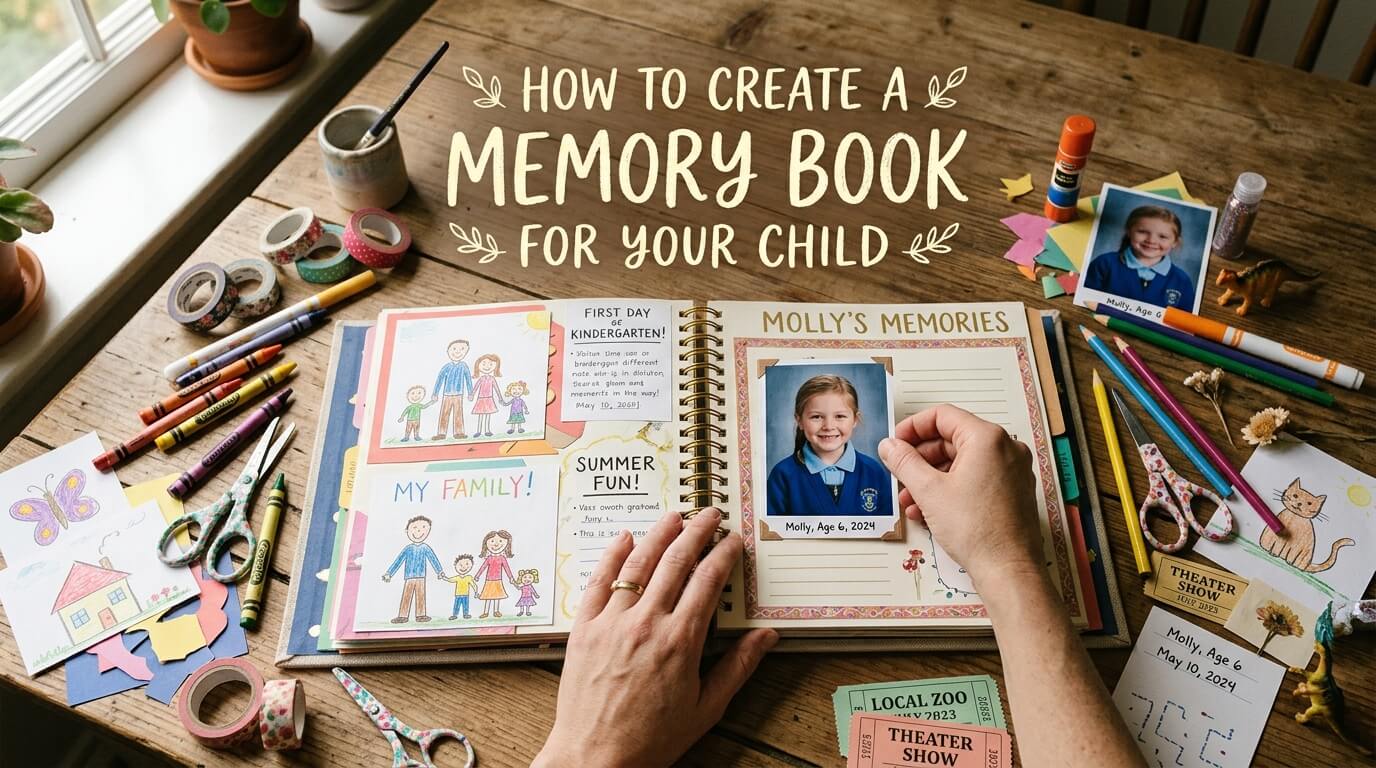
A child grows in moments so small they often go unnoticed while they are happening. A first word said incorrectly but confidently, a drawing that makes no sense to adults but means everything to the child, a random question asked at bedtime, a sudden burst of laughter in an ordinary afternoon—these are the things that disappear quickly if they are not deliberately preserved. A memory book is the practice of holding onto these fleeting fragments and shaping them into a meaningful record of childhood.
Unlike social media posts or scattered phone galleries, a memory book is intentional. It is not about capturing everything; it is about capturing meaning. It becomes a curated emotional timeline of a child’s life, showing not just what happened, but how it felt to witness it. Over time, it becomes a deeply personal archive of identity, love, and growth.
Creating a memory book is not about artistic skill or perfect writing. It is about awareness. It is about noticing life while it is unfolding and choosing to preserve it in a way that will matter years later. When done consistently, it becomes one of the most valuable emotional gifts a parent can give their child.
The Hidden Emotional Power of a Memory Book
A memory book is often underestimated as a “nice idea” rather than something essential. But childhood memories are fragile. Human memory does not store every detail; it reconstructs selectively. Over time, even the most emotionally significant moments fade or become distorted.
Psychological research in autobiographical memory shows that children build their sense of self from the stories they hear about themselves. When parents consistently document early life experiences, they are not just preserving memories—they are shaping how a child understands their own identity later in life.
There is also something deeply grounding about seeing your own story from the beginning. Many adults struggle with fragmented childhood memories. A memory book fills those gaps. It allows a person to see continuity in their life, to understand that they were always becoming who they are.
From the parent’s perspective, it also becomes a way of slowing down time mentally. While children grow quickly, the act of documenting forces observation. It turns ordinary parenting moments into meaningful reflections rather than passing routines.
Choosing the Right Approach: Physical, Digital, or Combined Memory Books
Before beginning, it helps to decide how the memory book will exist. There is no single correct method, but the format will shape the experience of both creating and revisiting it.
A physical memory book has emotional weight. The texture of paper, handwritten notes, glued photographs, and tucked-in keepsakes like hospital bracelets or birthday cards create a sensory experience that feels intimate and real. Physical books are often treasured as heirlooms because they feel personal and irreplaceable.
However, physical formats also require time, materials, and care. They are not always convenient for daily updates, which can lead to gaps if the parent becomes too busy.
A digital memory book solves many of these limitations. It allows you to store unlimited photos, videos, voice notes, and scanned documents. It can be organized by year, month, or milestone without physical space constraints. It is also easier to back up, ensuring memories are not lost to damage or time.
The most effective approach for many families is a hybrid system. Important milestones such as birthdays, first school days, or family trips are preserved physically, while everyday moments are stored digitally. This creates both emotional depth and practical flexibility.
Designing the Structure of a Memory Book That Evolves Over Time
A memory book should never feel like a rushed project. It is not something you “finish.” It is something you build slowly, over years, as the child grows.
The structure should act as a loose framework rather than a strict system. Think of it as chapters of a life story that unfold naturally. Early pregnancy memories, birth details, infancy, toddler years, preschool experiences, school milestones, and emerging personality traits can all form natural sections.
But structure should not become restriction. Some of the most meaningful memories will not fit neatly into categories. A random afternoon of laughter, a small act of kindness from the child, or a conversation that reveals personality may become more important than formal milestones.
A good memory book structure is flexible enough to include both milestones and everyday life.
Expanded Memory Book Framework With Emotional Depth
| Stage | Focus of Memory | Emotional Themes | Example Content | Purpose in Child’s Story |
| Before Birth | Anticipation and imagination | Hope, expectation, bonding | Pregnancy reflections, ultrasound images, naming thoughts | Establish emotional connection before arrival |
| Birth Moment | Beginning of life story | Awe, transformation, love | Birth story, hospital experience, first photo | Document origin of identity |
| Newborn Phase (0–3 months) | Adjustment and bonding | Exhaustion, tenderness, discovery | Feeding routines, sleep patterns, first reactions | Capture early adaptation |
| Infancy (3–12 months) | Rapid development | Surprise, joy, curiosity | First smile, crawling, first words | Show fast physical and emotional growth |
| Toddler Stage (1–3 years) | Exploration and independence | Mischief, wonder, frustration | First steps, tantrums, favorite toys | Highlight personality formation |
| Preschool (3–5 years) | Imagination and expression | Creativity, storytelling, social learning | Drawings, imaginary friends, early friendships | Reveal developing imagination |
| Early School (5–8 years) | Structure and identity building | Confidence, challenge, belonging | School experiences, achievements, fears | Track adaptation to society |
| Later Childhood (8+ years) | Reflection and individuality | Self-awareness, independence | Hobbies, opinions, personal writing | Encourage self-identity formation |
This structure is not meant to be rigid. It simply ensures that no stage of emotional development is overlooked while still allowing freedom for spontaneous entries.
Collecting Memories Without Pressure or Overwhelm
One of the biggest reasons memory books remain unfinished is the belief that they require too much effort. In reality, the most effective memory books are built from very small, consistent actions rather than large, occasional projects.
A memory can be captured in seconds. A quick note in a phone after a funny sentence, a photo taken without staging, or saving a child’s drawing in a folder are all valid entries. The goal is not to document perfectly but to document honestly.
Over time, these fragments become a complete narrative. What matters is not quantity but consistency. Even a few sentences every week can accumulate into a deeply meaningful archive over the years.
Writing Memory Entries That Feel Alive Years Later
Writing in a memory book is not about formal storytelling. It is about emotional preservation. The best entries are those that capture atmosphere as much as event.
Instead of writing only what happened, it helps to describe what it felt like to experience it. A child’s first school day, for example, is not just an event. It includes nervousness, excitement, hesitation, and pride—all of which should be reflected in the entry.
The tone should remain natural. There is no need for polished language. In fact, simplicity often creates stronger emotional impact. A short, honest paragraph written in the moment carries more emotional truth than a carefully edited description written years later.
Small details matter significantly. The way a child mispronounces a word, their favorite bedtime question, or the exact expression they make when excited can become powerful emotional anchors in the future.
Adding Physical and Emotional Layers to the Memory Book
A memory book becomes richer when it includes more than photographs and text. Physical artifacts add a layer of reality that strengthens emotional connection.
Items such as hospital wristbands, birthday invitations, school reports, handmade cards, and even small toys can be preserved within envelopes or pockets in a physical book. These objects hold emotional memory in a tangible form.
In digital formats, these items can be scanned or photographed and paired with voice recordings or short videos. Hearing a child’s voice or laughter years later can be even more powerful than viewing an image.
Combining sensory elements creates a multi-dimensional memory experience that feels more complete and emotionally immersive.
Observing Growth Through Comparison and Reflection
One of the most meaningful aspects of a memory book is the ability to observe transformation over time. Children change not only physically but emotionally, socially, and intellectually.
Comparing early and later entries often reveals surprising development. A child who once struggled to speak may later write long stories. A child who once clung to parents may later show independence and leadership. These changes are powerful to witness when documented clearly.
Yearly reflections help strengthen this perspective. Writing a short summary of each year creates a rhythm in the memory book that highlights growth patterns. It also helps parents notice subtle changes they might otherwise overlook in daily life.
Involving the Child in Their Own Memory Book
As children grow older, they should naturally become part of the memory book process. This transforms it from a parent-created archive into a shared life story.
Children can contribute drawings, write short reflections, or even dictate memories they want included. This participation helps them develop self-awareness and emotional expression.
It also allows them to see how they were perceived in childhood, which can be deeply grounding during teenage years when identity often feels uncertain.
A memory book that includes both parent and child perspectives becomes far more dynamic and meaningful.
Avoiding Common Challenges in Memory Book Creation
Many memory books remain incomplete because of unrealistic expectations. One common issue is perfectionism, where parents feel every page must look polished. This often leads to delay or abandonment.
Another issue is inconsistency caused by waiting for “special moments.” In reality, everyday life contains most of the meaningful memories. Ordinary days often become the most nostalgic in hindsight.
There is also the tendency to over-document early on and lose momentum later. A sustainable approach is better than an intense but short-lived effort.
The most successful memory books are those that grow slowly and imperfectly over time.
The Deep Emotional Impact of a Completed Memory Book
When revisited years later, a memory book becomes more than documentation. It becomes emotional time travel. For the child, it provides access to a version of themselves they no longer remember. For the parent, it becomes a reflection of years that passed too quickly to fully grasp in the moment.
It often carries unexpected emotional weight. Parents are reminded not just of milestones but of feelings, struggles, and small joys that defined each stage of parenting.
For children, it becomes a grounding force. It shows them that they were once small, learning, growing, and deeply observed. It helps build emotional security and a sense of belonging that lasts into adulthood.
Final Thoughts
A memory book is not a project that ends. It is a continuous act of noticing, recording, and preserving life as it unfolds. It does not require perfection, artistic talent, or strict structure. It only requires attention and consistency.
Over time, it becomes a living story of childhood. Not a polished version of events, but a real, emotional, layered record of growing up. It captures what is often lost in everyday life: the feeling of a moment, not just the memory of it.
And long after the pages are filled, it remains one of the most meaningful gifts a child can ever receive—their own story, told with care from the very beginning.
FAQs on Creating a Memory Book for Your Child
Q1. What is the best age to start a memory book for a child?
You can start a memory book even before birth during pregnancy. The earlier you begin, the more complete and continuous the story becomes, but it is never too late to start at any age.
Q2. Do I need to write every day in a memory book?
No, daily writing is not required. A memory book works best when updated naturally with meaningful moments rather than forced or routine entries.
Q3. What should I include in a child’s memory book besides photos?
You can include short written notes, drawings, school work, voice notes, small keepsakes like cards, and descriptions of emotional or funny moments.
Q4. Should a memory book be physical or digital?
Both formats work well. A physical book feels more personal and emotional, while a digital one is easier to update and store long-term. Many people use a combination of both.
Q5. How can I make my child interested in their memory book later?
Make it personal and honest. When children see real stories, emotions, and even small imperfections, they connect more deeply with their own history and enjoy revisiting it.
