
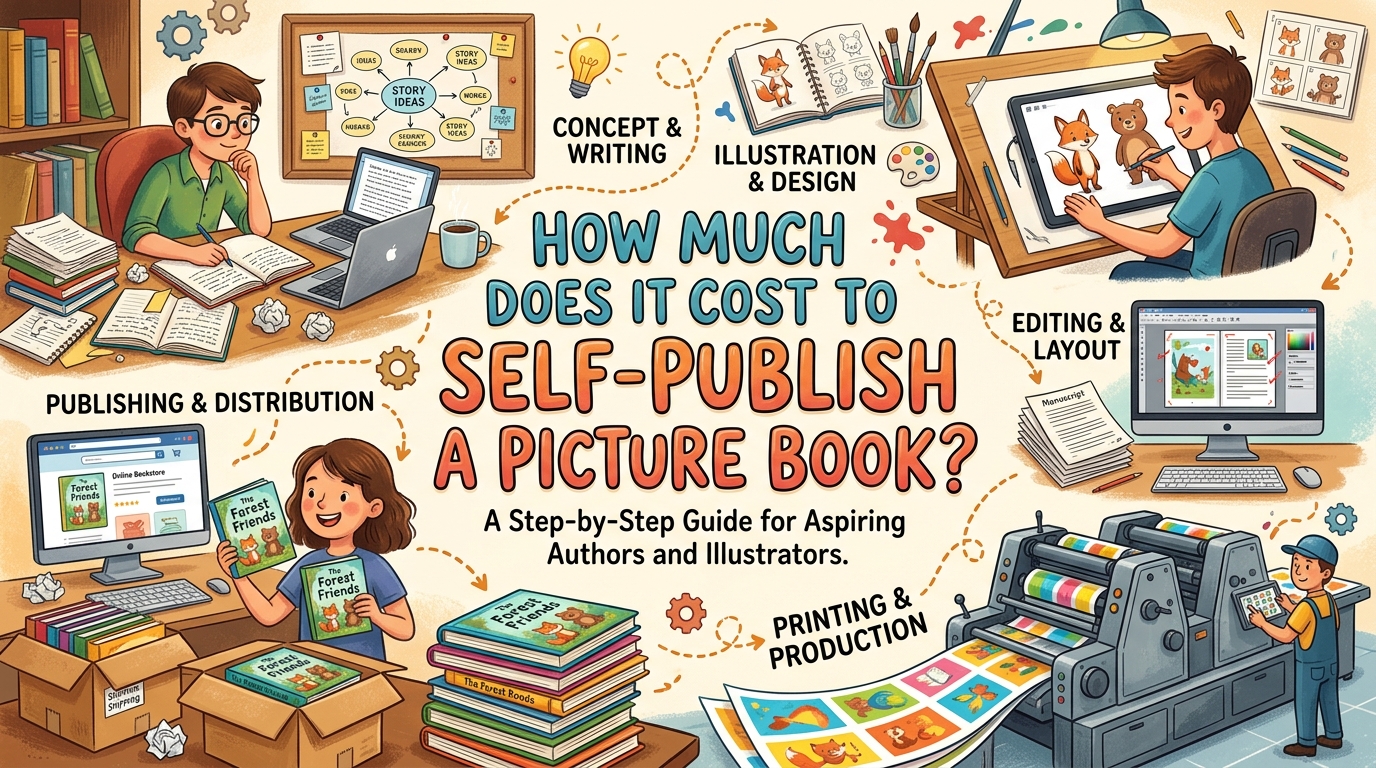
Publishing a picture book is a dream shared by many writers, illustrators, educators, and parents. Whether you have created a heartwarming bedtime story, an educational concept book, or an imaginative adventure for young readers, self-publishing offers a direct path to bringing your vision to life. However, one of the most common questions aspiring authors ask before beginning the process is: how much does it cost to self-publish a picture book?
The answer is not always straightforward because the total cost depends on several factors, including illustrations, editing, formatting, printing, and marketing. Unlike standard novels, picture books require extensive visual elements, making them one of the more expensive book categories to produce. While some creators publish on a minimal budget, others invest thousands of dollars to create a highly professional product that can compete with traditionally published books.
Understanding where your money goes is essential before you begin your publishing journey. By knowing the typical expenses involved, you can build a realistic budget, avoid unnecessary spending, and make informed decisions that improve your book’s chances of success.
In this guide, we will explore the real costs of self-publishing a picture book, discuss the factors that influence pricing, and help you understand how much you should expect to invest at each stage of the process.
The Art and Purpose Behind Picture Books
Picture books differ significantly from novels and nonfiction books. In a picture book, illustrations play an equally important role as the text. Young readers often engage with the visual storytelling before they fully understand the words. As a result, authors must consider both literary quality and artistic presentation.
Because illustrations are such a central element, they often represent the largest expense in the self-publishing process. In many cases, illustration costs alone can exceed the entire production budget of a standard novel.
Picture books also require careful page layout design, specialized formatting, and higher printing standards. Most are printed in full color, which increases production expenses compared to black-and-white books.
These unique requirements mean that self-publishing a picture book typically costs more than self-publishing other types of books.
Average Cost of Self-Publishing a Picture Book
The total cost of self-publishing a picture book can vary widely depending on your goals, production quality, and whether you hire professionals.
The table below provides a general overview of common expenses.
| Publishing Expense | Estimated Cost Range |
| Manuscript Editing | $200 – $2,000 |
| Illustrations | $1,000 – $15,000+ |
| Cover Design | $150 – $1,500 |
| Interior Formatting | $100 – $1,000 |
| ISBN Purchase | $0 – $125 |
| Copyright Registration | $45 – $100 |
| Proof Copies | $20 – $200 |
| Printing Setup | $0 – $500 |
| Marketing & Promotion | $200 – $10,000+ |
| Total Estimated Investment | $1,500 – $30,000+ |
Authors seeking a professional-quality picture book typically spend between $3,000 and $10,000. More ambitious projects involving premium illustrations and extensive marketing campaigns can easily exceed $20,000.
The Cost of Writing and Development
Before a picture book reaches the illustration stage, it starts with a manuscript. While some authors write their own stories, many still invest in professional editing to strengthen the final product.
Children’s books require concise language, age-appropriate vocabulary, strong pacing, and effective storytelling. Because picture books often contain fewer than 1,000 words, every sentence must contribute meaningfully to the story.
Developmental editing helps improve plot structure, character development, and narrative flow. Copyediting focuses on grammar, punctuation, and clarity. Even a short manuscript can benefit greatly from professional feedback.
Many editors charge between $200 and $2,000 depending on the complexity of the manuscript and the editor’s experience level.
Although editing may seem optional for a short book, skipping this step can lead to a weaker final product that struggles to engage readers.
Illustration Costs: The Largest Investment
For most picture book creators, illustrations represent the single biggest expense.
Professional illustrators typically charge based on experience, artistic style, complexity, and the number of illustrations required. A standard picture book contains approximately 24 to 32 pages, many of which feature full-page or double-page artwork.
Illustration rates vary dramatically across the industry. Emerging illustrators may charge a few hundred dollars per illustration, while established professionals can charge several thousand dollars per piece.
A basic picture book project may cost between $1,000 and $3,000 for illustrations. Mid-range professional illustrations often cost between $3,000 and $8,000. Premium custom artwork from highly experienced illustrators can exceed $15,000.
Several factors influence illustration pricing.
Artistic Complexity
Simple cartoon-style illustrations generally cost less than highly detailed, realistic, or painterly artwork. The amount of time required to create each illustration directly affects pricing.
Number of Pages
More illustrations naturally increase costs. Some books require artwork on every page, while others include a mixture of full-page illustrations and text-heavy spreads.
Character Design
Books featuring multiple recurring characters often require additional design work. The illustrator must ensure visual consistency throughout the entire book.
Revisions
Many illustration contracts include a limited number of revisions. Extensive changes after artwork is completed may result in additional fees.
Because illustrations shape the reader’s first impression of the book, many successful authors consider this investment one of the most important aspects of the publishing process.
Cover Design Expenses
A picture book cover serves as both a marketing tool and a visual introduction to the story.
Even though interior illustrations are essential, the cover is what initially attracts parents, teachers, librarians, and young readers. A professionally designed cover communicates quality, genre, and target audience within seconds.
Some illustrators include cover design within their illustration package. Others charge separately for creating front, back, and spine artwork.
Professional picture book cover design typically costs between $150 and $1,500 depending on complexity and designer experience.
An effective cover should not only look beautiful but also remain visually appealing when displayed as a small online thumbnail.
Interior Book Formatting Costs
Formatting a picture book is more complicated than formatting a traditional novel.
Text placement must work harmoniously with illustrations. Each page spread should feel balanced, visually engaging, and easy to read. Designers must also ensure that artwork aligns correctly with printing specifications.
Professional formatting services generally range from $100 to $1,000.
Authors with graphic design experience may choose to format their books independently using software such as Adobe InDesign. However, improper formatting can lead to printing errors, image cropping issues, and poor reader experiences.
Investing in professional formatting often improves the overall presentation of the book and reduces production complications.
ISBN and Publishing Identifiers
An ISBN, or International Standard Book Number, serves as a unique identifier for your book.
Many self-publishing platforms offer free ISBNs, allowing authors to publish without purchasing their own identifier. However, authors who want complete publishing control often purchase ISBNs independently.
In the United States, a single ISBN typically costs around $125, though bulk packages offer lower per-unit pricing.
While free ISBNs can help reduce costs, owning your ISBN gives you greater flexibility and control over your publishing imprint.
Copyright Registration Costs
Although copyright protection exists automatically when you create original work, official copyright registration provides additional legal benefits.
Registering a copyright can strengthen your ability to enforce ownership rights if disputes arise in the future.
Copyright registration fees vary by country but generally range between $45 and $100.
For authors investing substantial money into illustrations and production, copyright registration is often viewed as an important protective measure.
Printing Costs for Picture Books
Printing is another major expense that distinguishes picture books from standard books.
Because picture books are usually printed in full color on higher-quality paper, production costs are significantly higher than black-and-white novels.
Printing expenses depend on several factors.
Book Size
Larger books require more paper and higher production costs. Popular picture book sizes include 8.5 x 8.5 inches and 8.5 x 11 inches.
Page Count
Longer books naturally cost more to print because they require additional materials.
Color Printing
Full-color interiors are essential for most picture books but substantially increase printing costs.
Hardcover Versus Paperback
Hardcover editions typically cost more to produce but may offer greater durability and perceived value.
Print-on-demand services often charge between $3 and $8 per copy for standard picture books. Hardcover editions can cost considerably more.
Authors ordering large print runs through offset printing may reduce per-unit costs but must invest more money upfront.
Comparing Print-on-Demand and Offset Printing
One of the biggest decisions picture book authors face involves selecting a printing method.
Print-on-demand allows books to be printed only when customers place orders. This eliminates inventory expenses and reduces financial risk.
Offset printing involves producing large quantities of books at once. While the initial investment is significantly higher, the cost per copy is usually lower.
Authors testing a new book often begin with print-on-demand because it requires minimal upfront capital. Established authors expecting strong sales may benefit from offset printing’s lower per-unit costs.
The right choice depends on your sales expectations, budget, and distribution strategy.
Marketing Costs for Self-Published Picture Books
Even the most beautifully illustrated picture book needs effective marketing to reach readers.
Marketing budgets vary enormously. Some authors spend only a few hundred dollars, while others invest thousands into promotional campaigns.
Marketing expenses may include social media advertising, website development, author branding, review copies, book trailers, influencer outreach, and educational outreach programs.
Many children’s book authors also attend school visits, library events, book fairs, and community programs. These activities can increase visibility but may involve travel and promotional costs.
Successful marketing often requires consistent effort over an extended period rather than a single promotional push.
Hidden Costs Many Authors Overlook
When calculating publishing expenses, authors often focus on major categories such as illustrations and printing while overlooking smaller but important costs.
Proof copies are one example. Reviewing physical proofs before publication helps identify formatting issues, color inconsistencies, and printing errors.
Software subscriptions can also add expenses. Programs used for writing, design, and project management often involve recurring monthly fees.
Website hosting, domain registration, promotional materials, and shipping costs may further increase the total investment.
While these expenses may seem minor individually, they can collectively add hundreds or even thousands of dollars to a project’s overall budget.
Budget Publishing Versus Premium Publishing
Not every picture book requires a five-figure investment.
Authors working with limited resources often adopt budget-friendly strategies. Some illustrate their own books, perform their own formatting, or use free publishing tools.
A budget self-publishing project might cost between $1,500 and $3,000 if the author handles multiple production tasks independently.
Premium publishing projects typically involve professional editing, custom illustrations, advanced formatting, hardcover production, and extensive marketing. These projects often range from $10,000 to $30,000 or more.
Neither approach is inherently better. The ideal budget depends on your goals, skills, audience, and long-term publishing strategy.
Is Self-Publishing a Picture Book Worth the Cost?
For many authors, self-publishing offers advantages that justify the investment.
Creative control is one of the biggest benefits. Authors maintain authority over illustrations, design, pricing, and publishing schedules. They are not required to alter their vision to satisfy traditional publishing requirements.
Self-publishing also allows faster market entry. Traditional publishing timelines often span several years, while self-publishing projects can move from concept to publication much more quickly.
Financially, self-published authors typically earn higher royalty percentages than traditionally published authors. Although they assume greater upfront costs, successful books can generate meaningful long-term returns.
The value of self-publishing depends on how effectively authors balance quality production with strategic marketing.
Planning Your Picture Book Budget
Creating a realistic budget before starting the publishing process helps prevent financial surprises later.
Begin by identifying your most important priorities. Some authors prioritize premium illustrations. Others focus on marketing or hardcover production. Understanding where quality matters most allows you to allocate resources effectively.
Research service providers thoroughly before making commitments. Request portfolios, obtain quotes, and compare multiple options. Careful planning can save money while ensuring professional results.
Most importantly, treat self-publishing as an investment rather than simply an expense. Every dollar spent should contribute to creating a stronger book or reaching more readers.
Conclusion
The cost of self-publishing a picture book can range from a few thousand dollars to tens of thousands depending on the level of professionalism and support involved. While illustrations often represent the largest expense, editing, formatting, printing, and marketing also play critical roles in creating a successful final product.
For most authors, a professionally produced picture book falls somewhere between $3,000 and $10,000. Authors seeking premium artwork, hardcover editions, and extensive marketing campaigns may invest considerably more.
Understanding these costs allows you to plan effectively, make informed decisions, and create a publishing strategy that aligns with your goals. Whether you are producing a family keepsake, launching an author career, or building a children’s book brand, careful budgeting can help transform your picture book idea into a polished publication that readers will enjoy for years to come.
