
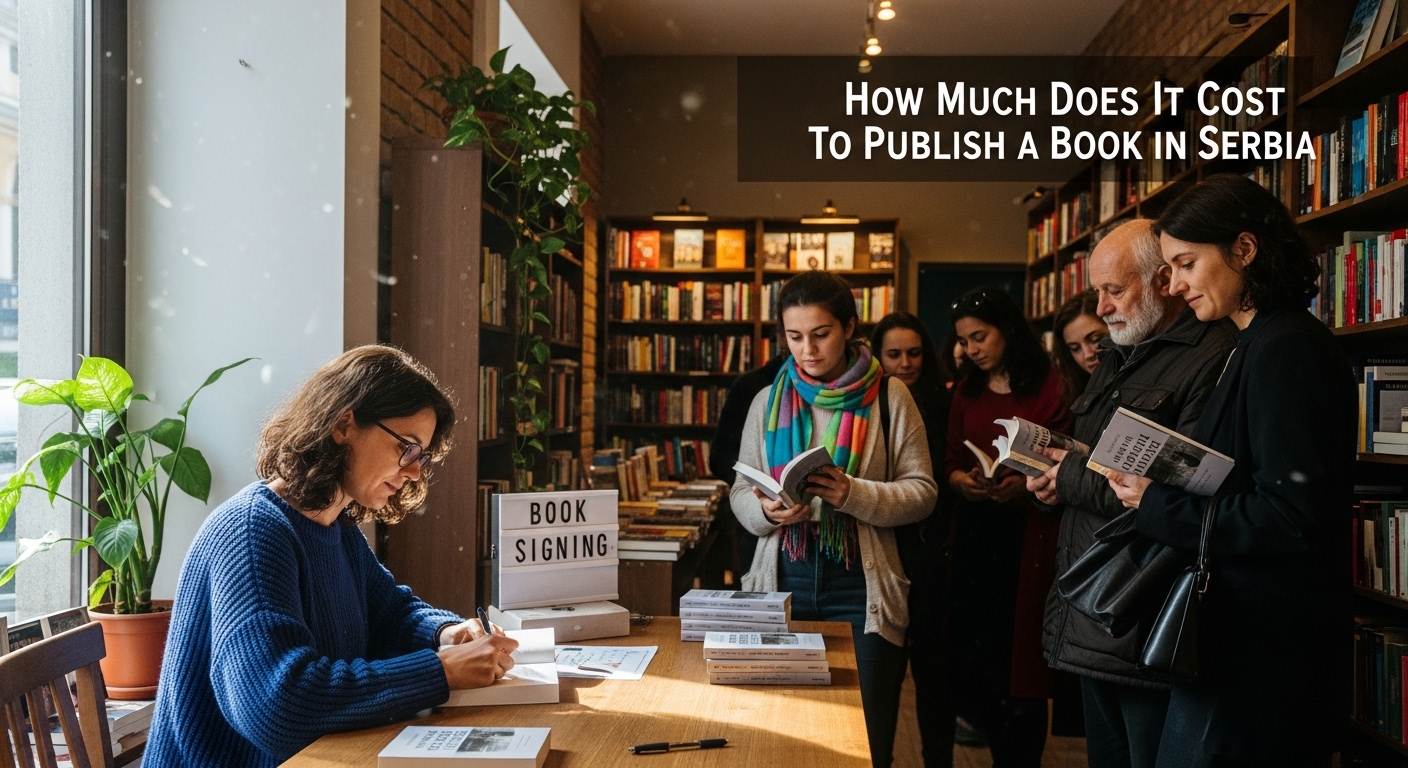
Publishing a book in Serbia is both an artistic and financial adventure. It’s exciting to imagine your words sitting on bookstore shelves or available to readers around the world, but before you get there, it’s crucial to understand what it really costs to bring a book to life.
The overall price depends on how you choose to publish. Traditional publishers usually take care of the expenses but control the rights and profits. Self-publishing, on the other hand, gives you full creative freedom — but also means you’ll cover all the costs yourself. Let’s walk through what those costs look like in Serbia today.
The Publishing Scene in Serbia
Serbia’s literary world is a fascinating mix of old traditions and modern publishing methods. Established publishers in Belgrade and Novi Sad continue to nurture local authors, while many independent writers now explore digital and print-on-demand platforms to reach readers across Europe and beyond.
For traditional publishing, the financial burden typically falls on the publisher. They invest in editing, design, printing, and marketing, and in return, you share royalties from every sale. However, getting a traditional publishing deal can be time-consuming and competitive.
That’s why many authors in Serbia now choose self-publishing. It offers independence, faster turnaround, and higher potential earnings per copy sold. Yet, it comes with its own set of expenses — from editing and design to printing and promotion.
Step 1: Administrative and Legal Essentials
Before printing or uploading your book, a few basic administrative steps are required.
Every book needs an ISBN (International Standard Book Number). It’s the global identification number used by retailers and distributors. Some online platforms such as Amazon provide a free ISBN for their authors, while you can also buy your own to maintain complete ownership. Purchasing your own ISBN usually costs between $30 and $100.
You’ll also need to comply with legal deposit requirements in Serbia. Every publisher or self-published author must provide copies of their work to the National Library of Serbia. It’s part of preserving the country’s literary record and does not add a large financial burden — just the cost of printing and mailing a few copies.
While not mandatory, many Serbian authors also register their work with the Intellectual Property Office to secure formal evidence of authorship. This service costs around $40, and it can be helpful if you ever need to prove ownership.
Step 2: Editing — Where the Real Transformation Happens
Editing is where a manuscript becomes a book. It’s not just about fixing typos; it’s about improving flow, style, and clarity. In the Serbian market, you can find affordable editors locally or work with professionals abroad who charge in dollars.
For proofreading, which checks grammar and final details, expect to pay between $300 and $800. A more detailed copy edit, which focuses on consistency, tone, and language refinement, can cost around $0.02 to $0.04 per word, or roughly $1,500 to $3,000 for an average-length book.
If your story or structure needs deeper guidance, a developmental edit will be necessary. This process can cost anywhere between $2,000 and $5,000, depending on the genre, complexity, and the editor’s experience.
For most self-published authors in Serbia, editing is the biggest single expense — but it’s also the most valuable. A well-edited book stands a far better chance of success.
Step 3: Design and Layout
Once the text is polished, your book needs an appealing presentation. Readers often judge a book by its cover, and investing in professional design makes a real difference.
A professional cover design in Serbia can cost anywhere from $100 to $400 when working with local designers, or up to $1,000 for internationally recognized artists. If you choose a premade cover from online marketplaces, you might spend around $50–$100.
Beyond the cover, the interior layout — how text appears on each page — requires attention too. Typesetting for print books or formatting for e-books usually ranges between $100 and $600. The price goes up for books with illustrations, tables, or color pages.
Step 4: Printing Your Book
Printing costs are highly flexible, depending on your book size, paper quality, and quantity. In Serbia, authors can choose between offset printing (ideal for large runs) and digital or print-on-demand printing (perfect for smaller quantities).
For print-on-demand (POD) platforms such as Amazon KDP or IngramSpark, you don’t need to pay upfront for a print run. The printing cost is deducted each time a book is ordered. For a standard black-and-white 300-page paperback, the cost per printed copy might range between $3.50 and $5.00, depending on paper type and trim size.
If you prefer local offset printing in Serbia, prices vary with volume. Printing around 300 copies could cost about $1,000 to $1,200, or roughly $3 to $4 per copy. Ordering 1,000 copies may lower the cost per book, but it increases your initial expense. You’ll also need to account for storage and distribution.
For limited releases or first-time authors, many choose to start with a small print run to test the market and later expand if demand grows.
Step 5: Distribution and Platforms
When your book is printed or formatted for digital release, the next step is distribution.
Online platforms like Amazon KDP, Apple Books, and Kobo let Serbian authors sell globally with no setup fee. You simply upload your files, choose pricing, and the platform takes a share from each sale.
If you wish to make your book available in local Serbian bookstores, you’ll likely partner with distributors who charge a commission of around 30% to 50% of the retail price. Some bookstores also work on a consignment basis, meaning they only pay when a copy sells.
Balancing between online and local distribution gives you both global visibility and regional credibility.
Step 6: Marketing and Promotion
Publishing your book is one thing — getting readers to notice it is another. Marketing can make or break your book’s success.
A modest marketing plan might include social media ads, author copies, and small promotional materials, costing anywhere between $100 and $600. If you want to invest in a larger-scale campaign with professional help, book trailers, and media outreach, you could spend $1,000 to $5,000 or more.
Many authors also invest in book launch events or local fairs, which may add $200–$800 to your budget but offer excellent exposure.
Putting It All Together: Sample Budgets
To give you a clear idea, here are three rough publishing budget examples depending on your goals and approach:
- Basic Self-Publishing (DIY approach)
Ideal for digital-first authors who handle editing and design on their own.
- Approximate total cost: $200–$800
- Professional Indie Publishing
For authors who hire editors and designers but keep printing runs small.
- Approximate total cost: $3,000–$6,000
- Full-Scale Launch (Premium setup)
For those investing in top-tier editing, offset printing, and marketing.
- Approximate total cost: $8,000–$20,000+
These ranges are flexible. Your actual cost depends on how much work you do yourself and what professional services you hire.
Smart Ways to Manage Publishing Costs
Publishing doesn’t have to drain your finances if you plan carefully. Start by setting priorities — spend most on editing and design, where quality matters most.
Request multiple quotes from local printers and freelancers before committing. Bundling services (like cover + formatting) can reduce costs. Consider using print-on-demand for small batches and scaling up later.
Above all, think of your book as a long-term investment. A professionally produced book continues to earn and build your reputation over time.
Conclusion
The cost to publish a book in Serbia varies widely, but on average, most independent authors spend between $1,500 and $6,000 to release a professional-quality title. With careful budgeting and the right mix of local and global resources, publishing in Serbia can be both affordable and rewarding.
Whether you dream of holding your first printed novel or building an author brand that reaches international readers, understanding these costs helps you make smarter, more confident choices — and brings your book one step closer to reality.
