
In the highly competitive world of publishing, releasing a book without a robust marketing strategy is like launching a whisper into a hurricane. Thousands of new titles are published daily across platforms like Amazon, Barnes & Noble, and independent bookstores. To stand out, authors and publishers must treat their book launch not as a singular event, but as a sustained business operation. This reality brings us to a critical, industry-defining question: How Long Should a Book Marketing Campaign Last?
Historically, traditional publishers focused their efforts on a brief window surrounding the book’s release date—typically a few weeks before and a few weeks after. However, the rise of digital publishing, algorithmic discovery engines, and direct-to-consumer marketing has completely transformed this timeline. Today, a successful book marketing campaign is no longer a sprint; it is a multi-phase marathon that begins months before the manuscript is finalized and continues indefinitely through backlist promotion.
This comprehensive guide will dissect the optimal duration of a book marketing campaign. We will break down the essential phases of a book’s lifecycle, evaluate the variables that influence your timeline, compare different campaign durations, and provide actionable blueprints to maximize your book’s visibility, sales, and long-term ROI.
The Lifecycle of a Comprehensive Book Marketing Campaign
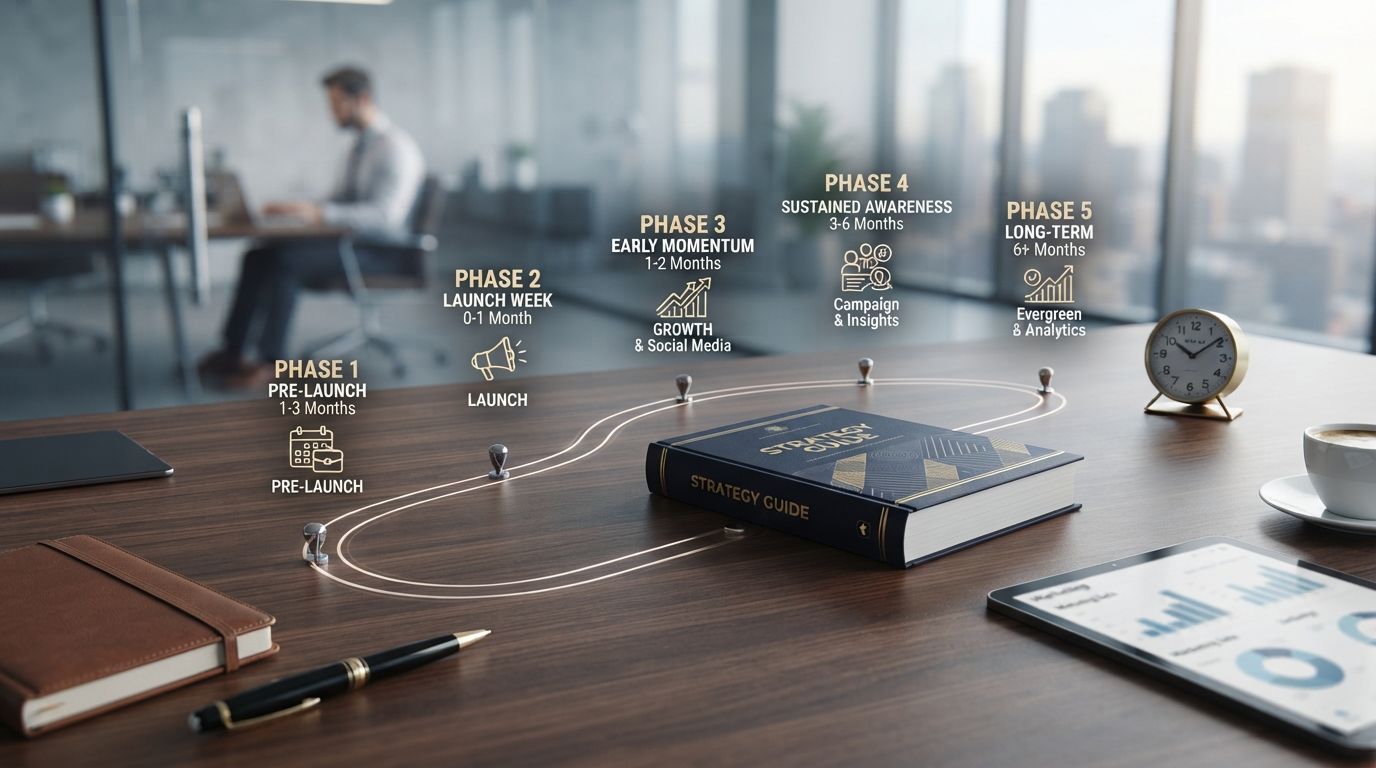
To accurately answer the question, “How Long Should a Book Marketing Campaign Last?”, we must first examine the four distinct phases of a book’s lifecycle. A truly effective campaign is divided into pre-launch, launch week, post-launch, and evergreen phases. Each phase requires different strategies, budgets, and operational focuses.
Phase 1: The Pre-Launch Phase (3 to 6 Months Before Release)
The pre-launch phase is the most critical period for building anticipation, establishing social proof, and priming search engine algorithms. Skipping or rushing this phase is the primary reason many book launches fail to gain traction.
- Months 5–6: Focus on building your author platform. This includes optimizing your website, creating a compelling lead magnet to grow your email newsletter list, and establishing your social media presence.
- Months 3–4: Finalize your book’s metadata (SEO keywords, categories, and description). Begin reaching out to potential endorsers for editorial reviews and design your book cover to ensure it meets market expectations.
- Months 1–2: Set up your pre-order pages on Amazon and other retailers. Recruit a dedicated “launch team” or “street team”—a group of highly engaged readers who receive Advanced Reader Copies (ARCs) in exchange for honest reviews on launch day. Platforms like NetGalley, Booksprout, or Pubby should be utilized during this window to secure early reviews.
Phase 2: The Launch Window (1 to 2 Weeks of High Intensity)
The launch window is characterized by intense, concentrated promotional activity. The primary goal during this phase is to drive a high volume of sales in a short period to trigger retail algorithms (such as the Amazon A9 algorithm), pushing your book onto “Hot New Releases” and bestseller lists.
During these two weeks, you should execute your email marketing campaigns, coordinate social media takeovers, publish guest blog posts, run targeted digital ads (Amazon Ads, Facebook Ads, and BookBub Ads), and conduct virtual or physical book tours. This phase requires daily monitoring of ad performance, conversion rates, and review acquisitions.
Phase 3: The Post-Launch Phase (1 to 3 Months Post-Release)
Once the initial launch buzz subsides, your campaign transitions into the post-launch phase. This period is designed to sustain the momentum generated during launch week and prevent your sales rank from plummeting.
During this phase, which lasts roughly 30 to 90 days post-release, you should focus on securing secondary media coverage, appearing on niche podcasts, running price promotions, and optimizing your ongoing ad campaigns. It is also the perfect time to pitch your book to local libraries, independent bookstores, and book clubs.
Phase 4: The Evergreen & Backlist Phase (Ongoing/Infinite)
Does a book marketing campaign ever truly end? For successful authors, the answer is no. Once a book has been on the market for more than three months, it enters the “backlist” category. Backlist marketing is the secret to long-term passive income in publishing.
Evergreen marketing involves running low-budget, continuous ad campaigns, periodically discounting the book to participate in retail promotions (like Kindle Daily Deals), and cross-promoting the title to new subscribers who join your email list. When you publish subsequent books, your backlist marketing efforts will naturally ramp up, as your new releases will drive read-through sales to your older titles.
Factors That Determine Your Campaign Duration
While a standard blueprint is highly valuable, there is no one-size-fits-all answer to how long your campaign should run. When determining How Long Should a Book Marketing Campaign Last?, you must evaluate several key variables unique to your project.
1. Publishing Model: Self-Published vs. Traditionally Published
Your publishing pathway heavily influences your marketing timeline:
- Traditionally Published: Traditional publishers operate on rigid seasonal catalogs. Their active marketing push is highly concentrated, usually lasting from 30 days pre-launch to 30 days post-launch. After this window, the publisher’s attention shifts to the next season’s titles, leaving the author responsible for sustaining long-term marketing.
- Self-Published (Indie): Indie authors have total control over their timelines. Because they retain a higher royalty share, indie authors often run continuous, multi-year marketing campaigns for a single title, leveraging automated email funnels and ongoing paid advertising to maintain consistent sales.
2. Book Genre and Target Audience
Different genres require different marketing durations. For example, fiction books—especially those in series (such as Fantasy, Romance, or Thrillers)—rely heavily on rapid-release schedules and long-term backlist marketing. The marketing campaign for Book 1 in a series effectively lasts for as long as the series is active.
Conversely, non-fiction books (such as Business, Self-Help, or Memoirs) often enjoy a much longer active marketing lifecycle. A business book can serve as a lead generator for a consulting practice or speaking business for years, justifying an ongoing, multi-year marketing campaign focused on thought leadership and corporate B2B sales.
3. Marketing Budget and Resource Allocation
Your budget dictates how long you can sustain active promotional efforts. A high-budget campaign might compress intense activity into a 90-day window using heavy ad spend, influencer partnerships, and PR agencies. Conversely, a bootstrapped author may choose a slow-burn, organic marketing campaign that relies on content marketing, SEO, and organic social media, spanning 6 to 12 months to achieve the same reach.
4. Author Platform and Existing Audience Size
An author with an established platform of 50,000 email subscribers can execute a shorter, highly effective campaign. Their audience provides immediate social proof and sales volume, allowing the campaign to transition quickly into the evergreen phase. A debut author with no existing audience must plan for a significantly longer pre-launch and post-launch phase to build trust and visibility from scratch.
Strategic Timeline Comparison: Campaign Durations
To help you visualize the structure of your campaign, the table below compares three common marketing timelines based on budget, goals, and book types.
The Sprint (Short-Term)
The Standard (Medium-Term)
The Marathon (Long-Term)
| Campaign Type | Total Duration | Primary Strategic Focus | Ideal For |
|---|---|---|---|
| 30 to 45 Days | High-impact launch week, rapid bestseller status, concentrated ad spend. | Celebrity memoirs, highly topical non-fiction, established authors with massive pre-existing mailing lists. | |
| 90 to 120 Days | Balanced pre-launch building, launch week push, sustained 60-day post-launch ads and PR. | Debut novelists, mainstream fiction, business books aiming for industry authority, and mid-list indie authors. | |
| 6 Months to Ongoing | Continuous lead generation, series read-through optimization, evergreen ads, and community building. | Indie series authors, academic texts, B2B non-fiction authors, and self-help authors offering coaching/courses. |
Why “One and Done” Launch Strategies Fail
To truly understand How Long Should a Book Marketing Campaign Last?, one must examine why short-term, “one-and-done” launches fail. Many authors spend years writing a book, only to market it for two weeks around the release date before stopping entirely. This approach is highly inefficient for several reasons.
The Decay of the Amazon Algorithm
Online retailers like Amazon rely on predictive algorithms to recommend books to buyers. These algorithms look for patterns of consistent sales and customer reviews. A sudden spike in sales on launch day followed by complete silence signals to the algorithm that the book is no longer relevant. As a result, the book loses its algorithmic visibility (“Also Bought” sections, search rankings, and automated recommendation emails), causing sales to flatline.
Reader Decision Cycles and Touchpoints
In marketing, the “Rule of 7” states that a prospect needs to encounter a brand or product at least seven times before making a purchase decision. This rule applies directly to books. A reader rarely buys a book the first time they see it on social media. They may need to see a tweet, read a newsletter recommendation, see an Instagram post, spot an Amazon ad, and read a blog review before finally clicking “Buy Now.” A short campaign does not allow enough time to complete these crucial consumer touchpoints.
Building Long-Term Author Brand Equity
A book is not just a single product; it is an asset within your broader brand portfolio. Short-term marketing campaigns treat the book as a perishable commodity. A prolonged, strategic campaign builds brand equity, establishes your authority in your niche, and creates a highly engaged community of readers who will eagerly purchase your future releases.
Key Takeaways for Designing Your Marketing Timeline
To ensure your book marketing campaign is structured for maximum impact and sustainability, keep the following core principles in mind:
- Start Early: Never begin marketing on launch day. Initiate your pre-launch sequence at least 3 to 6 months before your publication date.
- Sustain the Momentum: Plan for a post-launch campaign of at least 30 to 90 days to help retail algorithms categorize and promote your book organically.
- Focus on List Building: Use your marketing campaign to drive readers to your email list. Your email list is the single most valuable marketing asset you own.
- Optimize for Read-Through: If you write fiction series, focus your ongoing marketing budget on Book 1. The natural “read-through” will drive organic sales to subsequent books without additional ad spend.
- Transition to Evergreen: Once active promotions end, set up low-maintenance, automated evergreen ad campaigns to maintain a baseline of visibility and sales.
How to Pivot and Extend Your Campaign
If your initial launch did not yield the results you hoped for, you do not need to abandon the book. Because digital bookshelves are infinite, you can pivot and extend your book marketing campaign at any time. This process is often called a “re-launch.”
Leveraging Price Promotions and Box Sets
One of the most effective ways to breathe new life into a stagnant campaign is through strategic price promotions. Dropping your eBook price to $0.99 or free for a limited time allows you to apply for high-volume promotional newsletters like BookBub, Robin Reads, or Freebooksy. These promotions expose your book to hundreds of thousands of active readers, generating a massive influx of downloads, reviews, and read-through sales for your other titles.
Securing Ongoing Reviews and Media Coverage
Reviews are the lifeblood of long-term book sales. If your review count is low, extend your campaign by focusing heavily on review acquisition. Reach out to book bloggers, Bookstagrammers, and BookTubers in your genre. Offer them a free copy of your book in exchange for an honest review. Additionally, search for podcasters who cover topics related to your book and pitch yourself as an expert guest.
Repurposing Content for Social Media and Newsletters
Do not let your book’s content sit idle. Extract compelling quotes, actionable tips, or dramatic excerpts from your book and repurpose them into visual assets for platforms like Pinterest, Instagram, and TikTok (BookTok). Write blog posts that expand on your book’s themes and link back to your sales page. By continuously sharing valuable, book-adjacent content, you keep your title in front of potential readers without sounding overly promotional.
Frequently Asked Questions
How long should a book marketing campaign last for a self-published author?
For a self-published author, a book marketing campaign should ideally last indefinitely. While the high-intensity launch phase lasts about 90 days (comprising pre-launch and immediate post-launch), the book should then transition into an evergreen marketing phase. This involves automated email funnels, steady low-budget advertising, and periodic price promotions to ensure consistent, passive sales over the long term.
Is a 30-day marketing campaign long enough?
A 30-day campaign is usually too short to give a book its best chance of success, especially for debut and self-published authors. In most cases, 30 days only covers the launch and the immediate period afterward, leaving little or no time for important pre-launch activities like building anticipation, securing advance reviews, distributing ARCs, and generating pre-orders. It also doesn’t provide enough time to create long-term momentum and sustainable visibility for the book. A 30-day campaign is generally best suited to well-established authors who already have a large, highly engaged mailing list and an existing audience ready to support a new release.
When should I start marketing my book before its release?
You should start actively marketing your book at least 3 to 6 months before its official release date. This pre-launch window is crucial for building your email list, setting up retail pre-orders, securing editorial and early reader reviews, and generating buzz among your target audience.
How much budget should I allocate to a long-term marketing campaign?
Your budget should be determined by your publishing goals and potential return on investment. A common rule of thumb is to reinvest 10% to 20% of your book royalties back into ongoing marketing (such as Amazon or Facebook ads). For debut authors, setting aside a fixed launch budget of $1,000 to $3,000 to cover cover design, ARC distribution, and initial ad spend is highly recommended.
Can I market a book that was published years ago?
Yes, absolutely. This is known as backlist marketing or a “cold re-launch.” Because thousands of new readers enter the market every day, your older book is still completely new to them. You can update the cover design, optimize your Amazon metadata, run a price promotion, or bundle the book into a box set to successfully re-introduce it to the market.
Conclusion
Determining How Long Should a Book Marketing Campaign Last? requires a shift in perspective. Instead of viewing a book launch as a fleeting event with a strict expiration date, successful authors and publishers view it as the launch of a permanent intellectual property asset. While the intense, active phase of a campaign typically spans a highly structured 90 to 120 days, the marketing of a book should ultimately be an ongoing, evergreen process.
By investing heavily in the pre-launch phase, sustaining momentum through the post-launch window, and leveraging automated evergreen marketing systems, you can ensure your book continues to find new readers, generate revenue, and build your brand for years to come. Remember, the digital shelves are permanent—your marketing efforts should be designed to match that permanence.
