
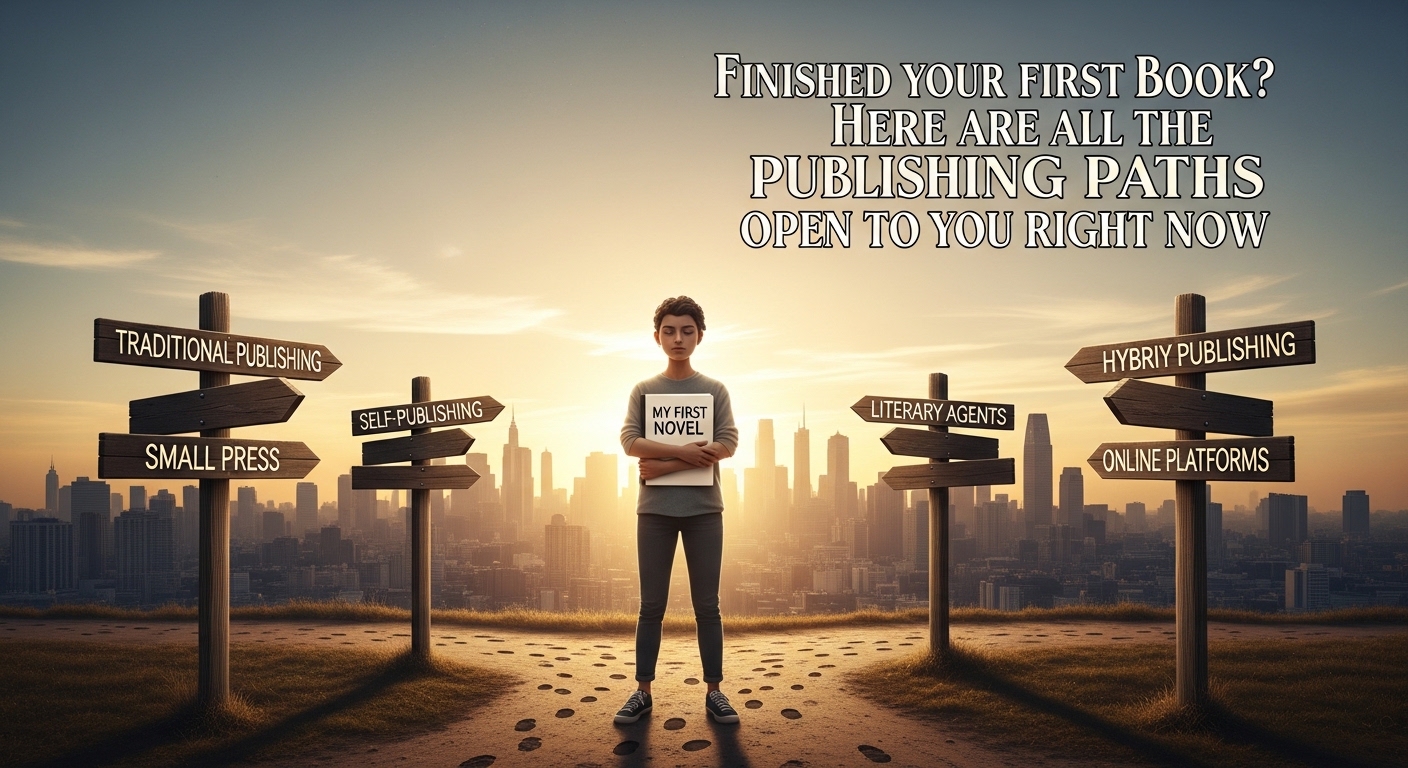
Finishing your first book is a moment that feels both exhilarating and uncertain. After weeks, months, or even years of writing, rewriting, and refining, you finally have a complete manuscript in your hands. But as the excitement settles, a new challenge emerges—figuring out how to bring your book into the world.
Publishing today looks very different from what it did even a decade ago. The once narrow road has expanded into a wide network of possibilities, each offering unique benefits and trade-offs. For first-time authors, this can feel overwhelming. Yet, it is also empowering. You are no longer limited to a single gatekeeper or process. Instead, you have the freedom to choose a path that fits your goals, timeline, and creative vision.
Understanding these publishing options is the key to making a confident decision. Each path represents not just a method of distribution, but a different philosophy about ownership, control, and the role of the author in the publishing process.
The Evolution of Modern Publishing
The publishing industry has undergone a dramatic transformation in recent years. Advances in digital technology, global connectivity, and online marketplaces have disrupted traditional systems and opened doors for independent creators.
In the past, authors had to rely almost entirely on traditional publishing houses to reach readers. Today, writers can publish independently, collaborate with hybrid companies, or explore digital-first models that prioritize speed and accessibility.
This evolution has shifted the balance of power. Authors now have more control than ever before, but they also carry more responsibility. The modern publishing landscape is not just about getting a book printed, it’s about positioning your work in a competitive and rapidly changing market.
Traditional Publishing: Structure, Prestige, and Reach
Traditional publishing remains one of the most established and respected routes for authors. Under this model, a publishing house acquires your manuscript, invests in its production, and manages everything from editing and design to printing and distribution.
For many writers, this path symbolizes success. Being selected by a publisher provides a level of validation that is difficult to replicate elsewhere. It often opens doors to bookstores, literary awards, and media attention, giving your book a broader platform.
However, the journey to traditional publishing is rarely simple. Authors typically need to secure a literary agent, prepare query letters, and navigate a highly competitive submission process. Rejections are common, and even strong manuscripts may take months or years to find the right fit.
Once accepted, the process continues at a measured pace. Editing, design, and marketing plans are carefully developed, which means your book may not be released for a significant period. While this approach ensures quality and professionalism, it requires patience.
Another important aspect to consider is creative control. Traditional publishers often have the final say on cover design, pricing, and certain editorial decisions. While you benefit from expert guidance, you may need to compromise on some elements of your vision.
Financially, authors typically receive an advance against royalties, followed by a percentage of sales. Although the earnings per book may be lower compared to other models, the potential for wide distribution and exposure can make up for it.
Self-Publishing: Independence and Opportunity
Self-publishing has evolved into one of the most dynamic and accessible options for modern authors. It allows you to take full control of your book’s journey, from manuscript to marketplace.
With self-publishing, you are responsible for every aspect of the process. This includes editing, cover design, formatting, pricing, and marketing. While this may seem daunting, it also gives you complete creative freedom. You can present your book exactly as you envision it, without external constraints.
One of the biggest advantages of self-publishing is speed. Once your manuscript is ready, you can publish your book within a matter of weeks. This is particularly beneficial for authors who want to capitalize on timely topics or build momentum through multiple releases.
The financial model is another major draw. Self-published authors often earn significantly higher royalties per sale, allowing them to retain a larger share of their book’s revenue. Over time, this can lead to substantial income, especially for authors who actively market their work and build a loyal readership.
However, self-publishing is not without its challenges. Success requires more than just writing a good book. It demands marketing skills, strategic thinking, and a willingness to invest in professional services. Without proper editing or design, even a strong manuscript can struggle to gain traction.
For authors who are willing to embrace both the creative and business sides of publishing, self-publishing offers unmatched flexibility and potential.
Hybrid Publishing: Bridging Two Worlds
Hybrid publishing has gained popularity as a middle-ground solution for authors who want professional support without giving up complete control.
In this model, authors typically contribute financially to the publishing process, while the company provides services such as editing, design, and distribution. Unlike traditional publishing, you retain a greater share of royalties and often have more influence over creative decisions.
Hybrid publishing is designed to combine the strengths of traditional and self-publishing. It offers the expertise and structure of a professional team while allowing authors to remain actively involved in the process.
This approach can be particularly appealing for first-time authors who want guidance but also value independence. It reduces the burden of managing every detail while still providing a sense of ownership.
However, the hybrid space requires careful evaluation. Not all companies operate with the same level of transparency or quality. It is important to research thoroughly, review contracts, and ensure that the services offered justify the cost.
When approached thoughtfully, hybrid publishing can deliver high-quality results and a balanced publishing experience.
Assisted Self-Publishing: Professional Help on Your Terms
Assisted self-publishing offers another flexible option for authors who want to remain independent while benefiting from professional expertise.
In this approach, you act as the publisher but hire freelancers or agencies to handle specific tasks such as editing, cover design, or marketing. This allows you to build a customized publishing team based on your needs and budget.
The advantage of assisted self-publishing lies in its adaptability. You can choose where to invest your resources and maintain full control over your book. This ensures that your vision remains intact while still achieving a professional standard.
It also provides a learning opportunity. By working closely with industry professionals, you gain insights into the publishing process, which can be valuable for future projects.
This model works well for authors who want independence but recognize the importance of collaboration. It strikes a balance between doing everything yourself and relying entirely on a publishing company.
Small Press and Independent Publishers
Small presses and independent publishers offer an alternative to large traditional publishing houses. These organizations often focus on specific genres, themes, or communities, allowing them to provide more personalized attention to authors.
Working with a small press can be a collaborative and rewarding experience. Editors and publishers are often deeply involved in the creative process, helping to shape your book while respecting your voice.
These publishers may also be more open to experimental or niche works that larger companies might overlook. For debut authors, this can be an opportunity to find a supportive environment that values originality.
However, smaller presses may have limited resources for marketing and distribution. While they can offer a strong editorial foundation, authors may still need to take an active role in promoting their work.
This path is ideal for writers who value creative partnership and are willing to contribute to the book’s success beyond publication.
Digital-First and Emerging Publishing Models
The rise of digital platforms has introduced new publishing models that prioritize accessibility and speed. Digital-first publishing focuses on eBooks, audiobooks, and online distribution, allowing authors to reach global audiences with minimal barriers.
These models are particularly effective for genre fiction, serialized storytelling, and niche markets. Authors can experiment with pricing, release schedules, and promotional strategies, adapting quickly to reader preferences.
Digital publishing also enables direct engagement with readers. Through social media, newsletters, and online communities, authors can build relationships that drive long-term success.
This shift reflects a broader trend in the publishing industry, where adaptability and innovation are becoming essential. Authors who embrace digital tools and strategies can create new opportunities for growth and visibility.
The Role of Marketing in Every Path
Regardless of the publishing route you choose, one factor remains constant, marketing matters.
In the past, authors could rely heavily on publishers to promote their books. Today, even traditionally published authors are expected to participate actively in marketing efforts. Building an online presence, engaging with readers, and promoting your work are essential components of success.
Marketing is not just about selling books. It’s about telling your story, connecting with your audience, and creating a lasting impression. Authors who understand this are better positioned to thrive, regardless of their chosen path.
Choosing the Path That Fits Your Vision
Selecting the right publishing path is a deeply personal decision. It depends on your goals, resources, and long-term aspirations as a writer.
If you dream of seeing your book in major bookstores and value industry recognition, traditional publishing may be the right choice.
If you prioritize control, speed, and higher earnings, self-publishing could align better with your goals.
If you want a combination of support and independence, hybrid or assisted self-publishing may offer the best solution.
There is no single “correct” path. Each option has its strengths and challenges, and success can be achieved through any of them with the right strategy and commitment.
A New Chapter Begins
Completing your first book is not the end of your journey—it’s the beginning of a new chapter. The decisions you make now will shape how your work is shared with the world and how you grow as an author.
The beauty of today’s publishing landscape is its diversity. You are not confined to a single route or definition of success. Instead, you have the freedom to explore, experiment, and evolve.
Take the time to understand your options. Reflect on your goals. Consider what matters most to you as a writer. Whether you choose a traditional path, an independent route, or something in between, the most important thing is that your story reaches the readers who need it.
Your book is ready. Now it’s time to decide how the world will discover it.
