
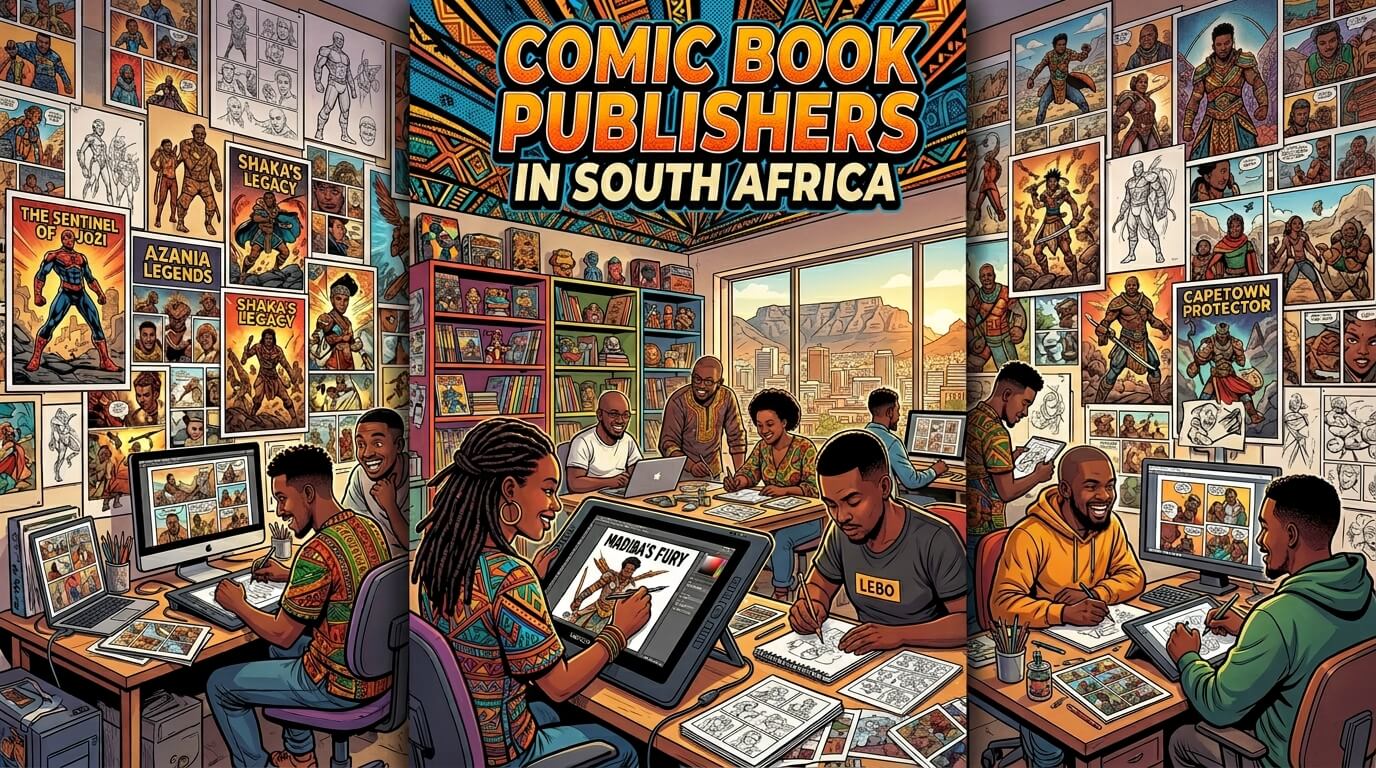
The comic book industry has long been dominated by major publishers from North America, Europe, and parts of Asia. Characters from large publishing houses have become global cultural icons, appearing in films, television series, video games, and merchandise enjoyed by millions. Yet beyond these established markets, many countries have been quietly developing their own vibrant comic book scenes. South Africa stands among the most exciting examples of this growth.
Over the last two decades, South African comic creators, illustrators, writers, and independent publishers have built a unique creative ecosystem that reflects the country’s diverse cultures, languages, histories, and contemporary experiences. Rather than simply imitating Western superhero traditions, many South African comic publishers have focused on telling stories rooted in African realities while embracing genres such as fantasy, science fiction, horror, historical fiction, adventure, and social commentary.
The rise of digital publishing, comic conventions, crowdfunding platforms, and independent creative communities has provided South African publishers with new opportunities to reach readers both locally and internationally. As interest in African storytelling continues to grow worldwide, South African comic publishers are increasingly gaining recognition for their originality, artistic quality, and cultural significance.
This article explores the landscape of comic book publishing in South Africa, highlighting major publishers, emerging trends, industry challenges, and the future of African comics.
Understanding South Africa’s Comic Book Industry
South Africa’s comic book industry differs significantly from larger publishing markets. Instead of being dominated by a few massive corporations, the industry consists primarily of independent publishers, small creative studios, self-publishing creators, and collaborative artistic communities.
This structure has both advantages and limitations. On one hand, creators often enjoy greater creative freedom and can experiment with storytelling styles that might not fit mainstream publishing models. On the other hand, limited funding, smaller readership markets, and distribution challenges can make growth difficult.
Despite these obstacles, South African comic publishers have established a strong reputation for innovation. Their publications frequently explore African mythology, social issues, local history, urban culture, futuristic African societies, and indigenous folklore. These themes allow South African comics to stand apart from many international titles while offering readers fresh perspectives.
The country’s growing creative industries, increasing internet access, and expanding convention culture have further contributed to the industry’s development.
Major Comic Book Publishers in South Africa
Dark Pygmy Publishing
Dark Pygmy Publishing is widely recognized as one of South Africa’s most influential independent comic publishers. Founded with a commitment to showcasing African stories and talent, the company has played an important role in expanding awareness of local comics.
The publisher focuses on original intellectual properties that highlight African narratives while maintaining high production standards. Through its publications, Dark Pygmy has demonstrated that African creators can produce world-class comics capable of competing in international markets.
The company has helped nurture local talent and has become a respected name among comic enthusiasts throughout the region. Its efforts have contributed significantly to strengthening South Africa’s comic publishing ecosystem.
Loyiso Mkize Studio
Although not a traditional publishing house in the conventional sense, the work of creator Loyiso Mkize has become one of the most influential forces within South African comics.
His groundbreaking comic series Kwezi introduced readers to a uniquely African superhero whose story reflects contemporary South African society. The success of the title demonstrated that local audiences were eager to support homegrown superheroes and culturally relevant narratives.
The impact of Kwezi extends beyond sales figures. It helped inspire a new generation of African comic creators while proving that African superheroes could resonate with readers both locally and internationally.
Kugali
Kugali has become one of Africa’s most recognized comic and entertainment brands. While its reach extends beyond South Africa into a broader pan-African network, the platform has played a major role in promoting African comic creators and publishers.
Kugali focuses on showcasing African fantasy, science fiction, and superhero stories while creating opportunities for creators across the continent. Its success has helped increase global awareness of African comic storytelling.
The company’s international collaborations and growing reputation have demonstrated the global potential of African comics and graphic novels.
Mzansi Comics
Mzansi Comics represents another important contributor to South Africa’s comic book landscape. The publisher focuses on stories that resonate with local audiences while incorporating African cultural themes and contemporary social realities.
Its publications often combine action, adventure, and fantasy elements with uniquely South African settings. This approach has helped cultivate a loyal readership interested in stories that reflect their own experiences and environments.
By prioritizing local voices and narratives, Mzansi Comics contributes to the continued growth of South Africa’s creative industries.
Independent Creator Collectives
A significant portion of South Africa’s comic publishing activity comes from independent creator collectives rather than traditional publishing companies.
These groups frequently collaborate on anthologies, webcomics, graphic novels, and convention-exclusive publications. Their flexibility allows them to experiment with different storytelling formats while supporting emerging artists and writers.
Independent collectives have become vital for developing new talent and ensuring a steady stream of fresh voices within the industry.
The Rise of African Superheroes
One of the most notable developments within South African comics has been the emergence of African superheroes.
For decades, superhero comics were largely associated with American publishing giants. While these characters remain popular in South Africa, local creators increasingly sought to develop heroes who reflected African identities, cultures, and experiences.
African superheroes often address issues unique to their communities while drawing inspiration from indigenous traditions, folklore, and contemporary realities. Their stories frequently explore themes of identity, social justice, cultural pride, and community responsibility.
The popularity of these characters demonstrates a growing demand for representation within global entertainment. Readers increasingly want stories that reflect their own backgrounds and perspectives rather than relying solely on imported narratives.
South African publishers have responded to this demand by creating characters who feel authentic, relevant, and distinctly African.
How South African Culture Shapes Comic Publishing
South Africa’s remarkable cultural diversity serves as one of the industry’s greatest strengths.
The country is home to numerous ethnic groups, languages, traditions, and historical experiences. This diversity provides creators with an enormous range of storytelling possibilities.
Comic book publishers often draw inspiration from:
Indigenous Mythology and Folklore
African mythology remains a rich source of material for comic creators. Ancient legends, spiritual traditions, mythical creatures, and heroic figures provide compelling foundations for fantasy and adventure stories.
By incorporating these elements into modern narratives, publishers create stories that feel both timeless and contemporary.
Historical Narratives
South Africa’s complex history offers countless opportunities for storytelling. Historical comics can educate readers while exploring important events, social movements, and cultural transformations.
These works often blend factual research with compelling visual storytelling, making history accessible to broader audiences.
Contemporary Urban Life
Many South African comics focus on modern city life, reflecting the realities of contemporary society. Themes such as technology, economic challenges, youth culture, and social change frequently appear in these narratives.
This focus helps readers connect with stories that mirror their everyday experiences.
Challenges Facing Comic Book Publishers in South Africa
Despite impressive growth, South African comic publishers continue to face significant challenges.
Limited Distribution Networks
Distribution remains one of the industry’s largest obstacles. Unlike major international publishers that benefit from extensive retail partnerships, many South African publishers struggle to place their books in bookstores and retail outlets.
This limitation can make it difficult for readers to discover local comics.
Funding and Investment Constraints
Publishing comics requires substantial investment. Writers, artists, editors, designers, printers, and marketers all contribute to production costs.
Many independent publishers operate with limited financial resources, making long-term growth difficult.
Competition from International Brands
South African publishers compete against globally recognized comic franchises with enormous marketing budgets and established fan bases.
While local publishers offer unique content, attracting reader attention in such a competitive environment remains challenging.
Smaller Reader Base
The comic-reading audience in South Africa continues to grow but remains relatively small compared to markets such as the United States or Japan.
Publishers often need to balance artistic ambition with commercial sustainability.
Digital Publishing and New Opportunities
Digital technology has transformed the South African comic industry.
Online platforms allow publishers to distribute content directly to readers without relying exclusively on physical retail channels. This approach reduces production costs while expanding potential audiences.
Digital publishing also enables creators to reach international readers interested in African stories.
Social media platforms have become valuable marketing tools. Publishers can showcase artwork, build fan communities, announce new releases, and engage directly with readers.
Crowdfunding platforms have further expanded opportunities by allowing creators to secure financial support before publication. This model helps reduce financial risks while validating audience interest.
Comic Conventions and Community Growth
Comic conventions have played a crucial role in developing South Africa’s comic industry.
Events across major cities provide opportunities for creators, publishers, and readers to connect in person. These gatherings foster collaboration, encourage networking, and expose audiences to local talent.
Conventions also create valuable sales opportunities for independent publishers that may have limited access to traditional retail channels.
The growing popularity of comic conventions reflects increasing public interest in comics, graphic novels, animation, gaming, and pop culture.
As these events continue expanding, they contribute to the overall strength and visibility of South Africa’s creative industries.
Educational and Cultural Impact of Comics
South African comic publishers are increasingly being recognized for their educational value.
Comics combine visual and textual storytelling, making complex subjects more accessible and engaging. Educational institutions have begun exploring comics as tools for literacy development, cultural education, and historical learning.
Many South African comics address social issues such as inequality, environmental concerns, identity, and community development. Through storytelling, publishers encourage meaningful discussions while entertaining readers.
This educational dimension strengthens the cultural importance of comic publishing within South Africa.
International Recognition of South African Comics
The global entertainment industry is showing growing interest in African stories.
International publishers, film studios, streaming platforms, and gaming companies increasingly recognize the creative potential of African intellectual property. South African comic creators have benefited from this shift, gaining opportunities to showcase their work on larger stages.
Readers around the world are seeking fresh narratives that move beyond familiar settings and perspectives. South African comics provide exactly this kind of originality.
As global demand for diverse storytelling continues to expand, South African publishers are well positioned to reach broader audiences.
The Future of Comic Book Publishing in South Africa
The future of South African comic publishing appears increasingly promising.
Several factors support continued growth. Improved digital distribution, expanding convention culture, increasing international interest in African content, and the emergence of talented new creators all contribute to a positive outlook.
Younger generations are embracing comics as both entertainment and cultural expression. Educational institutions are beginning to recognize the medium’s value, while technology makes publishing more accessible than ever before.
Publishers are also becoming more sophisticated in areas such as branding, marketing, crowdfunding, and intellectual property development. This professionalization helps strengthen the industry’s long-term sustainability.
Perhaps most importantly, South African creators continue producing stories that are uniquely their own. Rather than following established formulas, they draw upon local cultures, histories, myths, and experiences to create narratives that stand out in the global marketplace.
Key Comic Publishing Organizations and Studios in South Africa
| Publisher/Studio | Focus Area | Contribution to Industry |
| Dark Pygmy Publishing | African comics and graphic novels | Promotes local creators and original African stories |
| Loyiso Mkize Studio | Superhero comics | Created influential African superhero narratives |
| Kugali | Pan-African comics and entertainment | Supports African creators and international exposure |
| Mzansi Comics | Local storytelling and fantasy | Develops South African-focused narratives |
| Independent Creator Collectives | Anthologies and experimental comics | Supports emerging talent and creative innovation |
| Digital Comic Platforms | Online publishing | Expands audience reach and accessibility |
| Convention-Based Publishers | Event-exclusive publications | Strengthens community engagement and creator visibility |
Conclusion
Comic book publishing in South Africa represents one of the most exciting developments within the global comics industry. While challenges related to funding, distribution, and market size remain, South African publishers have demonstrated remarkable creativity, resilience, and innovation. By embracing local cultures, African mythology, contemporary social realities, and original storytelling approaches, these publishers have created a distinctive identity that sets them apart from larger international competitors.
As digital technology continues expanding opportunities and global audiences become increasingly interested in diverse voices, South African comic publishers are positioned for significant growth. Their work not only entertains readers but also preserves cultural heritage, promotes representation, and introduces the world to uniquely African perspectives. The future of South African comics is not simply about catching up with established markets—it is about shaping a new chapter in global storytelling where African voices occupy a central and influential place.
FAQs
Q1. Who are some notable comic book publishers in South Africa?
Notable names include Dark Pygmy Publishing, Mzansi Comics, and several independent creator-led studios.
Q2. Are South African comics based on local culture and history?
Yes, many South African comics draw inspiration from African mythology, history, and contemporary society.
Q3. Can South African comic creators publish independently?
Yes, many creators use self-publishing, crowdfunding, and digital platforms to release their work.
Q4. Where can readers buy South African comic books?
They can be found through publisher websites, comic conventions, online stores, and select bookstores.
Q5. Is the South African comic book industry growing?
Yes, the industry is steadily expanding through digital publishing, conventions, and increasing global interest in African stories.
