
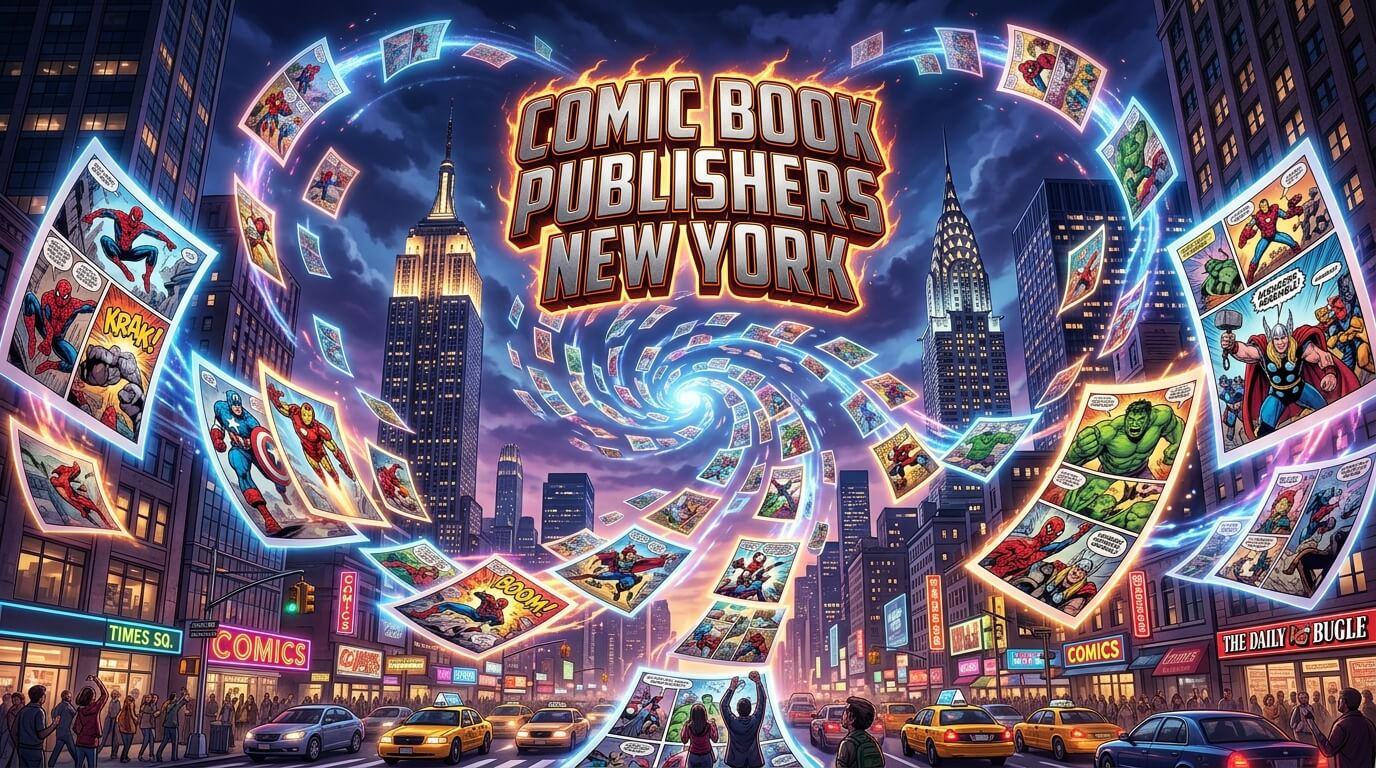
New York City is not just a cultural capital of the United States; it is one of the foundational pillars of global comic book publishing. When people think of superheroes, graphic novels, or illustrated storytelling that has shaped modern pop culture, they are often indirectly thinking of work that was conceptualized, edited, illustrated, or published in New York offices.
What makes New York especially important is not only the presence of major publishers, but the entire ecosystem that supports them. Writers, illustrators, inkers, colorists, editors, marketing teams, printing houses, and distribution networks all converge in this city, forming a tightly woven creative industry. Over time, New York has evolved from a print-dominated publishing hub into a hybrid powerhouse where traditional comics, digital storytelling, and graphic novels all coexist.
Unlike other cities where comic culture is often niche or underground, New York treats comics as both an art form and a major commercial industry. The result is a publishing environment that is highly competitive, deeply creative, and constantly evolving.
The Historical Foundation of Comic Publishing in New York
The story of comic book publishing in New York begins long before superheroes existed. In the early 1900s, the city was already the center of American print media. Newspapers were booming, magazines were widely circulated, and illustrated storytelling was becoming increasingly popular with working-class readers.
Comic strips first appeared in newspapers, but it was in New York that they began transitioning into standalone publications. Publishers realized that serialized illustrated stories could be sold independently, giving rise to the modern comic book format.
By the 1930s, New York had become the undisputed headquarters of comic production in the United States. This period, often referred to as the Golden Age of Comics, saw the emergence of characters and publishing systems that would shape the next century of storytelling.
Two major forces were especially important during this period: what would become Marvel Entertainment and DC Comics. These companies were deeply embedded in Manhattan’s publishing districts, where editors worked in tightly packed offices and creators produced content at a rapid pace to meet growing public demand.
At the time, comic books were sold in newsstands, pharmacies, and subway kiosks. The accessibility of New York’s distribution network helped comics reach mass audiences quickly, making the city the ideal place for the industry to grow.
The Golden Age: When New York Became the Comic Capital
During the late 1930s and 1940s, comic books transformed from simple entertainment into cultural phenomena. Superheroes emerged as symbols of hope during times of economic hardship and global conflict.
New York publishers played a critical role in shaping this transformation. Editorial teams worked under tight deadlines, producing monthly issues that required constant innovation. Writers and illustrators often collaborated in real time, refining characters and story arcs based on reader response.
What made New York unique during this period was its density of talent. Immigrant artists, Jewish-American writers, European illustrators, and local creative professionals all worked in close proximity. This diversity of voices shaped the emotional depth and visual style of early comics.
Companies like Marvel Entertainment and DC Comics became cultural institutions, even before superheroes became global icons.
Expansion and Evolution: The Silver Age and Beyond
As the industry matured in the 1950s and 1960s, New York continued to dominate comic book publishing. This period, known as the Silver Age of Comics, introduced more complex characters, improved storytelling structures, and a growing emphasis on science fiction and moral complexity.
Publishers in New York began to move beyond simple hero-versus-villain narratives. Instead, stories started exploring human psychology, political themes, and ethical dilemmas. This shift reflected broader cultural changes in American society.
Editorial systems also became more structured. Large publishers developed departments dedicated to continuity, ensuring that long-running storylines remained consistent across multiple issues. This was especially important for expanding fictional universes, where multiple writers contributed to interconnected narratives.
During this time, New York also became a training ground for comic professionals. Many artists started as assistants or freelancers before moving into full-time roles. The city’s creative density meant that mentorship and collaboration were constant.
The Modern Comic Publishing Landscape in New York
Today, New York remains one of the most important centers for comic book publishing, but the industry has expanded far beyond superhero narratives. The modern landscape includes corporate publishers, independent studios, and digital-first creators.
Major companies like Marvel Entertainment continue to dominate global superhero storytelling. Their narratives extend into films, streaming series, merchandise, and video games, making comics part of a larger multimedia ecosystem.
Similarly, DC Comics continues to evolve its iconic characters, blending classic storytelling with modern themes such as identity, social justice, and psychological realism.
However, the real transformation in New York’s comic industry comes from its independent sector. Small publishers and creative collectives based in Brooklyn, Queens, and Lower Manhattan are redefining what comics can be. These creators often reject traditional superhero formats in favor of experimental storytelling, memoir-based narratives, and literary graphic novels.
This diversification has allowed New York to remain relevant even as global entertainment trends shift.
Independent Publishers and the Creative Underground
While major publishers dominate visibility, independent comic book publishers in New York form the creative backbone of the industry. These smaller studios often operate with limited budgets but unlimited creative freedom.
Many indie publishers are based in shared studios or co-working spaces, especially in Brooklyn neighborhoods known for their artistic communities. These environments encourage collaboration, where writers and illustrators frequently exchange ideas and work on multiple projects simultaneously.
Independent publishers often focus on personal storytelling, cultural identity, political commentary, and experimental visual formats. Unlike mainstream superhero comics, these works tend to prioritize emotional depth and artistic expression.
A key strength of New York’s independent comic scene is its diversity. Creators from different cultural backgrounds bring unique perspectives, resulting in stories that reflect the complexity of urban life. This has helped comics evolve into a more inclusive and globally relevant medium.
The Rise of Graphic Novels in New York Publishing
Graphic novels have played a transformative role in New York’s comic publishing industry. Once considered niche or alternative, they are now widely recognized as legitimate literary works.
Publishers in New York have embraced this shift by expanding their catalogs beyond serialized comic issues. Graphic novels allow for complete narratives, often addressing historical events, personal memoirs, or socially relevant themes.
This format has attracted writers and artists from outside the traditional comic industry, including journalists, novelists, and fine artists. As a result, New York has become a hub for cross-disciplinary storytelling.
Graphic novels are also widely used in education, libraries, and academic research, further strengthening the cultural legitimacy of comics as a storytelling medium.
Table: Key Comic Book Publishing Ecosystem in New York
| Category | Example Presence | Role in Industry | Impact |
| Major Publishers | Marvel Entertainment | Superhero storytelling and multimedia franchises | Global pop culture influence |
| Major Publishers | DC Comics | Iconic character universes and modern myth-building | Long-form narrative development |
| Independent Studios | Brooklyn & Manhattan collectives | Experimental and literary comics | Creative innovation and diversity |
| Editorial Houses | Manhattan publishing offices | Story development and franchise continuity | Industry structure and quality control |
| Graphic Novel Imprints | Specialized divisions | Standalone illustrated storytelling | Expansion into literary markets |
The Workforce Behind the Industry
The comic book industry in New York depends heavily on a collaborative workforce. Unlike industries where a single author or creator dominates, comics require teams of specialists.
Writers develop scripts, pencillers create layouts, inkers refine artwork, colorists enhance visual depth, and letterers integrate dialogue into panels. Editors oversee this entire process, ensuring consistency and quality.
Freelancing is common in New York’s comic industry. Many professionals work on multiple projects across different publishers, creating a highly fluid labor market. This flexibility allows for artistic experimentation but also demands strong time management and adaptability.
Cultural Influence of New York Comics
Comics published in New York have had a global cultural impact far beyond entertainment. Superhero narratives have become modern mythology, influencing films, television, literature, and even philosophy.
At the same time, New York-based graphic novels often reflect real social issues such as immigration, inequality, identity, and urban life. The city itself frequently appears as a character within these stories, symbolizing both opportunity and struggle.
This dual identity—fantasy and realism—has made New York comics uniquely powerful.
Digital Transformation and the Future of Publishing
The comic book industry in New York is currently undergoing a major digital transformation. Online platforms have made comics more accessible than ever before, allowing creators to publish directly to global audiences.
Digital comics, webcomics, and subscription-based platforms are becoming increasingly popular. This shift has lowered entry barriers for new creators while expanding the reach of established publishers.
However, print comics remain important, particularly for collectors and graphic novel readers who value physical editions. The coexistence of digital and print formats reflects the adaptability of New York’s publishing ecosystem.
Challenges Facing Comic Publishers in New York
Despite its success, the industry faces several challenges. Rising operational costs in New York make it difficult for small publishers to sustain physical offices. Competition from streaming platforms and video games also affects audience engagement.
Additionally, maintaining creative originality in large franchises can be difficult. As comic universes expand, ensuring consistency while allowing innovation becomes increasingly complex.
However, New York’s deep creative infrastructure continues to support resilience. The city’s ability to attract global talent ensures that the industry remains vibrant.
Conclusion: Why New York Will Always Matter in Comics
Comic book publishers in New York are not just part of an industry—they are part of a cultural legacy that has shaped modern storytelling. From early print studios to global entertainment empires like Marvel Entertainment and DC Comics, the city has continuously reinvented how stories are told.
Even as digital platforms and global competitors reshape the industry, New York remains a creative anchor. Its combination of history, talent, diversity, and infrastructure ensures that it will continue to influence comic book publishing for generations to come.
