
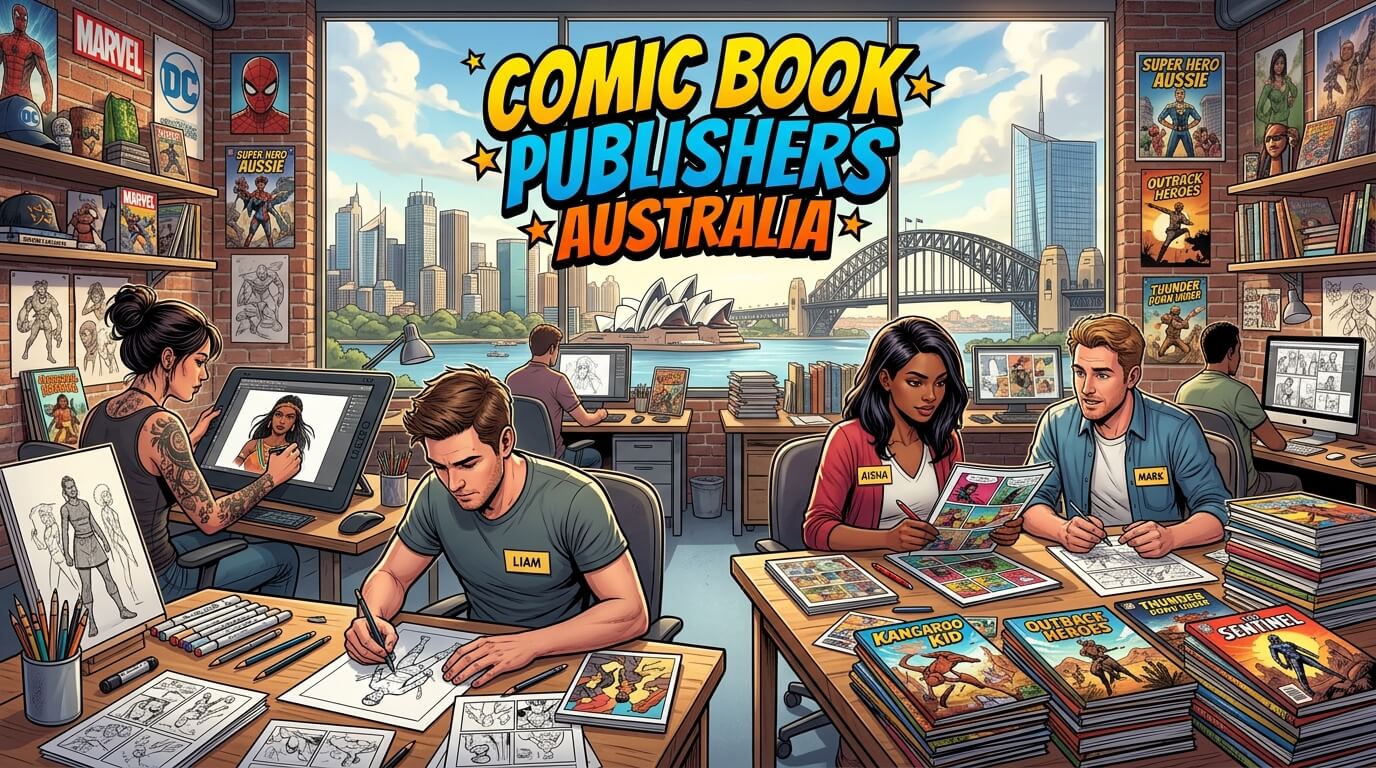
The Australian comic book industry has experienced remarkable growth over the past decade. Once considered a niche corner of the publishing world, comics and graphic novels have become an increasingly important part of Australia’s creative landscape. From independent creators producing small print runs to established publishers releasing nationally distributed titles, the Australian comics scene is more diverse and vibrant than ever before.
For aspiring comic creators, understanding the Australian publishing ecosystem is an essential step toward bringing stories to readers. Whether you are developing a superhero series, a fantasy adventure, a memoir, a historical graphic novel, or a children’s comic, finding the right publisher can significantly influence the success of your project.
Australia’s comic book publishers play a crucial role in nurturing local talent, supporting original storytelling, and creating opportunities for artists and writers to showcase their work. They help creators navigate editing, production, marketing, distribution, and audience engagement while providing a platform for uniquely Australian voices.
This guide explores the Australian comic publishing landscape, the role of comic book publishers, what creators should expect from the submission process, and some of the most influential comic publishers operating in Australia today.
The Growth of Comic Book Publishing in Australia
Comic books have evolved far beyond their traditional association with superheroes and action-packed adventures. Modern Australian comics cover a wide range of genres and themes, including science fiction, horror, romance, history, biography, social commentary, fantasy, and literary fiction.
Several factors have contributed to the growth of the Australian comics market. Digital publishing has made it easier for creators to reach audiences without relying solely on traditional distribution channels. Social media platforms have helped artists build communities around their work and attract publishers’ attention. Graphic novels have also gained greater acceptance in schools, libraries, and bookstores, leading to increased demand from readers of all ages.
Australian creators are now receiving international recognition, with many working for major publishers overseas while continuing to contribute to the local industry. At the same time, Australian publishers have become more willing to invest in original intellectual property and homegrown storytelling.
Why Comic Book Publishers Matter
Publishing a comic book involves much more than printing pages and selling copies. Publishers provide professional support that helps creators transform ideas into marketable products.
A publisher often assists with editorial development, helping refine storytelling, pacing, dialogue, character development, and visual presentation. They may coordinate artists, colorists, letterers, and designers to ensure a professional final product.
Publishers also handle production logistics, including printing specifications, distribution agreements, marketing campaigns, and retailer relationships. This support allows creators to focus more on the creative aspects of their work while benefiting from industry expertise.
For readers, publishers serve as quality gatekeepers. Their editorial processes help ensure consistency, professionalism, and engaging storytelling across the titles they release.
Understanding the Australian Comic Publishing Landscape
The Australian comic publishing industry includes a mix of independent publishers, boutique presses, graphic novel specialists, and larger publishing houses with dedicated comic or graphic novel divisions.
Independent publishers often focus on creator-owned projects and experimental storytelling. They may work closely with a small number of creators and prioritize artistic innovation.
Larger publishers generally have broader distribution networks and greater marketing resources. They often seek projects with strong commercial potential while maintaining editorial standards designed to appeal to mainstream audiences.
Some publishers specialize exclusively in comics and graphic novels, while others publish comics alongside traditional books, children’s literature, educational materials, and illustrated works.
This variety provides creators with multiple publishing pathways depending on their goals, artistic style, and target audience.
Key Comic Book Publishers in Australia
The following table highlights several notable publishers that have contributed to Australia’s comic and graphic novel industry.
| Publisher | Focus Area | Known For |
| Gestalt Comics | Graphic novels and comics | Original Australian stories and international collaborations |
| Black House Comics | Independent comics | Creator-owned projects and genre fiction |
| Comicoz | Australian comic promotion | Supporting local creators and publications |
| IF? Commix | Independent comics | Alternative and experimental storytelling |
| FEC Comics | Australian comic publishing | Local comic book production |
| Allen & Unwin Graphic Division | Graphic novels | Publishing graphic novels for wider audiences |
| Hardie Grant Children’s Publishing | Children’s graphic novels | Youth-focused illustrated storytelling |
| Scholastic Australia | Children’s comics and graphic novels | Educational and commercial graphic titles |
These publishers represent different segments of the Australian comics ecosystem and demonstrate the diversity available to creators seeking publication opportunities.
Gestalt Comics and Its Influence on Australian Comics
Among Australia’s most recognized comic publishers, Gestalt Comics has established itself as a major force in graphic novel publishing. The company has built a reputation for producing high-quality books that combine strong storytelling with professional artwork.
Gestalt has published works across numerous genres, including science fiction, fantasy, action, and historical fiction. The publisher has also collaborated with creators from Australia and abroad, helping local comics gain international visibility.
One of the company’s strengths lies in its commitment to developing original intellectual property. Rather than focusing exclusively on licensed content, Gestalt encourages creators to bring fresh ideas and unique perspectives to the market.
This approach has contributed significantly to the growth and maturity of Australian comic publishing.
Independent Publishers and Creator-Owned Projects
Independent publishers play a critical role within Australia’s comic industry. These companies often serve as launching pads for emerging creators who may struggle to secure opportunities through larger publishing houses.
Many independent publishers prioritize creator ownership, allowing writers and artists to retain greater control over their intellectual property. This model has become increasingly attractive in a media environment where successful comics may eventually expand into films, television adaptations, games, or merchandise.
Independent publishers are frequently more willing to experiment with unconventional storytelling formats and niche genres. As a result, they contribute significantly to the artistic diversity of Australia’s comic landscape.
For many creators, independent publishing provides a valuable opportunity to build experience, develop audiences, and establish professional portfolios.
The Rise of Graphic Novels in Australia
Graphic novels have become one of the fastest-growing categories within Australian publishing. Unlike traditional serialized comics, graphic novels often present complete narratives in a single volume, making them particularly appealing to bookstores, libraries, schools, and general readers.
Australian graphic novels explore a broad range of topics and frequently address themes that resonate with local audiences. Indigenous storytelling, immigration experiences, environmental issues, historical events, and contemporary social challenges have all found expression within the graphic novel format.
Publishers increasingly recognize graphic novels as legitimate literary works capable of reaching readers who might not otherwise engage with traditional comics.
This growing acceptance has created new opportunities for creators seeking publication.
Children’s Comics and Young Adult Graphic Novels
The children’s and young adult sectors have become especially important within Australian comic publishing. Publishers are responding to increased demand from educators, parents, and librarians who recognize the educational value of visual storytelling.
Graphic novels can encourage reluctant readers, support literacy development, and foster a love of reading among young audiences. As a result, many Australian publishers actively seek projects aimed at middle-grade and young adult readers.
Stories featuring relatable characters, diverse perspectives, and age-appropriate themes continue to perform particularly well in this segment of the market.
For creators interested in children’s publishing, comics and graphic novels offer significant commercial and creative opportunities.
What Australian Comic Publishers Look For
Publishers evaluate submissions based on several important criteria. While specific requirements vary between companies, certain qualities consistently attract editorial attention.
Strong storytelling remains the most important factor. Publishers want narratives that engage readers emotionally while maintaining clear structure and compelling pacing.
Visual quality is equally critical. Professional artwork, effective page layouts, strong character designs, and readable lettering all contribute to a project’s appeal.
Originality also matters. Publishers receive numerous submissions and often look for concepts that stand out from existing titles in the market.
Market potential is another consideration. Editors assess whether a project has a clearly defined audience and whether it fits within current publishing trends while offering something distinctive.
Projects that successfully balance creativity and commercial viability generally have the strongest chances of publication.
Preparing a Comic Book Submission
Submitting a comic project requires careful preparation. Most publishers request specific materials designed to help them evaluate the work efficiently.
A typical submission package includes a synopsis outlining the story’s premise and major plot developments. Creators are usually expected to provide sample pages demonstrating both writing and artwork.
Character descriptions may also be required, especially for longer series. These descriptions help publishers understand character motivations, relationships, and development arcs.
Professional presentation is essential. Clear formatting, polished artwork, and concise communication demonstrate seriousness and professionalism.
Before submitting, creators should carefully review each publisher’s guidelines to ensure compliance with specific requirements.
The Role of Digital Publishing in Australian Comics
Digital publishing has transformed the comic industry worldwide, and Australia is no exception. Online platforms have reduced barriers to entry while expanding opportunities for creators and publishers alike.
Digital comics allow publishers to reach readers beyond Australia’s geographic boundaries. International audiences can access Australian content instantly, increasing visibility and sales potential.
For independent creators, digital publishing offers a way to test concepts, build audiences, and demonstrate market demand before pursuing traditional publishing agreements.
Many Australian publishers now incorporate both print and digital strategies, recognizing that readers increasingly consume content across multiple formats.
The combination of digital accessibility and traditional publishing expertise continues to shape the future of Australian comics.
Comic Conventions and Industry Networking
Comic conventions play an important role in Australia’s publishing ecosystem. Events held across major cities provide opportunities for creators, publishers, retailers, and readers to connect.
These gatherings often serve as networking hubs where creators can showcase portfolios, meet editors, and learn about industry trends. Publishers frequently attend conventions to discover new talent and promote upcoming releases.
Networking remains one of the most valuable tools available to aspiring comic creators. Building professional relationships can open doors to collaborations, mentorships, and publishing opportunities.
Many successful Australian comic creators developed industry connections through convention participation before securing publishing deals.
Challenges Facing Australian Comic Publishers
Despite its growth, the Australian comic industry faces several challenges. The domestic market is relatively small compared to larger markets such as the United States and Japan.
Distribution can also be difficult due to Australia’s geographic size and population distribution. Publishers must carefully manage printing costs, shipping expenses, and retailer relationships to maintain profitability.
Competition from international publishers presents another challenge. Readers have access to an enormous range of imported comics, making it essential for Australian publishers to differentiate themselves through unique content and strong branding.
Nevertheless, many publishers continue to thrive by focusing on high-quality storytelling, niche audiences, and innovative publishing models.
Opportunities for Emerging Creators
The current publishing environment offers numerous opportunities for new comic creators. Crowdfunding platforms have enabled artists and writers to finance projects independently while demonstrating audience interest.
Social media allows creators to share artwork, build followings, and connect directly with readers. Publishers increasingly monitor online communities when searching for promising talent.
Collaborative projects are also becoming more common. Writers, artists, colorists, and letterers frequently work together remotely, expanding creative possibilities regardless of geographic location.
For aspiring creators willing to develop their skills and engage with the community, the Australian comic industry provides multiple pathways to publication and professional growth.
The Future of Comic Book Publishing in Australia
The future of Australian comic publishing appears promising. Growing recognition of graphic storytelling, increased educational adoption of graphic novels, and expanding digital distribution channels continue to create new opportunities.
Publishers are becoming more open to diverse voices and unconventional narratives, reflecting broader cultural shifts within the publishing industry. Readers increasingly seek stories that offer fresh perspectives and authentic experiences.
Technological advances are likely to further transform production, distribution, and audience engagement. At the same time, the fundamental appeal of compelling stories and memorable artwork remains unchanged.
Australian comic publishers are well positioned to continue fostering creative talent while introducing readers to innovative and meaningful stories.
Conclusion
Comic book publishing in Australia has evolved into a dynamic and rapidly growing sector that supports a wide variety of creators, genres, and audiences. From established publishers like Gestalt Comics to independent presses championing creator-owned work, the industry offers numerous opportunities for writers and artists seeking publication.
As graphic novels and comics gain broader acceptance among readers, educators, and booksellers, Australian publishers continue to expand their influence both domestically and internationally. Their commitment to original storytelling, artistic excellence, and creative innovation ensures that the Australian comics scene remains vibrant and forward-looking.
For aspiring creators, understanding the publishing landscape is the first step toward success. By developing strong stories, producing professional-quality work, and identifying publishers whose goals align with their own, creators can find meaningful opportunities within Australia’s thriving comic book industry.
