
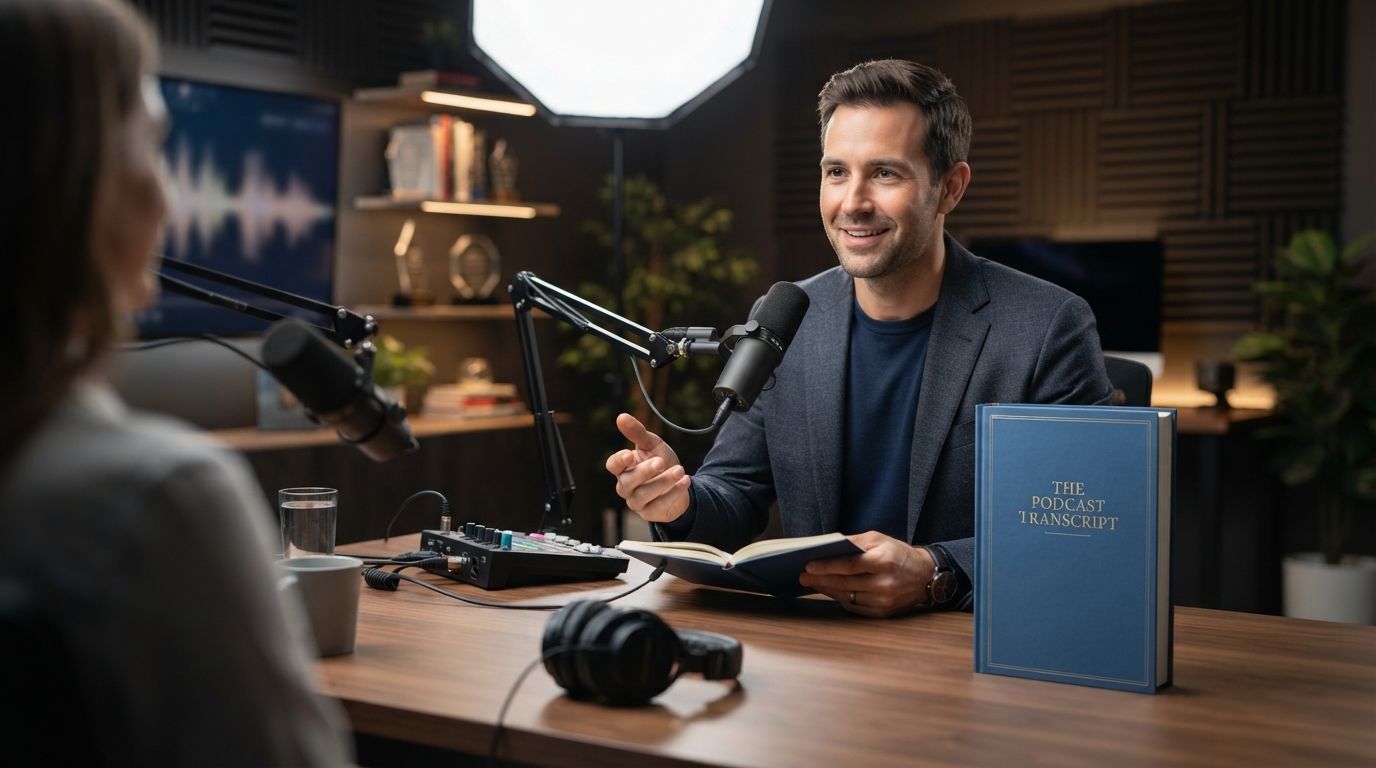
Introduction
The creator economy is experiencing an unprecedented boom. With over 4 million active podcasts globally and millions of listeners tuning in daily, audio content has become one of the most powerful mediums for building an audience, sharing expertise, and establishing authority. However, audio content is inherently ephemeral. Once an episode ends, your insights can easily get lost in the digital noise. This reality has led many forward-thinking creators to ask a crucial strategic question: Can I Turn My Podcast Into a Book?
The short answer is a resounding yes. In fact, repurposing your podcast into a professionally published book is one of the most effective ways to compound your intellectual property, reach entirely new demographics, and build a highly profitable backend for your business. From business leaders and industry experts to narrative storytellers, creators are realizing that the thousands of hours they have spent behind the microphone represent a goldmine of pre-validated written content.
This comprehensive guide will walk you through the entire process of transforming your audio catalog into a high-quality, authoritative book. We will explore the strategic advantages of this conversion, provide a step-by-step framework for execution, address critical legal considerations, and detail how to leverage your existing podcast audience to launch a bestseller.
Why Repurpose Your Podcast Into a Book?
Before diving into the technical execution, it is vital to understand the strategic “why” behind this transition. Transforming your audio assets into a physical or digital book is not merely a vanity project; it is a high-yield business decision.
1. Establish Ultimate Authority and Credibility
While being a podcaster carries significant weight, being a published author remains the gold standard for professional credibility. A book serves as a permanent, physical calling card. It positions you as an industry authority, opens doors to high-paying speaking engagements, and establishes trust with potential high-ticket clients far faster than almost any other medium.
2. Unlock New Revenue Streams and Lead Generation
A book is a powerful asset in your marketing funnel. It can serve as a low-friction entry point (a tripwire) for your audience, leading them into your higher-priced services, coaching programs, SaaS platforms, or online courses. Furthermore, selling your book on global marketplaces like Amazon, Apple Books, and Barnes & Noble introduces your brand to readers who may never have discovered your podcast.
3. Cater to Different Learning Styles
Not everyone consumes information via audio. Some people are highly visual learners who prefer to highlight text, take notes in margins, and study structured, written frameworks. By converting your podcast into a book, you make your valuable insights accessible to an entirely new audience segment that prefers reading over listening.
Evaluating Your Podcast’s Book Potential
While the prospect of publishing is exciting, not every podcast is immediately ready to be packaged into a book. To determine if your show is a prime candidate, you must conduct a thorough content audit.
Analyzing Your Podcast Format
The structure of your podcast heavily influences how you will approach the book-writing process. Let us look at how different formats translate to the page:
- Solo, Educational Podcasts: These are the easiest to convert. If your show consists of you teaching specific frameworks, sharing industry insights, or solving particular problems, you already have the foundational chapters of an instructional or how-to book.
- Interview-Based Podcasts: If your show relies on guest interviews, you cannot simply publish raw transcripts. Instead, your book should synthesize the collective wisdom of your guests, using quotes to support overarching themes, concepts, and chapters that you curate.
- Narrative and Storytelling Podcasts: True crime, historical, or investigative podcasts already rely on heavily structured scripts. These scripts can be adapted into narrative non-fiction or journalistic books, requiring deeper descriptive passages and literary pacing.
Identifying Your Core Book Concept
To write a successful book, you must narrow your focus. A book that tries to cover every topic your podcast has ever touched will feel disjointed and unfocused. Instead, look at your download analytics. Which episodes have the highest engagement? What recurring themes do your listeners constantly ask about? Your book should solve one specific, major problem for your target reader, using your podcast episodes as the supporting pillars.
The Step-by-Step Framework to Convert Audio to Text
Once you have validated your concept, it is time to begin the actual conversion process. Transitioning from spoken word to written literature requires a systematic approach to ensure quality, flow, and readability.
Step 1: Execute High-Quality Transcriptions
The first practical step is to convert your chosen audio files into text. Do not attempt to do this manually. Instead, leverage modern technology to generate clean, highly accurate transcripts of your selected episodes. You can use automated AI transcription services like Otter.ai, Descript, or Temi for a fast, budget-friendly initial draft. For highly technical content, consider hiring professional human transcriptionists via platforms like Rev to ensure industry jargon and names are spelled correctly.
Step 2: Content Curation and Outlining
Now that you have thousands of pages of raw text, you must organize them. This is where many creators feel overwhelmed. To avoid this, create a rigorous book outline before editing a single sentence. Divide your book into logical sections (usually 8 to 12 chapters) that guide the reader on a clear journey from point A to point B. Group your transcripts under these corresponding chapter headings.
Step 3: Translating Spoken Word into Written Prose
This is the most critical step of the entire process. Spoken language is fundamentally different from written language. When speaking, we naturally use filler words, repeat ourselves for emphasis, speak in run-on sentences, and rely on vocal inflections to convey meaning. If you print a direct transcript of a podcast, it will read poorly.
You must aggressively edit the text to find your written voice. This involves:
- Removing all filler words (e.g., “like,” “um,” “you know,” “essentially”).
- Shortening long, winding sentences into punchy, readable statements.
- Restructuring paragraphs to ensure logical, linear flow.
- Adding smooth transitions between ideas that may have been interrupted by conversational tangents in the original audio.
Step 4: Enhancing the Content with Unique Value
To ensure your book is highly valuable, it should not be a mere copy of your podcast. Your podcast listeners should find fresh, exclusive content in your book. Enhance your edited chapters by integrating:
- Deep-dive case studies and real-world examples.
- Up-to-date industry statistics, data, and academic research.
- Actionable worksheets, checklists, and step-by-step exercises at the end of each chapter.
- Custom diagrams, charts, and visual frameworks that simplify complex ideas.
Podcast vs. Book Formats: A Structural Comparison
To successfully answer the question, “Can I Turn My Podcast Into a Book?”, you must understand how structural elements shift between the two mediums. The following table highlights the core operational differences you must manage during the conversion process:
| Content Element | Podcast Format (Audio) | Book Format (Print/Digital) |
|---|---|---|
| Pacing | Conversational, relaxed, with natural tangents. | Structured, concise, and highly intentional. |
| Structure | Episodic, often chronological or guest-dependent. | Thematic, organized into cohesive, progressive chapters. |
| Engagement | Vocal tone, sound effects, and guest chemistry. | Formatting, typography, clear headings, and visual charts. |
| Call to Action | Verbal mentions throughout or at the end of the episode. | Strategically placed lead magnets, QR codes, and resources. |
| Retention | Passive listening (often while multitasking). | Active reading, highlighting, and study-oriented consumption. |
Legal and Ethical Considerations
When repurposing audio content, especially content involving other people, you must navigate several legal and ethical boundaries to protect your intellectual property and avoid costly disputes.
Securing Guest Permissions
If your podcast features guest interviews, you do not automatically own the rights to publish their spoken words in a commercial book. Even if they agreed to appear on your podcast, that consent does not necessarily extend to print publishing. To safely use guest quotes, insights, or entire interview segments in your book, you must obtain written permission.
Moving forward, update your podcast’s Guest Release Form to include a clause granting you the perpetual right to repurpose the interview audio, video, and transcripts into other formats, including physical and digital books, courses, and promotional materials. For past episodes, reach out to guests with a simple, friendly email securing their written sign-off for the specific excerpts you plan to include.
Understanding Copyright and Fair Use
Ensure that any external research, quotes, or frameworks you referenced on your show are meticulously cited in your book. While podcasts can be somewhat relaxed with verbal attributions, books require formal citations, footnotes, or endnotes. Plagiarism—even accidental—can destroy your professional reputation and lead to legal action.
Publishing Paths: Self-Publishing vs. Traditional Publishing
Once your manuscript is polished, edited, and formatted, you must choose how you will bring your book to market. Both primary publishing pathways have distinct advantages for podcasters.
The Self-Publishing Route
Self-publishing is highly popular among podcasters because it offers complete creative control, rapid speed-to-market, and exceptionally high royalty rates (typically 35% to 70% compared to the 10% to 15% offered by traditional publishers). Platforms like Kindle Direct Publishing (KDP) and IngramSpark allow you to upload your manuscript and cover design, making your book immediately available worldwide on a print-on-demand basis.
This model is ideal if you have a highly engaged niche audience, want to use your book as a direct lead generator for your business, and want the flexibility to update your book’s content or pricing whenever you choose.
The Traditional Publishing Route
If you have a massive, highly active podcast audience (typically tens of thousands of downloads per episode), traditional publishers may be highly interested in acquiring your book. Under this model, a publishing house buys the rights to print and distribute your book, paying you an advance against future royalties.
Traditional publishing provides immense prestige, professional editorial support, and access to physical bookstore distribution. However, the process is slow—often taking 12 to 18 months from signing to publication—and you will lose a significant amount of creative control and intellectual property rights.
Marketing Your Book to Your Existing Podcast Audience
One of the biggest advantages podcasters have over traditional authors is an existing, loyal audience. You do not have to build a readership from scratch; you simply need to convert your listeners into readers.
1. Create a “Behind-the-Scenes” Journey
Do not wait until your book is finished to start talking about it. Document your writing journey on your podcast. Share your struggles, read rough snippets of chapters, ask your audience to vote on cover designs, and let them help you choose the final title. By involving your listeners in the creation process, they will feel a sense of ownership and will be highly motivated to purchase the book on launch day.
2. Leverage Strategic Audio Previews
As your launch date approaches, record special solo episodes that act as audio previews of specific book chapters. Read a compelling excerpt, explain the deep value the written chapter provides, and direct listeners to a dedicated landing page where they can pre-order the book to unlock exclusive bonuses.
3. Implement a Lead-Generation Engine
Use your book to drive traffic back to your podcast and business ecosystem. Place call-to-action boxes throughout your book offering free companion resources—such as video training, templates, worksheets, or exclusive audio tracks. To access these bonuses, readers must visit your website and enter their email addresses, allowing you to convert anonymous book readers into highly qualified email subscribers and future podcast listeners.
Key Takeaways
- High Asset Value: Turning your podcast into a book preserves your ephemeral audio insights, transforming them into a permanent, highly authoritative business asset.
- Rigorous Curation is Mandatory: Successful books are not raw transcripts; they require meticulous organizing, structural editing, and the addition of exclusive written value.
- Legal Safety First: Always secure written consent from past and future podcast guests before publishing their spoken words in a commercial book.
- Strategic Funnel Integration: Design your book with built-in lead magnets to seamlessly funnel readers back into your podcast, email list, and high-ticket service offerings.
- Audience Leverage: Involve your podcast listeners in the book-writing process early to build anticipation, secure pre-orders, and guarantee a successful launch.
Frequently Asked Questions
How much does it cost to turn a podcast into a book?
The cost varies widely based on your approach. If you self-publish and do everything yourself, your costs can be minimal. However, to produce a book that matches the quality of a traditional publisher, you should budget between $2,000 and $7,000. This budget typically covers professional transcription, developmental editing, copyediting, professional cover design, interior formatting, and initial marketing assets.
Can I use AI to write the book from my transcripts?
AI tools can be incredibly helpful for outlining, summarizing chapters, and cleaning up conversational grammar. However, you should not rely on AI to write the book entirely. A compelling book requires your unique voice, personal stories, deep industry nuances, and authentic human connection—elements that AI cannot replicate. Use AI as an assistant, but keep yourself as the primary author.
Do I need to hire a ghostwriter?
If you lack the time, patience, or writing skills to convert your audio into polished prose, hiring a professional ghostwriter or book collaborator is an excellent option. A skilled ghostwriter can take your raw podcast transcripts, capture your unique voice, and structure the content into a beautifully written manuscript. While this increases your upfront costs, it guarantees a world-class final product.
How long does the conversion process take?
On average, converting a podcast into a polished, publication-ready book takes between 6 to 9 months. This timeline includes transcription, outlining, multiple rounds of editing, cover design, formatting, and preparing your marketing launch strategy. Trying to rush this process often results in a lower-quality book that fails to build the authority you desire.
Should I launch an audiobook alongside my print book?
Absolutely. Since you are already a podcaster, your audience is highly accustomed to listening to your voice. Producing an audiobook version of your newly published book is a non-negotiable. You can easily record the audiobook yourself using your existing podcasting equipment, upload it to platforms like ACX (Audible), and capture a massive share of the rapidly growing audio market.
Conclusion
When you ask yourself, Can I Turn My Podcast Into a Book?, you should view it not as a daunting challenge, but as an incredible opportunity to scale your message. Your podcast has already done the heavy lifting of content creation, audience building, and concept validation. By taking those audio assets and carefully shaping them into a beautifully structured, highly polished book, you elevate your brand, secure your place as a leading authority in your niche, and build an evergreen asset that will generate leads and revenue for years to come.
The transition from audio creator to published author is a proven path to professional growth. Audit your catalog, select your most impactful episodes, and start building your literary legacy today.
