
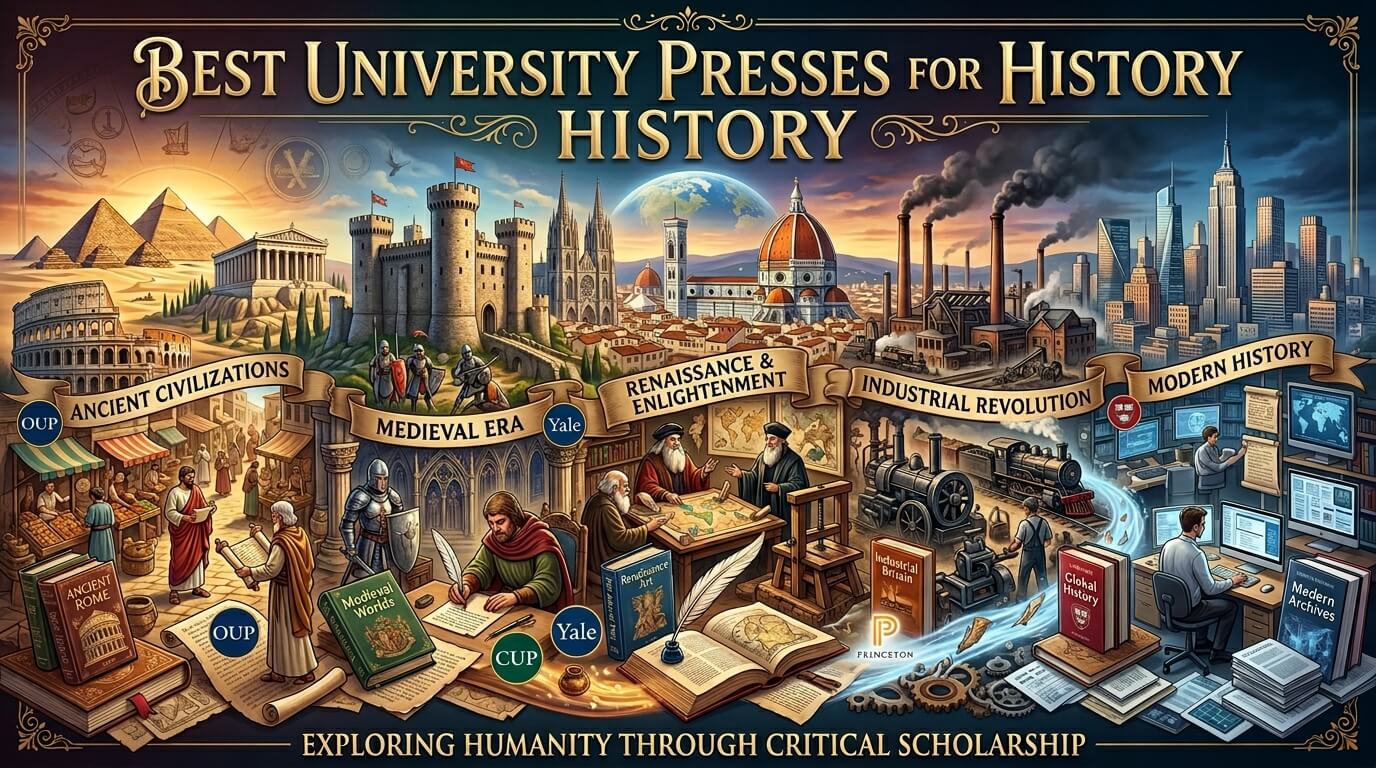
History publishing occupies a unique place in the academic and literary world. Unlike many other disciplines, historical scholarship depends heavily on rigorous research, extensive documentation, archival evidence, and careful interpretation of past events. For historians, choosing the right publisher is often as important as conducting the research itself. A respected university press can provide scholarly credibility, global visibility, expert peer review, and long-term preservation of historical work.
University presses have long been at the forefront of publishing groundbreaking historical studies. They serve as bridges between scholars and readers, transforming specialized research into accessible books that influence classrooms, libraries, researchers, and public discourse. Whether focusing on ancient civilizations, medieval societies, colonial encounters, military conflicts, political movements, social transformations, or global history, university presses play a crucial role in shaping how history is written and understood.
The best university presses for history are recognized for their commitment to scholarly excellence, editorial quality, and influential publishing programs. Many of these presses have established reputations over decades, publishing works that become foundational texts in historical studies. Their catalogs often include award-winning monographs, biographies, archival collections, and interdisciplinary studies that push the boundaries of historical knowledge.
This guide explores some of the most respected university presses for history, examining their strengths, areas of specialization, and contributions to the field. Whether you are a historian seeking publication, a graduate student researching publishers, or a reader interested in authoritative historical scholarship, understanding these presses can help you navigate the world of history publishing.
Why University Presses Matter in Historical Scholarship
History is a discipline built on evidence, interpretation, and debate. Unlike commercial publishers that often prioritize market trends, university presses prioritize scholarly value. Their peer-review processes ensure that historical works meet rigorous academic standards before publication.
For historians, publication through a respected university press often carries significant professional benefits. Academic institutions, tenure committees, and funding organizations frequently recognize university press publications as indicators of scholarly excellence. These presses also invest heavily in editorial development, helping authors refine arguments, improve clarity, and strengthen research presentation.
Furthermore, university presses contribute to the preservation of historical knowledge. They publish specialized works that may not attract mass-market audiences but remain essential to academic discourse. By doing so, they support the advancement of historical research and ensure that important scholarship reaches future generations.
Leading University Presses for History at a Glance
| University Press | Known For | Key Historical Strengths |
| Oxford University Press | Global scholarship | World history, political history, ancient history |
| Cambridge University Press | Academic excellence | Medieval history, global history, intellectual history |
| Harvard University Press | Influential scholarship | American history, cultural history, biography |
| Yale University Press | Accessible academic works | Art history, military history, European history |
| Princeton University Press | Innovative research | Intellectual history, international history |
| University of Chicago Press | Interdisciplinary studies | Social history, urban history |
| Cornell University Press | Strong humanities catalog | Military history, diplomatic history |
| University of Pennsylvania Press | Historical depth | Medieval studies, early modern history |
| Columbia University Press | Global perspectives | Asian history, modern history |
| University of North Carolina Press | Regional expertise | Southern history, Civil War studies |
Oxford University Press
A Historic Leader in Historical Publishing
Oxford University Press is one of the oldest and most prestigious academic publishers in the world. Its history catalog spans nearly every period and geographical region, making it a leading destination for historians across disciplines.
The press has built an impressive reputation through publications that combine rigorous scholarship with broad intellectual significance. Historians publishing with Oxford often benefit from international distribution networks and extensive academic recognition.
Areas of Strength
Oxford University Press excels in ancient history, political history, imperial studies, religious history, and global historical analysis. Many of its publications become standard references in universities worldwide.
Its commitment to publishing both specialist monographs and broader historical syntheses allows it to serve diverse audiences, from academic researchers to informed general readers.
Cambridge University Press
Excellence in Historical Research
Cambridge University Press has long been associated with scholarly rigor and influential academic publishing. Its history program consistently produces works that shape debates within historical scholarship.
The press publishes studies covering a wide chronological range, from antiquity to contemporary history. It is particularly respected for methodological innovation and interdisciplinary historical research.
Influence on Historical Studies
Cambridge titles frequently appear on university reading lists and are cited extensively in scholarly literature. The press’s reputation for peer review and editorial quality makes it a preferred destination for historians seeking academic credibility.
Its extensive collection of historical journals further enhances its influence within the discipline.
Harvard University Press
Publishing History That Shapes Conversations
Harvard University Press is renowned for producing books that bridge academic scholarship and public discourse. Its history publications often address major historical questions while remaining accessible to educated readers.
The press has published numerous award-winning works that have influenced both academic debates and broader cultural discussions.
Historical Fields of Focus
American history remains one of Harvard’s strongest areas, but the press also publishes extensively in intellectual history, cultural history, global history, and historical biography.
Many historians value Harvard University Press for its ability to elevate specialized scholarship into works with broader public impact.
Yale University Press
Combining Scholarship with Readability
Yale University Press occupies a unique position in historical publishing. It maintains rigorous academic standards while producing books that appeal to general readers interested in serious history.
Its history catalog includes influential works on politics, culture, warfare, and international relations.
Strength in Narrative History
One of Yale’s distinguishing characteristics is its support for narrative-driven historical writing. Authors often combine deep archival research with compelling storytelling, resulting in books that resonate beyond academic circles.
This balance between scholarship and readability has made Yale a leading publisher in the historical field.
Princeton University Press
Advancing Historical Interpretation
Princeton University Press has earned a reputation for publishing innovative and intellectually ambitious historical works. The press encourages scholarship that challenges conventional interpretations and introduces new analytical frameworks.
Its history program frequently intersects with political science, philosophy, economics, and sociology.
Intellectual Contributions
Princeton’s historical publications often address major themes such as state formation, democracy, revolution, international relations, and intellectual movements.
By supporting original scholarship, the press has become a major force in shaping contemporary historical research.
University of Chicago Press
Interdisciplinary Historical Scholarship
The University of Chicago Press is known for encouraging interdisciplinary approaches to history. Historians publishing with the press frequently engage with theories and methods from neighboring disciplines.
This intellectual openness has produced influential works in social, cultural, urban, and economic history.
A Tradition of Innovation
Chicago’s history catalog reflects a willingness to explore unconventional topics and methodologies. The press has helped expand the boundaries of historical inquiry, making it particularly attractive to scholars pursuing innovative research agendas.
Its publications often spark important conversations within the academic community.
Cornell University Press
A Strong Voice in Military and Diplomatic History
Cornell University Press has developed a particularly strong reputation in military history, diplomatic history, and international affairs. Its publications frequently examine conflicts, foreign policy, and geopolitical developments from historical perspectives.
The press combines scholarly rigor with topical relevance, making many of its titles valuable resources for both historians and policymakers.
Historical Scholarship with Contemporary Relevance
Many Cornell publications demonstrate how historical analysis can illuminate current global issues. This approach has strengthened the press’s position within modern historical scholarship.
Its commitment to high-quality peer review further reinforces its academic standing.
University of Pennsylvania Press
Preserving Historical Depth
The University of Pennsylvania Press is highly regarded for its contributions to medieval studies, early modern history, and cultural history. Its publications often draw on extensive archival research and specialized source materials.
Historians appreciate the press for supporting projects that require significant scholarly investment and long-term research commitments.
Excellence in Medieval Studies
Few publishers have matched Penn Press’s influence in medieval scholarship. Its catalog includes important works on religion, politics, society, and culture during the medieval period.
This specialization has made the press a central institution within historical research communities.
Columbia University Press
A Global Approach to History
Columbia University Press stands out for its international perspective and commitment to global historical scholarship. The press publishes works examining diverse regions, cultures, and historical experiences.
Its catalog reflects the growing importance of transnational and comparative history.
Expanding Historical Perspectives
By supporting research on Asia, Latin America, Africa, and other regions often underrepresented in traditional Western historiography, Columbia contributes to a more inclusive understanding of the past.
Its publications frequently encourage readers to view history through broader global frameworks.
University of North Carolina Press
A Premier Publisher of American History
The University of North Carolina Press has established itself as one of the leading publishers of American historical scholarship. It is particularly known for works on Southern history, Civil War studies, and African American history.
Its publications have significantly shaped understanding of the American experience.
Influence on Regional History
Regional history often provides insights into broader national developments. UNC Press excels at publishing studies that connect local experiences to larger historical themes.
This focus has earned the press widespread respect among historians of the United States.
What Makes a University Press Ideal for History?
Editorial Expertise
One of the defining features of a strong history publisher is editorial expertise. History manuscripts often involve complex arguments, extensive citations, and detailed source analysis. Experienced editors help authors strengthen these elements while maintaining scholarly integrity.
A press with knowledgeable history editors can significantly enhance the quality and impact of a publication.
Strong Peer Review Systems
Peer review remains central to academic publishing. The best university presses employ rigorous review processes that ensure historical works meet disciplinary standards.
Constructive feedback from experts helps authors refine arguments, address weaknesses, and improve overall scholarship.
Subject-Specific Reputation
Different presses have developed reputations in particular historical fields. Some excel in ancient history, while others dominate military history, cultural history, or regional studies.
Choosing a publisher aligned with a manuscript’s subject area can increase visibility among the intended audience.
Global Distribution
A university press’s distribution network influences how widely a book is read and cited. Presses with international reach help historians connect with scholars, institutions, and readers around the world.
This visibility contributes to academic influence and professional recognition.
Emerging Trends in History Publishing
Digital Scholarship
The rise of digital archives, online databases, and digital humanities projects has transformed historical research. University presses increasingly support publications that integrate digital methodologies and innovative forms of analysis.
This shift is expanding opportunities for historians working with large datasets and technological tools.
Global and Transnational Perspectives
Contemporary historical scholarship increasingly emphasizes connections across borders. University presses are responding by publishing works that examine migration, trade, empire, environmental change, and cultural exchange on global scales.
These perspectives challenge traditional national narratives and encourage broader interpretations of historical processes.
Public History and Accessibility
Many presses are seeking ways to make historical scholarship more accessible to wider audiences. This includes publishing books written in engaging prose, supporting open-access initiatives, and promoting interdisciplinary dialogue.
As a result, historical research is reaching readers beyond academic institutions.
How Historians Choose the Right University Press
Selecting a publisher requires careful consideration. Historians often begin by examining recent publications in their field. Understanding which presses publish similar topics can provide valuable guidance.
Authors also consider factors such as editorial support, peer-review quality, marketing capabilities, distribution reach, and professional reputation. A press’s strengths should align with the goals of the manuscript.
For early-career scholars, choosing a publisher with strong academic credibility may be especially important. Established historians may prioritize audience reach or thematic fit. In either case, researching a press’s history catalog remains an essential step in the publication process.
The Lasting Importance of University Presses in History
University presses remain among the most important institutions in historical scholarship. They provide the infrastructure necessary for rigorous research, critical debate, and intellectual advancement. Through careful peer review, expert editing, and long-term preservation, these publishers ensure that historical knowledge continues to evolve and reach new audiences.
Presses such as Oxford, Cambridge, Harvard, Yale, Princeton, Chicago, Cornell, Pennsylvania, Columbia, and North Carolina have established themselves as leaders in the field because of their unwavering commitment to scholarly excellence. Their catalogs contain works that have transformed understanding of the past and influenced generations of historians.
For researchers, students, and readers alike, these university presses represent trusted sources of historical knowledge. As historical scholarship continues to expand into new areas and methodologies, the role of university presses will remain essential. They not only publish history but also help shape the future of the discipline itself, ensuring that important stories, interpretations, and discoveries continue to enrich our understanding of humanity’s past.
