
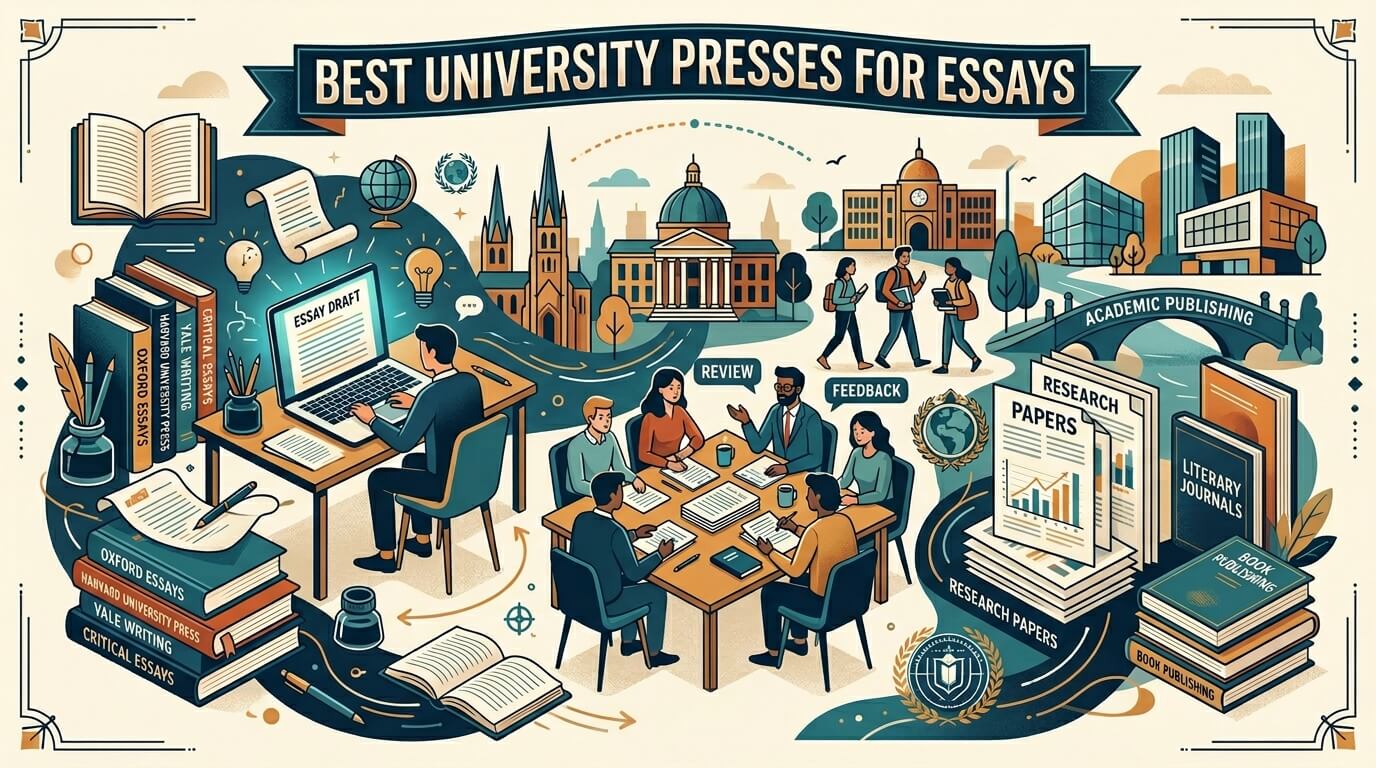
For essay writers, finding the right publisher can be just as important as writing the essay itself. While commercial publishers often focus on market trends and mass appeal, university presses have long been recognized as champions of thoughtful, intellectually rigorous, and culturally significant writing. They provide a home for essay collections that explore history, politics, philosophy, culture, literature, science, personal narratives, and contemporary social issues with depth and originality.
The essay occupies a unique position in literature. It is neither purely academic nor entirely creative. Essays allow writers to investigate ideas, challenge assumptions, share experiences, and engage readers in meaningful conversations. Because of this versatility, many of the most influential essay collections have been published by university presses that value intellectual exploration and literary craftsmanship.
University presses are affiliated with colleges and universities, but their readership extends far beyond academia. They publish books for scholars, students, professionals, and general readers who seek thoughtful perspectives on important subjects. Many presses have built strong reputations for publishing exceptional essay collections that combine research, storytelling, and critical thinking.
For writers looking to publish essays, understanding which university presses actively support this form of writing can help identify the best potential publishing partners. Some presses specialize in literary essays, while others focus on cultural criticism, social commentary, memoir-driven essays, or interdisciplinary works.
This guide explores some of the best university presses for essays and examines what makes each one a respected destination for essay writers.
Why University Presses Matter for Essay Writers
Essay collections often occupy a challenging space in publishing. They may not fit neatly into commercial categories, yet they can offer some of the most profound and lasting contributions to literature and public discourse.
University presses provide an environment where ideas take precedence over market formulas. Editors often seek projects that contribute to intellectual conversations, address pressing social issues, or offer fresh perspectives on established topics. This commitment creates opportunities for essayists whose work may be too specialized, experimental, or nuanced for mainstream publishers.
Many university presses also maintain strong relationships with academic institutions, literary communities, libraries, and scholarly networks. These connections can help essay collections reach readers who actively engage with complex ideas and literary nonfiction.
Perhaps most importantly, university presses often support long-term literary value. Rather than focusing solely on immediate commercial success, they invest in books that can remain relevant and influential for years or even decades.
Leading University Presses for Essay Collections
Princeton University Press
Among the most respected academic publishers in the world, Princeton University Press has earned a reputation for publishing intellectually ambitious books that appeal to both specialists and general readers.
Its catalog includes essays exploring politics, philosophy, history, science, economics, and contemporary culture. The press often seeks authors who can communicate complex ideas clearly while maintaining scholarly rigor.
Essay collections published by Princeton frequently bridge the gap between academic research and public discourse. Writers who can combine original thinking with accessible prose often find Princeton an attractive publishing destination.
Yale University Press
Yale University Press has a long history of publishing influential nonfiction works that engage readers across disciplines. The press regularly releases essay collections examining social issues, cultural developments, historical perspectives, and literary criticism.
What distinguishes Yale is its commitment to publishing works that stimulate public conversation. Essayists who explore contemporary challenges through historical, cultural, or philosophical lenses often find a receptive audience through Yale’s publishing programs.
The press is also known for producing beautifully designed books, which can enhance the visibility and longevity of essay collections.
Harvard University Press
Harvard University Press remains one of the most prestigious academic publishers worldwide. Its catalog includes a broad range of essay collections addressing politics, history, ethics, science, literature, and public policy.
Many of the essays published by Harvard seek to influence ongoing intellectual debates and contribute to broader societal discussions. Authors often combine scholarly expertise with engaging writing styles that appeal to readers beyond academic settings.
For essayists interested in exploring significant contemporary issues with depth and authority, Harvard University Press represents a highly respected platform.
Columbia University Press
Columbia University Press has developed a strong reputation for publishing thought-provoking nonfiction and interdisciplinary scholarship. The press frequently supports essay collections that examine cultural studies, media, politics, urban development, and global issues.
Essay writers who work at the intersection of multiple disciplines often find Columbia particularly attractive. The press encourages innovative perspectives and welcomes projects that challenge conventional approaches to understanding society and culture.
Its commitment to public scholarship has helped establish Columbia as a major force in contemporary essay publishing.
University of Chicago Press
The University of Chicago Press is widely recognized for publishing books that combine rigorous analysis with accessible writing. Its extensive catalog includes essay collections covering literature, philosophy, sociology, science, history, and cultural criticism.
One of the press’s greatest strengths is its willingness to support authors who engage deeply with complex ideas while remaining accessible to broader audiences.
Many influential essayists have found a home at Chicago because the press values intellectual curiosity, originality, and strong narrative voice.
Comparing Top University Presses for Essays
| University Press | Strongest Areas | Audience Reach | Known For |
| Princeton University Press | Politics, Philosophy, History | Academic and General Readers | Intellectual rigor and accessibility |
| Yale University Press | Culture, Society, History | Broad Public Audience | Public discourse and literary quality |
| Harvard University Press | Public Policy, Ethics, History | Global Academic Audience | Influential intellectual works |
| Columbia University Press | Media, Culture, Urban Studies | Academic and Professional Readers | Interdisciplinary perspectives |
| University of Chicago Press | Sociology, Literature, Criticism | Wide Scholarly Audience | Accessible scholarship |
| Duke University Press | Cultural Studies, Race, Gender | Academic and Activist Communities | Innovative critical essays |
| University of California Press | Environment, Society, Politics | Global Readers | Progressive and interdisciplinary work |
| MIT Press | Technology, Science, Society | Researchers and Public Readers | Essays on innovation and culture |
Duke University Press
Duke University Press has become one of the most influential publishers in cultural studies, critical theory, race studies, gender studies, and social analysis.
Its essay collections frequently challenge dominant narratives and explore emerging intellectual movements. Writers whose work addresses identity, power structures, globalization, activism, and cultural transformation often find Duke particularly receptive.
The press has played a significant role in shaping contemporary discussions across numerous academic and cultural fields, making it an important destination for essayists seeking to contribute to critical conversations.
A Focus on Contemporary Issues
One reason Duke stands out is its willingness to engage with urgent social and political questions. Essays published through the press often tackle topics that influence current debates and future scholarship.
This emphasis on relevance and innovation attracts writers who want their work to participate directly in contemporary discussions.
University of California Press
The University of California Press consistently publishes high-quality nonfiction that bridges academic research and public understanding.
Its essay collections frequently address environmental challenges, social justice, cultural history, politics, and global affairs. The press values interdisciplinary thinking and encourages authors to explore connections between different fields of knowledge.
Many essayists appreciate the press’s commitment to making important ideas accessible to wider audiences without sacrificing intellectual complexity.
Strong Public Engagement
A defining characteristic of the University of California Press is its dedication to public engagement. Books are often written with both scholarly and general readers in mind, helping important ideas reach larger audiences.
For essay writers seeking impact beyond academia, this approach can be especially valuable.
MIT Press
MIT Press occupies a unique position within university publishing due to its focus on technology, science, design, media, and innovation.
Essay collections published by MIT often examine the ways technology shapes society, culture, communication, education, and human behavior. The press encourages interdisciplinary work that connects scientific knowledge with broader cultural and ethical questions.
As technological change continues to transform modern life, MIT Press remains an important venue for essayists exploring the relationship between innovation and society.
University of Minnesota Press
The University of Minnesota Press has earned recognition for publishing forward-thinking works in cultural studies, media studies, philosophy, and critical theory.
Its essay collections frequently engage with emerging intellectual trends and explore unconventional perspectives. Writers interested in experimental approaches, contemporary cultural analysis, and interdisciplinary scholarship often find Minnesota particularly appealing.
The press has developed a reputation for supporting groundbreaking work that influences academic and cultural conversations.
Oxford University Press
Oxford University Press is one of the oldest and most respected publishing institutions in the world. Its extensive catalog includes essays covering virtually every field of knowledge.
Essay collections published by Oxford often combine scholarly expertise with broad public relevance. Topics range from history and politics to science, religion, literature, and philosophy.
The global reach of Oxford provides authors with significant visibility and access to diverse readerships around the world.
Global Recognition and Influence
Publishing with Oxford carries considerable prestige. The press’s international reputation helps ensure that essay collections receive attention from scholars, reviewers, educators, and readers worldwide.
For authors seeking a broad platform, Oxford remains a highly attractive option.
Johns Hopkins University Press
Johns Hopkins University Press has established itself as a major publisher of humanities and social science scholarship.
Its essay collections frequently address public health, history, literature, cultural analysis, and social issues. The press values clear communication and encourages authors to present complex subjects in engaging ways.
Essayists who combine research with compelling storytelling often find Johns Hopkins particularly supportive.
How to Choose the Right University Press
Selecting the right university press involves more than simply targeting the most prestigious publisher. Writers should carefully examine each press’s catalog, editorial priorities, and existing essay collections.
A press that regularly publishes books on similar topics is more likely to understand the intended audience and appreciate the manuscript’s goals. Reviewing recently published titles can provide valuable insight into editorial interests and publishing strategies.
Writers should also consider factors such as marketing support, distribution networks, peer review processes, and publication timelines. Understanding these elements can help identify the best fit for a particular essay collection.
Preparing an Essay Collection for Submission
Before approaching university presses, authors should ensure their manuscripts are polished and cohesive. While individual essays may have appeared previously in journals or magazines, the collection should demonstrate a clear thematic connection.
Editors often look for projects that offer a unified vision rather than simply gathering unrelated essays into a single volume. A compelling introduction can help establish this coherence and explain the collection’s broader significance.
Strong proposal materials are equally important. These typically include a project overview, chapter descriptions, author biography, and information about the intended readership.
The more clearly an author can articulate the collection’s contribution, the stronger the submission becomes.
The Future of Essay Publishing Through University Presses
The essay remains one of literature’s most adaptable forms. In an era characterized by rapid change, complex social challenges, and evolving cultural conversations, readers increasingly seek thoughtful analysis and nuanced perspectives.
University presses continue to play a crucial role in supporting this type of writing. By prioritizing intellectual quality, originality, and public engagement, they provide a platform for essays that might otherwise struggle to find publication.
As digital technologies expand readership opportunities and interdisciplinary scholarship becomes more common, university presses are likely to remain essential partners for essay writers. Their commitment to fostering meaningful dialogue ensures that essays will continue to inform, challenge, and inspire future generations of readers.
Conclusion
The best university presses for essays combine editorial excellence, intellectual curiosity, and a commitment to meaningful public discourse. Institutions such as Princeton University Press, Yale University Press, Harvard University Press, Columbia University Press, University of Chicago Press, Duke University Press, University of California Press, MIT Press, University of Minnesota Press, Oxford University Press, and Johns Hopkins University Press have all demonstrated strong support for essay collections that contribute to important cultural and intellectual conversations.
For essay writers, choosing the right university press can significantly influence a book’s reach, reception, and long-term impact. By understanding each press’s strengths and editorial priorities, authors can identify publishing partners that align with their vision and help bring their ideas to readers who value thoughtful, well-crafted nonfiction. In a publishing landscape often driven by trends, university presses remain vital institutions dedicated to preserving and promoting the enduring power of the essay.
FAQs
Q. What is a university press?
A university press is a publishing house affiliated with a college or university that publishes scholarly, literary, and educational books for academic and general readers.
Q. Do university presses publish essay collections?
Yes, many university presses actively publish essay collections, especially those focused on literature, culture, history, politics, social issues, and intellectual inquiry.
Q. Can first-time authors submit to university presses?
Yes, first-time authors can submit manuscripts, particularly if their work offers original insights, strong research, or a unique literary voice.
Q. Are university presses different from commercial publishers?
University presses prioritize intellectual and cultural value, while commercial publishers typically focus more on market demand and sales potential.
Q. How do I submit an essay manuscript to a university press?
Most university presses provide submission guidelines on their websites, outlining proposal requirements, manuscript formats, and review procedures.
