
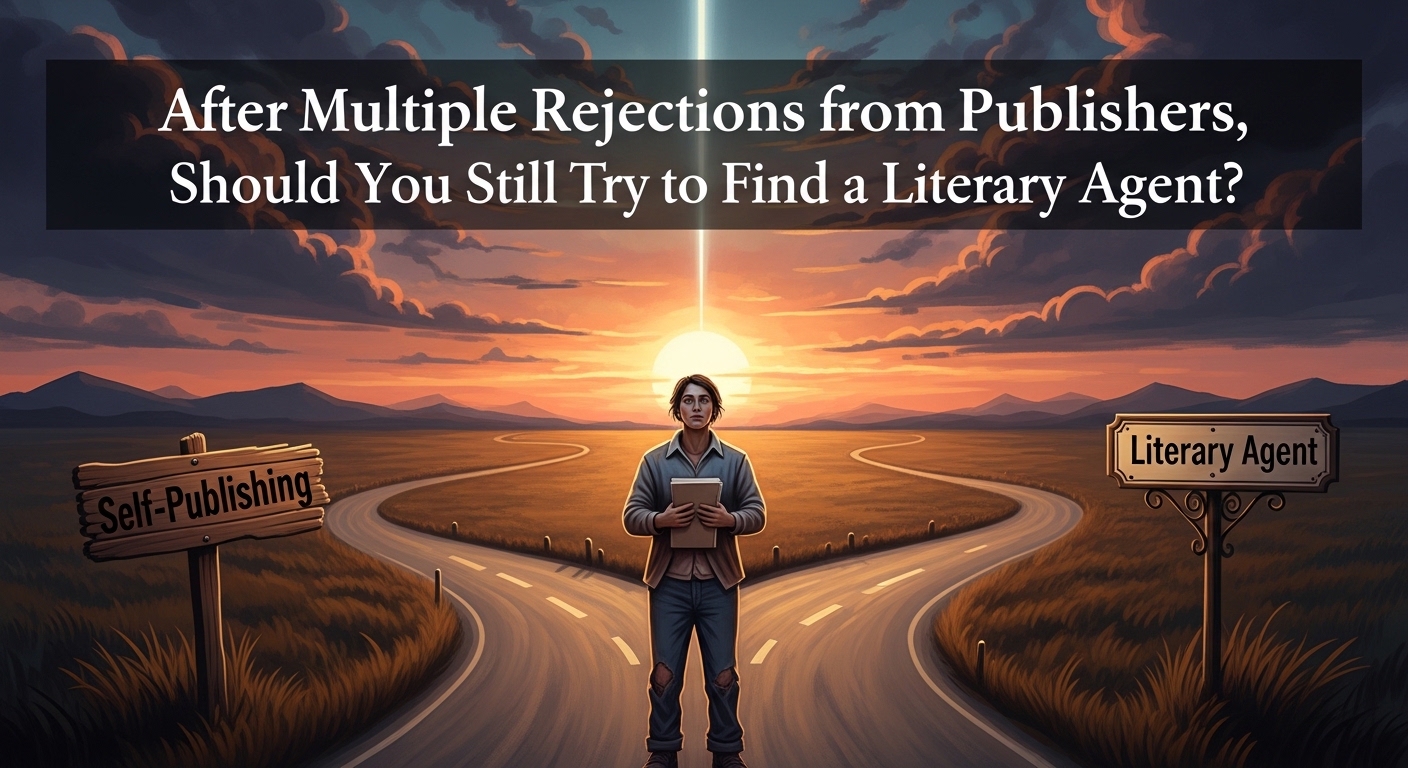
Rejection is one of the few constants in the publishing world. For writers who have already faced multiple refusals from publishers, the question often shifts from “Is my work good enough?” to something more complex and strategic: “Should I still pursue a literary agent, or is it time to pivot?” This is not just an emotional dilemma but a professional one. The publishing industry is layered, nuanced, and often opaque, and understanding where an agent fits into that system can help you make a more informed decision.
This article explores what repeated publisher rejections actually mean, how literary agents operate within the ecosystem, and whether continuing the search for representation is a worthwhile path forward. Rather than offering a simplistic yes-or-no answer, it examines the realities writers face and how persistence, strategy, and timing all intersect in a writer’s journey.
Understanding What Rejection Really Means
It is easy to interpret multiple rejections as a definitive judgment on your writing ability. However, in publishing, rejection rarely tells the full story. Manuscripts are declined for a wide range of reasons that extend beyond quality. Market trends, timing, editorial preferences, and even internal publishing schedules all play a role.
A manuscript might be well-written but not align with what a publisher is currently seeking. Another might be too similar to a project they recently acquired. Sometimes, the decision comes down to risk management rather than literary merit. Publishing houses operate as businesses, and even excellent manuscripts can be rejected if they do not fit commercial expectations at a particular moment.
Understanding this broader context is crucial. Rejection is not always a reflection of failure; it is often a reflection of fit. This distinction becomes especially important when considering whether to pursue a literary agent.
The Role of a Literary Agent in Modern Publishing
A literary agent acts as both a gatekeeper and an advocate. They do more than simply submit your manuscript to publishers. They help refine your work, position it in the market, negotiate contracts, and guide your long-term career.
For writers who have already been rejected by publishers, an agent can provide a fresh perspective. They may see potential in your manuscript that publishers overlooked or identify ways to reposition it for a different audience. In many cases, agents also have access to editors and imprints that are not open to unsolicited submissions, which can significantly expand your opportunities.
Additionally, agents understand the business side of publishing in a way that most writers do not. They can negotiate better terms, protect your rights, and ensure that your work is presented in the best possible light. This expertise can be particularly valuable if you have already encountered setbacks.
When Rejections Signal the Need for Revision
While rejection does not always indicate a problem with your manuscript, multiple consistent rejections can sometimes point to underlying issues. These might include structural weaknesses, pacing problems, unclear positioning, or a mismatch between your manuscript and its intended genre.
Before deciding to pursue an agent, it is worth taking a step back to evaluate your work critically. Seeking feedback from beta readers, professional editors, or writing groups can provide insights that you may have overlooked. In some cases, revising your manuscript can significantly improve its chances of success.
It is also important to consider whether your query materials are as strong as your manuscript. A compelling query letter and synopsis are essential when approaching agents. If these elements are not effectively communicating the value of your work, they can lead to rejections even if the manuscript itself is strong.
The Difference Between Publisher Rejections and Agent Rejections
One key factor that many writers overlook is the difference between being rejected by publishers and being rejected by agents. These are two distinct processes with different criteria.
Publishers often evaluate manuscripts based on marketability, sales potential, and alignment with their current catalog. Agents, on the other hand, are looking for projects they believe they can sell. Their evaluation is both creative and strategic, focusing on whether they can successfully represent your work in the marketplace.
This distinction means that a manuscript rejected by publishers is not necessarily one that agents will also reject. In fact, some agents specialize in discovering overlooked or unconventional projects and finding the right home for them.
Timing and Market Conditions
Timing plays a significant role in publishing success. Trends shift, reader preferences evolve, and what may not have worked a year ago could resonate strongly today. A manuscript that was previously rejected might find success if it is reintroduced to the market at the right time.
Agents are often more attuned to these shifts than individual writers. They monitor industry trends, maintain relationships with editors, and understand what is currently in demand. This awareness allows them to position your work more effectively and increase its chances of acceptance.
If your rejections occurred during a period when your genre was saturated or out of favor, pursuing an agent later could yield different results.
Emotional Resilience and Professional Persistence
The emotional impact of repeated rejection cannot be underestimated. It can lead to self-doubt, frustration, and even the temptation to abandon writing altogether. However, resilience is a defining characteristic of successful authors.
Continuing to pursue a literary agent after multiple rejections requires a shift in mindset. Instead of viewing rejection as a final verdict, it should be seen as part of the process. Each rejection provides an opportunity to refine your approach, improve your work, and better understand the industry.
Persistence, when combined with adaptability, can be a powerful force. Many successful authors faced numerous rejections before finding the right agent and achieving publication.
Exploring Alternative Paths While Querying Agents
Pursuing a literary agent does not have to be your only strategy. Many writers explore alternative paths simultaneously, such as self-publishing, hybrid publishing, or submitting to smaller presses that accept unsolicited manuscripts.
These options can provide valuable experience and help you build an audience. In some cases, success in these areas can even attract the attention of agents and traditional publishers.
Balancing multiple approaches allows you to maintain momentum while continuing to seek representation. It also reduces the pressure associated with relying on a single path to success.
A Comparative Overview of Your Options
The decision to continue seeking a literary agent should be informed by a clear understanding of your available options. The following table outlines key considerations:
| Path | Advantages | Challenges | Best For |
| Pursuing a Literary Agent | Access to major publishers, professional guidance, better contracts | Competitive, time-consuming | Writers aiming for traditional publishing |
| Direct Publisher Submissions | Immediate access to some publishers, no intermediary | Limited opportunities, less negotiation support | Writers targeting smaller presses |
| Self-Publishing | Full creative control, faster timeline, higher royalties | Requires investment and marketing responsibility | Entrepreneurial writers |
| Hybrid Publishing | Professional support with shared costs | Variable quality, financial risk | Writers seeking a middle ground |
This comparison highlights that there is no single “correct” path. The right choice depends on your goals, resources, and willingness to navigate different aspects of the publishing process.
Signs You Should Continue Looking for an Agent
There are several indicators that pursuing a literary agent remains a viable and worthwhile option. If you are receiving personalized rejection feedback, it often means that your work has potential but may need refinement. Similarly, if beta readers and professionals respond positively to your manuscript, it suggests that the issue may lie in positioning rather than quality.
Another sign is your long-term career vision. If you aspire to build a sustained presence in traditional publishing, an agent can play a crucial role in achieving that goal. They can help you navigate multiple book deals, manage your brand, and expand your opportunities.
Finally, if you remain passionate about your manuscript and believe in its value, that conviction can sustain you through the querying process.
When It Might Be Time to Reconsider
While persistence is important, there are situations where it may be beneficial to reassess your approach. If you have received a large number of rejections with no positive feedback, it may indicate that your manuscript needs significant revision or that it is not aligned with current market expectations.
In such cases, focusing on a new project can be a productive alternative. Writing a new manuscript allows you to apply what you have learned and approach the process with a fresh perspective. Many authors find success with their second or third projects rather than their first.
Reconsidering your strategy does not mean giving up; it means adapting.
The Long View: Building a Writing Career
Ultimately, the decision to pursue a literary agent should be viewed within the context of your broader writing career. Publishing is not a single event but an ongoing journey. Each manuscript, each submission, and each rejection contributes to your growth as a writer.
Agents are not just representatives for one book; they are partners in your career. Finding the right agent can open doors that extend far beyond a single project. However, this partnership requires patience, persistence, and a willingness to evolve.
Conclusion
After multiple rejections from publishers, the question of whether to continue seeking a literary agent does not have a simple answer. In many cases, the answer is yes, but with a more strategic and informed approach. Rejection should prompt reflection rather than resignation. It should lead to refinement, not retreat.
A literary agent can provide opportunities, expertise, and advocacy that are difficult to access independently. However, their value is maximized when your manuscript is strong, your positioning is clear, and your expectations are realistic.
The key is to remain flexible. Continue querying if your work shows promise, but do not hesitate to revise, pivot, or explore alternative paths when necessary. Writing is a long-term endeavor, and success often comes to those who are willing to adapt while continuing to move forward.
