
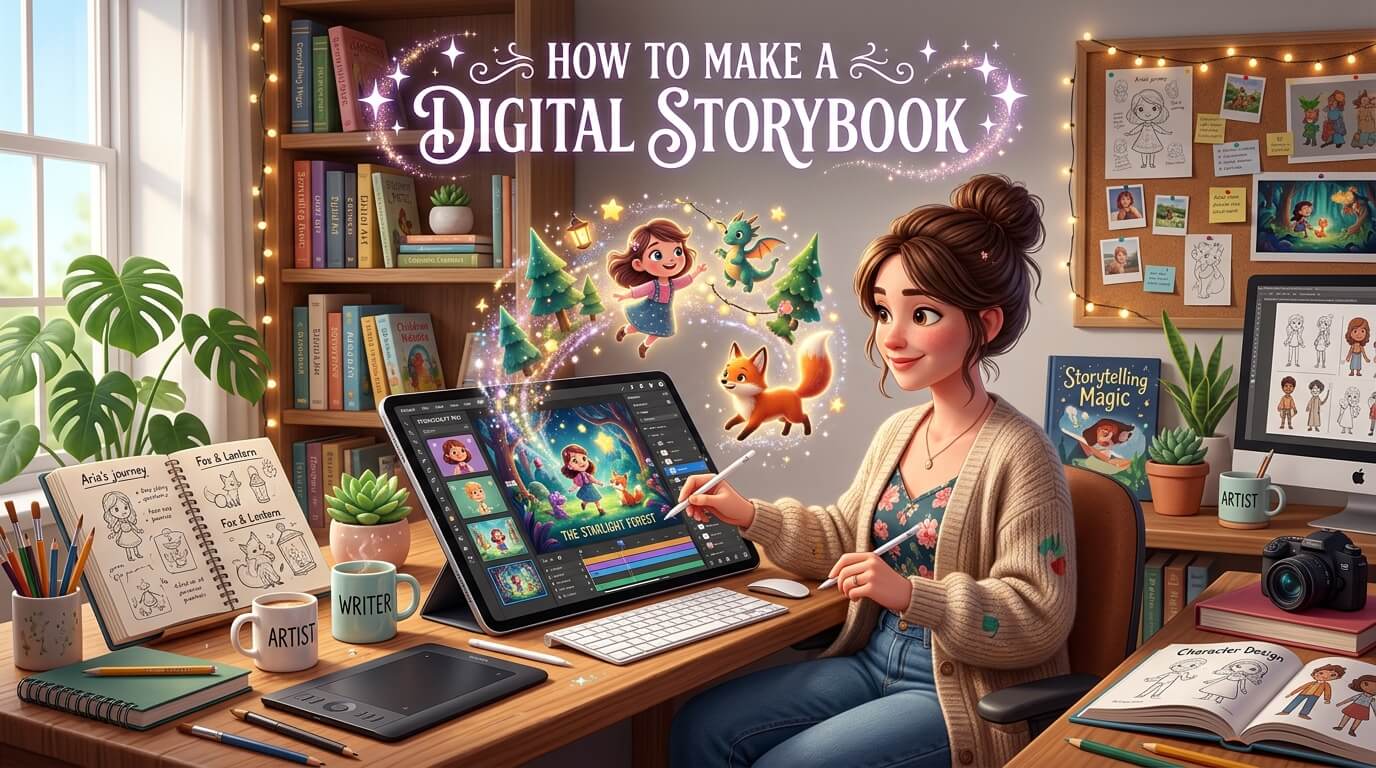
Digital storytelling has transformed the way people create and consume stories. What once required a printed manuscript, a publisher, and physical distribution can now be accomplished through a computer, tablet, and internet connection. From children’s picture books and educational learning materials to interactive novels and family memory projects, digital storybooks have become one of the most effective ways to share stories with modern audiences.
The growing popularity of smartphones, tablets, e-readers, and online learning platforms has created a strong demand for digital content. Readers increasingly expect engaging visual experiences, while educators and parents seek interactive resources that capture attention and improve comprehension. As a result, digital storybooks have evolved beyond simple electronic versions of printed books. Today, they can include illustrations, voice narration, animations, sound effects, music, videos, and interactive elements that enrich the storytelling experience.
Creating a digital storybook is both a creative and technical process. It involves developing a compelling narrative, designing attractive visuals, choosing the right digital format, and ensuring that the final product provides a seamless reading experience across devices. Whether you are an aspiring author, teacher, entrepreneur, parent, or content creator, understanding how to create a digital storybook can open new opportunities for communication, education, and creative expression.
This comprehensive guide explores every stage of the process, helping you move from an initial idea to a polished digital storybook ready for readers around the world.
Why Digital Story Books Have Become So Popular
The popularity of digital storybooks is closely connected to the way people consume information today. Modern readers spend a significant amount of time on digital devices, making electronic content more accessible than ever. Unlike traditional books, digital storybooks can be downloaded instantly, accessed from anywhere, and updated when necessary.
For children, digital storybooks offer engaging experiences that combine reading with visual and auditory stimulation. Educational institutions increasingly use digital books because they are easier to distribute and often include interactive learning features. Authors benefit from lower publishing costs and direct access to global audiences.
Another major advantage is accessibility. Digital storybooks can include narration for emerging readers, adjustable text sizes for visually impaired users, and translation options that allow stories to reach international audiences. These features make storytelling more inclusive and adaptable to diverse reader needs.
As technology continues to advance, digital storybooks are becoming an increasingly important part of both entertainment and education.
Understanding What a Digital Story Book Really Is
Many people assume that a digital storybook is simply a PDF version of a printed book. While PDFs are one type of digital book, modern digital storybooks can offer much more sophisticated experiences.
A digital storybook is an electronically created narrative designed specifically for digital consumption. It combines storytelling with visual design and may include multimedia features that are impossible to achieve in traditional print formats.
The defining characteristic of a digital storybook is its ability to leverage technology to enhance reader engagement. Readers may listen to narration, interact with characters, trigger animations, watch embedded videos, or explore additional content through clickable features.
Despite these technological enhancements, the core of every successful digital storybook remains the story itself. Readers remember characters, emotions, and experiences long after they forget technical features. This is why strong storytelling remains the foundation of every effective digital book project.
Defining the Purpose Before You Begin
One of the most important steps in creating a digital storybook is determining its purpose. Many projects struggle because creators begin designing pages without clearly understanding what they want the story to accomplish.
Some digital storybooks are designed purely for entertainment. These stories focus on adventure, humor, fantasy, mystery, or emotional experiences that captivate readers. Others are educational, aiming to teach concepts such as mathematics, science, language skills, social development, or cultural awareness.
Businesses sometimes use digital storytelling as a marketing tool to communicate brand values and connect with audiences emotionally. Families often create digital memory books to preserve personal experiences, photographs, and family histories.
A clearly defined purpose influences every aspect of the project, including writing style, visual design, multimedia features, and publishing strategy. When the purpose remains clear throughout development, the final product feels cohesive and intentional.
Researching Your Target Audience
Understanding your audience is essential for creating a storybook that resonates with readers. Different audiences have different expectations, attention spans, reading abilities, and preferences.
Creating Digital Story Books for Preschool Children
Preschool readers require simple language, clear sentence structures, and visually engaging illustrations. Stories should be easy to follow while introducing age-appropriate themes and lessons.
Young children often respond positively to repetition, rhythm, colorful imagery, and interactive features. Audio narration can significantly improve engagement because many preschoolers cannot yet read independently.
The goal is to create a reading experience that feels both educational and entertaining.
Creating Digital Story Books for Elementary School Readers
School-age readers are ready for more developed narratives, stronger character arcs, and increasingly complex vocabulary. They enjoy stories that challenge their imagination while providing relatable emotional experiences.
Adventure stories, fantasy worlds, mysteries, and humorous narratives often appeal to this age group. Interactive features can enhance immersion but should not distract from the story itself.
Readers in this category begin to value plot development and character relationships more deeply.
Creating Digital Story Books for Teenagers
Teen readers often seek stories that explore identity, relationships, personal growth, and social challenges. Visual design remains important, but storytelling quality becomes increasingly significant.
Multimedia features should feel purposeful and sophisticated rather than gimmicky. Teen audiences appreciate authenticity and emotional depth.
Creating Digital Story Books for Adults
Adult readers generally prioritize narrative quality over interactive technology. They expect polished writing, meaningful themes, and professional design.
Digital enhancements can add value, particularly in memoirs, educational books, and nonfiction works, but they should support rather than dominate the reading experience.
Developing a Strong Story Concept
Every memorable digital storybook begins with a compelling idea. A strong concept provides direction for the entire project and helps maintain consistency during development.
The most effective story concepts often emerge from universal human experiences such as curiosity, friendship, courage, love, loss, growth, discovery, or transformation. These themes create emotional connections that resonate across age groups and cultures.
When brainstorming ideas, consider the central question your story explores. Think about what challenge your protagonist faces and how that challenge changes them. The emotional journey is often more important than the external events themselves.
Strong concepts are typically simple at their core. Complexity can develop through character interactions, world-building, and plot development, but the central idea should remain clear and easy to understand.
Building Memorable Characters
Characters are the emotional heart of any story. Readers become invested when they care about what happens to the people within the narrative.
A memorable protagonist should have clear goals, strengths, weaknesses, fears, and motivations. They should encounter obstacles that force them to grow and evolve throughout the story.
Digital storybooks offer unique opportunities to deepen character engagement. Illustrations can visually communicate personality traits. Voice narration can reveal emotional nuance. Animations can bring character actions to life.
However, technology cannot compensate for weak characterization. Readers connect with characters because of their humanity, not because they move across the screen.
Effective character development requires understanding who your characters are before writing their stories.
Creating a Story Structure That Keeps Readers Engaged
A well-structured story guides readers smoothly from beginning to end while maintaining interest throughout the journey.
Establishing the Beginning
The opening pages introduce the protagonist, setting, and initial situation. This stage is crucial because readers often decide whether to continue based on their first impressions.
A strong beginning creates curiosity and establishes expectations. It provides enough information for readers to understand the context while leaving questions unanswered.
Digital storybooks can strengthen openings through immersive illustrations, soundscapes, and visually appealing layouts.
Building the Middle
The middle section is where conflict develops and tension increases. Characters face challenges, make decisions, experience setbacks, and pursue their goals.
This is often the longest and most demanding part of the storytelling process. Poor pacing can cause readers to lose interest, while effective pacing maintains engagement.
Interactive features can support the narrative during this stage by allowing readers to explore environments, access additional information, or experience events more vividly.
Delivering a Satisfying Ending
A satisfying ending resolves the central conflict and reflects the themes established throughout the story.
The conclusion should feel earned rather than forced. Readers want to see how the protagonist has changed and what lessons have been learned through the journey.
Whether the ending is happy, bittersweet, inspiring, or thought-provoking, it should provide emotional closure.
Writing Specifically for Digital Readers
Writing for digital platforms requires an understanding of how people read on screens.
Research consistently shows that screen reading differs from print reading. Readers often skim content more quickly and have shorter attention spans when using digital devices. This does not mean stories should be simplified, but it does mean presentation becomes especially important.
Paragraph lengths, page layouts, typography, and visual balance all influence readability. Digital storybook writers should strive for clarity and flow while ensuring that text works harmoniously with accompanying visuals.
Each page should feel purposeful and visually inviting.
Designing the Visual Identity of the Story
Visual design shapes how readers perceive a story before they read a single word.
Illustrations establish atmosphere, communicate emotions, and reinforce narrative themes. Color palettes influence mood, while typography affects readability and tone.
A whimsical fairy tale might use soft colors and playful fonts, while a science-focused educational storybook may require a cleaner and more structured visual approach.
Consistency is critical. Readers should feel that every page belongs to the same world.
Professional visual design significantly increases reader engagement and enhances overall storytelling quality.
Choosing Illustrations That Support the Narrative
Illustrations should function as storytelling tools rather than decorative additions.
Strong illustrations reveal character emotions, highlight important plot developments, establish settings, and provide contextual information that strengthens reader understanding.
When selecting or creating artwork, consider how each image contributes to the story. Ask whether the illustration advances the narrative, deepens emotional impact, or clarifies important information.
Purposeful visuals create stronger reader experiences than decorative images alone.
Selecting the Best Software for Digital Story Book Creation
The software you choose depends on your goals, technical expertise, and desired level of interactivity.
Some creators prefer simple design platforms for creating static digital books. Others use specialized publishing software that supports animations, narration, and interactive features.
When evaluating software options, consider ease of use, export formats, multimedia support, collaboration features, and publishing compatibility.
The ideal tool should simplify your workflow rather than complicate it.
Adding Multimedia Elements Effectively
One of the defining strengths of digital storybooks is the ability to incorporate multimedia experiences.
Voice Narration
Narration adds accessibility and emotional depth. It supports emerging readers and can improve comprehension for language learners.
Professional-quality narration creates a more immersive experience and can significantly increase reader engagement.
Music and Soundscapes
Background music helps establish mood and atmosphere. Gentle musical accompaniment can enhance emotional scenes and strengthen reader immersion.
Soundscapes can make environments feel more realistic, whether depicting forests, cities, oceans, or fantasy worlds.
Animation and Motion
Animation introduces movement that captures attention and supports storytelling.
Subtle animations are often more effective than elaborate visual effects because they maintain focus on the narrative.
Interactive Features
Interactive elements encourage active participation. Readers may tap objects, explore scenes, reveal hidden content, or engage with educational activities.
When thoughtfully designed, interactivity enhances learning and enjoyment.
Testing and Refining the Reader Experience
Testing is one of the most important stages of digital storybook development.
A storybook may look excellent on one device but perform poorly on another. Differences in screen sizes, operating systems, and software versions can affect functionality.
Creators should test navigation, readability, multimedia playback, loading speed, and accessibility features across multiple devices.
Reader feedback is invaluable during this stage. Observing real users interact with the story often reveals improvements that creators may overlook.
Publishing Your Digital Story Book
Once development is complete, the next step is distribution.
Digital storybooks can be published through eBook marketplaces, educational platforms, mobile applications, personal websites, or subscription services. Each channel offers different advantages depending on your audience and objectives.
Some creators choose self-publishing because it provides complete control over pricing and distribution. Others pursue traditional publishing partnerships that offer professional support and broader market access.
The right publishing strategy depends on your goals, resources, and target audience.
Marketing and Growing Your Audience
Creating a great digital storybook is only part of the journey. Readers must discover it before they can enjoy it.
Successful marketing begins with understanding where your audience spends time. Parents, educators, students, and general readers often engage with different online communities.
Content marketing, social media campaigns, email newsletters, educational partnerships, online workshops, and reader communities can all contribute to visibility and growth.
The most effective marketing focuses on storytelling value rather than direct promotion. Readers connect with meaningful experiences and authentic narratives.
The Future of Digital Storytelling
Digital storytelling continues to evolve rapidly. Advances in artificial intelligence, augmented reality, virtual reality, and interactive technologies are creating new possibilities for authors and educators.
Future digital storybooks may offer personalized narratives, adaptive learning experiences, and immersive environments that respond to reader choices.
Despite these technological innovations, the essential principles of storytelling remain unchanged. Readers continue to seek emotional connections, memorable characters, compelling conflicts, and meaningful resolutions.
Technology can enhance storytelling, but it cannot replace the human desire for stories that inspire, entertain, and educate.
Conclusion
Learning how to make a digital story book involves much more than assembling text and images into an electronic format. It is a multidisciplinary process that combines storytelling, visual communication, design thinking, technology, and audience engagement. The most successful digital storybooks begin with a clear purpose, a strong narrative foundation, and a deep understanding of reader needs. From developing memorable characters and designing compelling illustrations to incorporating multimedia elements and choosing the right publishing platform, every decision contributes to the final experience. As digital reading continues to grow worldwide, creators who understand both storytelling principles and digital possibilities will be well positioned to produce engaging, impactful storybooks that resonate with audiences across generations and devices.
