
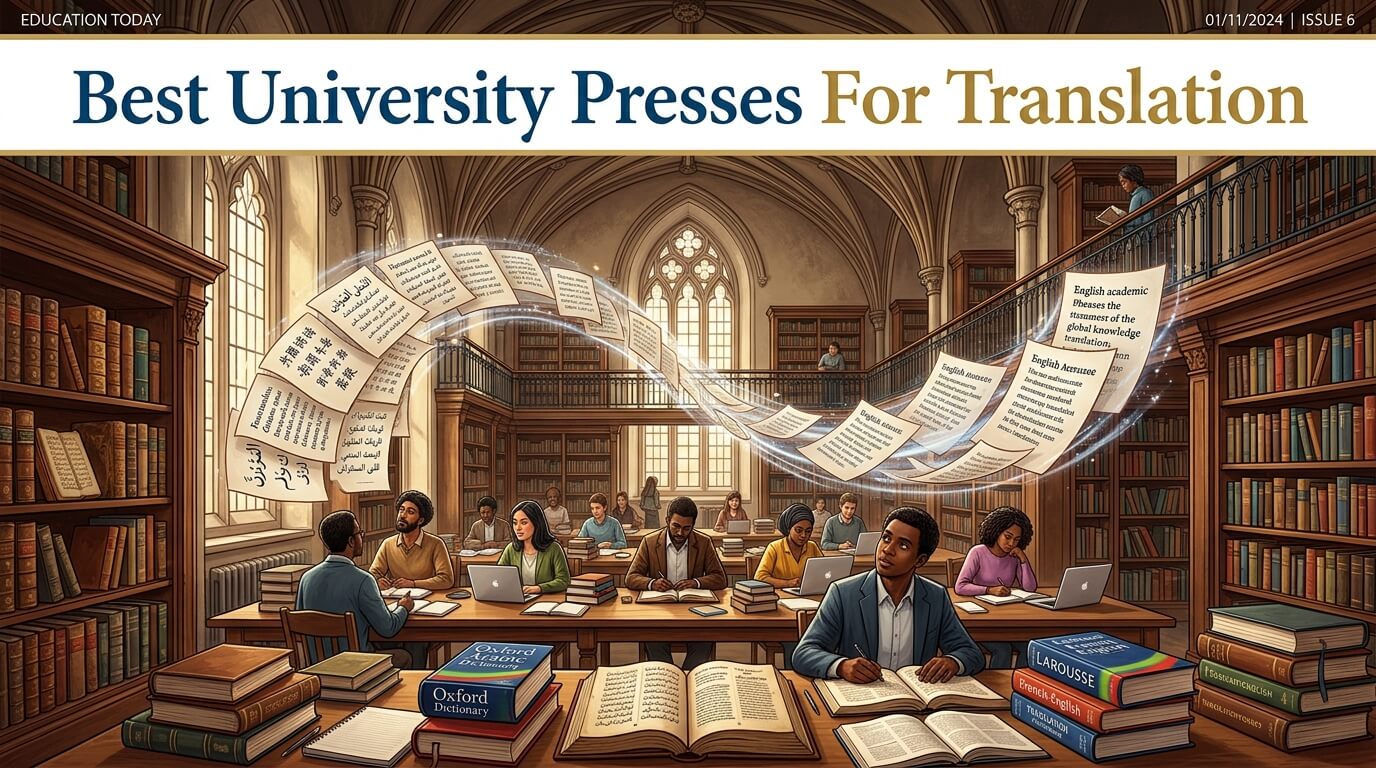
Translation has always played a central role in the circulation of knowledge, literature, philosophy, history, and culture. Long before the modern publishing industry emerged, translated texts helped civilizations exchange ideas across borders and generations. Today, translation remains one of the most important academic and literary practices, allowing readers to engage with works originally written in languages they may never speak. Whether it is a medieval Arabic manuscript, a contemporary Japanese novel, a French philosophical treatise, or a Latin American political study, translation serves as the bridge connecting diverse intellectual traditions.
Within this landscape, university presses occupy a unique and influential position. Unlike commercial publishers that often prioritize market trends and sales potential, university presses focus on scholarly significance, cultural preservation, and intellectual contribution. Many of the world’s most respected translations of literary classics, philosophical works, historical documents, and contemporary international scholarship have been published through university presses.
For scholars, translators, researchers, students, and readers interested in world literature, choosing the right university press can make a significant difference. The quality of editorial review, translation accuracy, contextual annotations, and scholarly introductions often determines how effectively a translated work reaches its audience. This is why certain university presses have developed international reputations for excellence in translation publishing.
This article explores the best university presses for translation, examining their strengths, publishing traditions, academic influence, and contributions to the global exchange of ideas.
Leading University Presses for Translation at a Glance
| University Press | Country | Notable Translation Focus | Strength |
| Harvard University Press | United States | Classics, philosophy, history | Scholarly translations and critical editions |
| Princeton University Press | United States | Literature, religion, philosophy | High academic standards |
| Yale University Press | United States | Historical and literary translations | Extensive global collections |
| Oxford University Press | United Kingdom | Classical texts and scholarship | Worldwide academic influence |
| Columbia University Press | United States | Asian literature and cultural studies | Strong international translation programs |
| University of Chicago Press | United States | Humanities and social sciences | Authoritative scholarly works |
| Cornell University Press | United States | History, literature, and cultural studies | Academic translation excellence |
| Stanford University Press | United States | Philosophy and critical theory | Innovative translated scholarship |
| University of California Press | United States | Global studies and literature | Diverse translation catalog |
| Cambridge University Press | United Kingdom | Classical and academic texts | Research-driven publishing |
Why University Presses Matter in Translation Publishing
Translation is much more than converting words from one language into another. A successful translation captures cultural nuances, historical context, literary style, and intellectual depth. Academic translations often require years of research, collaboration, and editorial oversight.
University presses are uniquely positioned to support such projects because they operate with scholarly goals rather than purely commercial objectives. Their editorial processes typically involve peer review, expert consultation, and extensive fact-checking. As a result, readers receive translations that are both reliable and intellectually rigorous.
Many university presses also invest heavily in supplementary materials such as introductions, commentaries, glossaries, footnotes, and bibliographies. These additions help readers understand the broader significance of a translated text and place it within its historical and cultural framework.
In an era where global communication is increasingly important, university presses continue to preserve linguistic diversity and make international scholarship accessible to wider audiences.
Harvard University Press
A Global Leader in Scholarly Translation
Harvard University Press has long been recognized as one of the most influential academic publishers in the world. Its translation program spans philosophy, classical studies, literature, religion, political thought, and intellectual history.
One of Harvard’s most respected contributions is the Loeb Classical Library, a monumental collection featuring Greek and Latin texts alongside English translations. This series has become indispensable for students, scholars, and general readers seeking access to classical literature.
The press consistently publishes authoritative translations of major thinkers and historical texts. Each volume undergoes extensive scholarly review, ensuring accuracy and reliability. The accompanying introductions and annotations often provide valuable context that enriches the reading experience.
Harvard University Press stands out because it combines academic rigor with accessibility, making complex translated works approachable for both specialists and newcomers.
Commitment to Intellectual Preservation
Beyond literature, Harvard plays a critical role in preserving philosophical and historical traditions through translation. Many texts that would otherwise remain inaccessible to English-speaking audiences have found new life through the press’s efforts.
Princeton University Press
Excellence Across Disciplines
Princeton University Press has developed an impressive reputation for publishing translations in philosophy, religious studies, political theory, literature, and history. Its catalog includes works from numerous linguistic traditions, ranging from European intellectual history to Asian religious texts.
The press is particularly respected for its translations of philosophical works. Scholars frequently cite Princeton editions because of their accuracy and thoughtful editorial apparatus. Many translated texts include extensive commentary that helps readers navigate challenging concepts.
Princeton’s translation projects often emphasize both scholarly precision and readability. This balance has made the press a preferred destination for translators seeking academic credibility while maintaining literary quality.
Influencing Academic Discourse
Many translated works published by Princeton have become foundational texts in university classrooms worldwide. The press’s commitment to intellectual excellence ensures that translated scholarship continues to shape research and teaching across disciplines.
Yale University Press
Bridging Cultures Through Translation
Yale University Press has established itself as a major force in international publishing. Its translation catalog encompasses literature, history, archaeology, philosophy, religion, and cultural studies.
One of Yale’s greatest strengths lies in its ability to bring important international voices to English-speaking audiences. The press regularly publishes translations of significant literary and scholarly works that might otherwise receive limited exposure.
Yale’s editors place strong emphasis on preserving the original author’s voice while ensuring clarity for contemporary readers. This approach results in translations that are both faithful and engaging.
Supporting Literary and Historical Scholarship
Many of Yale’s translated works feature detailed annotations, historical essays, and contextual introductions. These elements transform translations into comprehensive scholarly resources, making them valuable for academic research and classroom use.
Oxford University Press
A Tradition of Translation Excellence
Oxford University Press is one of the oldest and most respected academic publishers in the world. Its contributions to translation publishing span centuries and encompass numerous disciplines.
The press is especially renowned for translations of classical literature, religious texts, historical documents, and philosophical works. Oxford editions frequently become standard references within academic communities because of their scholarly reliability.
The breadth of Oxford’s translation program is remarkable. Readers can explore ancient Greek dramas, medieval manuscripts, Renaissance literature, and modern intellectual works through carefully edited translations.
Global Academic Reach
Oxford’s international presence allows it to collaborate with scholars and translators from around the world. This global network contributes to the exceptional quality and diversity of its translation catalog.
For readers seeking authoritative translations supported by rigorous scholarship, Oxford University Press remains one of the strongest choices available.
Columbia University Press
A Pioneer in International Literature
Columbia University Press occupies a special place in translation publishing due to its strong emphasis on global literature and cross-cultural understanding.
The press has become particularly influential in translating works from East Asia. Chinese, Japanese, and Korean literature have all benefited from Columbia’s commitment to introducing international voices to English-speaking audiences.
Its translation program extends beyond literature into history, philosophy, religion, and cultural studies. The result is a catalog that reflects the richness and diversity of global intellectual traditions.
Advancing Cultural Exchange
Columbia’s dedication to translation reflects a broader mission of fostering international dialogue. By making important texts accessible across linguistic boundaries, the press contributes to greater cultural understanding and academic collaboration.
University of Chicago Press
Translating Ideas Across Borders
The University of Chicago Press has long been associated with excellence in humanities and social sciences publishing. Translation forms an important part of its mission to disseminate influential ideas from around the world.
The press publishes translations in philosophy, sociology, anthropology, history, and literary studies. Many of these works introduce groundbreaking international scholarship to English-speaking readers.
Chicago editions are known for their intellectual depth and editorial precision. Translators work closely with subject experts to ensure both linguistic accuracy and conceptual clarity.
Strength in Scholarly Contextualization
What distinguishes Chicago’s translations is the extensive scholarly framework accompanying many volumes. Readers often benefit from introductions, critical essays, and explanatory notes that illuminate the significance of the translated work.
Cornell University Press
Expanding Access to Global Scholarship
Cornell University Press has earned widespread respect for its contributions to historical, literary, and cultural scholarship. Translation occupies an important place within its publishing strategy.
The press frequently publishes works that explore international perspectives on politics, culture, history, and society. Many translated texts address subjects that are underrepresented in English-language publishing.
Cornell’s commitment to academic excellence ensures that translations meet high scholarly standards while remaining accessible to broader audiences.
Encouraging Interdisciplinary Research
By translating significant works from diverse linguistic traditions, Cornell supports interdisciplinary inquiry and encourages intellectual exchange across national and cultural boundaries.
Stanford University Press
A Home for Critical Theory and Philosophy
Stanford University Press is particularly renowned for its translations of philosophical and theoretical works. Scholars interested in contemporary European thought frequently encounter Stanford editions in academic research.
The press has played a major role in introducing influential thinkers to English-speaking audiences. Its catalog includes translations of important works in philosophy, political theory, cultural criticism, and intellectual history.
Shaping Modern Scholarship
Many translated works published by Stanford have significantly influenced contemporary academic discourse. Through careful editorial oversight and collaboration with leading scholars, the press ensures that complex theoretical ideas are presented with accuracy and clarity.
University of California Press
Diversity and Global Perspectives
The University of California Press has developed a highly diverse translation program that reflects its commitment to global scholarship. Its publications cover literature, anthropology, history, environmental studies, religion, and cultural analysis.
The press often prioritizes voices from regions that have historically received less attention in mainstream publishing. This commitment broadens access to international perspectives and enriches academic conversations.
Supporting Emerging Areas of Study
Many translated works published by California address contemporary social, cultural, and political issues. As a result, the press remains highly relevant to modern scholarly debates and interdisciplinary research.
Cambridge University Press
Centuries of Scholarly Publishing
Cambridge University Press is among the oldest publishing institutions in the world and has a distinguished history of translation publishing.
Its catalog includes translations of classical texts, religious works, historical documents, and scholarly studies. Cambridge editions are widely respected for their editorial rigor and academic credibility.
The press collaborates with leading scholars across disciplines, ensuring that translations meet the highest standards of research and scholarship.
Balancing Tradition and Innovation
While rooted in centuries of publishing tradition, Cambridge continues to embrace new approaches to translation and international scholarship. This combination of heritage and innovation contributes to its enduring influence.
How University Presses Select Translation Projects
The process of selecting translation projects is often highly competitive. University presses evaluate submissions based on scholarly significance, cultural value, originality, and potential impact.
Editors typically consult experts in the relevant field before approving a translation proposal. Peer reviewers assess the quality of the translation and determine whether the work contributes meaningfully to existing scholarship.
Because translation projects often require substantial resources, presses prioritize works that fill important gaps in academic literature or introduce significant voices to new audiences.
This careful selection process helps maintain the high standards associated with university press publishing.
The Growing Importance of Translation in Academic Publishing
Globalization has increased demand for translated scholarship across nearly every academic discipline. Researchers today frequently engage with ideas originating from different linguistic and cultural traditions.
Translation allows important discoveries, theories, and literary achievements to reach wider audiences. It also promotes intellectual diversity by ensuring that knowledge is not restricted by language barriers.
University presses play a critical role in this process. Their commitment to quality, accuracy, and scholarly integrity makes them essential partners in preserving and sharing global knowledge.
As universities continue to emphasize international collaboration and cross-cultural research, translation publishing will likely become even more important in the years ahead.
What Makes a Great Translation Publisher?
Several factors distinguish exceptional translation publishers from average ones. Editorial expertise is perhaps the most important. Skilled editors understand both the source material and the target audience, helping translators navigate complex linguistic challenges.
Peer review also contributes significantly to quality. Independent scholars can identify potential inaccuracies, cultural misunderstandings, or interpretive issues before publication.
Strong translation publishers additionally provide contextual materials that enhance understanding. Introductions, annotations, and supplementary essays often transform a translation into a comprehensive educational resource.
Finally, a commitment to long-term intellectual value rather than short-term commercial success enables university presses to publish works that might otherwise remain unavailable.
Conclusion
Translation remains one of humanity’s most powerful tools for sharing knowledge, preserving culture, and fostering intellectual exchange. Behind many of the world’s most influential translated works stand university presses committed to scholarly excellence and cultural accessibility.
Harvard University Press, Princeton University Press, Yale University Press, Oxford University Press, Columbia University Press, University of Chicago Press, Cornell University Press, Stanford University Press, University of California Press, and Cambridge University Press have each made extraordinary contributions to translation publishing. Through rigorous editorial standards, collaboration with expert translators, and dedication to academic integrity, these institutions continue to expand access to global literature and scholarship.
For students, researchers, translators, and readers seeking authoritative translated works, these university presses represent some of the most trusted and respected sources available. Their efforts ensure that important ideas can cross linguistic boundaries, enriching intellectual life and strengthening connections between cultures around the world.
FAQs
Q1. What is a university press?
A university press is an academic publishing organization affiliated with a university that publishes scholarly books, research, and translated works.
Q2. Why are university presses important for translation?
University presses ensure high-quality translations through expert review, scholarly editing, and detailed contextual information.
Q3. Which university press is best for translated literature?
Columbia University Press is widely recognized for its strong catalog of translated international literature, particularly from Asia.
Q4. Do university presses publish contemporary translated works?
Yes, many university presses publish both classic and contemporary translations in literature, history, philosophy, and cultural studies.
Q5. Are university press translations suitable for academic research?
Yes, university press translations are highly regarded for their accuracy, scholarly annotations, and reliability, making them valuable resources for research and teaching.
