
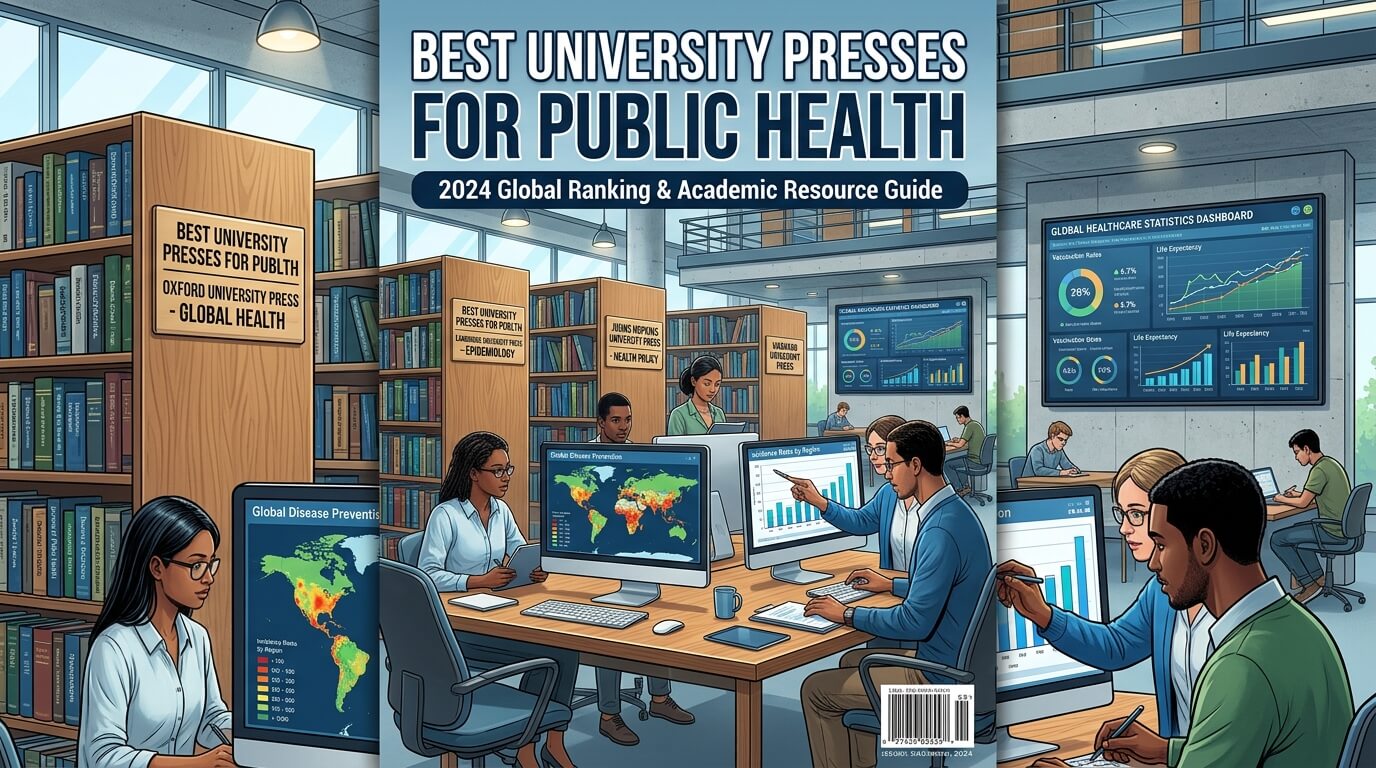
Public health is one of the most dynamic and influential academic fields in the modern world. From managing infectious diseases and improving healthcare systems to addressing environmental health risks and reducing social inequalities, public health research directly impacts communities across the globe. As the field continues to expand, scholars, researchers, policymakers, healthcare professionals, and students rely heavily on authoritative academic publications to stay informed about emerging challenges and evidence-based solutions.
One of the most trusted sources of scholarly literature in public health comes from university presses. Unlike commercial publishers that often focus on market-driven titles, university presses are dedicated to advancing knowledge, supporting rigorous peer review, and publishing research that contributes to academic and societal progress. Their books and journals frequently shape policy discussions, influence healthcare practices, and provide foundational resources for education and research.
Choosing the right university press can significantly improve access to high-quality public health literature. Some presses specialize in epidemiology and global health, while others excel in health policy, medical anthropology, environmental health, health equity, and healthcare management. This article explores the best university presses for public health and highlights their contributions to one of the world’s most important academic disciplines.
Why University Presses Matter in Public Health
Public health is a multidisciplinary field that draws knowledge from medicine, sociology, economics, environmental science, political science, psychology, and statistics. Because of this complexity, researchers need publishing platforms that maintain rigorous academic standards while encouraging interdisciplinary collaboration.
University presses play a critical role in preserving the integrity of public health scholarship. Their editorial processes emphasize evidence-based research, peer review, and long-term scholarly value. Rather than focusing solely on immediate commercial success, university presses prioritize publications that advance understanding and address significant public health concerns.
The influence of university press publications extends beyond universities. Government agencies, international organizations, healthcare institutions, and non-governmental organizations often rely on books published by respected academic presses when developing policies, designing interventions, and evaluating health outcomes.
As public health challenges become increasingly global, university presses continue to serve as essential bridges between research, policy, and practice.
Leading University Presses for Public Health
The following university presses have earned international recognition for publishing influential public health books, research collections, and interdisciplinary studies.
| University Press | Notable Strengths in Public Health | Global Reputation |
| Harvard University Press | Health policy, medical ethics, healthcare systems | Excellent |
| Johns Hopkins University Press | Epidemiology, global health, public health journals | Outstanding |
| Oxford University Press | Global health, health economics, epidemiology | Outstanding |
| Cambridge University Press | Population health, infectious disease research | Outstanding |
| University of California Press | Health equity, environmental health, social determinants | Excellent |
| Yale University Press | Medical history, health policy, healthcare reform | Excellent |
| Columbia University Press | Urban health, public policy, global health studies | Excellent |
| University of Chicago Press | Sociology of health, healthcare systems, public health theory | Excellent |
| Princeton University Press | Health economics, policy analysis, population studies | Excellent |
| Duke University Press | Health disparities, medical anthropology, social medicine | Excellent |
Johns Hopkins University Press
A Global Leader in Public Health Publishing
When discussing public health publishing, Johns Hopkins University Press is often regarded as one of the most influential academic publishers in the field. Its connection with the renowned Johns Hopkins Bloomberg School of Public Health provides a strong foundation for publishing cutting-edge research that addresses pressing global health concerns.
The press publishes books that cover epidemiology, biostatistics, infectious diseases, healthcare management, environmental health, maternal health, and health policy. Its publications frequently become essential references for both students and experienced researchers.
One of the reasons for the press’s exceptional reputation is its commitment to translating scientific research into practical knowledge. Many of its publications bridge the gap between academic inquiry and real-world public health practice, making them valuable resources for policymakers and healthcare leaders.
Johns Hopkins University Press is also known for publishing highly respected journals that contribute significantly to global public health discourse.
Oxford University Press
Advancing Global Health Knowledge
Oxford University Press has long been recognized as one of the world’s most prestigious academic publishers. Its public health catalog reflects a commitment to addressing healthcare challenges from both local and international perspectives.
The press publishes influential works in epidemiology, health economics, disease prevention, healthcare policy, global health governance, and public health ethics. Many leading public health textbooks used in universities worldwide originate from Oxford University Press.
A distinguishing characteristic of Oxford’s public health publications is their international scope. Authors frequently examine healthcare systems across different countries, providing comparative analyses that help researchers understand how public health interventions perform in diverse settings.
The press also supports interdisciplinary research that integrates medical science with economics, sociology, law, and political science, making its publications especially relevant for contemporary public health challenges.
Cambridge University Press
Excellence in Epidemiology and Population Health
Cambridge University Press has built an impressive reputation for publishing rigorous research in epidemiology, infectious disease control, population health, and healthcare policy.
The press is particularly strong in quantitative public health research. Many of its publications focus on statistical methods, disease surveillance, health data analysis, and evidence-based decision-making. These resources are frequently used by epidemiologists and public health professionals seeking to understand disease patterns and evaluate interventions.
Cambridge also publishes works exploring climate change, environmental sustainability, and their implications for public health. As environmental factors increasingly influence health outcomes worldwide, these publications have become especially relevant.
Researchers value Cambridge University Press because of its commitment to methodological rigor and its emphasis on publishing work that can inform public policy and healthcare practice.
Harvard University Press
Shaping Public Health Policy and Ethics
Harvard University Press is widely respected for publishing scholarly works that examine healthcare systems, public policy, medical ethics, and social determinants of health.
Public health challenges are often deeply connected to broader societal issues such as poverty, inequality, education, and governance. Harvard University Press excels at exploring these connections through carefully researched and thoughtfully written publications.
Many of its books analyze healthcare reform, health equity, access to care, and ethical questions surrounding medical decision-making. These topics are increasingly important as governments and institutions seek to improve healthcare outcomes while managing limited resources.
Harvard’s publications often reach audiences beyond academia, influencing policymakers, healthcare administrators, and public health advocates around the world.
University of California Press
Championing Health Equity and Social Justice
The University of California Press has become a major force in public health publishing, particularly in areas related to health equity, environmental health, community health, and social justice.
Its publications frequently examine how social, economic, and environmental factors shape health outcomes. Researchers interested in health disparities, racial inequities, occupational health risks, and environmental exposure often turn to the press for authoritative scholarship.
One of the strengths of the University of California Press is its focus on contemporary public health issues. Many of its books address emerging challenges such as climate change, urban health crises, migration, and healthcare accessibility.
The press has earned recognition for publishing research that highlights the experiences of marginalized populations and proposes solutions for reducing health inequalities.
Yale University Press
Bridging Medical History and Modern Public Health
Yale University Press occupies a unique position in public health publishing because of its ability to connect historical perspectives with contemporary healthcare challenges.
Many of its publications examine how public health systems evolved over time, offering valuable insights into current policy debates. Understanding the historical context of healthcare reforms, disease outbreaks, and public health interventions can help researchers develop more effective strategies for addressing modern challenges.
The press also publishes influential works on healthcare policy, ethics, and global health. Its authors often explore the relationships between politics, economics, and public health outcomes.
Yale University Press is especially valuable for scholars seeking comprehensive analyses that combine historical depth with practical relevance.
Columbia University Press
Addressing Urban and Global Health Challenges
Columbia University Press has established itself as a respected publisher of interdisciplinary public health research. Its publications often focus on urban health, healthcare systems, international development, and global health policy.
As urban populations continue to grow worldwide, understanding the health implications of urbanization has become increasingly important. Columbia’s publications explore issues such as housing, transportation, environmental exposure, healthcare access, and community health in urban settings.
The press also publishes research on global health governance and international health initiatives, making it particularly relevant for scholars working in international development and public policy.
Its interdisciplinary approach encourages collaboration between researchers from diverse academic backgrounds, enriching public health scholarship.
University of Chicago Press
Understanding Health Through Social Science
The University of Chicago Press is renowned for publishing influential works in sociology, anthropology, economics, and political science. These disciplines play a crucial role in understanding public health outcomes.
Public health is not solely about biological factors; it is also shaped by human behavior, social structures, cultural practices, and economic conditions. Chicago’s publications often examine these complex relationships.
Researchers interested in healthcare systems, social determinants of health, behavioral health, and population studies frequently rely on books published by the University of Chicago Press.
The press is particularly respected for publishing theoretical and conceptual works that deepen understanding of health and society.
Princeton University Press
Evidence-Based Perspectives on Health Policy
Princeton University Press has earned recognition for publishing high-quality research in public policy, economics, and population health.
Many of its public health publications focus on healthcare financing, demographic change, aging populations, and health policy evaluation. These topics are increasingly important as governments confront rising healthcare costs and changing population structures.
The press is known for presenting complex research in ways that remain accessible to broader audiences. Policymakers, researchers, and students often appreciate the clarity and analytical rigor of Princeton’s publications.
Its books frequently contribute to important discussions regarding healthcare reform and public resource allocation.
Duke University Press
Exploring Health Disparities and Social Medicine
Duke University Press has developed a strong reputation for publishing innovative scholarship in medical anthropology, social medicine, and health disparities.
The press often highlights how social identities, cultural experiences, and structural inequalities influence health outcomes. Its publications encourage readers to think critically about the broader contexts in which health and illness occur.
Duke’s public health catalog includes research on global health, disability studies, reproductive health, healthcare access, and community-based interventions.
Many scholars value the press for its willingness to publish groundbreaking and interdisciplinary work that challenges conventional approaches to public health research.
Emerging Trends in Public Health Publishing
Public health publishing continues to evolve in response to changing global challenges. University presses are increasingly publishing research that addresses pandemic preparedness, digital health technologies, climate-related health risks, and mental health concerns.
The COVID-19 pandemic demonstrated the importance of rapid knowledge dissemination and evidence-based decision-making. As a result, many university presses have expanded access to digital publications and open-access resources.
Climate change has also emerged as a major focus within public health scholarship. Researchers are examining the health effects of extreme weather events, air pollution, food insecurity, and environmental degradation. University presses are playing a critical role in publishing this growing body of research.
Health equity remains another important area of focus. Scholars continue to investigate disparities related to race, ethnicity, gender, income, geography, and disability, while proposing strategies to create more equitable healthcare systems.
How to Choose the Right University Press for Public Health Research
Selecting the best university press depends largely on individual research interests and professional goals. Researchers focused on epidemiology and disease prevention may find Johns Hopkins University Press and Cambridge University Press particularly valuable. Those interested in global health policy and health economics may prefer Oxford University Press or Princeton University Press.
Scholars exploring health equity, environmental justice, and social determinants of health often benefit from publications produced by the University of California Press and Duke University Press. Researchers interested in healthcare ethics and policy may find Harvard University Press and Yale University Press especially useful.
Students should also consider the types of textbooks, journals, and digital resources offered by each press. Access to relevant materials can significantly enhance learning and research productivity.
Ultimately, the strongest public health libraries often include publications from multiple university presses, allowing readers to benefit from diverse perspectives and methodologies.
The Future of University Presses in Public Health
As global health challenges become increasingly interconnected, the role of university presses will continue to grow. Emerging issues such as antimicrobial resistance, climate-related health threats, artificial intelligence in healthcare, aging populations, and global health security require rigorous scholarly investigation.
University presses are uniquely positioned to support this work because of their commitment to academic excellence and intellectual independence. They provide platforms for researchers to share innovative ideas, challenge existing assumptions, and develop evidence-based solutions.
The future of public health depends heavily on access to trustworthy knowledge. University presses will remain essential institutions for producing, preserving, and disseminating that knowledge to scholars, practitioners, policymakers, and communities worldwide.
Conclusion
The best university presses for public health serve as pillars of scholarly communication in one of the world’s most impactful academic disciplines. From the epidemiological expertise of Johns Hopkins University Press to the global health leadership of Oxford University Press, the methodological rigor of Cambridge University Press, and the social justice focus of the University of California Press and Duke University Press, each publisher contributes uniquely to advancing public health knowledge.
These presses not only publish research but also shape policy discussions, influence healthcare practices, and support the education of future public health leaders. Whether you are a student beginning your academic journey, a researcher conducting advanced studies, or a policymaker seeking evidence-based guidance, the publications produced by these university presses provide invaluable resources.
As public health continues to address evolving global challenges, university presses will remain at the forefront of scholarly publishing, helping transform research into meaningful improvements in health and well-being for people around the world.
