
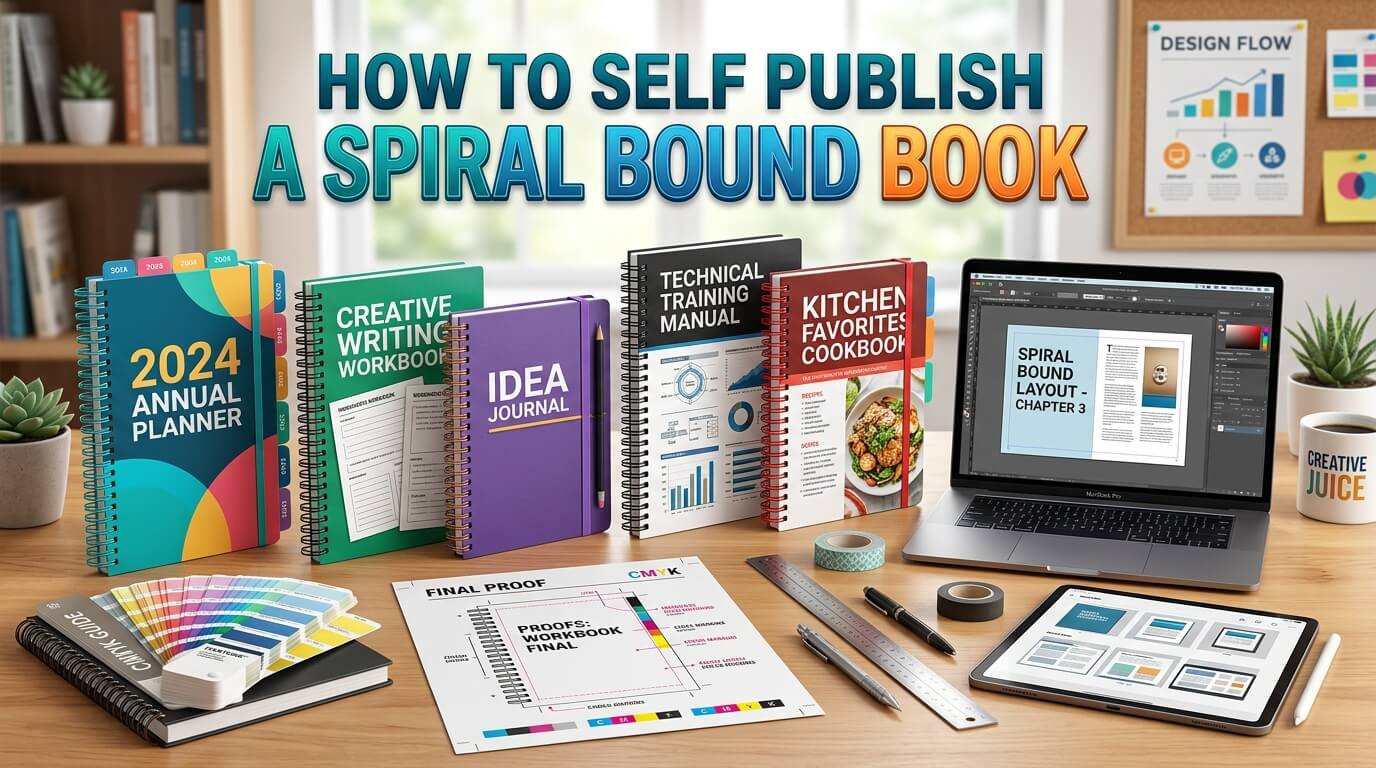
The self-publishing industry has expanded far beyond traditional paperback and hardcover books. Today, creators have access to numerous publishing formats that allow them to present their content in ways that better serve readers’ needs. Among these options, spiral-bound books have become increasingly popular for authors, educators, coaches, entrepreneurs, and professionals who want to create highly functional publications. Whether it is a workbook, planner, training manual, cookbook, educational guide, journal, or business resource, spiral binding offers a practical reading experience that many audiences prefer.
Unlike standard book formats, spiral-bound books are designed for usability. They can lie flat on a desk, fold back on themselves, and provide readers with easy access to information while they write, study, cook, plan, or complete exercises. These advantages make spiral-bound publications particularly valuable in industries where interaction and convenience matter just as much as the content itself.
Self-publishing a spiral-bound book involves much more than simply writing a manuscript and sending it to a printer. Authors must understand the unique requirements of spiral binding, choose appropriate dimensions and paper types, prepare professional layouts, identify reliable printing partners, and develop a marketing strategy that reaches the right audience. While the process may seem complex at first, a well-planned approach can result in a high-quality publication that stands out in an increasingly competitive market.
The Increasing Demand for Spiral-Bound Books Explained
The publishing landscape has changed significantly as readers increasingly seek practical and interactive resources. While novels and traditional nonfiction books continue to thrive, there is a growing demand for publications that encourage participation and hands-on engagement. Spiral-bound books fill this need by providing a format that supports active use.
One of the biggest advantages of spiral binding is functionality. Readers can keep the book open without holding it, making it ideal for situations where they need both hands free. A student working through an educational workbook, a chef preparing a recipe, or a business professional referencing training materials can all benefit from a book that remains open exactly where it is needed. This practical advantage has helped spiral-bound books become a preferred format for many educational and instructional projects.
In recent years, the rise of online learning, coaching programs, productivity planning, and digital entrepreneurship has further fueled demand for spiral-bound publications. Many creators are discovering that readers appreciate resources that function as tools rather than simply books. This shift has created exciting opportunities for self-publishers willing to explore alternative publishing formats.
Determining Whether Spiral Binding Is the Right Choice for Your Book
Before beginning the publishing process, it is important to evaluate whether spiral binding aligns with your project’s purpose and audience expectations. Not every book benefits equally from this format. Understanding how readers will use your publication can help determine whether spiral binding is the most effective option.
Books that require regular interaction often benefit the most from spiral binding. Educational workbooks, planners, journals, instructional manuals, recipe collections, fitness guides, training materials, and reference books frequently perform better in this format because readers need easy access to pages while performing specific tasks. The ability to lay flat enhances usability and improves the overall experience.
Conversely, books intended primarily for sequential reading may not require spiral binding. Novels, memoirs, and narrative nonfiction often work perfectly well in paperback or hardcover formats because readers generally move through the content without needing to write, reference, or interact with the pages extensively.
When evaluating your project, focus on the reader’s experience. If the format can make the content easier to use and more valuable, spiral binding may be an excellent publishing choice.
Defining Your Audience Before You Publish
Every successful self-publishing project begins with a clear understanding of the target audience. This principle becomes even more important when creating a spiral-bound book because functionality often plays a major role in purchasing decisions.
Understanding who will use your book helps shape content development, design decisions, production quality, and pricing strategies. A workbook designed for elementary school students requires different formatting considerations than a professional training manual intended for corporate employees. Similarly, a fitness journal aimed at athletes may require different paper quality and page layouts than a recipe book designed for home cooks.
Researching similar publications can provide valuable insights into audience preferences. Examining bestselling products within your niche can reveal common design elements, page counts, cover styles, and content structures that resonate with readers. This research helps ensure your book meets market expectations while still offering unique value.
By identifying your audience early in the process, you can make informed decisions that improve both user satisfaction and commercial success.
Developing Content That Supports Practical Use
Creating content for a spiral-bound book requires a slightly different mindset than writing a traditional book. While the quality of information remains essential, usability becomes equally important. Readers often purchase spiral-bound publications because they intend to interact with the material rather than simply consume it.
This means content should be organized in ways that support practical application. Information should flow logically from one section to the next while allowing readers to easily locate key concepts when needed. Clear explanations, engaging examples, and thoughtful organization can significantly enhance the user experience.
For workbooks and educational resources, interactive elements often add considerable value. Reflection exercises, guided activities, practice sections, and note-taking spaces can transform a standard book into a highly engaging learning tool. Similarly, planners and journals benefit from layouts that encourage consistent use over extended periods.
The goal is to create a publication that readers find genuinely useful in their daily lives, increasing the likelihood of positive reviews, recommendations, and repeat purchases.
Choosing the Ideal Size for Your Spiral-Bound Book
Book dimensions have a direct impact on both usability and production costs. Selecting the right size requires careful consideration of how readers will interact with the content.
Larger formats often provide more writing space, making them ideal for workbooks, planners, and instructional manuals. Smaller formats may offer greater portability, which can be advantageous for journals and field guides. The choice should balance convenience, functionality, and printing expenses.
The table below highlights common spiral-bound book sizes and their typical applications.
| Book Size | Common Applications | Primary Benefits |
| 5.5″ x 8.5″ | Journals, personal planners | Portable and easy to carry |
| 6″ x 9″ | Educational guides, workbooks | Balanced size and readability |
| 8.5″ x 11″ | Training manuals, worksheets | Generous writing space |
| 8″ x 10″ | Cookbooks, instructional books | Professional appearance |
| 11″ x 17″ Folded | Technical manuals, presentations | Maximum workspace for complex content |
Choosing the correct size at the beginning of the project helps streamline design decisions and minimizes costly revisions later in the publishing process.
Designing the Interior for Maximum Readability and Functionality
Interior design plays a critical role in determining how readers interact with a spiral-bound publication. Even exceptional content can lose effectiveness if the layout feels cluttered, confusing, or difficult to navigate.
One of the most important considerations is margin spacing. Because spiral-bound books require holes punched along one edge, designers must leave adequate space between the content and the binding area. Failing to account for this can result in text, images, or writing areas being partially obscured.
Visual hierarchy is equally important. Headings, subheadings, typography, and spacing should guide readers naturally through the material. Well-designed pages reduce cognitive load and make information easier to absorb. White space should be used intentionally to create balance and prevent pages from feeling overwhelming.
A professional layout not only improves usability but also enhances the perceived value of the book, making readers more likely to recommend it to others.
Incorporating Interactive Elements Into the Design
Many spiral-bound books are intended to be used repeatedly over time. Incorporating interactive features can significantly increase engagement and customer satisfaction.
Workbooks often benefit from dedicated writing areas where readers can complete exercises directly within the publication. Journals may include reflection prompts that encourage thoughtful responses. Training manuals can feature worksheets, progress trackers, and review sections that reinforce learning outcomes.
These elements should be integrated seamlessly into the design rather than added as afterthoughts. Every interactive component should support the book’s overall purpose and contribute meaningfully to the reader’s experience.
Thoughtful interaction design transforms a publication from a passive reading experience into an active learning and productivity tool.
Selecting the Right Paper and Printing Specifications
Paper quality has a major influence on how readers perceive and use a spiral-bound book. Since many publications in this format involve writing, selecting appropriate paper stock is especially important.
Thin paper may reduce production costs, but it can create problems such as ink bleed-through and reduced durability. Heavier paper often provides a better writing experience and contributes to a more professional feel. Publications that include photographs or detailed graphics may require specialized paper finishes to ensure optimal image reproduction.
Authors should consider how readers will interact with the pages. A workbook used daily for several months may require different paper specifications than a recipe book that is consulted occasionally. Matching paper quality to the intended use enhances both functionality and customer satisfaction.
Consulting with printing providers can help identify options that balance quality and budget effectively.
Finding the Best Printing Partner
Choosing the right printer is one of the most important decisions in the self-publishing process. The quality of the finished product depends heavily on the capabilities and reliability of the printing provider.
Some printers specialize in short-run digital printing, while others focus on large-scale offset production. Certain providers offer print-on-demand services that eliminate inventory concerns, while others provide extensive customization options for authors ordering in bulk.
When evaluating potential partners, request samples whenever possible. Examining actual products provides valuable insight into print quality, binding durability, paper stock, and finishing options. Comparing multiple providers can help ensure you receive the best combination of quality, service, and pricing.
Investing time in this research can prevent costly production issues and improve the overall success of your publishing project.
Print-on-Demand Versus Bulk Printing
One of the biggest decisions self-publishers face is whether to use print-on-demand services or order books in bulk. Each approach offers distinct advantages depending on the project’s goals.
Print-on-demand minimizes financial risk because books are produced only when orders are placed. This model eliminates inventory storage concerns and allows creators to test market demand without making a large upfront investment. It is particularly attractive for first-time publishers or niche products with uncertain sales projections.
Bulk printing, on the other hand, often results in significantly lower per-unit costs. Authors who anticipate strong demand may achieve higher profit margins by ordering larger quantities. Bulk production also provides greater control over customization options and material selections.
The best choice depends on budget, audience size, sales expectations, and long-term business objectives.
Pricing Your Spiral-Bound Book for Profitability
Pricing is both an art and a science. Setting the price too high may discourage potential buyers, while pricing too low can undermine profitability and perceived value.
Spiral-bound books generally cost more to produce than standard paperbacks due to specialized binding processes and higher production requirements. These expenses must be factored into the pricing strategy. However, customers often recognize the additional functionality and are willing to pay premium prices for products that provide practical benefits.
Researching competing books within your niche can help establish realistic expectations. Consider production costs, shipping expenses, marketing investments, and desired profit margins when calculating retail pricing.
A successful pricing strategy balances affordability with sustainability, ensuring that the book remains attractive to customers while supporting long-term publishing goals.
Marketing Your Spiral-Bound Book Effectively
Publishing a great book is only part of the journey. Successful self-publishers understand that marketing plays a crucial role in generating awareness and driving sales.
One of the most effective approaches is demonstrating how the book solves a specific problem. Readers are often more interested in outcomes than features. Showing how a workbook improves learning, how a planner enhances productivity, or how a recipe book simplifies meal preparation can create stronger connections with potential buyers.
Visual marketing is especially important for spiral-bound publications. Videos, page previews, demonstrations, and user-generated content allow prospective customers to experience the product before purchasing. This is particularly valuable because many of the format’s advantages become apparent when people see it in action.
Building an email list, maintaining a content-driven website, and engaging with niche communities can further expand reach and establish credibility within the target market.
Creating Long-Term Success Beyond the Initial Launch
Many authors focus heavily on launch activities while overlooking opportunities for ongoing growth. In reality, successful publishing often involves continuous refinement and audience engagement long after the initial release.
Reader feedback can provide valuable insights into what works well and what could be improved. Reviews, surveys, customer emails, and social media interactions often reveal opportunities to enhance future editions. Updating content, improving layouts, and expanding resources can extend the lifespan of a publication and increase customer loyalty.
Additionally, successful spiral-bound books often lead to complementary products. Authors may develop companion workbooks, advanced editions, digital resources, online courses, or coaching programs that build upon the original publication’s success.
Viewing your book as part of a larger content ecosystem can create multiple revenue streams and strengthen your overall publishing business.
Conclusion
Self-publishing a spiral-bound book offers creators a unique opportunity to combine valuable content with exceptional functionality. Unlike traditional books that focus primarily on reading, spiral-bound publications are often designed to be used, referenced, completed, and revisited over time. This practical nature makes them particularly effective for educational resources, planners, journals, training manuals, cookbooks, and interactive workbooks.
The path to successful self-publication involves careful planning, thoughtful content development, professional design, strategic printing decisions, and targeted marketing efforts. Every stage of the process contributes to the final product’s quality and market performance. By understanding your audience, prioritizing usability, investing in professional production standards, and creating a strong promotional strategy, you can produce a spiral-bound book that delivers meaningful value to readers while building a sustainable publishing venture. As demand for interactive and practical resources continues to grow, spiral-bound self-publishing remains one of the most promising opportunities for modern creators seeking to stand out in an increasingly competitive marketplace.
