
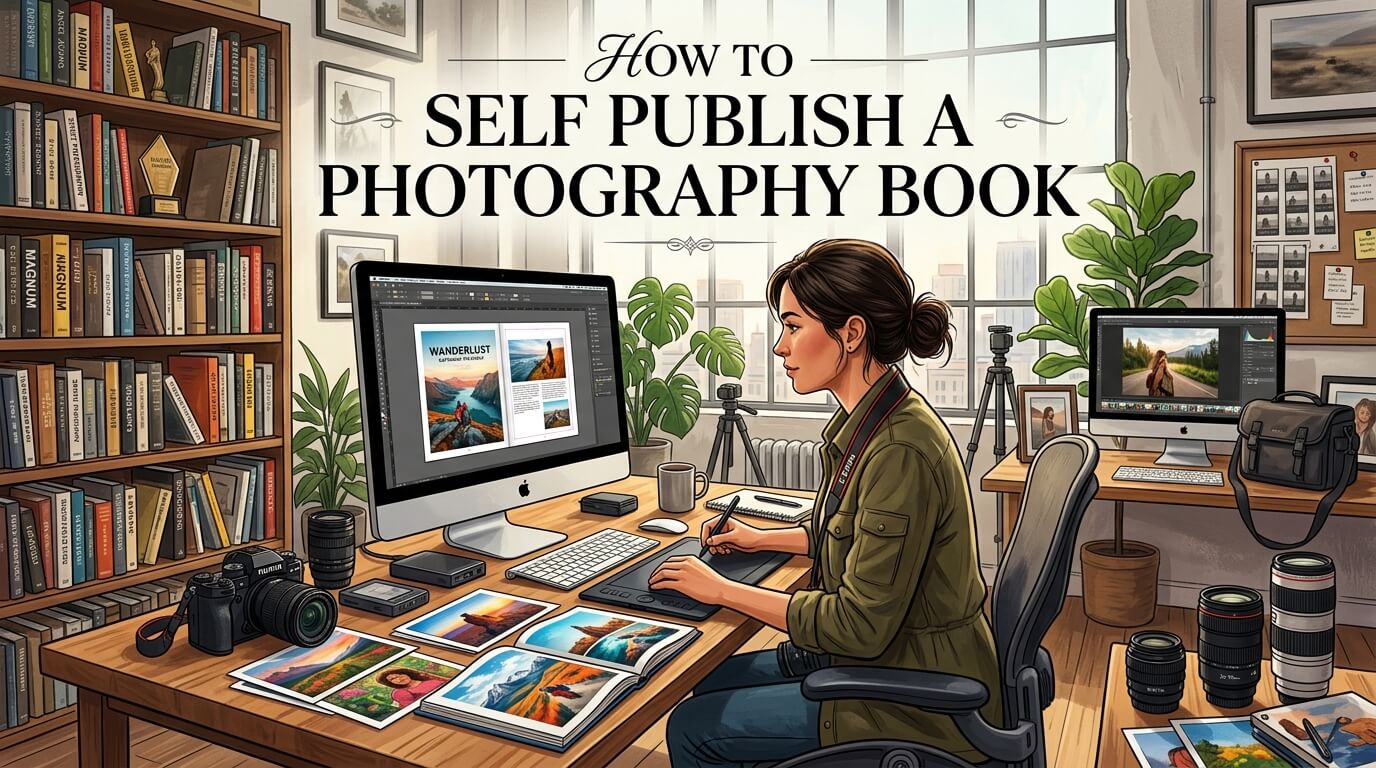
Photography has evolved far beyond a simple artistic hobby. Today, photographers use books to showcase portfolios, document journeys, preserve cultural stories, display fine art collections, and build professional credibility. While digital galleries and social media platforms offer instant exposure, a photography book provides something far more lasting. It transforms a collection of images into a carefully curated visual experience that readers can hold, revisit, and appreciate over time.
Self-publishing has opened new opportunities for photographers who want complete control over their creative vision. Instead of waiting for traditional publishers to approve a project, photographers can independently create, design, publish, and distribute books that reflect their artistic goals. Whether the project focuses on landscapes, street photography, wildlife, travel, fashion, architecture, documentary work, or personal artistic exploration, self-publishing offers a direct path from concept to publication.
Creating a successful photography book involves much more than selecting attractive images. It requires thoughtful planning, image curation, sequencing, design decisions, production choices, and marketing strategies. Understanding each stage of the process helps photographers create books that not only look visually impressive but also connect with readers and collectors.
Understanding the Purpose of Your Photography Book
Before beginning the publishing process, it is important to define the purpose of the book. Many photography projects fail because photographers focus entirely on individual images rather than the overall story the collection tells.
A photography book should have a clear objective. Some photographers publish books to showcase professional portfolios. Others create books documenting specific regions, historical events, environmental issues, cultural traditions, or personal experiences. Fine art photographers often use books as extensions of gallery exhibitions, while travel photographers use them to share visual narratives from their journeys.
Understanding the book’s purpose helps guide every decision that follows. The theme influences image selection, book size, layout, writing style, cover design, paper choice, and marketing strategy. Readers are more likely to engage with a book that feels cohesive and intentional rather than a random collection of unrelated photographs.
The strongest photography books usually revolve around a central concept that creates a sense of continuity from the first page to the last.
Developing a Strong Concept
A successful photography book begins with a compelling concept. Even visually stunning photographs may lose impact if they lack narrative structure or thematic consistency.
Photographers should consider what story they want readers to experience. The concept may be geographical, emotional, historical, social, environmental, or artistic. For example, a book may document disappearing rural communities, urban architecture, wildlife conservation efforts, seasonal landscapes, or a personal photographic journey spanning several years.
The concept becomes the foundation of the entire project. Every image should contribute to the larger message rather than simply filling pages.
When readers finish the book, they should feel they have experienced a complete visual narrative rather than viewed isolated photographs.
Curating the Right Images
Image selection is one of the most challenging aspects of creating a photography book. Photographers often become emotionally attached to certain images, making it difficult to evaluate them objectively.
The goal is not necessarily to include the largest number of photographs. Instead, the objective is to select images that work together to support the book’s overall concept.
Many experienced photographers begin with hundreds or even thousands of images before narrowing the collection to a manageable selection. During this process, it is important to evaluate photographs based on quality, relevance, emotional impact, visual consistency, and contribution to the story.
A photography book is strengthened when every image serves a purpose. Removing weaker images often improves the overall experience and allows stronger photographs to stand out.
Careful editing and selection create a more professional and memorable final product.
Creating Visual Flow Through Sequencing
The order of photographs significantly influences how readers experience the book. Sequencing transforms individual images into a narrative journey.
A well-sequenced photography book guides readers through changing moods, perspectives, locations, or themes. The opening image should immediately capture attention and establish the book’s tone. Subsequent photographs should build momentum and create visual relationships between pages.
Transitions between images matter. Similar colors, shapes, textures, lighting conditions, or subject matter can create continuity. Contrasting images can also be used strategically to create surprise, tension, or emotional shifts.
Many photographers spend weeks refining image order because sequencing often determines whether a book feels professional or disorganized.
The final image is equally important. It should provide a sense of closure while leaving a lasting impression on the reader.
Writing Supporting Content
Although photography books focus primarily on visual content, written material often enhances the reader’s understanding and appreciation of the work.
An introduction can explain the project’s inspiration, objectives, and background. Captions may provide context for individual images without overwhelming the visual experience. Essays can offer deeper insight into locations, historical events, cultural subjects, or creative processes.
The amount of text depends on the book’s purpose. Fine art photography books often use minimal text, while documentary projects may include substantial written content.
The key is ensuring that text complements the photographs rather than competing with them.
Strong writing helps readers connect emotionally and intellectually with the images.
Planning Your Book Format
Photography books come in many formats, and choosing the right one significantly impacts presentation and production costs.
The ideal format depends on the type of photography being showcased. Large landscape photographs often benefit from wide-format books that maximize visual impact. Portrait collections may work well in vertical formats. Travel photography frequently appears in square formats that balance flexibility and aesthetics.
Photographers must also decide between hardcover and softcover editions. Hardcover books typically offer greater durability, prestige, and collector appeal. Softcover books are often more affordable and accessible to a broader audience.
The chosen format should enhance the photographs while remaining practical for production and distribution.
Designing a Professional Layout
Book design plays a crucial role in how photographs are perceived. A poorly designed layout can diminish the impact of even the most exceptional images.
Photography book design requires careful consideration of white space, page balance, image placement, typography, and pacing. Some photographs benefit from full-page presentation, while others work effectively in smaller groupings.
Consistency throughout the design creates a polished reading experience. Fonts, margins, page numbering, and chapter structures should complement the book’s visual identity.
Professional design allows photographs to breathe and encourages readers to engage fully with the images.
Many photographers choose to work with experienced book designers because layout decisions often require specialized expertise.
Choosing the Right Paper
Paper selection is one of the most important production decisions for a photography book. Different paper types affect image reproduction, color accuracy, texture, and overall presentation.
Glossy paper tends to produce vibrant colors and sharp contrast, making it popular for fashion, travel, and commercial photography. Matte paper offers a softer appearance and reduces glare, making it suitable for fine art and documentary projects.
Paper weight also influences the book’s feel and durability. Heavier paper often conveys higher quality but increases production costs and shipping expenses. Photographers should request physical samples whenever possible before finalizing production decisions.
The right paper enhances the viewing experience and contributes significantly to the book’s perceived value.
Photography Book Production Options
The rise of digital printing technology has created multiple production paths for self-publishing photographers.
The following table highlights common publishing options available today.
| Publishing Method | Best For | Advantages | Considerations |
| Print-on-Demand | Small audiences and first-time publishers | No inventory requirements, lower upfront costs | Higher per-unit printing costs |
| Short-Run Printing | Independent photographers | Better print quality and unit pricing | Requires upfront investment |
| Offset Printing | Large print runs | Highest quality and lowest unit costs at scale | Significant initial expense |
| Limited Collector Editions | Fine art projects | Premium positioning and exclusivity | Smaller audience reach |
| Crowdfunded Printing | Community-supported projects | Reduces financial risk | Requires strong audience engagement |
Selecting the right production model depends on budget, target audience, expected sales volume, and project goals.
Editing Images for Print
Images prepared for online viewing often require additional adjustments before printing.
Printed photographs may appear different due to variations in color profiles, paper surfaces, lighting conditions, and printing equipment. Photographers should calibrate monitors and use print-specific workflows whenever possible.
Color correction, sharpening, contrast adjustments, and resolution optimization are essential steps. Images that look perfect on a screen may require modifications to achieve similar results in print.
Ordering proof copies allows photographers to identify issues before committing to a full production run.
Professional print preparation helps ensure the final product accurately represents the photographer’s artistic vision.
Obtaining ISBNs and Copyright Protection
Although not always mandatory, obtaining an ISBN can improve a photography book’s discoverability and distribution opportunities.
An ISBN allows bookstores, libraries, distributors, and online retailers to identify and catalog the book properly. Photographers planning commercial distribution often benefit from purchasing their own ISBNs.
Copyright protection is equally important. In many jurisdictions, copyright exists automatically when photographs are created, but formal registration may provide additional legal protections.
Photographers should ensure they possess all necessary rights, permissions, and releases related to images included in the book.
Proper legal preparation protects both the creator and the publication.
Selecting a Self-Publishing Platform
Numerous self-publishing platforms support photography books, each offering different features and production capabilities. Some platforms specialize in photo books with premium printing options, while others focus on broader publishing services that include photography projects.
When evaluating platforms, photographers should compare print quality, paper options, binding choices, distribution capabilities, pricing structures, and customer support. Ordering sample books from multiple providers often provides valuable insight into quality differences.
The best platform is not necessarily the cheapest option but the one that aligns most closely with the project’s artistic and commercial goals.
Pricing Your Photography Book
Pricing requires balancing profitability with market expectations. Photography books often cost more to produce than traditional text-based books because of higher-quality paper, color printing, larger formats, and premium binding requirements.
Photographers should calculate production costs, shipping expenses, platform fees, marketing budgets, and desired profit margins before determining a retail price. Researching comparable books within the same genre can provide useful benchmarks.
A well-produced photography book can often command premium pricing when positioned effectively and marketed to the appropriate audience.
Building an Audience Before Launch
One of the most important lessons in self-publishing is that marketing should begin long before publication.
Photographers who build anticipation during the creation process often experience stronger launches than those who wait until the book is finished.
Sharing behind-the-scenes content, project updates, image previews, design progress, and production milestones helps generate interest among potential readers.
Email newsletters remain particularly effective because they provide direct communication with supporters. Social media platforms can also help photographers document the journey from concept to publication.
Audience building transforms publication from a solitary event into a community experience.
Launching Your Photography Book
A successful launch creates momentum that can significantly influence long-term sales.
Photographers should develop a launch strategy that includes promotional content, media outreach, social campaigns, interviews, virtual events, and partnerships with relevant organizations or communities.
Book launches can also include gallery exhibitions, photography talks, workshops, signings, or online presentations.
The launch period represents an opportunity to tell the story behind the project and connect with readers on a deeper level.
Strong storytelling often sells photography books more effectively than simply showcasing images.
Selling Through Multiple Channels
Diversifying sales channels increases visibility and revenue potential. Many photographers sell books directly through personal websites because direct sales typically generate higher profit margins. Online marketplaces can provide additional exposure to wider audiences.
Independent bookstores, museum shops, galleries, photography festivals, and creative events may also offer valuable distribution opportunities. Selling through multiple channels reduces dependence on any single source of revenue and expands the book’s reach.
The most successful photography book projects often combine direct sales with broader distribution strategies.
Leveraging Photography Communities
Photography communities can play a significant role in promoting a self-published book. Photography clubs, online forums, educational institutions, workshops, and industry events frequently provide opportunities for networking and exposure.
Collaborating with other photographers, bloggers, reviewers, and visual arts organizations can help introduce the book to new audiences. Word-of-mouth recommendations remain one of the most powerful marketing tools available to independent creators.
Building authentic relationships within the photography community often generates long-term support beyond a single project.
Using Your Photography Book as a Professional Asset
A photography book serves purposes beyond direct sales.
Many photographers use books to strengthen portfolios, attract clients, secure speaking engagements, obtain exhibition opportunities, and establish professional authority.
A professionally produced book demonstrates commitment, expertise, and artistic vision. It provides a tangible representation of a photographer’s work that can leave a stronger impression than digital portfolios alone.
For commercial photographers, a book can become an effective business development tool. For artists, it can enhance credibility within galleries and creative institutions.
The value of a photography book often extends far beyond its immediate financial return.
Common Mistakes to Avoid
Many first-time photography book creators encounter similar challenges during the self-publishing process.
One common mistake involves including too many photographs. Another involves insufficient editing or poor image sequencing. Some photographers underestimate design requirements and attempt complex layouts without professional guidance.
Others choose printing services based solely on price rather than quality, leading to disappointing results. Inadequate marketing preparation is another frequent issue.
Successful photography books result from thoughtful planning, careful execution, and attention to detail throughout every stage of production.
Avoiding these mistakes significantly improves the chances of creating a book that readers value and remember.
The Future of Self-Published Photography Books
The future of photography publishing continues to evolve as technology expands creative possibilities. Advances in digital printing, print-on-demand services, crowdfunding platforms, and global distribution networks have made professional-quality publishing more accessible than ever before.
At the same time, readers increasingly appreciate physical books as meaningful alternatives to endless digital content. Photography books offer a tactile, immersive experience that screens cannot fully replicate.
For photographers, this creates a unique opportunity. A self-published photography book is not merely a collection of images. It is a carefully crafted artistic statement, a professional milestone, and a lasting record of visual storytelling.
Conclusion
Self-publishing a photography book is both a creative and entrepreneurial endeavor. It requires more than technical photography skills; it demands thoughtful curation, compelling storytelling, strategic design, careful production planning, and ongoing marketing efforts. From developing a strong concept and selecting impactful images to choosing paper, designing layouts, and building an audience, every decision contributes to the book’s success.
The most memorable photography books are those that transform photographs into meaningful experiences. They guide readers through a visual journey, communicate a clear vision, and leave a lasting impression long after the final page is turned. By approaching self-publishing with careful planning and artistic intention, photographers can create books that not only showcase their work but also preserve their stories, strengthen their professional reputation, and connect with audiences around the world.
