
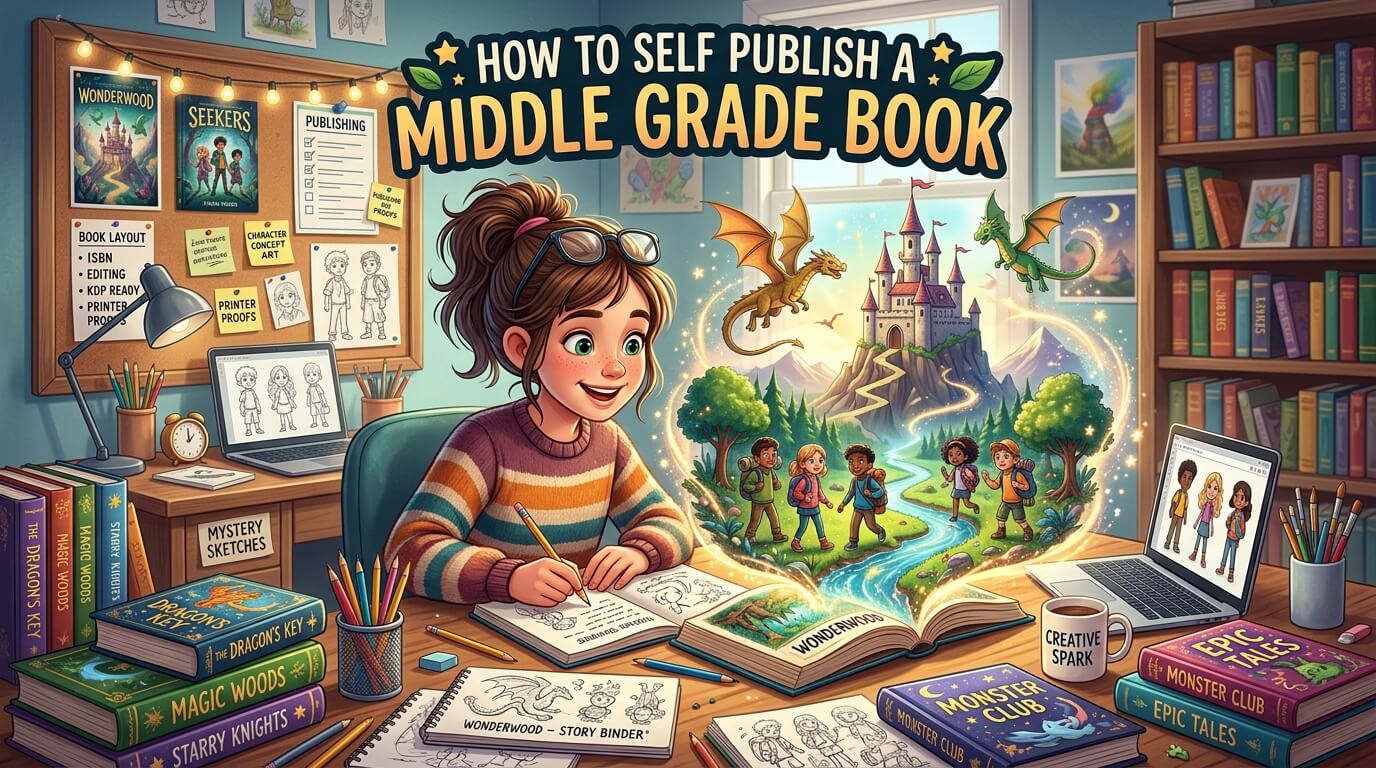
Writing a middle grade book is an exciting, creative journey. Middle-grade fiction occupies a unique place in publishing because it speaks directly to readers between the ages of approximately eight and twelve. These young readers are developing their independence, discovering new interests, and building lifelong reading habits. They are old enough to appreciate complex characters and meaningful themes, yet young enough to embrace imagination, adventure, and wonder without hesitation.
In recent years, self-publishing has become a powerful option for authors who want greater control over their books. Traditional publishing is no longer the only route to reaching young readers. Many successful authors are choosing to self-publish middle grade books because it allows them to maintain creative ownership, publish on their own timeline, and connect directly with families, schools, libraries, and readers.
However, publishing a middle-grade book successfully requires much more than uploading a manuscript online. Authors must understand the expectations of young readers, create a professional product, and develop a marketing strategy that reaches parents, educators, librarians, and children alike.
This guide explores the complete process of self-publishing a middle-grade book, from manuscript development to long-term marketing and sales.
The Essentials of the Middle Grade Book Industry
Before beginning the publishing process, it is important to understand what defines a middle-grade book. Middle-grade fiction generally targets readers between eight and twelve years old. These books typically feature protagonists within a similar age range and focus on themes relevant to children navigating friendship, family, school, identity, and personal growth.
Middle-grade books differ significantly from children’s picture books, chapter books, young adult novels, and adult fiction. The language must remain accessible while still engaging. Themes can be meaningful and emotionally rich, but they should be presented through a lens appropriate for younger readers.
Popular middle grade books often combine strong storytelling with memorable characters. Adventure, fantasy, mystery, contemporary realism, historical fiction, and science fiction all perform well within the category. Readers at this age are eager to immerse themselves in stories that make them laugh, think, and imagine.
Understanding the market helps authors position their books correctly and avoid common mistakes such as writing content that feels too young or too mature for the intended audience.
Why Self-Publishing Is Becoming Popular Among Middle Grade Authors
The publishing industry has changed dramatically over the past decade. Digital platforms have made it easier than ever for authors to produce and distribute professional-quality books.
For middle-grade authors, self-publishing offers several advantages. Creative control is perhaps the most significant benefit. Authors retain authority over their cover design, interior formatting, pricing, marketing strategy, and publication timeline.
Financial considerations also attract many writers. Traditional publishing contracts generally involve royalty splits and long production schedules. Self-publishing allows authors to earn a larger percentage of each sale while bringing their books to market much faster.
Another advantage is flexibility. Authors can update content, release sequels quickly, experiment with promotional campaigns, and respond directly to reader feedback.
For writers who have a clear vision for their stories and are willing to invest in quality production, self-publishing can provide remarkable opportunities.
Developing a Strong Middle Grade Manuscript
The foundation of every successful self-published book is an exceptional manuscript. No amount of marketing can compensate for weak storytelling.
Middle-grade readers are highly discerning. They quickly lose interest if a story becomes slow, confusing, or overly educational. The narrative must maintain momentum while delivering emotional authenticity.
When revising a middle-grade manuscript, authors should pay particular attention to pacing. Young readers expect stories to move efficiently. Scenes should advance the plot, deepen character development, or contribute meaningfully to the reading experience.
Dialogue deserves special attention. Conversations should sound natural and age-appropriate. Young characters should speak like real children rather than miniature adults. Character development remains equally important. Readers connect strongly with protagonists who face relatable challenges and demonstrate personal growth throughout the story.
The manuscript should undergo multiple revisions before publication. Strong editing significantly increases a book’s chances of success.
The Importance of Professional Editing
Many first-time self-published authors underestimate the value of professional editing. Yet editing is often the difference between an amateur publication and a professional one. Middle grade books must be polished because parents, educators, librarians, and reviewers expect high standards. Errors can undermine credibility and negatively affect reader reviews.
Developmental editing focuses on structure, plot, pacing, character development, and overall storytelling effectiveness. This stage helps identify larger issues that may affect reader engagement. Copyediting examines grammar, punctuation, sentence structure, consistency, and readability. A copyeditor ensures the manuscript flows smoothly and remains age-appropriate. Proofreading serves as the final quality check before publication. Even well-edited manuscripts can contain overlooked mistakes that require correction. Professional editing represents an investment, but it is one of the most important expenditures a self-publishing author can make.
Creating an Engaging Cover for Young Readers
Book covers play an enormous role in purchasing decisions. In the middle grade category, covers must appeal to both children and adults.
Young readers often respond to colorful, adventurous, and visually exciting designs. Parents and educators, however, also evaluate quality and professionalism before making purchasing decisions. A strong middle-grade cover communicates genre, tone, and audience instantly. Fantasy books often feature magical elements and vibrant imagery. Mystery novels may emphasize intrigue and suspense. Contemporary stories typically highlight relatable characters and settings.
Typography is equally important. The title should remain readable even in small online thumbnail images. Professional cover designers understand current market trends and can create artwork that competes effectively with traditionally published books.
Formatting Your Middle Grade Book
Interior formatting influences the overall reading experience. Poor formatting can frustrate readers and reduce perceived quality. Middle-grade books often require careful attention to chapter presentation, font selection, spacing, and readability. Younger readers benefit from clean layouts that do not feel overwhelming.
Print books should maintain appropriate margins, chapter headings, and page numbering. Ebooks must function properly across various devices and screen sizes. Many authors hire professional formatters to ensure their books meet industry standards. Others use specialized formatting software designed for self-publishing.
The goal is to create a seamless reading experience that keeps readers focused on the story rather than formatting issues.
Choosing the Right Publishing Platforms
Self-published authors have access to numerous distribution options. Selecting the right platform depends on publishing goals, target audience, and preferred formats.
The table below highlights some of the most popular self-publishing platforms for middle-grade authors.
| Platform | Best For | Formats Available | Distribution Reach |
| Kindle Direct Publishing (KDP) | New authors and wide Amazon exposure | Ebook and Paperback | Global Amazon stores |
| IngramSpark | Bookstore and library distribution | Ebook, Paperback, Hardcover | Worldwide retail network |
| Draft2Digital | Wide ebook distribution | Ebook | Multiple online retailers |
| Lulu | Specialized print projects | Paperback and Hardcover | International distribution |
| Barnes & Noble Press | Direct Nook distribution | Ebook and Print | Barnes & Noble ecosystem |
Many authors use a combination of platforms to maximize visibility and sales opportunities.
Deciding Between Ebook, Paperback, and Hardcover
Middle-grade readers consume books in multiple formats. Offering various editions can help expand market reach. Ebooks provide convenience and affordability. Many parents purchase digital books for tablets and e-readers, particularly during travel or school breaks. Paperback editions remain extremely popular within the middle-grade market. They are affordable, portable, and widely accepted by schools and libraries. Hardcover editions often appeal to gift buyers, collectors, and educational institutions seeking durable copies. Publishing in multiple formats allows authors to accommodate different reader preferences and purchasing behaviors.
Pricing Your Middle Grade Book
Pricing strategy requires careful consideration. Authors must balance profitability with market expectations. Middle grade readers rarely purchase books independently. Parents, educators, and librarians often make buying decisions. Competitive pricing can influence purchasing behavior significantly.
Factors affecting pricing include production costs, page count, format type, genre expectations, and comparable titles within the marketplace. Researching successful books in the same category provides valuable insights into pricing norms. Competitive pricing helps attract readers while maintaining reasonable profit margins.
Building an Author Brand
Successful self-publishing extends beyond a single book. Authors benefit from creating a recognizable brand that readers can follow over time. An author’s brand reflects writing style, themes, values, and audience focus. For middle-grade authors, branding often emphasizes imagination, adventure, education, humor, or inspiration.
A professional website serves as a central hub for information about books, upcoming releases, events, and author news. Consistent visual branding across websites, social media platforms, newsletters, and promotional materials helps strengthen recognition and trust.
Readers who enjoy one book are more likely to explore future releases when an author maintains a clear and consistent brand identity.
Marketing a Middle Grade Book Successfully
Marketing represents one of the most challenging aspects of self-publishing. Unlike adult fiction, middle grade books require authors to reach multiple audiences simultaneously. Children may become enthusiastic readers, but adults often make purchasing decisions. Effective marketing therefore targets parents, teachers, librarians, and young readers.
A successful launch begins months before publication. Building anticipation through social media, email newsletters, cover reveals, and advance reader copies can generate early interest. Reviews play a significant role in establishing credibility. Encouraging honest reviews from readers, educators, and bloggers helps build visibility. School visits, virtual author events, library presentations, and reading programs can also introduce books directly to target audiences.
Marketing should be viewed as an ongoing effort rather than a short-term activity surrounding publication day.
Reaching Schools and Libraries
Schools and libraries represent valuable opportunities for middle-grade authors. These institutions regularly seek engaging books for students and readers. Building relationships with educators can create long-term visibility. Teachers often recommend books that align with curriculum objectives, encourage literacy, or address meaningful themes.
Libraries offer another powerful avenue for discovery. Librarians frequently introduce young readers to new authors and emerging titles. Authors can increase their chances of library adoption by ensuring professional production quality, obtaining reviews, and making books available through library-friendly distributors.
Participation in educational conferences, literacy events, and community programs can further expand awareness among decision-makers.
Using Social Media Effectively
Social media has become an important marketing tool for authors. However, middle-grade authors should focus primarily on reaching adults rather than marketing directly to children. Parents, teachers, librarians, and book influencers often discover books through social platforms. Sharing writing updates, educational insights, reading recommendations, and behind-the-scenes content helps build meaningful connections.
Authenticity remains essential. Audiences respond positively to genuine engagement rather than constant promotional messaging. Over time, consistent social media activity can strengthen an author’s visibility and support long-term book sales.
Creating a Long-Term Publishing Strategy
Many successful middle grade authors approach self-publishing as a long-term career rather than a single project.
One book can introduce readers to an author’s work, but multiple books create momentum. Series fiction often performs particularly well within the middle grade market because young readers enjoy revisiting familiar characters and worlds.
A long-term strategy may include sequels, companion novels, educational resources, activity books, or classroom materials.
Building a catalog increases discoverability and provides readers with additional opportunities to engage with an author’s work.
Patience is important. Many self-published books achieve success gradually as reviews accumulate, audiences grow, and marketing efforts compound over time.
Common Mistakes to Avoid
Many first-time authors rush to publication before their books are truly ready. Skipping editing, using low-quality cover designs, neglecting market research, or publishing without a marketing plan can limit a book’s potential. Another common mistake involves misunderstanding the target audience. Middle-grade readers have distinct expectations, and books that feel too childish or too mature may struggle to connect.
Authors should also avoid viewing publication as the finish line. Publishing marks the beginning of a book’s journey into the marketplace. Continued promotion and audience engagement remain essential for long-term success. Learning from industry best practices and investing in professional quality can help authors avoid these challenges.
Conclusion
Self-publishing a middle grade book offers authors an exciting opportunity to share stories directly with young readers while maintaining creative and financial control. Today’s publishing landscape provides unprecedented access to global distribution, professional production tools, and direct audience engagement.
Success, however, requires more than simply writing a compelling story. Authors must invest in editing, cover design, formatting, distribution, branding, and marketing to create a book that can compete effectively in a crowded marketplace. Understanding the unique needs of middle-grade readers, along with the expectations of parents, teachers, and librarians, is essential throughout the process.
For writers who are willing to approach self-publishing professionally, the rewards can be substantial. A well-crafted middle-grade book has the power to inspire imagination, encourage empathy, and create lasting memories for young readers. By combining strong storytelling with thoughtful publishing practices, authors can build meaningful careers while bringing unforgettable stories into the hands of the next generation of readers.
FAQs
Q1. What age group is a middle-grade book written for?
Middle-grade books are typically written for readers between 8 and 12 years old, featuring characters and themes that resonate with this age range.
Q2. How long should a middle-grade book be?
Most middle-grade books range from 20,000 to 50,000 words, although fantasy and adventure novels may sometimes be longer.
Q3. Do I need an editor before self-publishing a middle-grade book?
Yes, professional editing helps improve story quality, readability, and overall professionalism, making the book more appealing to readers and reviewers.
Q4. Can I self-publish a middle-grade book on Amazon?
Yes, many authors use Amazon’s Kindle Direct Publishing (KDP) platform to publish middle-grade books in ebook and print formats.
Q5. How can I market a self-published middle-grade book?
Authors can market their books through social media, author websites, school visits, library events, book reviews, and partnerships with educators and reading communities.
