
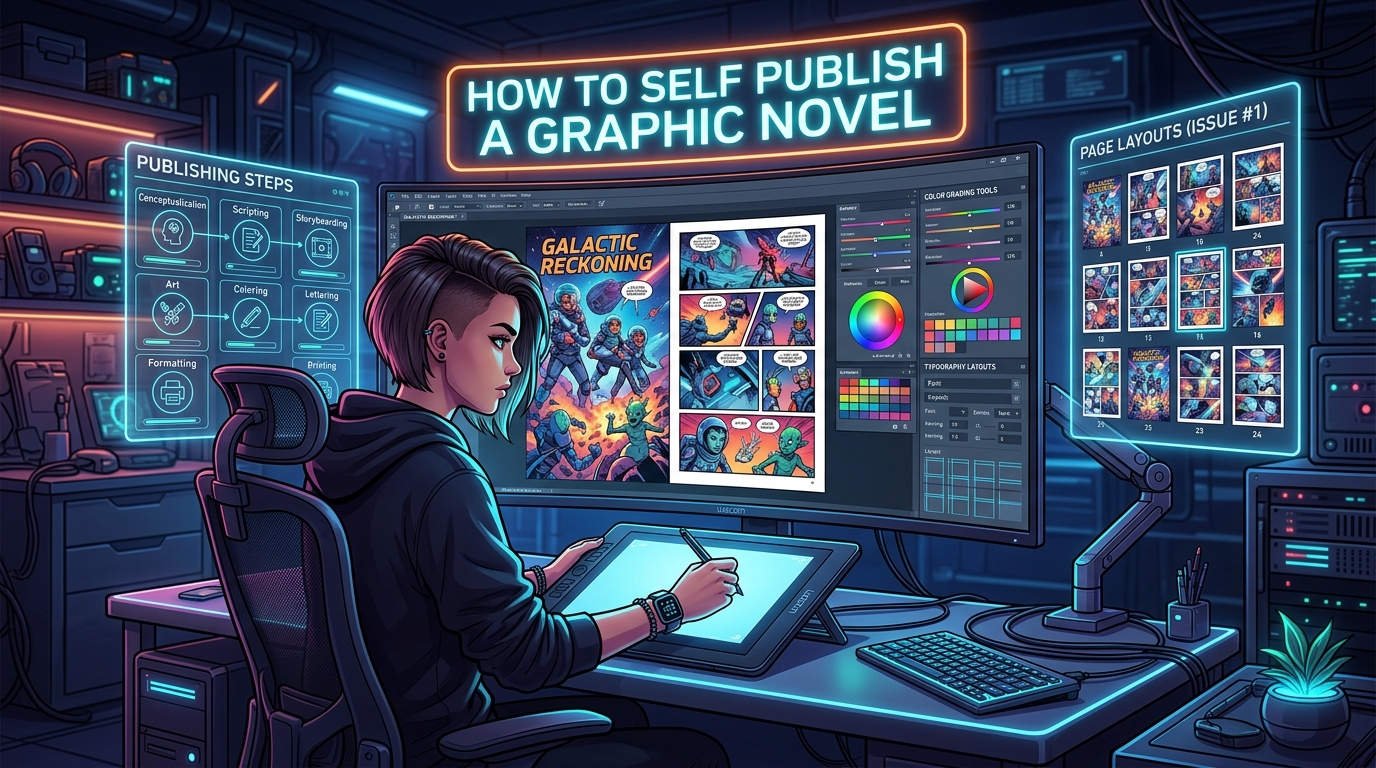
Self-publishing a graphic novel is no longer a distant dream reserved for industry insiders or traditionally published authors. Today, creators with a strong visual story, a clear voice, and a willingness to learn the production process can bring their work directly to readers around the world. What once required approval from publishing houses can now be achieved through digital tools, print-on-demand services, and global distribution platforms. Yet, while the barriers to entry have lowered, the craft of successfully publishing a graphic novel independently still demands careful planning, artistic discipline, and an understanding of both storytelling and publishing mechanics.
A graphic novel is not just a comic book stretched into a longer format; it is a fully immersive narrative experience where visuals and text carry equal emotional weight. Because of this hybrid nature, self-publishing one requires attention not only to writing but also to pacing, panel design, page flow, typography, printing standards, and market positioning. Many creators underestimate how technical the process becomes once the artwork is complete. The truth is that the journey from idea to printed book is as creative as the storytelling itself.
This guide explores the entire self-publishing process in a structured, practical way, helping you understand how to move from concept development to finished book distribution without relying on traditional publishers.
A Clear Look at the Self-Publishing Path for Graphic Novels
Self-publishing a graphic novel begins with understanding how the industry has evolved. Over the past decade, digital platforms and print-on-demand services have transformed independent publishing into a viable career path for illustrators and writers. Unlike traditional publishing, where creative control is often shared or restricted, self-publishing gives creators full ownership over narrative, design, pricing, and distribution.
A graphic novel sits at the intersection of literature and visual art, which means it benefits greatly from modern publishing flexibility. You are no longer limited to physical printing runs or bookstore approvals. Instead, digital marketplaces, online comics platforms, and global print networks allow you to reach niche audiences who actively seek independent storytelling.
At the same time, this freedom comes with responsibility. Without a publisher, you must handle or oversee editing, formatting, marketing, and distribution. Many creators find this overwhelming at first, but with structured planning, it becomes a manageable and even empowering process.
What Makes Self-Publishing Different for Graphic Novels
Unlike prose books, graphic novels require a production pipeline that is visually intensive. Each page is a designed composition rather than a simple flow of text. This means file preparation, resolution standards, and layout consistency become critical. A single formatting mistake can disrupt readability or affect print quality.
Additionally, graphic novels often require collaboration between writers, illustrators, colorists, and letterers. Even if you are a solo creator, you are effectively performing multiple roles at once. Self-publishing, in this sense, becomes not just writing a book but producing a visual product ready for both digital and physical consumption.
Developing Your Graphic Novel Before Publishing
Before thinking about platforms or sales, the foundation of your graphic novel must be solid. Many independent creators rush into illustration without fully developing the story structure, which often leads to inconsistent pacing or incomplete narratives. A strong concept stage saves months of revision later.
The development phase typically begins with story ideation and evolves into scripting and visual planning. Unlike traditional novels, a graphic novel script is closer to a film screenplay, where each page is broken into panels, dialogue, and visual direction.
Scriptwriting and Visual Storyboarding
A graphic novel script is not simply dialogue written in sequence. It includes panel descriptions, camera angles, emotional cues, and pacing instructions. Each page must be carefully structured so that the visual rhythm supports the narrative flow. For example, a dramatic reveal might occupy an entire page, while fast-paced action may require multiple smaller panels to convey motion.
Storyboarding follows the script and translates written structure into rough visual layouts. This stage is where pacing issues often become visible. A scene that feels balanced in writing may appear too crowded or too empty when visualized. Refining the storyboard ensures that each page carries the intended emotional impact before final illustration begins.
Preparing Artwork for Production
Once the storyboard is finalized, the artwork phase begins. This includes penciling, inking, coloring, and lettering. Each step affects readability and production quality. Resolution is especially important because print versions require high DPI settings, typically 300 DPI or higher, to ensure clarity.
Color choices also influence printing costs. Full-color graphic novels are more expensive to produce than black-and-white editions, which is why many independent creators strategically choose formats based on budget and target audience. Consistency in visual style across all pages is essential to maintain immersion.
Production Design and Formatting for Publishing
Production design is where creative work transitions into a publishable product. This stage is often underestimated, yet it determines how professional your graphic novel will appear in both digital and physical formats.
Page sizing must be standardized according to publishing platform requirements. Common formats include US comic size, trade paperback dimensions, or custom square formats depending on artistic intent. Incorrect sizing can lead to cropping issues or poor print alignment.
Typography and lettering are equally important. Dialogue must remain legible across different devices and print sizes. Lettering is not just functional; it is part of the visual storytelling. The font style, balloon placement, and spacing all influence reader experience.
File Preparation and Technical Standards
Before uploading your graphic novel to any platform, files must be exported in high-quality formats such as PDF or TIFF. Each page should be carefully checked for alignment, bleed margins, and color consistency. Bleed areas ensure that artwork extends slightly beyond the trim edge, preventing white borders after printing.
Digital versions require optimization for screen reading. This often involves adjusting file size without compromising image quality. Many creators produce separate versions for print and digital distribution to ensure optimal performance in both formats.
Editing, Feedback, and Final Refinement
Even in a visually driven medium, editing remains essential. Unlike prose editing, graphic novel editing focuses on narrative clarity, visual flow, and panel readability. A poorly paced page can confuse readers even if the artwork is technically excellent.
Feedback from beta readers or fellow artists can help identify inconsistencies in tone, pacing, or visual clarity. It is often difficult for creators to judge their own work objectively, especially after spending months immersed in the same pages. External perspective ensures that the final product resonates with readers rather than just fulfilling the creator’s original vision.
Choosing the Right Self-Publishing Path
Once your graphic novel is complete, the next step is selecting a publishing method. There are two primary paths: print-on-demand services and traditional offset printing. Print-on-demand is more accessible and cost-effective for independent creators because it eliminates the need for large upfront investment. Books are printed only when ordered, reducing financial risk.
Offset printing, on the other hand, offers higher print quality at lower per-unit cost but requires bulk orders. This option is often used when creators already have an established audience or plan to distribute at conventions and bookstores.
Digital-first publishing is also increasingly popular, especially through webcomic platforms. This allows creators to build an audience before releasing physical editions.
Popular Platforms for Self-Publishing Graphic Novels
The choice of platform significantly impacts distribution reach, royalties, and creative control. The following table compares some of the most widely used self-publishing platforms for graphic novel creators.
| Platform | Best For | Format Support | Distribution Reach | Key Advantage |
| Kindle Direct Publishing | Beginners and global reach | Print and ebook | Amazon marketplace worldwide | Easy setup and massive audience |
| IngramSpark | Professional print distribution | Print books and ebooks | Bookstores and libraries globally | Strong retail distribution network |
| Gumroad | Direct creator sales | Digital downloads | Direct-to-audience | Full control over pricing and branding |
| Webtoon | Serialized storytelling | Vertical digital comics | Global webcomic audience | Ideal for episodic release formats |
Each platform serves a different creative and commercial goal. Many successful independent creators use multiple platforms simultaneously to maximize reach, combining digital serialization with print editions for collectors.
Marketing Your Graphic Novel as an Independent Creator
Publishing is only half the journey; visibility determines success. Without a publisher’s marketing machine, creators must build their own audience through consistent engagement and strategic promotion. Social media platforms, particularly visual ones, play a significant role in audience building for graphic novelists.
Building anticipation before release is often more effective than promoting after publication. Sharing character designs, behind-the-scenes sketches, and panel previews helps readers connect emotionally with the work before it is available. Storytelling continues beyond the pages of the book through how you present the creative process.
Community engagement is equally important. Independent creators often grow through niche fandoms, forums, and digital art communities where readers actively seek original content. Consistency and authenticity matter more than aggressive advertising.
Pricing, Royalties, and Revenue Strategy
Pricing a graphic novel involves balancing production costs, audience expectations, and platform fees. Print editions must account for printing expenses, while digital editions can be priced more flexibly. Many creators adopt tiered pricing strategies, offering lower-cost digital versions alongside premium physical copies.
Royalties vary depending on platform choice. Print-on-demand services typically offer percentage-based earnings per sale, while direct sales platforms allow higher profit margins but require more self-management. Understanding these differences helps creators make informed financial decisions.
Long-term revenue often comes not just from book sales but also from merchandise, special editions, crowdfunding campaigns, and serialized content subscriptions.
Common Challenges in Self-Publishing Graphic Novels
One of the most common challenges is underestimating production time. Graphic novels take significantly longer to complete than prose books due to the visual workload. Another frequent issue is inconsistent art quality across pages, often caused by fatigue or shifting style during long projects.
Many creators also struggle with marketing because they prioritize creation over visibility. While artistic focus is essential, ignoring audience-building can limit the reach of even the most well-crafted stories.
Technical errors in formatting, especially regarding print specifications, can also lead to costly reprints or delays. Careful testing and proof copies are essential before final release.
Conclusion
Self-publishing a graphic novel is both a creative journey and a technical process that blends storytelling, design, and entrepreneurship. It allows creators to maintain full artistic control while directly connecting with readers across the world. However, success in this space depends on preparation, patience, and an understanding of every stage from scripting to distribution.
The modern publishing landscape has made it possible for independent artists to compete on a global level without traditional gatekeepers. With the right balance of storytelling skill, production knowledge, and audience engagement, a self-published graphic novel can achieve both artistic recognition and commercial success.
