
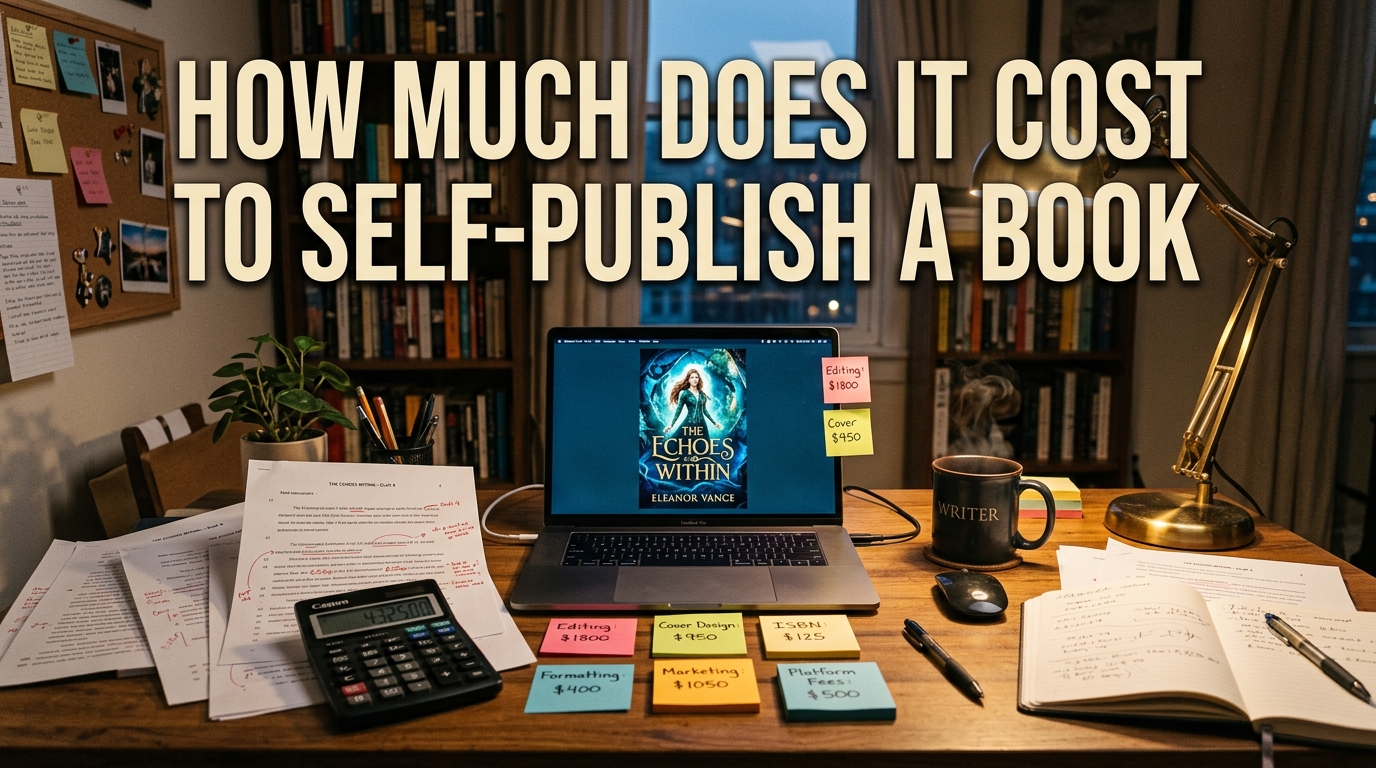
The dream of publishing a book has changed dramatically over the past decade. Writers no longer need to wait for approval from large publishing houses or literary agents before sharing their work with readers. Self-publishing has opened the doors for authors from every background, giving them complete control over their stories, timelines, pricing, and creative direction. Yet despite the accessibility of modern publishing platforms, one question continues to dominate conversations among aspiring authors: how much does it actually cost to self-publish a book?
The answer is more complex than many people expect. Some authors publish a simple ebook for only a few hundred dollars, while others invest thousands into editing, design, printing, and marketing. Self-publishing is flexible, which means the final cost depends on the quality level an author wants to achieve, the type of book being created, and the audience the writer hopes to reach. A memoir written for family members may require a very different budget than a commercial fantasy novel competing in the global marketplace.
Understanding the true cost of self-publishing is important because many first-time authors either underestimate the expenses or spend money in the wrong places. The process involves much more than uploading a manuscript online. Professional editing, strong cover design, proper formatting, and marketing all contribute to whether a book succeeds or disappears among millions of titles already available online. Self-publishing gives authors freedom, but it also gives them responsibility. Every publishing decision directly affects the quality and visibility of the final product.
In recent years, the self-publishing industry has grown into a serious business. Thousands of independent authors now earn full-time incomes through platforms like Amazon Kindle Direct Publishing, Apple Books, Kobo, and IngramSpark. Readers have also become more accepting of independently published books because many self-published titles now match the quality of traditional publishing. However, producing that professional standard usually requires financial investment.
For writers entering the world of independent publishing, knowing where the money goes can help prevent unnecessary stress and poor decisions later. Some costs are essential, while others depend entirely on the author’s goals. A carefully planned publishing budget can make the entire experience smoother and far more rewarding.
The Average Cost of Self-Publishing a Book
The average cost of self-publishing a professionally produced book generally falls between $1,000 and $7,500. This wide range exists because every book project is different. Some authors choose minimal expenses by doing most tasks themselves, while others hire professionals for every stage of production. Genre also plays a major role. A text-based nonfiction ebook costs much less than a heavily illustrated children’s book or graphic novel.
Writers often hear stories about books being published “for free,” and technically that is possible. Platforms such as Amazon KDP allow authors to upload manuscripts without upfront fees. However, free publishing rarely results in a polished or competitive book. Readers judge books quickly, especially online where thousands of titles compete for attention. Poor editing, weak covers, and formatting mistakes can instantly reduce credibility.
A professional self-published book usually includes several production stages. Editing often becomes the largest expense because multiple rounds of revision are needed before a manuscript is ready for readers. Cover design is another critical investment since readers frequently decide whether to click on a book based entirely on visual presentation. Formatting, ISBN registration, proofreading, printing samples, and marketing also contribute to the overall cost.
The financial commitment can feel intimidating for new authors, but many experienced independent writers view self-publishing as a long-term investment rather than a one-time expense. Books continue generating income for years after publication, especially when authors build multiple titles and establish loyal readerships.
Why Editing Is Often the Biggest Expense
Among all self-publishing costs, editing is usually considered the most important. A professionally edited manuscript creates trust between the author and the reader. Even the best story can lose its impact if readers encounter spelling mistakes, awkward sentences, plot inconsistencies, or confusing structure. Editing transforms a rough manuscript into a polished reading experience.
Developmental editing is often the first major editing stage. During this process, editors examine the structure of the book itself. They focus on pacing, storytelling flow, character development, chapter organization, and clarity of ideas. In nonfiction books, developmental editors help improve logic, readability, and content structure. This stage can cost anywhere from $500 to several thousand dollars depending on the manuscript length and complexity.
After developmental editing comes copy editing. This stage focuses on grammar, punctuation, sentence clarity, repetition, consistency, and readability. Copy editors strengthen the language while preserving the author’s voice. A strong copy edit helps books feel professional and polished, which is especially important for independent authors competing against traditionally published titles.
Proofreading is the final editing stage and often happens after formatting. Proofreaders catch remaining typos, spacing errors, formatting inconsistencies, and small mistakes that survived earlier revisions. Many authors assume proofreading is unnecessary after editing, but publishing professionals know even carefully edited books can contain hidden errors.
Some writers attempt to skip editing to save money, but this decision often becomes costly later. Poor reviews caused by weak editing can damage a book’s reputation permanently. Readers today expect high-quality writing regardless of whether a book is traditionally published or independently produced.
Cover Design and Why It Matters So Much
Book covers play a larger role in sales than many first-time authors realize. Readers absolutely judge books by their covers, especially in online stores where visual presentation becomes the first point of contact. A professional cover instantly communicates genre, tone, quality, and credibility.
In crowded marketplaces like Amazon, a weak cover can prevent readers from even clicking on the book description. A professionally designed cover, on the other hand, increases curiosity and creates stronger first impressions. This is why cover design is one of the smartest investments self-published authors can make.
Cover costs vary widely depending on the designer’s experience and the type of design needed. Premade covers usually cost less because designers create them before assigning them to a specific book. These covers often work well for romance, thriller, and mystery novels where genre expectations follow familiar visual trends.
Custom covers cost more because they are created specifically for one book. Custom work may involve original illustrations, advanced typography, detailed artwork, or photo manipulation. Fantasy novels, science fiction books, and literary fiction often benefit from fully customized designs because visual uniqueness matters heavily within those genres.
Print books also require additional design elements such as back covers and spine layouts. Hardcover editions may require even more technical preparation. The more formats an author publishes, the more extensive the design process becomes.
Many successful indie authors credit their cover design as one of the biggest reasons readers initially discovered their books. In digital publishing, visual branding is inseparable from marketing success.
Formatting Costs and Interior Design
Formatting is another area where many first-time authors underestimate the importance of professionalism. Readers expect books to look clean, organized, and comfortable to read. Poor formatting creates distractions that weaken the reading experience even if the writing itself is strong.
Ebook formatting ensures compatibility across devices like Kindle, iPads, tablets, and smartphones. Proper formatting keeps chapters aligned correctly, prevents broken spacing, and improves navigation. Ebook formatting is usually more affordable than print formatting because it involves fewer technical specifications.
Print formatting is more complex because physical books require precise margins, page numbering, trim sizes, typography adjustments, and print-ready files. Books with images, charts, tables, or illustrations require even more detailed formatting work.
Interior design also affects readability more than many people realize. Font choices, spacing, chapter styling, and page layouts influence how readers emotionally experience a book. Professional formatting creates subtle polish that separates amateur publishing from professional-quality production.
Some authors learn formatting software themselves to reduce costs. Others prefer hiring professionals because technical formatting mistakes can lead to printing problems and negative reader experiences.
ISBNs, Copyrights, and Publishing Ownership
ISBNs are unique identification numbers assigned to books. While some publishing platforms offer free ISBNs, these often list the platform itself as the publisher. Authors who want complete ownership and publishing control usually purchase their own ISBNs.
The importance of owning an ISBN depends on the author’s publishing goals. Casual writers may not care who is listed as the publisher, while authors building long-term publishing brands often prefer maintaining full ownership over every aspect of distribution.
Copyright registration is another area where authors decide whether additional legal protection is worth the cost. Technically, a manuscript receives copyright protection automatically once it is created. However, official registration strengthens legal rights in cases involving plagiarism or intellectual property disputes.
For most independent authors, these expenses are relatively small compared to editing or marketing costs, but they still contribute to the overall publishing budget.
Printing Costs in Modern Self-Publishing
One of the biggest advantages of modern self-publishing is print-on-demand technology. In the past, authors often needed to print thousands of copies upfront, creating major financial risk and storage problems. Today, platforms like Amazon KDP and IngramSpark print books only after customers place orders.
This system dramatically reduces upfront expenses because authors no longer need large inventories. Printing costs are deducted directly from royalties after each sale.
Even with print-on-demand services, authors usually order proof copies before launch. Proof copies allow writers to inspect print quality, formatting, cover alignment, and overall appearance before the book becomes publicly available. Multiple proofing rounds can slightly increase publishing costs, especially for heavily illustrated books.
Some authors eventually move into bulk printing if they sell books through events, schools, bookstores, or direct websites. Bulk printing lowers per-unit costs but requires larger upfront investment.
Marketing Costs and Book Promotion
Publishing a book is only part of the journey. Marketing determines whether readers actually discover the book in the first place. Many new authors underestimate how competitive online publishing has become. Millions of books are available online, and visibility is one of the greatest challenges in modern publishing.
Marketing costs vary enormously because promotional strategies differ from one author to another. Some writers rely mostly on organic social media growth, while others spend thousands on advertising campaigns and launch promotions.
Amazon advertising has become one of the most popular marketing tools for independent authors. These ads place books directly in front of potential readers searching within Amazon itself. Successful ad campaigns can generate consistent sales, but poorly managed campaigns can also waste significant money.
Social media has also become deeply connected to book sales. Platforms like TikTok, Instagram, Facebook, and YouTube influence reading trends and audience engagement. Authors often invest in graphics, promotional videos, influencer partnerships, and audience-building strategies.
Email marketing is another major promotional tool. Building a mailing list allows authors to communicate directly with readers, announce future releases, and maintain long-term audience relationships. While email platforms are relatively affordable individually, they become part of the broader publishing budget over time.
Marketing is often where publishing costs continue long after the book itself is released. Successful indie authors frequently view marketing as an ongoing investment rather than a one-time event.
Ebook Publishing Versus Print Publishing Costs
Ebooks are usually the least expensive format to publish because they eliminate physical printing and shipping expenses. Authors focusing exclusively on ebooks can often produce professional books with lower overall budgets.
Ebook publishing also offers strong royalty percentages through platforms like Kindle Direct Publishing. Many indie authors choose ebooks first because they allow faster production and quicker financial recovery.
Print books, however, continue to hold emotional and commercial value. Many readers still prefer physical books, especially for nonfiction, memoirs, and gift purchases. Paperback and hardcover publishing involve additional formatting, proofing, and printing considerations, which naturally increase costs.
Authors who publish in multiple formats often reach wider audiences but also spend more during production.
Audiobook Production Costs
Audiobooks represent one of the fastest-growing areas in publishing. Readers increasingly consume books during commuting, workouts, and travel. For self-published authors, audiobooks offer another income stream and audience expansion opportunity.
However, audiobook production can become expensive. Professional narrators typically charge per finished hour of audio. Longer books naturally require higher budgets.
Human narration remains the premium standard because emotional delivery strongly affects listener engagement. Some authors experiment with AI narration to reduce costs, though listener preferences still lean heavily toward human voices for fiction and storytelling.
Audiobook production also involves editing, mastering, and distribution considerations beyond narration itself.
Can You Successfully Self-Publish on a Small Budget?
Many authors begin with limited budgets, and fortunately self-publishing remains flexible enough to accommodate different financial situations. A small budget does not automatically mean poor quality if spending decisions are strategic.
Authors with tight budgets often prioritize editing and cover design first because these areas most strongly affect reader perception. Formatting can sometimes be learned independently, while early marketing may rely more on organic audience growth rather than paid advertising.
The key is understanding which corners should never be cut completely. Readers may forgive smaller marketing campaigns, but they rarely forgive unreadable writing or unprofessional presentation.
Many successful indie authors started modestly and gradually reinvested royalties into improving future books. Self-publishing allows writers to grow step by step rather than requiring enormous investment immediately.
Final Thoughts on the Cost of Self-Publishing
The cost of self-publishing a book ultimately depends on the kind of publishing journey an author wants to create. Some writers publish for personal fulfillment, while others aim to build full-time writing careers. Because of this flexibility, publishing budgets vary dramatically from one project to another.
What remains consistent is the importance of professionalism. Readers expect books to feel polished regardless of how they were published. Strong editing, thoughtful design, proper formatting, and meaningful marketing all contribute to the success of a self-published book.
Self-publishing is no longer viewed as a lesser alternative to traditional publishing. In many ways, it has become one of the most powerful opportunities available to modern writers. Authors maintain control over their work, keep larger royalty percentages, and build direct relationships with readers around the world.
While the financial investment may seem intimidating at first, many writers discover that self-publishing offers something incredibly valuable beyond profit alone: creative freedom. For countless independent authors, that freedom makes every publishing expense worthwhile.
